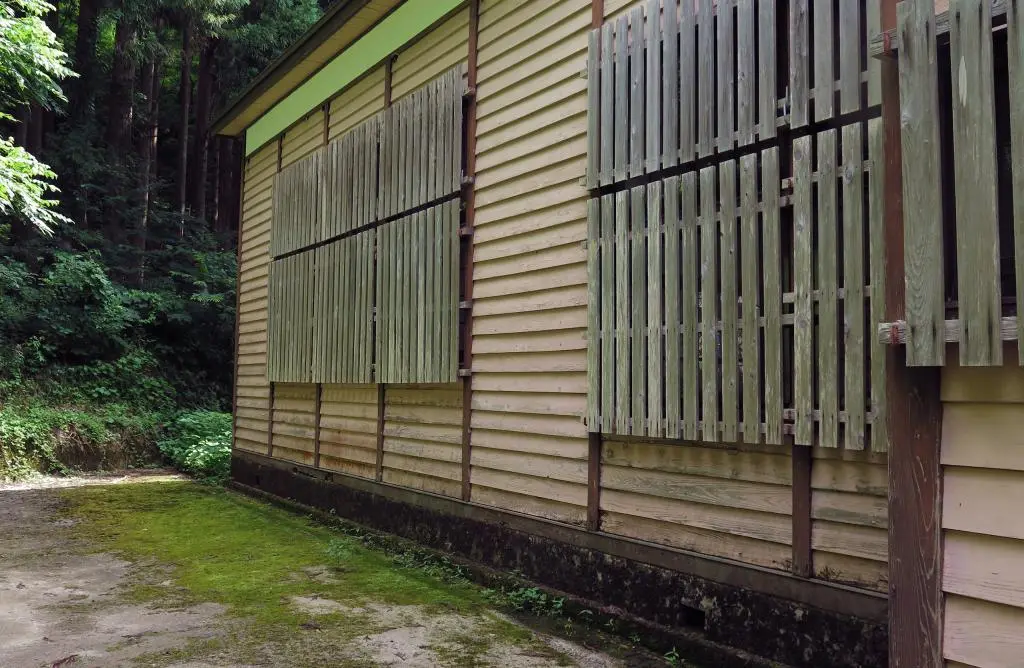
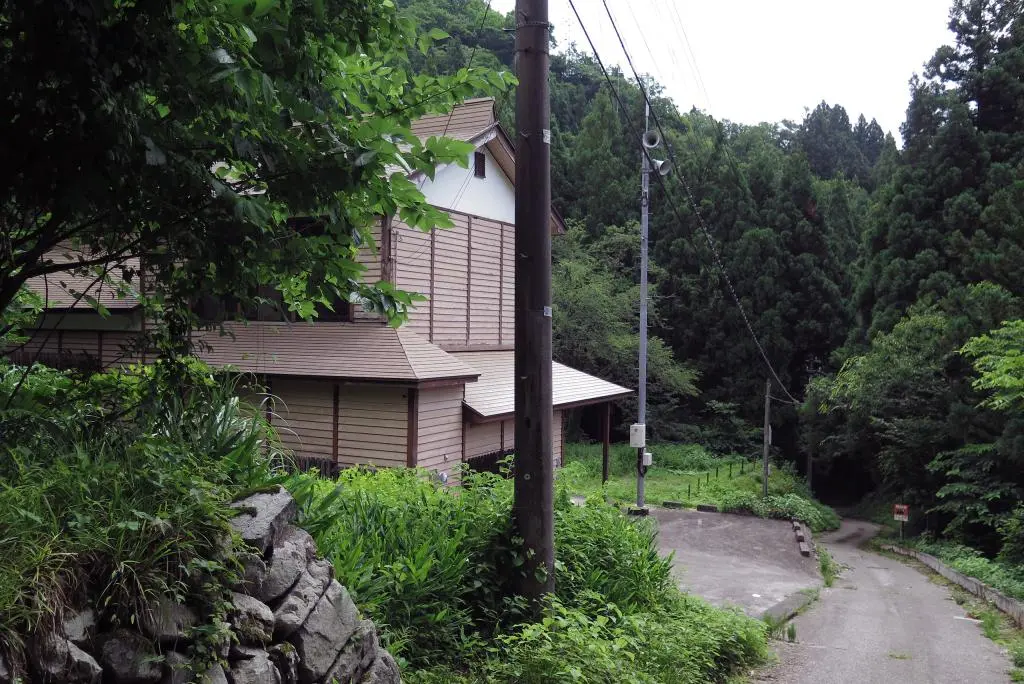
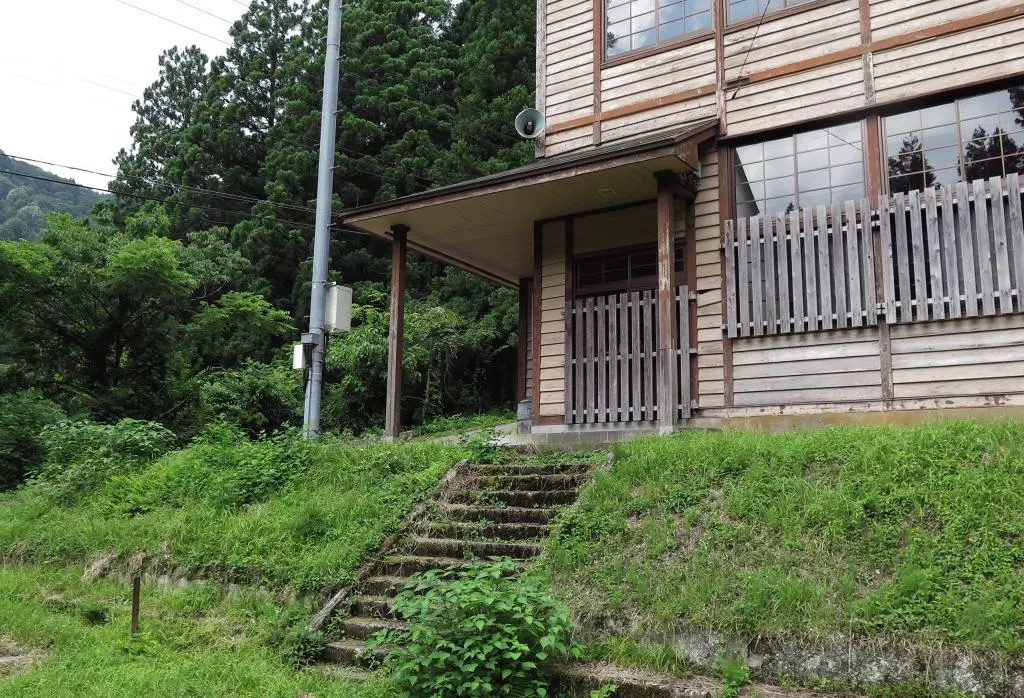
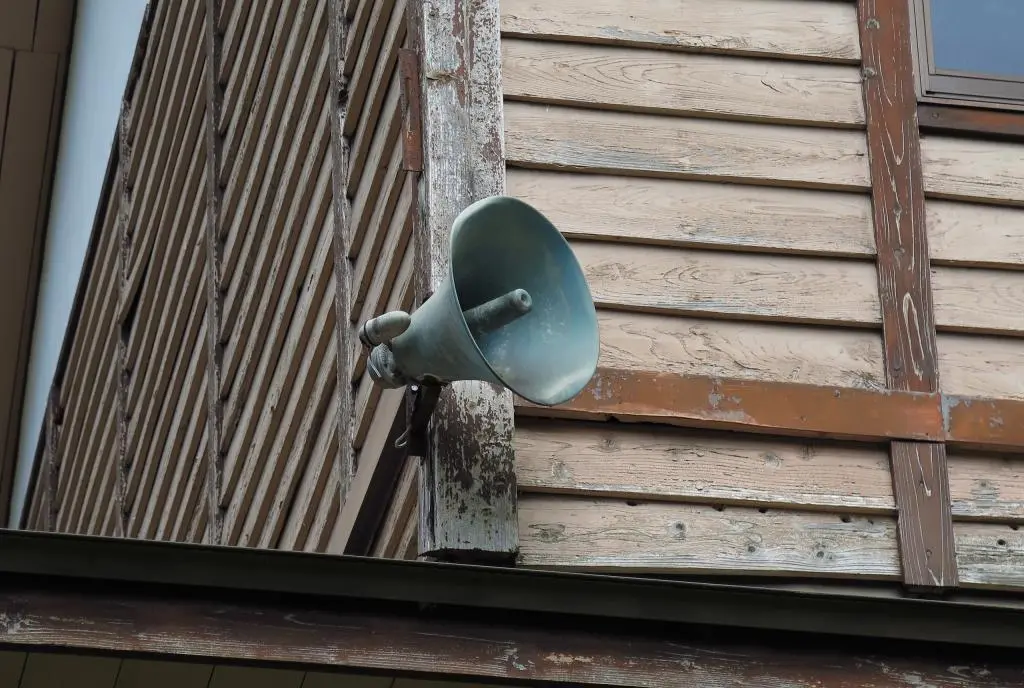
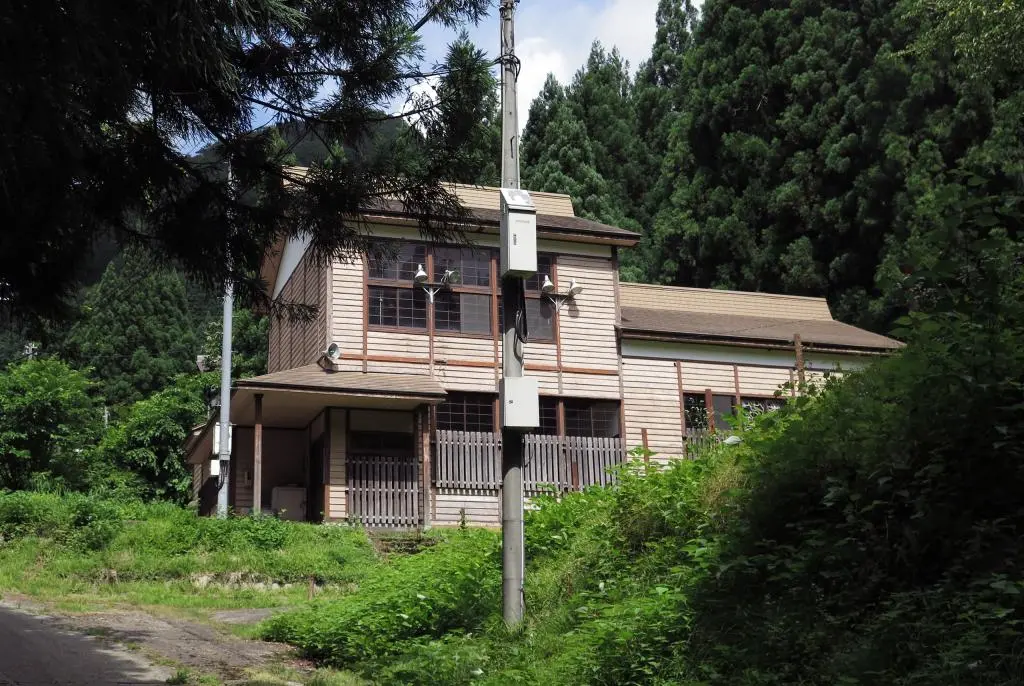
During the restoration and revitalization of Japan after World War II, the government poured money into education and many of the deep rural areas were given access to education in some form. Every city, town, and village had their centralized schools, but in the mountains and valleys, daily travel was nowhere near as easy as it is today.
In the 5 valleys of southwestern Toyama, known as Gokayama 五箇山, the area was split into 3 villages. The central-most village, Taira village, had two elementary schools, Shimonashi ES and Higashi Nakae ES. Higashi Nakae Elementary School was first established back in 1873 during the Meiji restoration.
I'm not really sure what the people in these mountain valleys did for education before then. Probably nothing. Probably no need as the children would grow up into farmers like everyone else in their home and village. And even with this elementary school established, there were other more rural pocket settlements further up and down the mountain and river who couldn't attend the school, especially in winter.
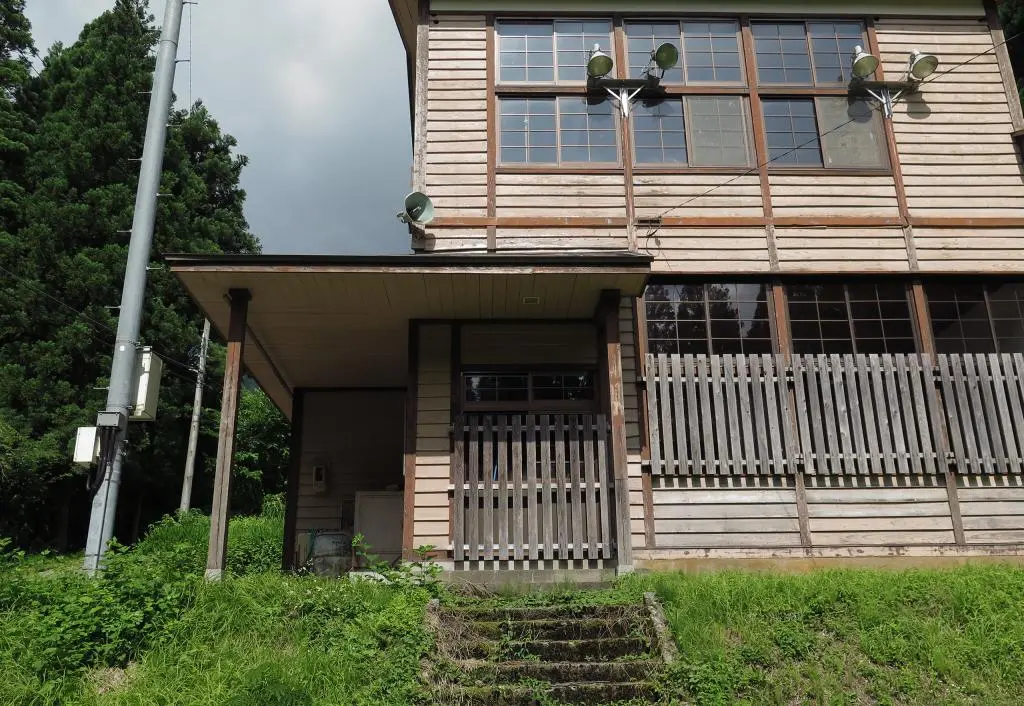
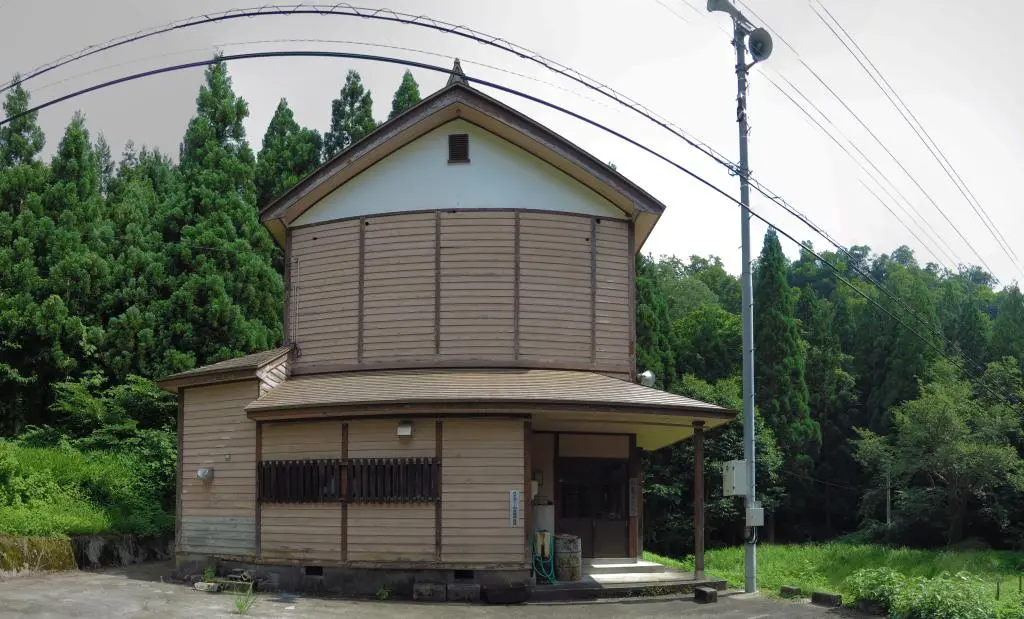
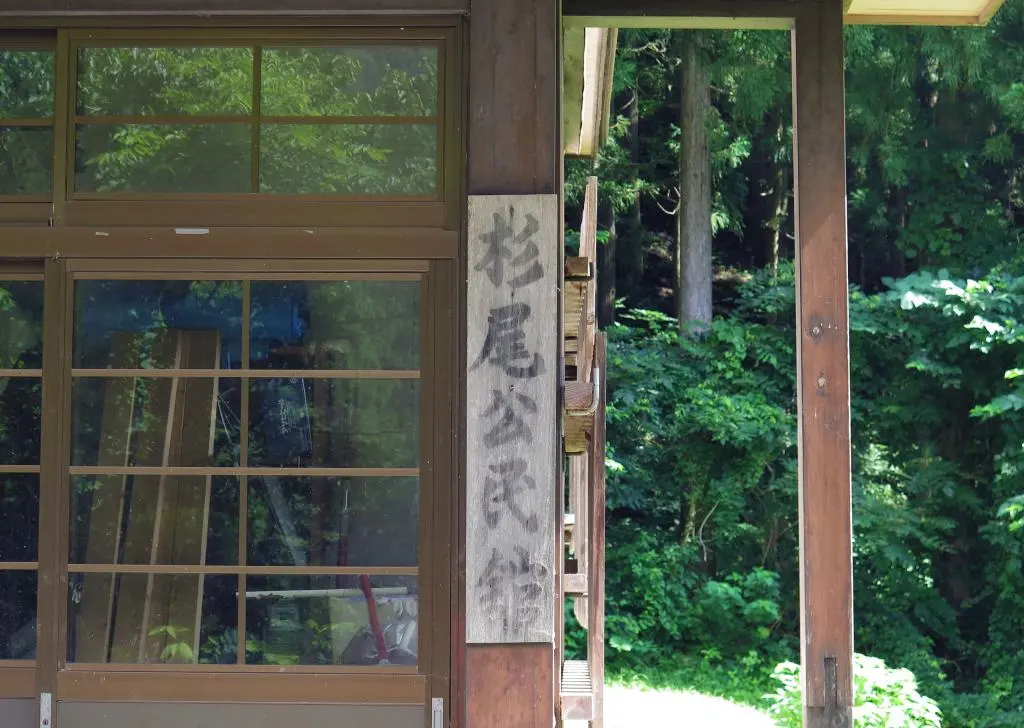
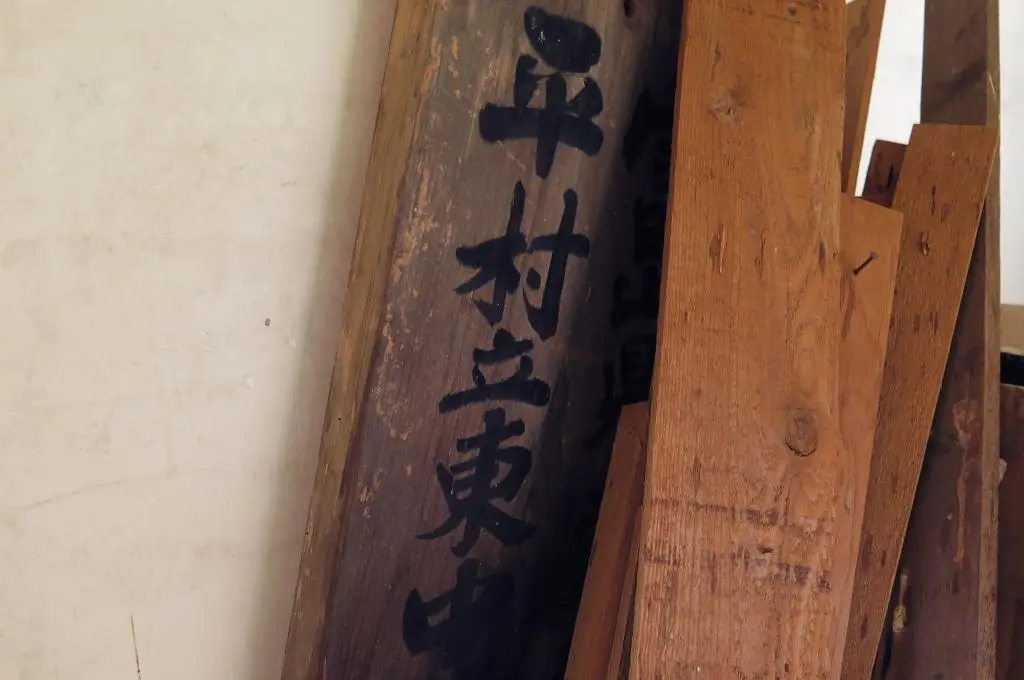
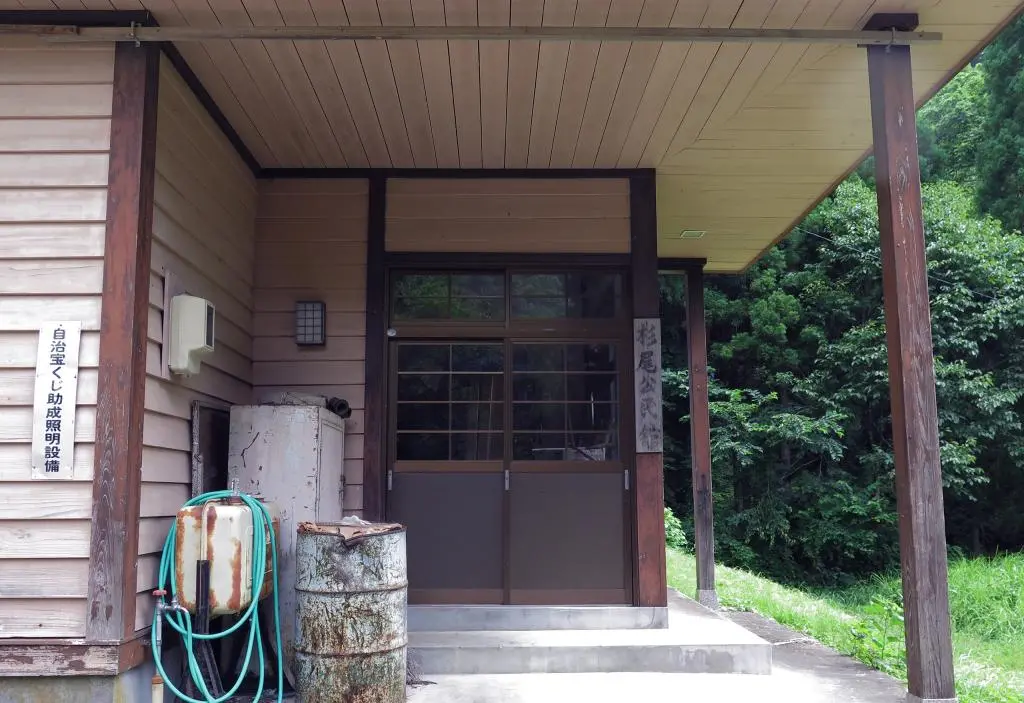
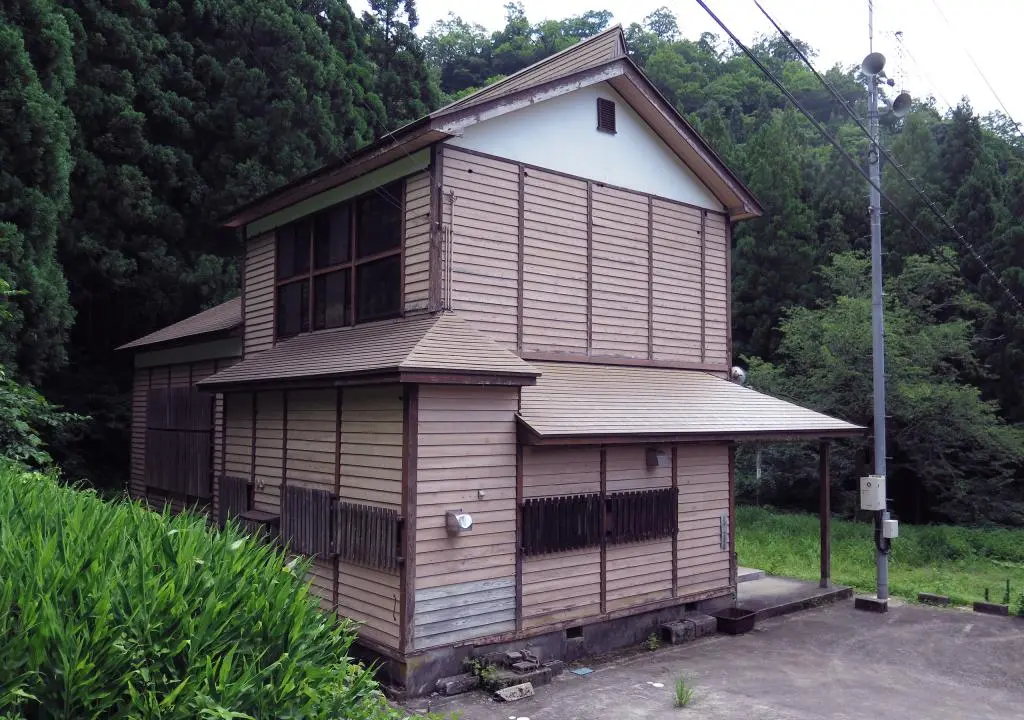
After World War II, with more money given to education, the government began building many many branch schools for the centralized schools. The Sugio Branch School was one such school. The full title of the school was 平村立東中江小学校杉尾分校 or Tiara Village Higashi Nakae Elementary School - Sugio Branch School.
The Sugio neighborhood was only 5 kilometers north up the river, but it was on the other side of that river and there were no bridges. If students were to join school, they would have to travel by boat. So, the government built a branch school for the few students living in Sugio.
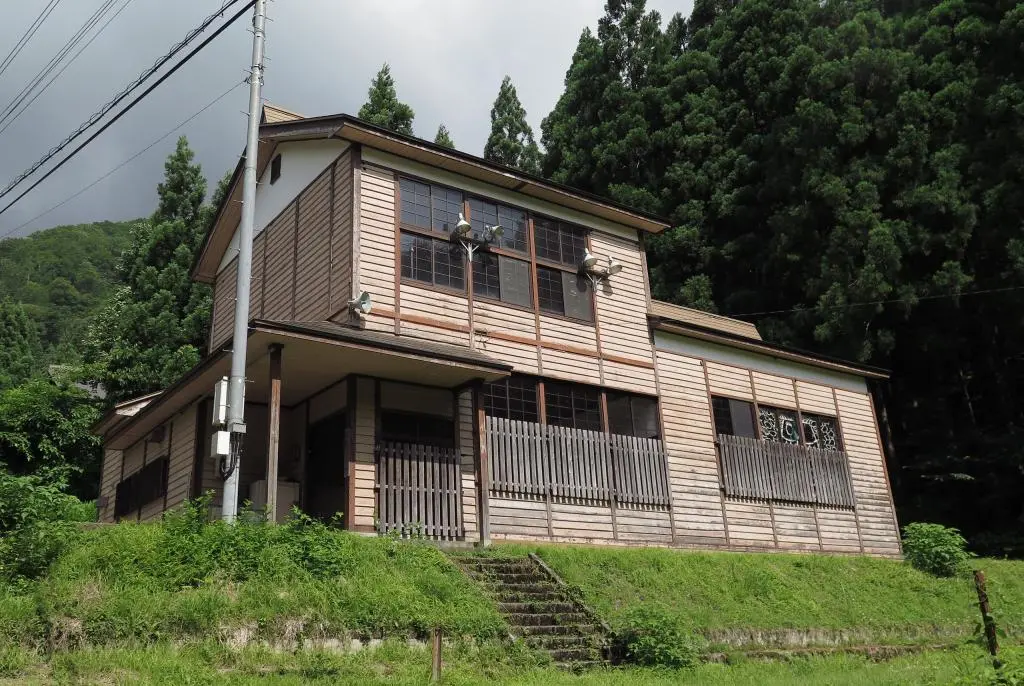
I'm not exactly sure when the school opened, but Sugio Branch school had its own branch school, the Donohara Winter Branch School. That school was completed in 1957, so the main branch must've been completed before. Both schools operated for less than 20 years before they were closed in March 1972. The reasons for closure were a combination of further rural depopulation in Japan and advances in transportation. Paved roads, bridges, tunnels, and snow sheds now connected most areas of Gokayama allowing for smooth daily travel. Schools had busses that could pick up the dozen or so students remaining in these pocketed areas.
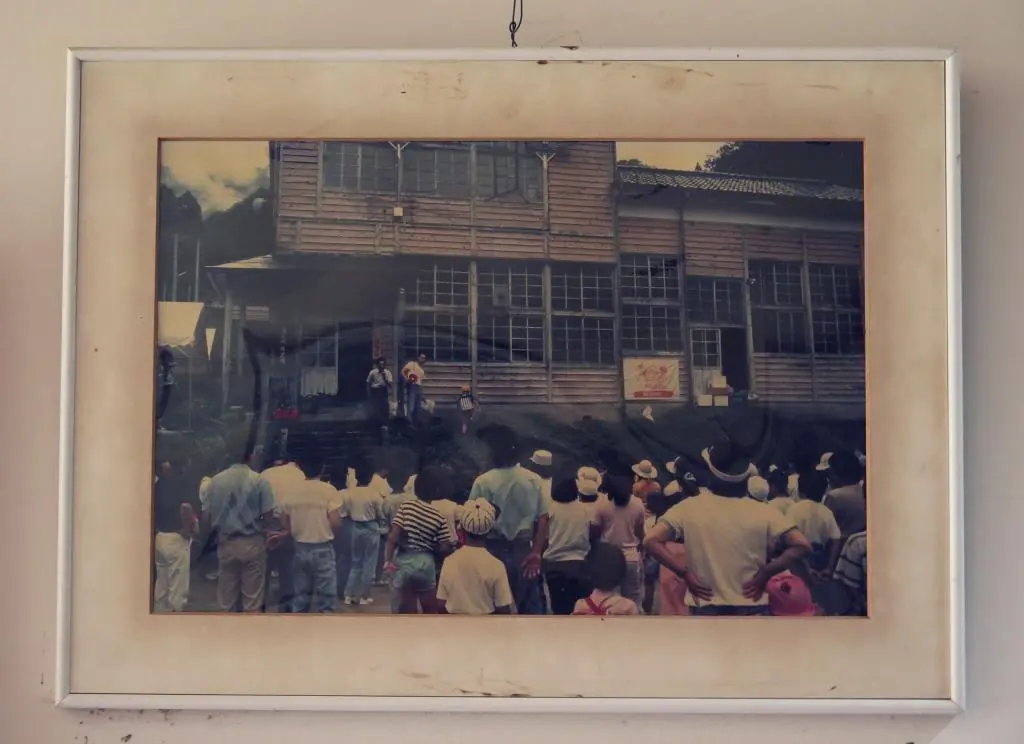
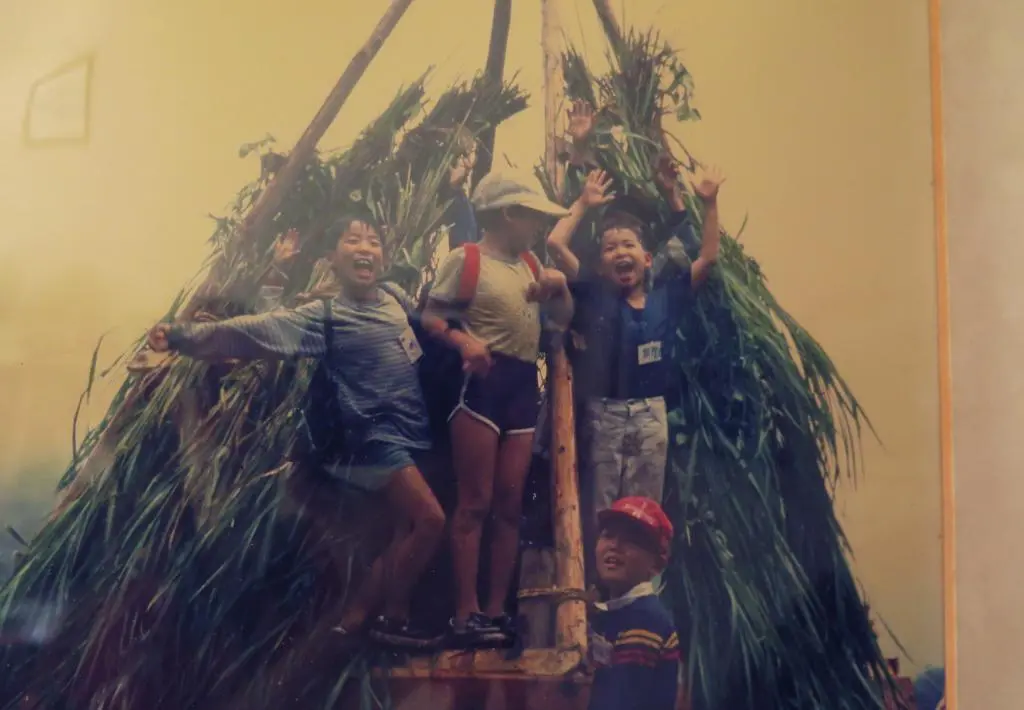
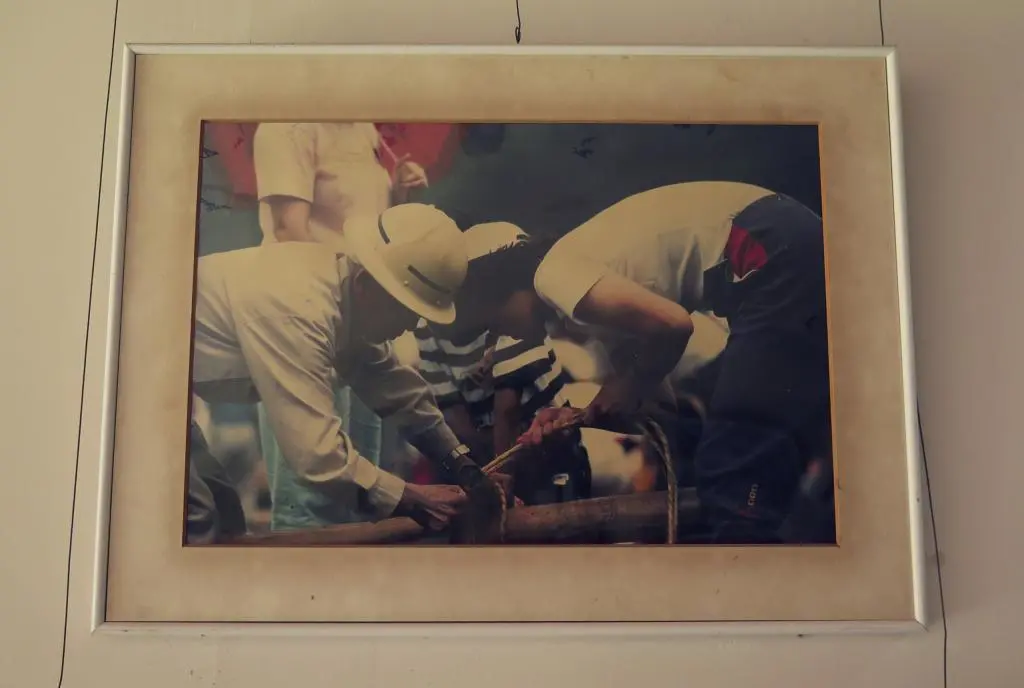
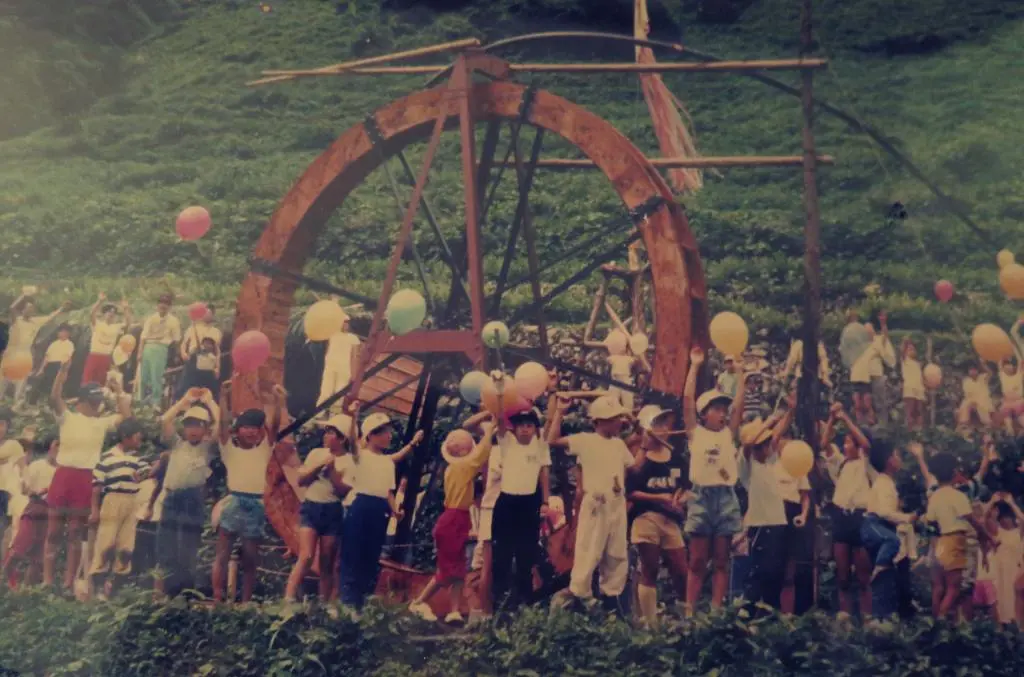
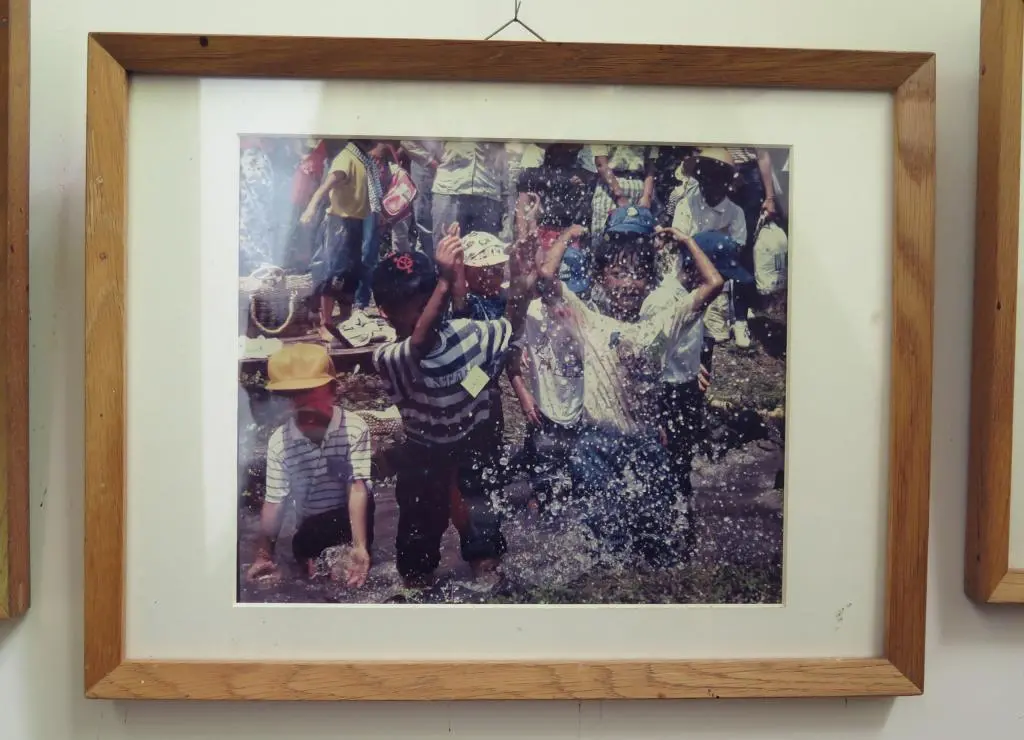
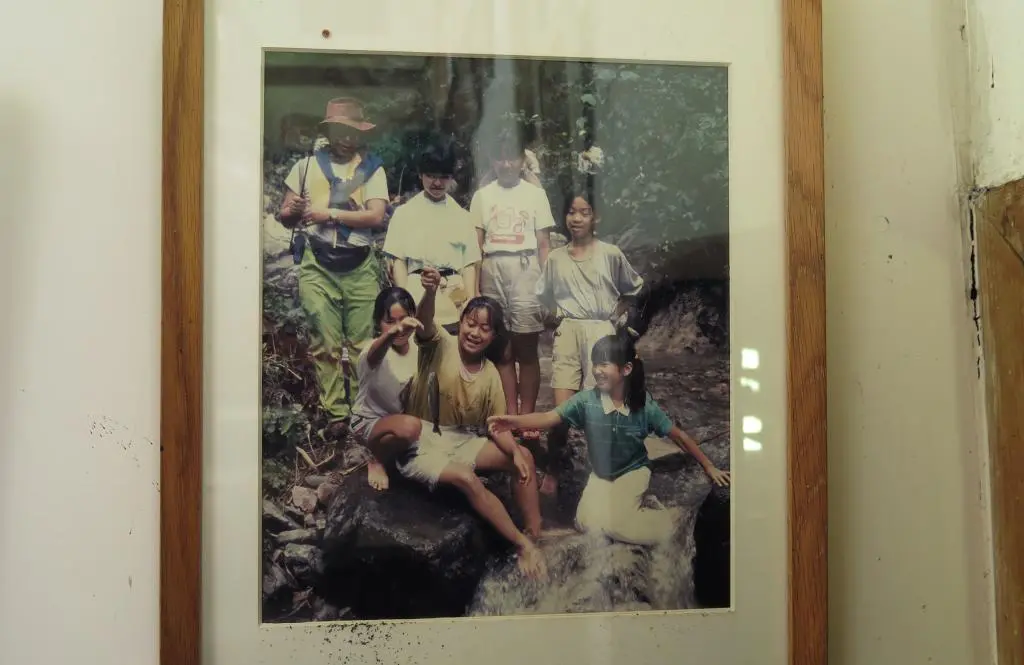
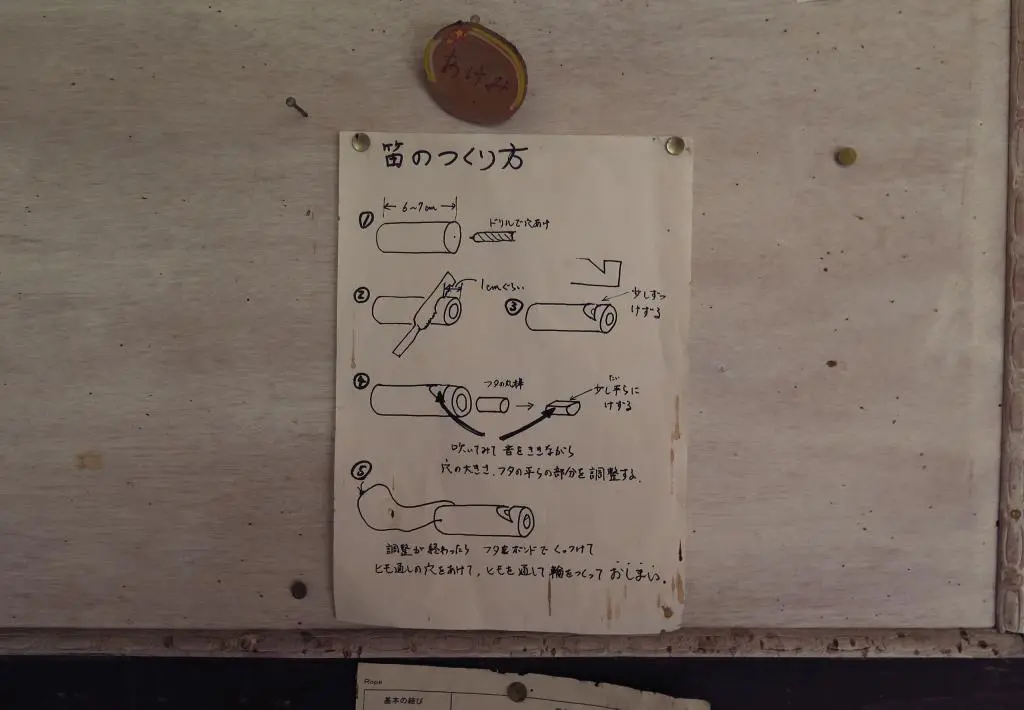
After its closure as a school, the Sugio Branch School continued to operate as a nature experience center. During summer, it seems like nearly all the older elementary students in the village visited the school to learn about woodworking and craftsmanship.
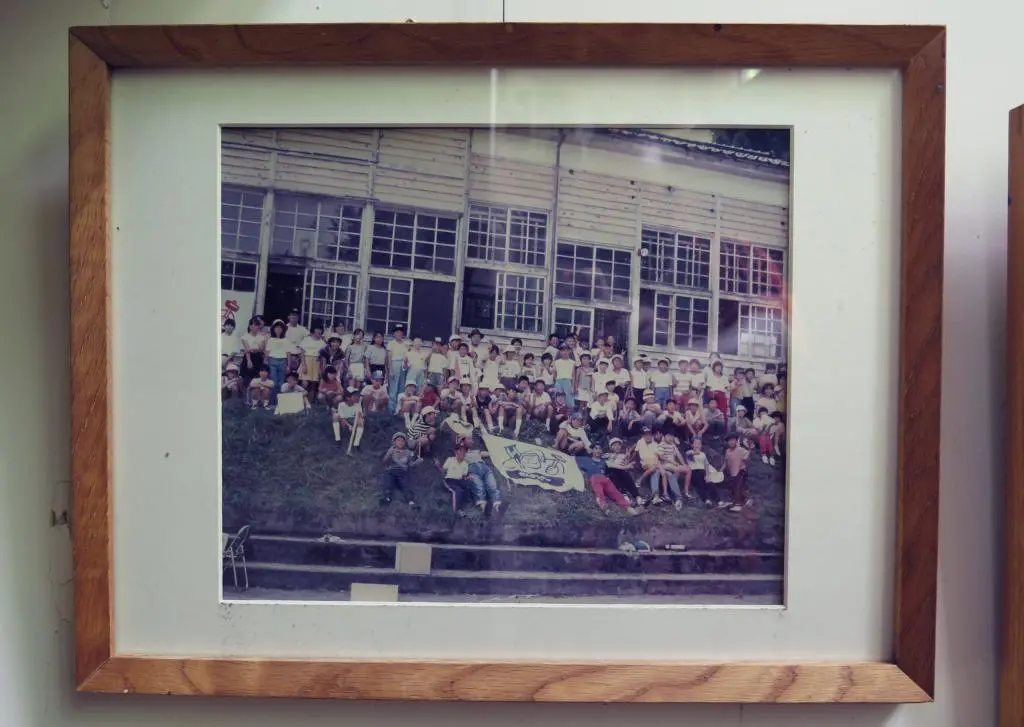
It's crazy how many children are in this photo compared to the population of the area today. This photo doesn't have a date, but I would guess it was the late 70s or early 80s. Since then, all the branch schools in Taira had closed, and Shimonashi ES and Higashi Nakae ES combined in 1999 to form Taira ES. 5 years later, municipal mergers were enacted across Japan and all areas of Gokayama merged with Nanto City. Taira ES was combined in Kamitaira ES in 2004.
Today, I would guess that the entire student population of Kamitaira ES is about the same or less than the number of students (maybe only sixth graders?) in the above photo.
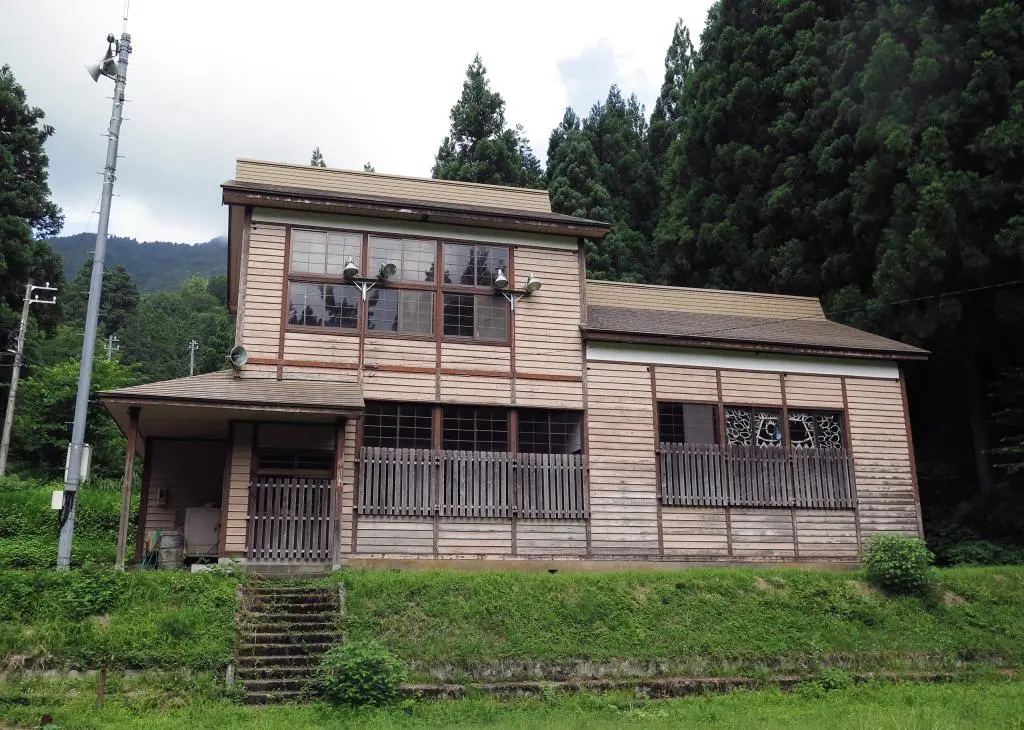
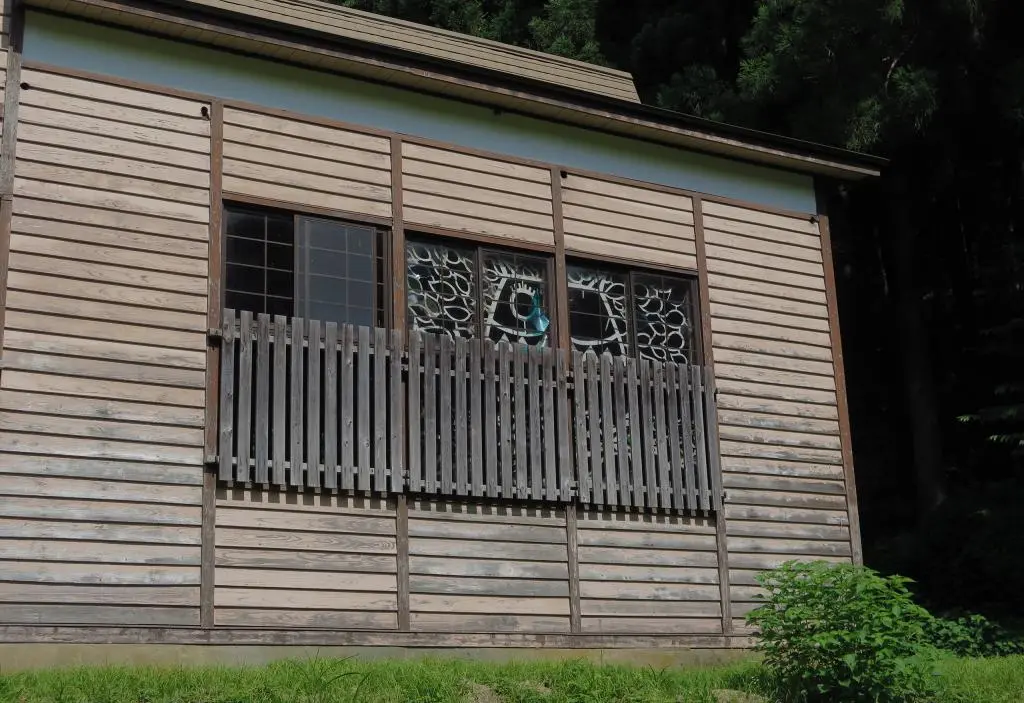
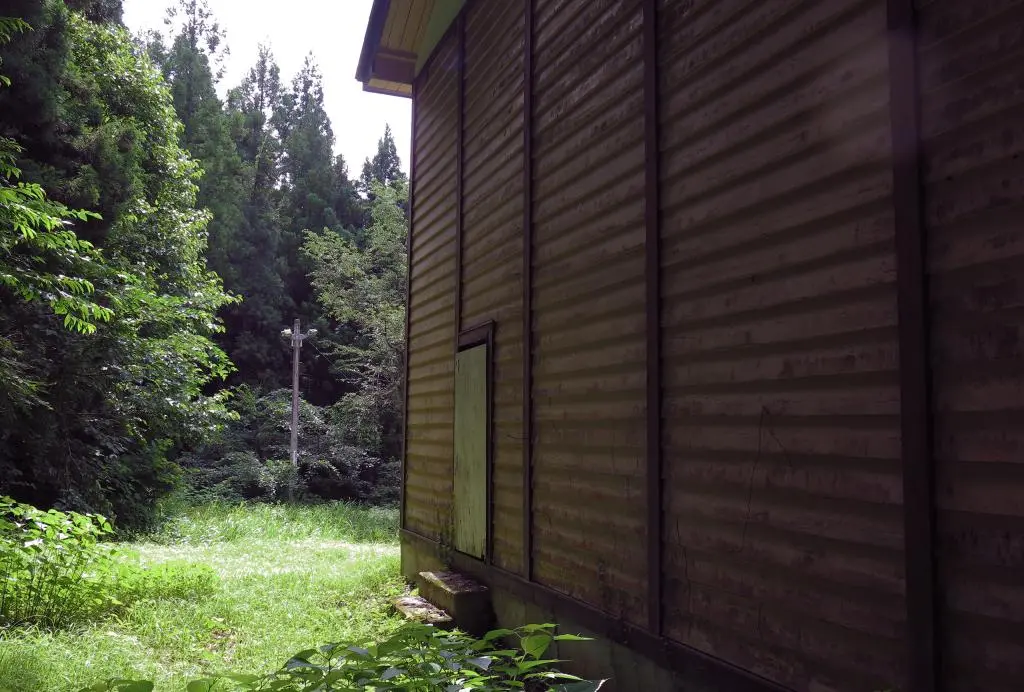
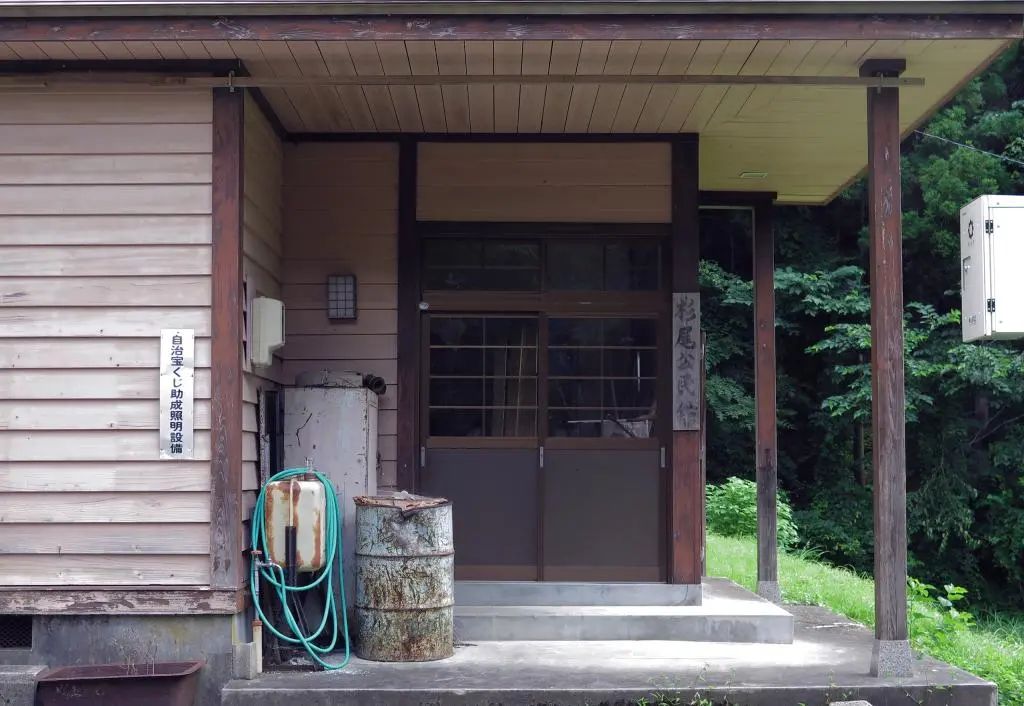
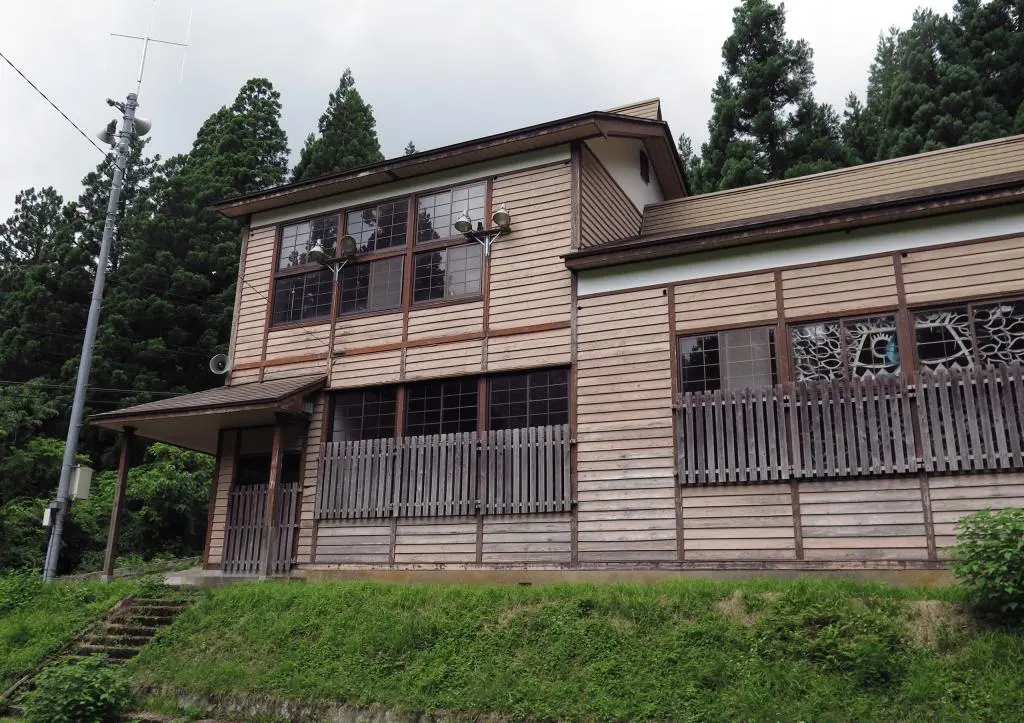
After a while, the building was designated as a community center. Now, it is derelict.
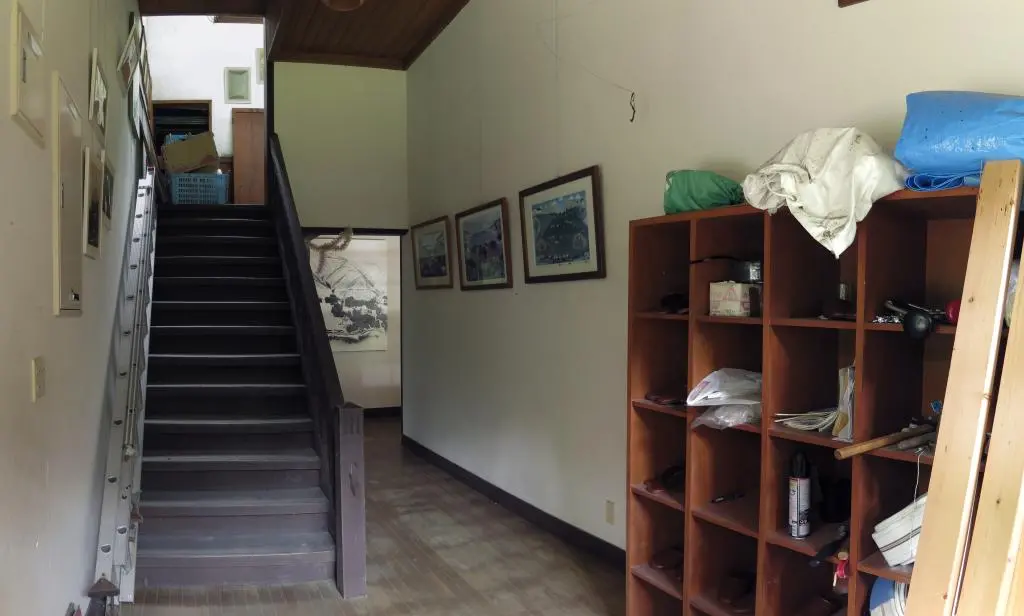
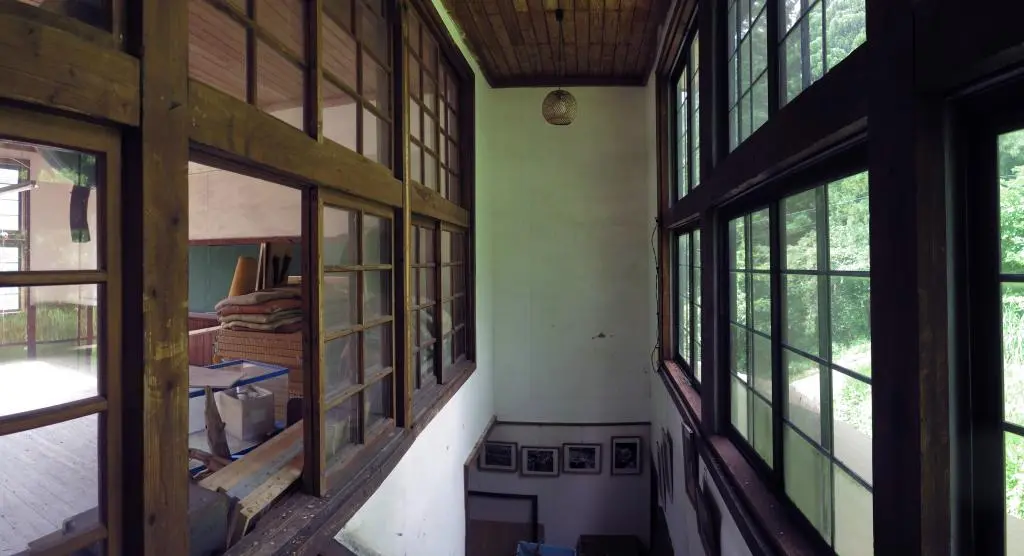
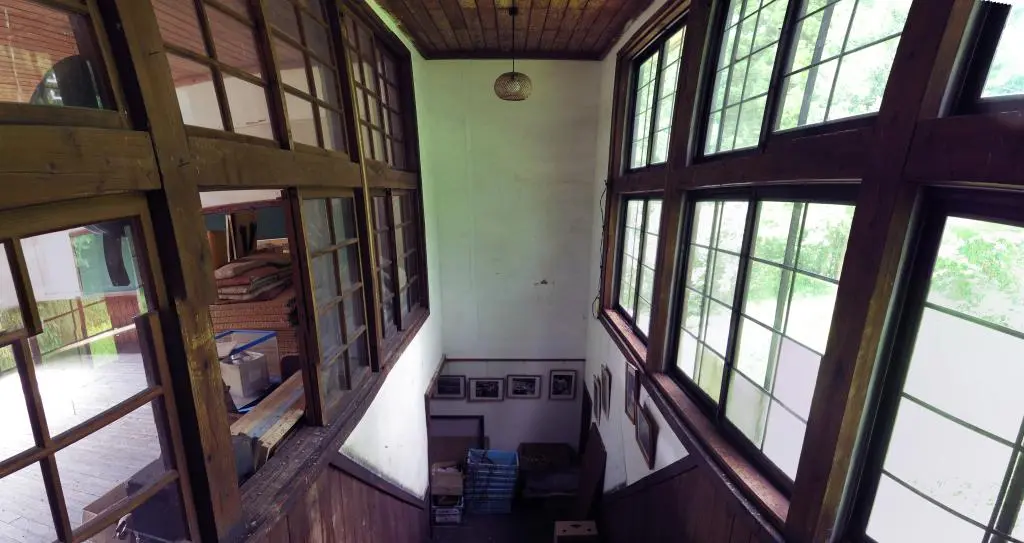
The door was opened, so I went inside and took photos.
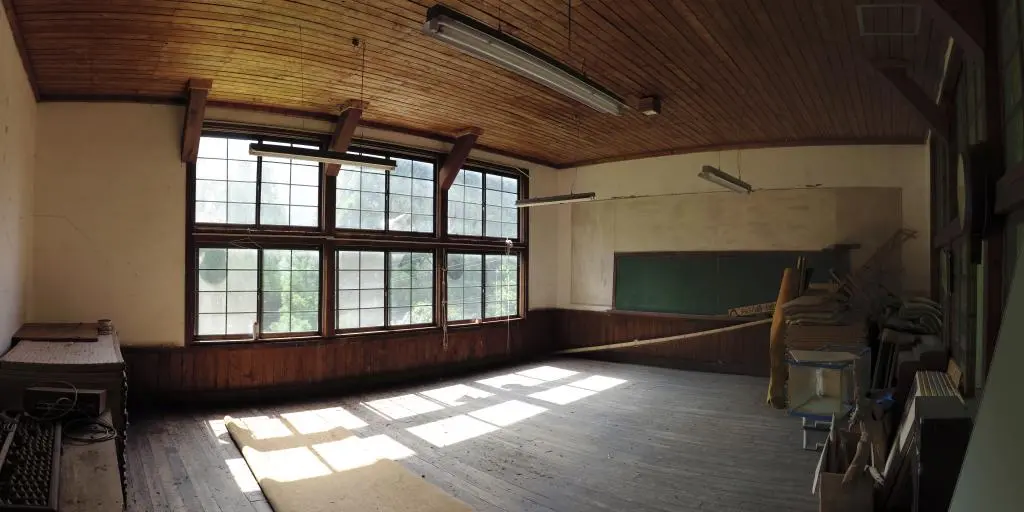
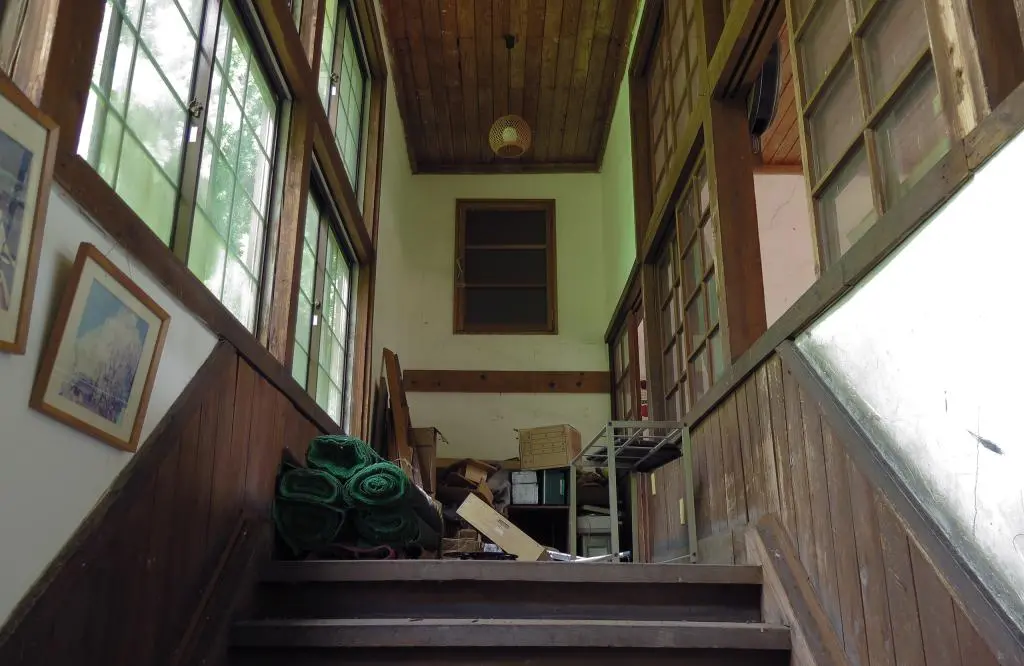
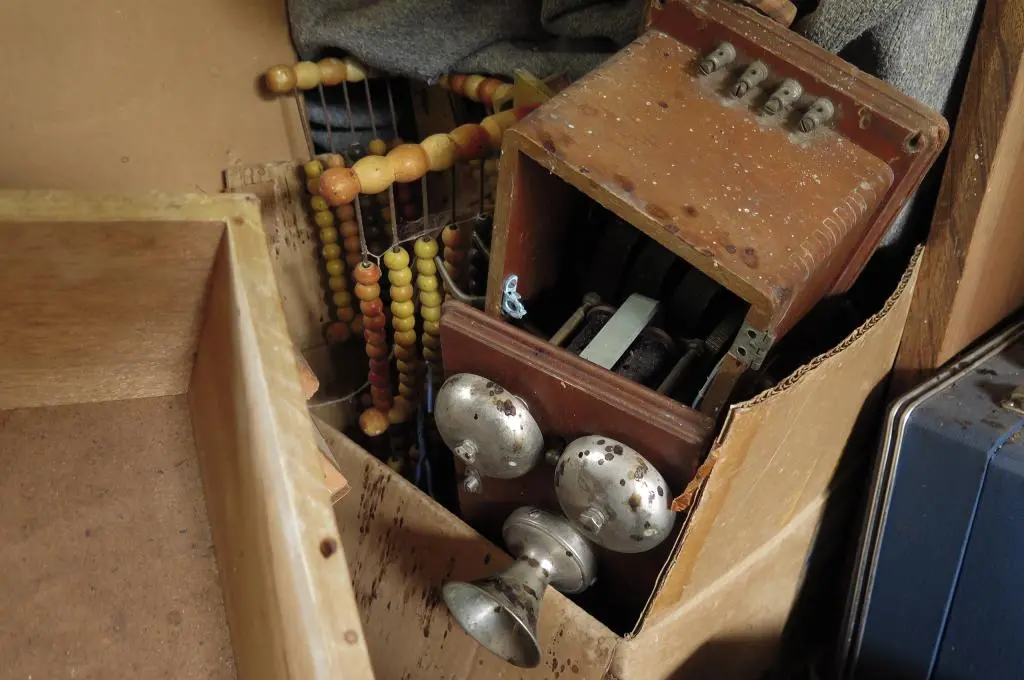
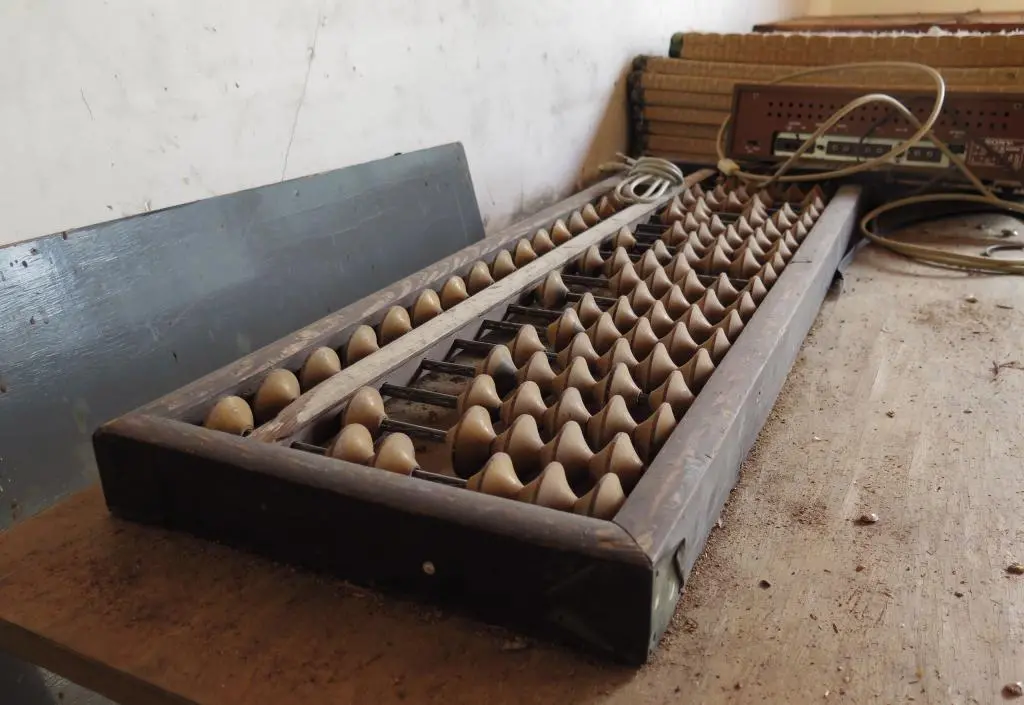
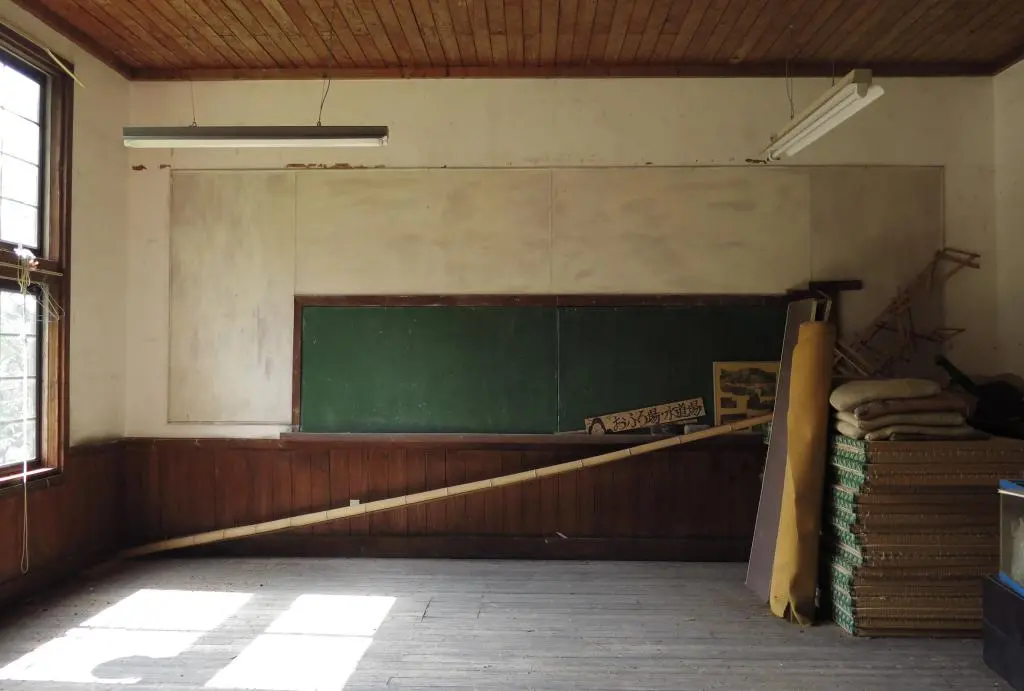
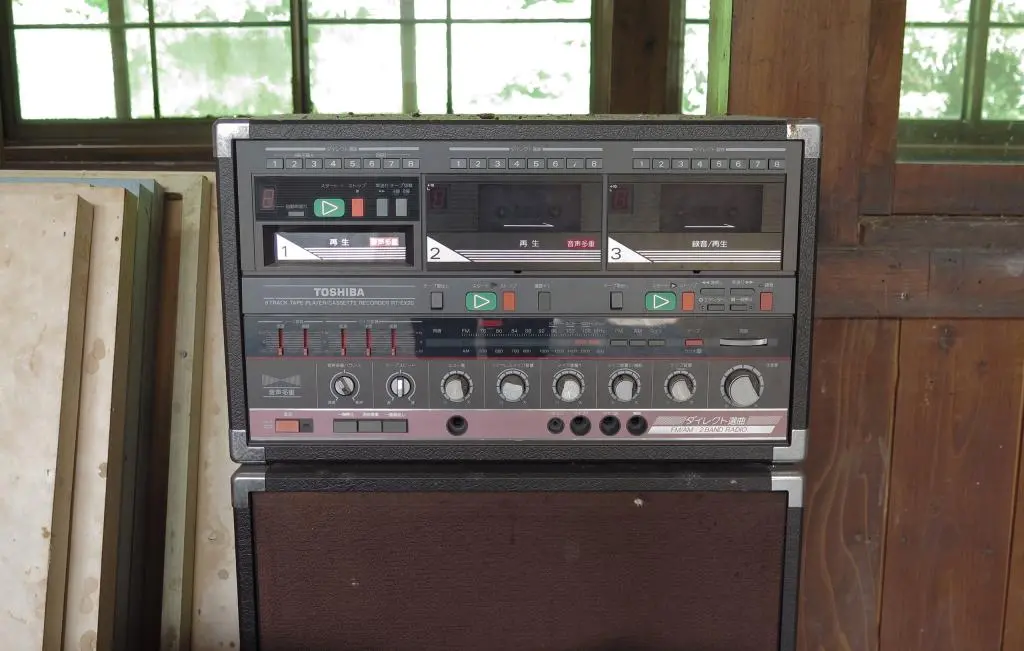
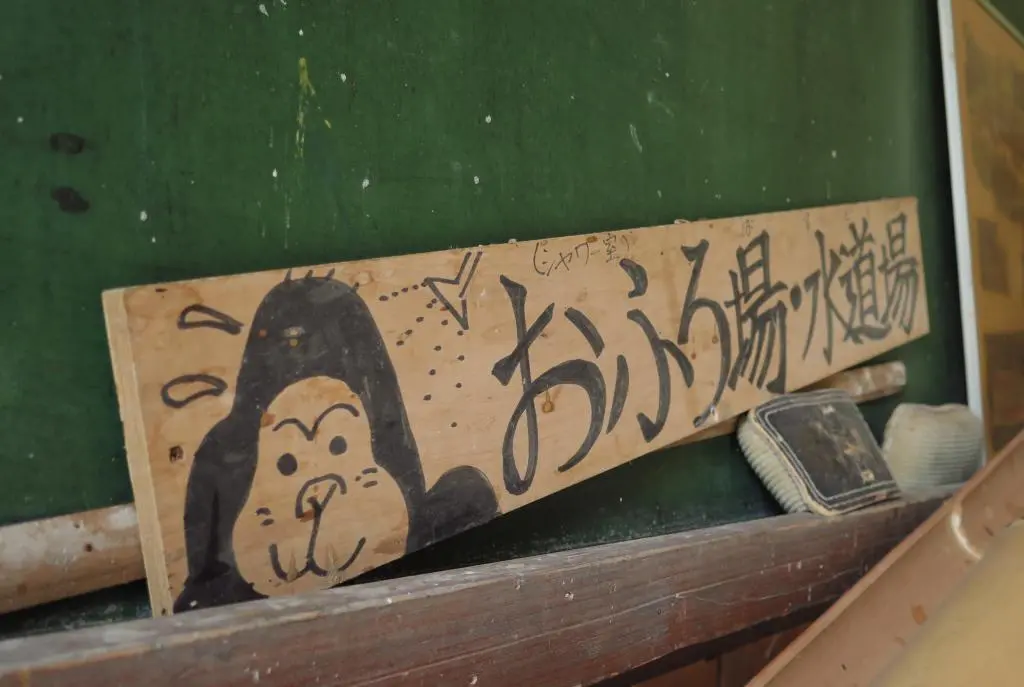
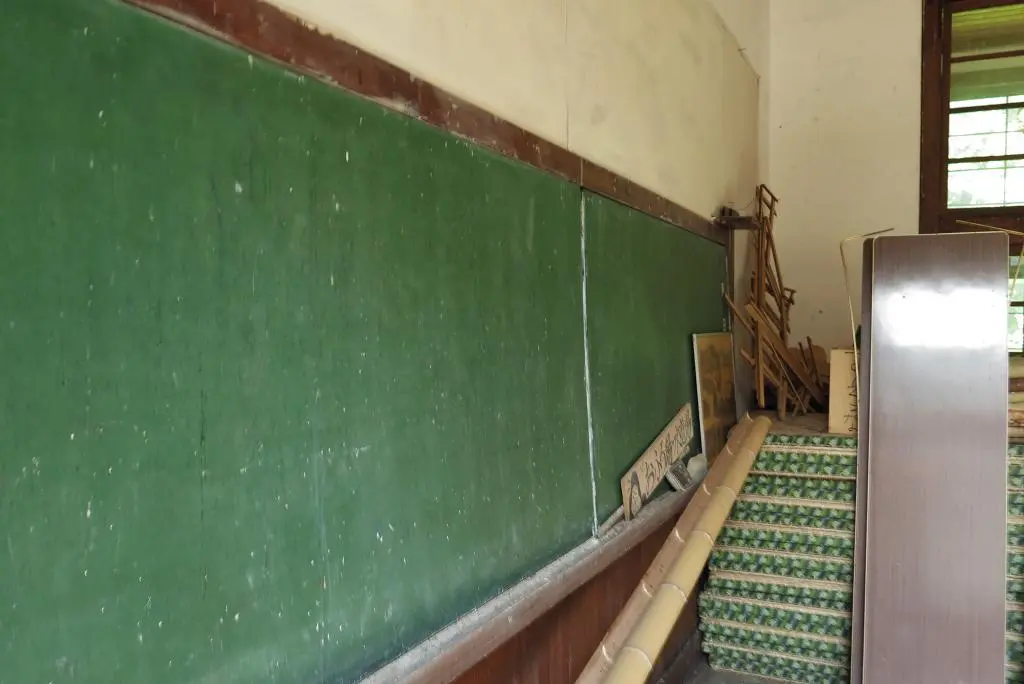
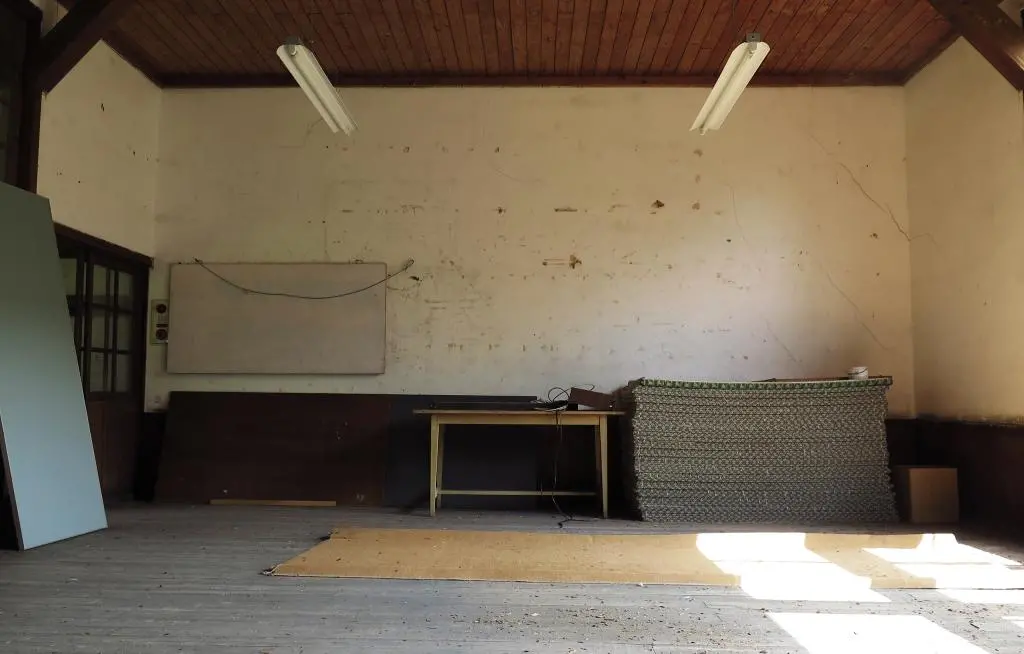
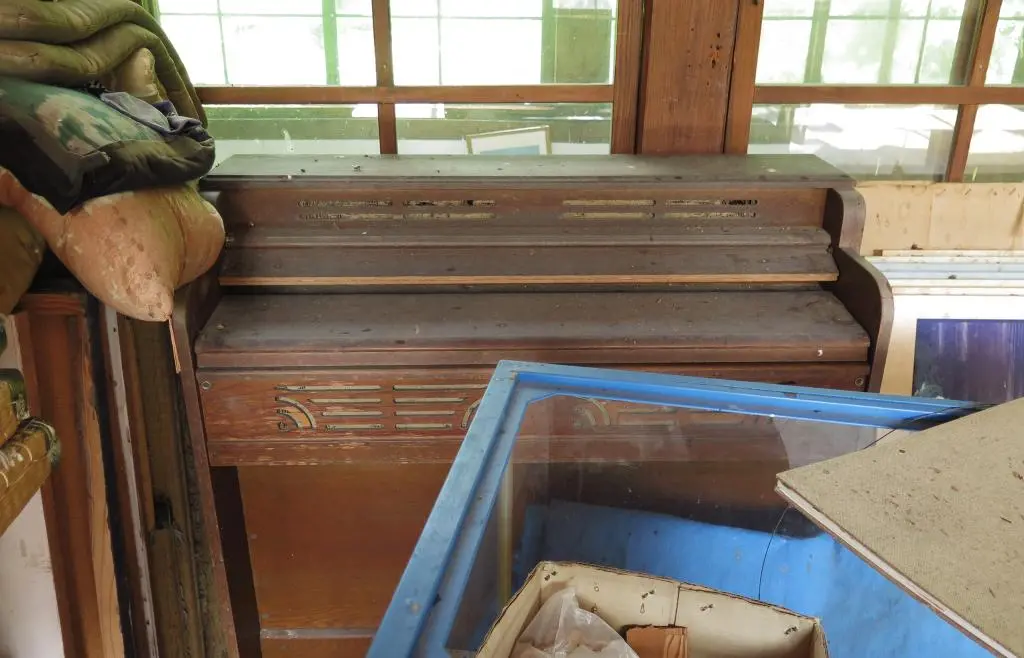
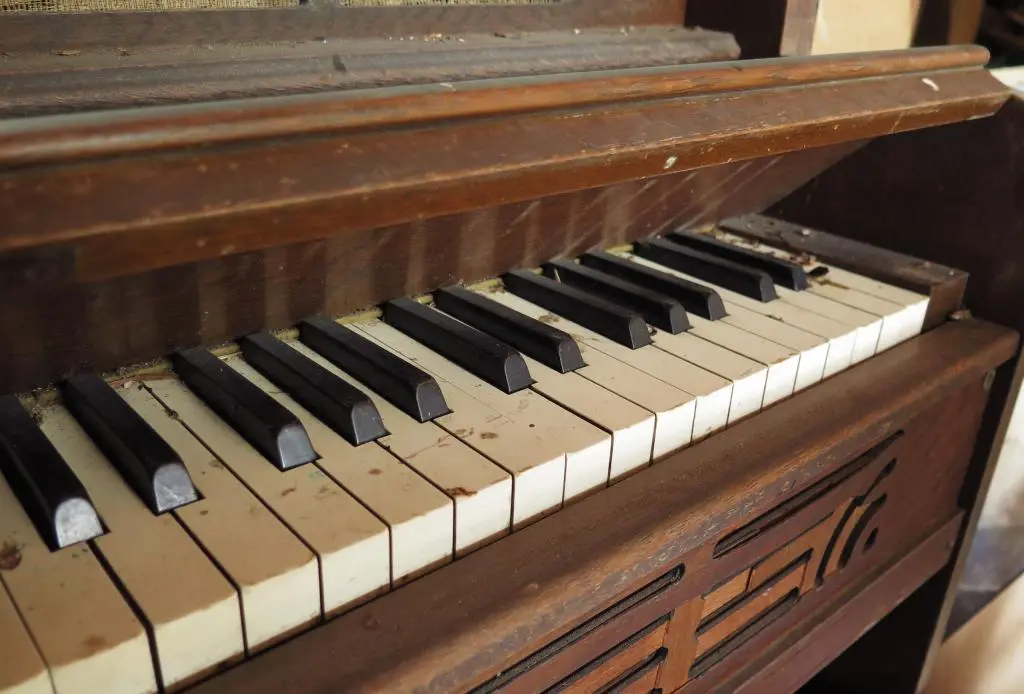
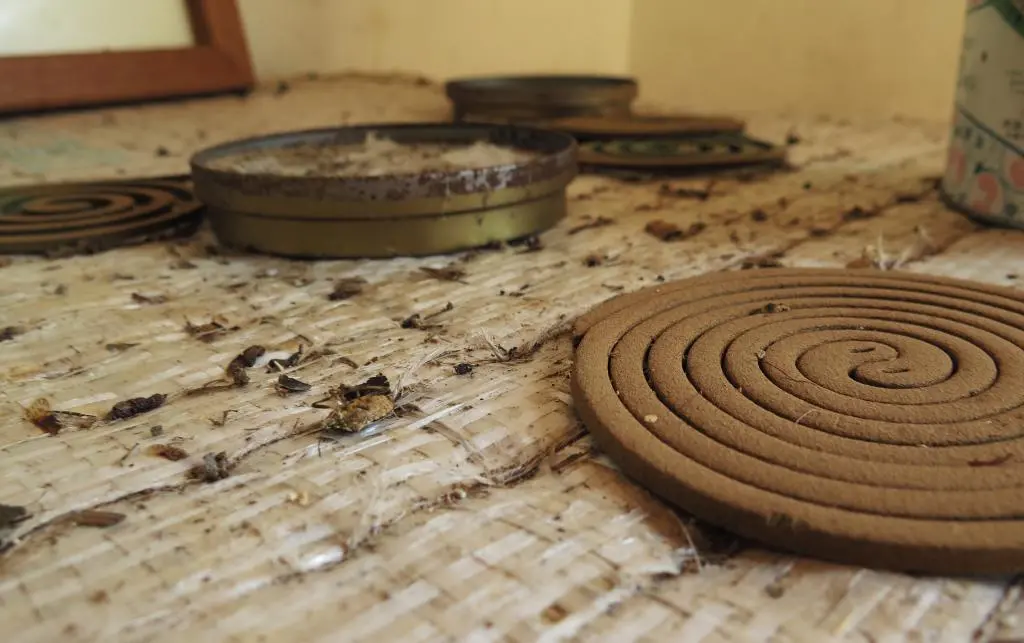
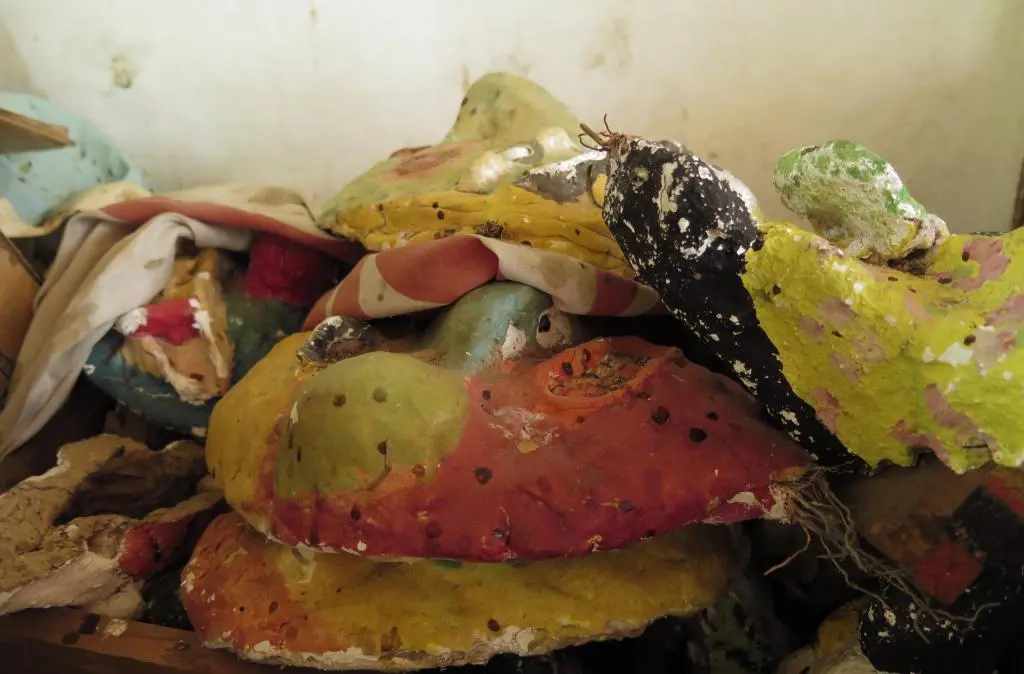
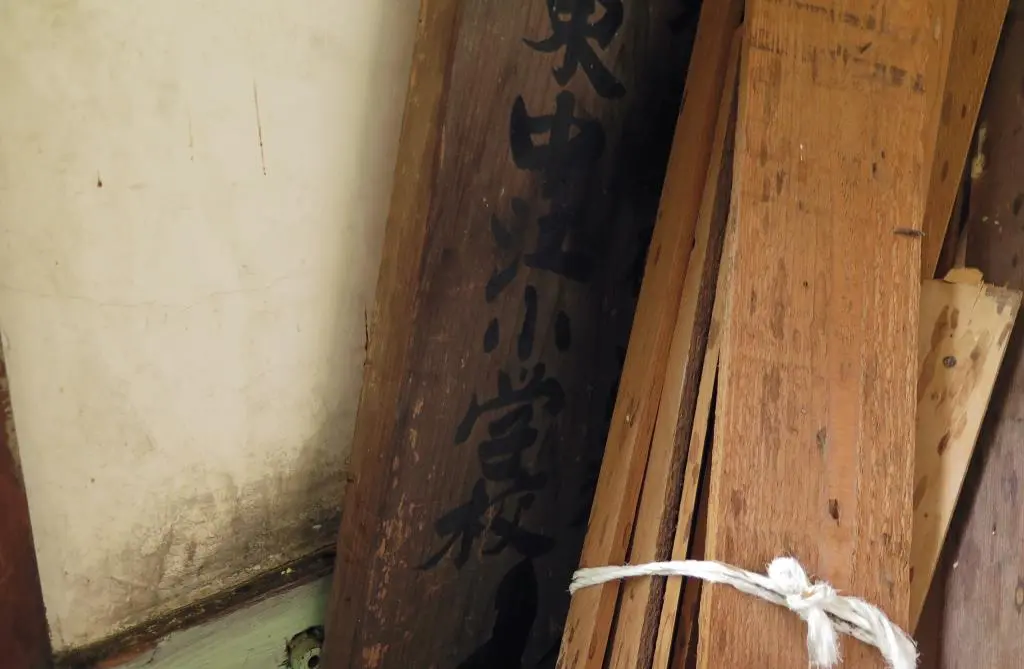
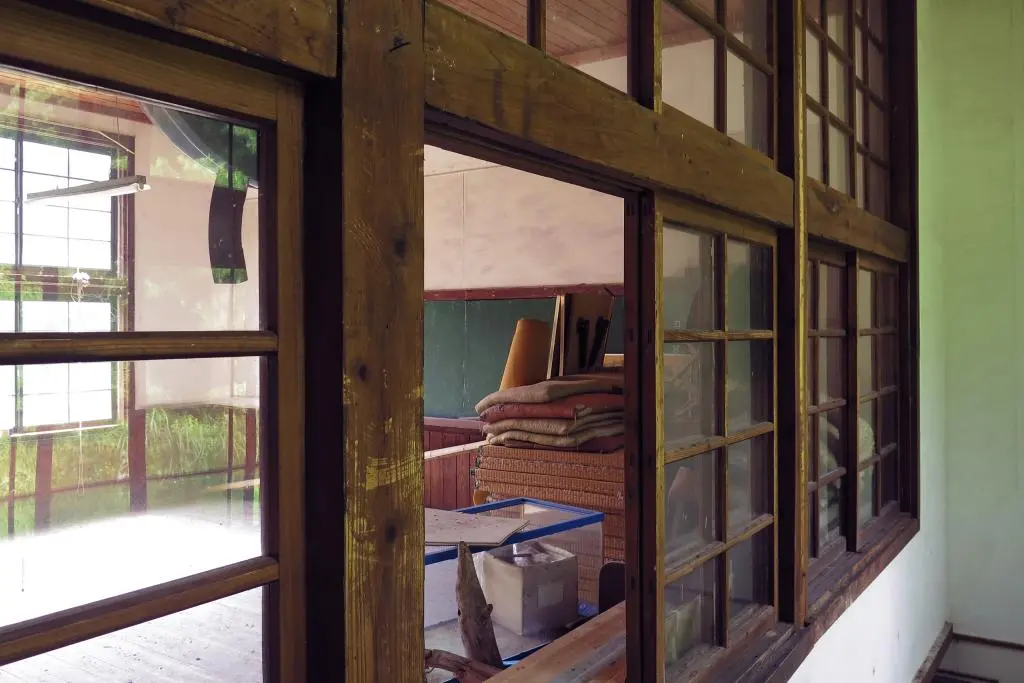
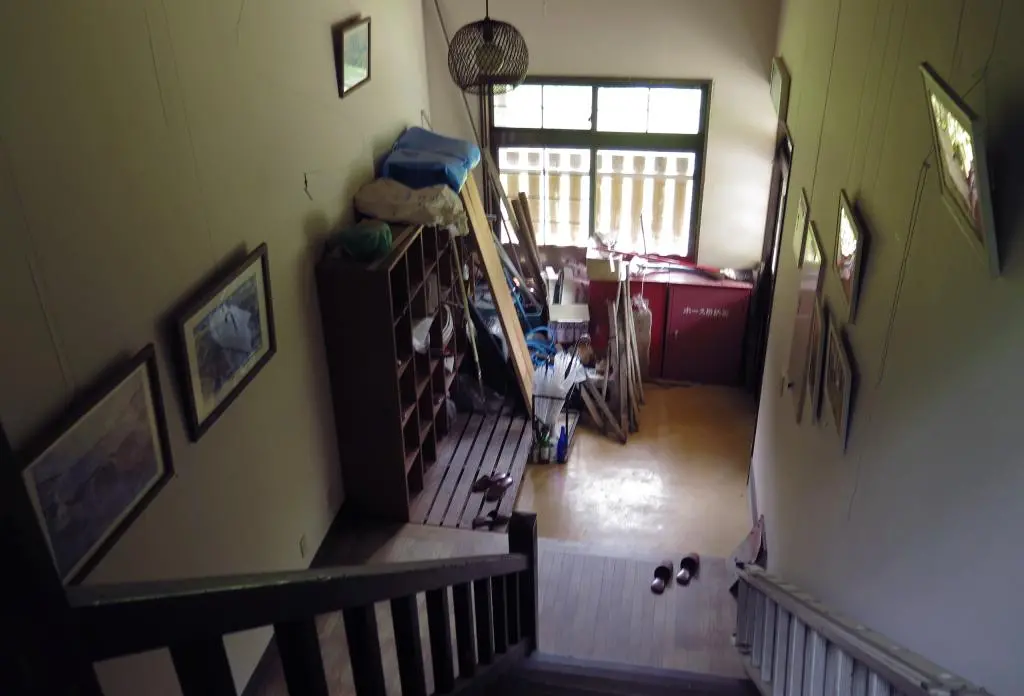
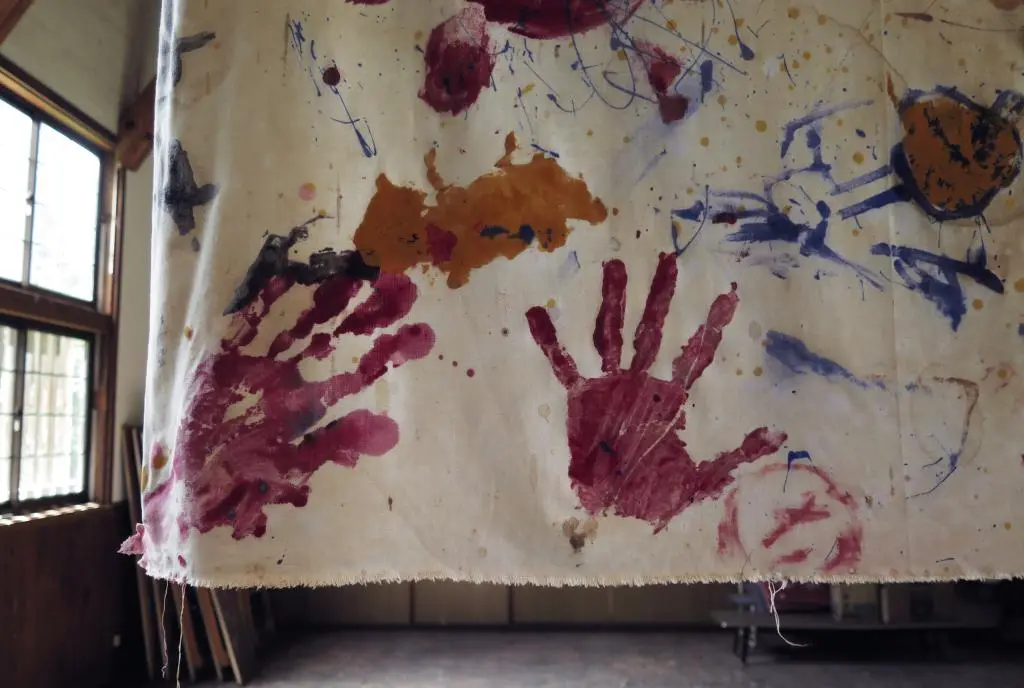
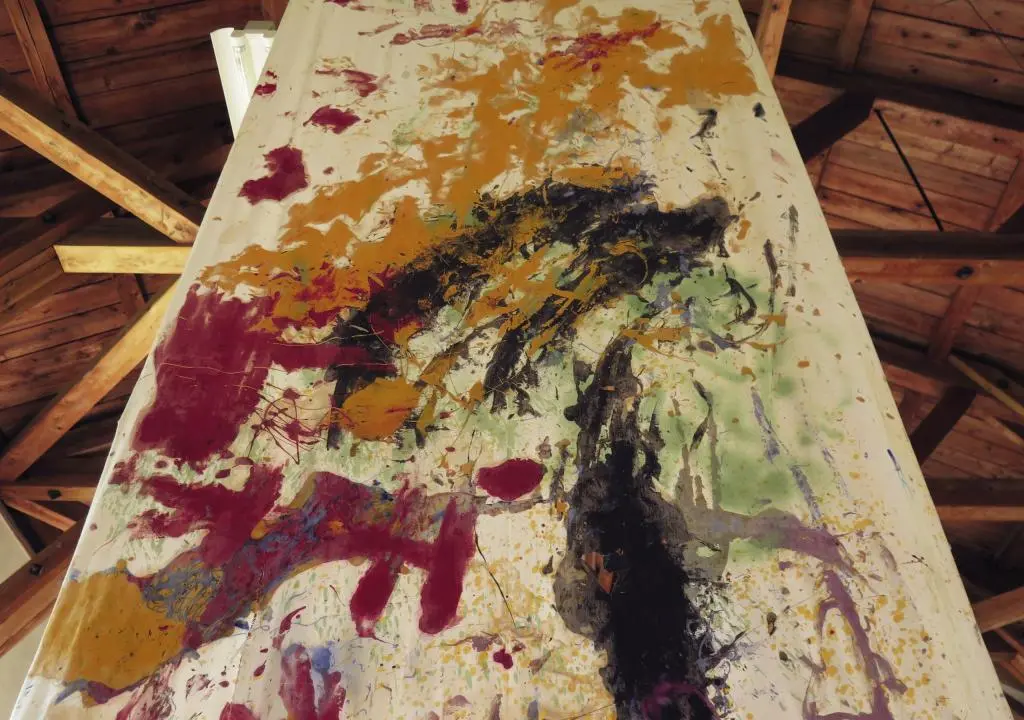
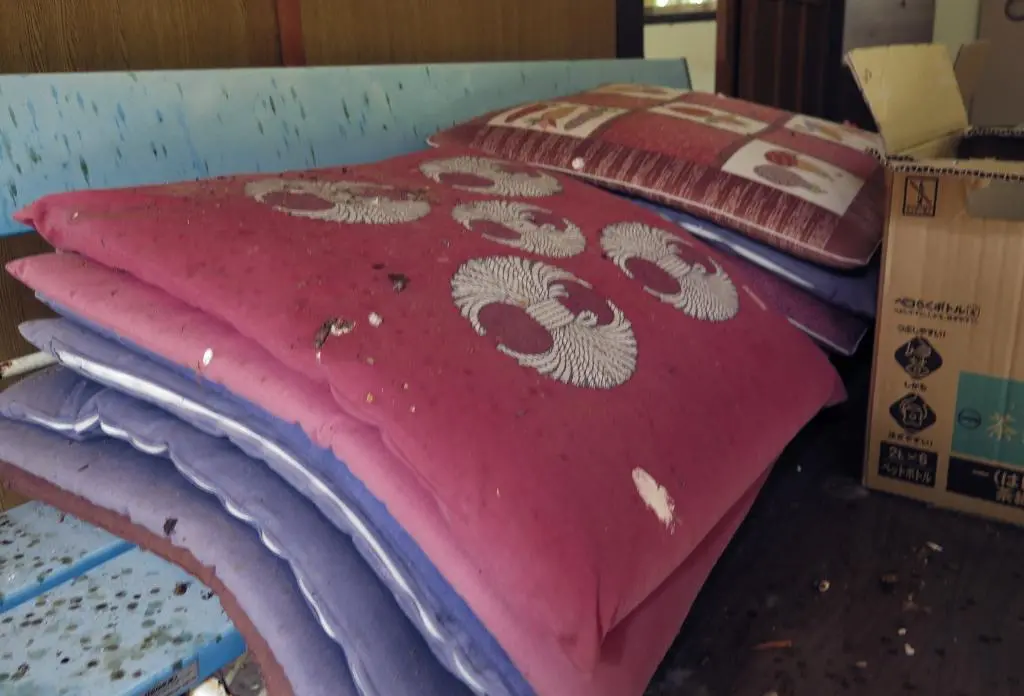
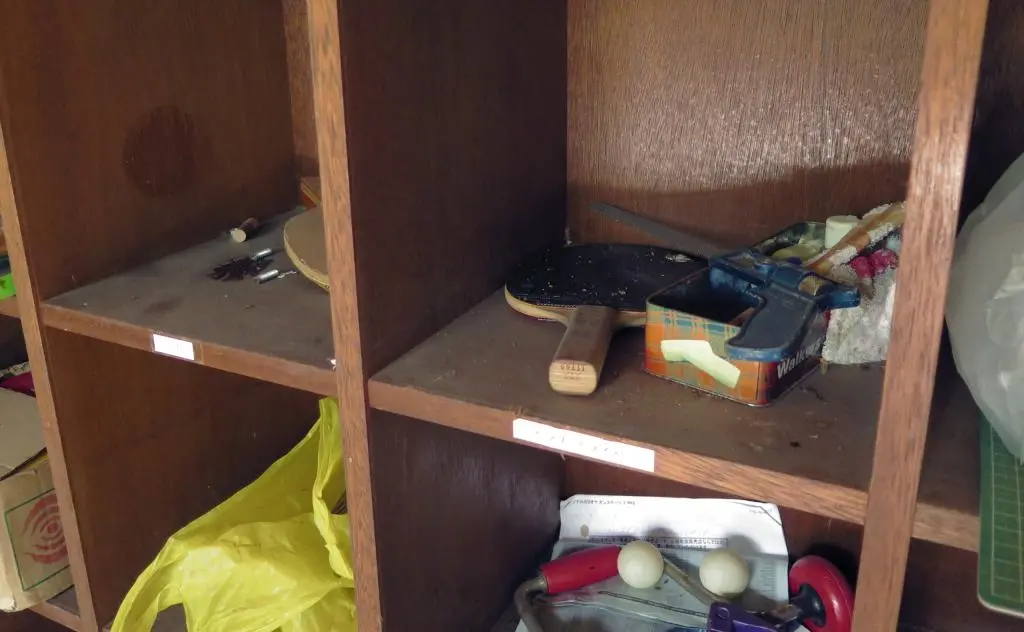
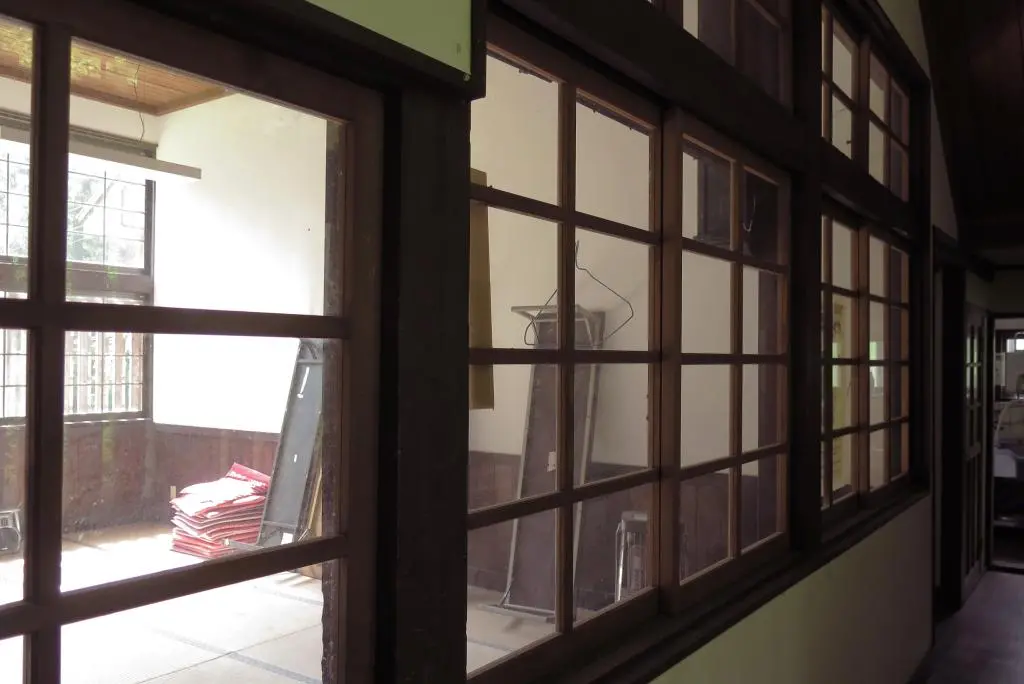
Upstairs, there was an open classroom with rotting tatami mats in one corner and some crafts and other equipment in another corner. Among the equipment was a PA system, some crafts, and the old signboards for the school.
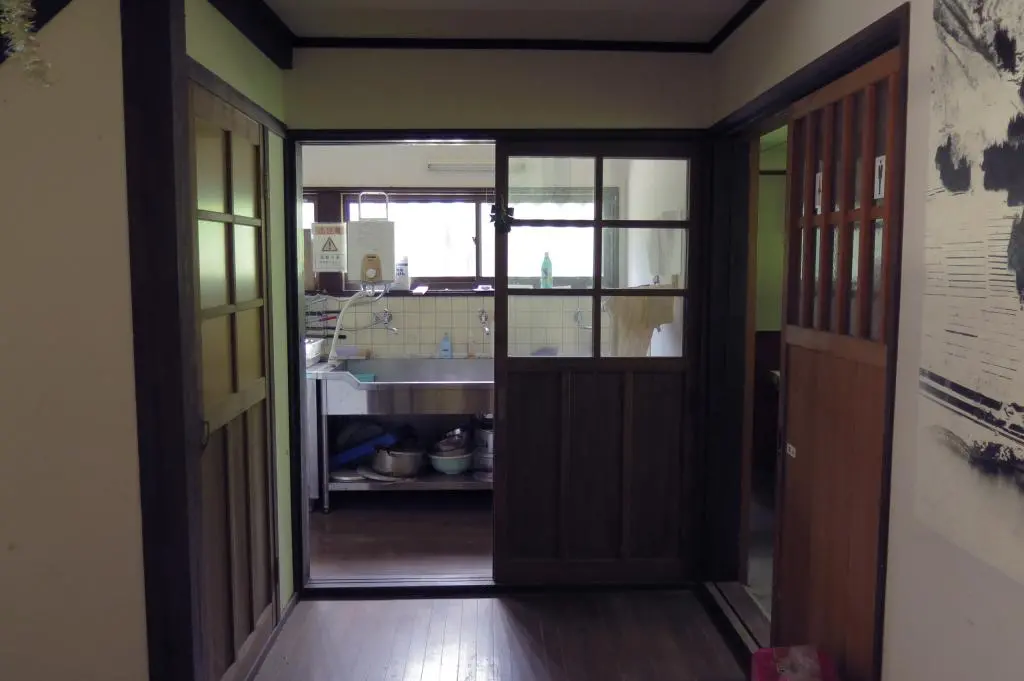
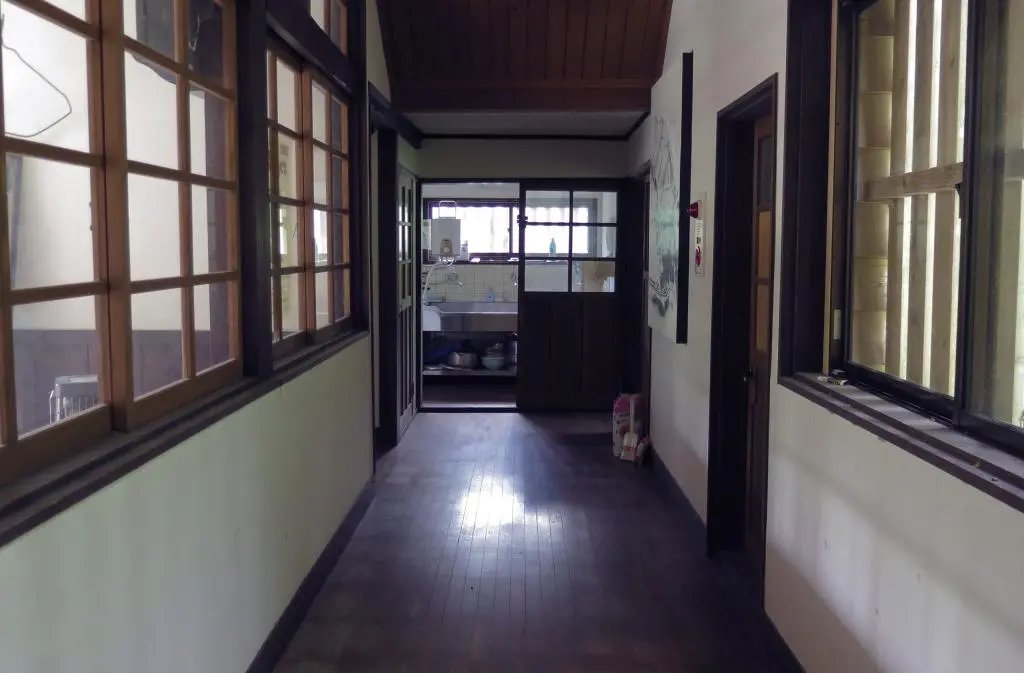
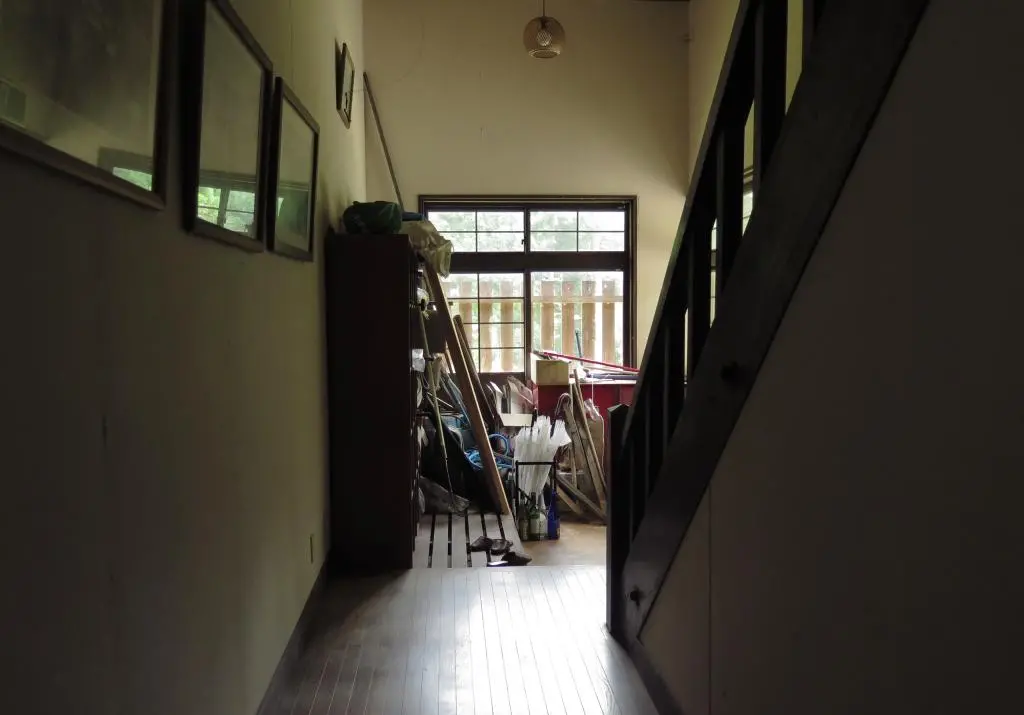
Going back downstairs, underneath the staircase was a kitchen that was fully stocked with glassware, silverware, and other kitchen attire that could be used to host an enkai (drinking party). The eldery members of this now small neighborhood probably used the building to get together every year, talk about happenings, and then have a party afterward. (All organizations and communities do this in Japan.)
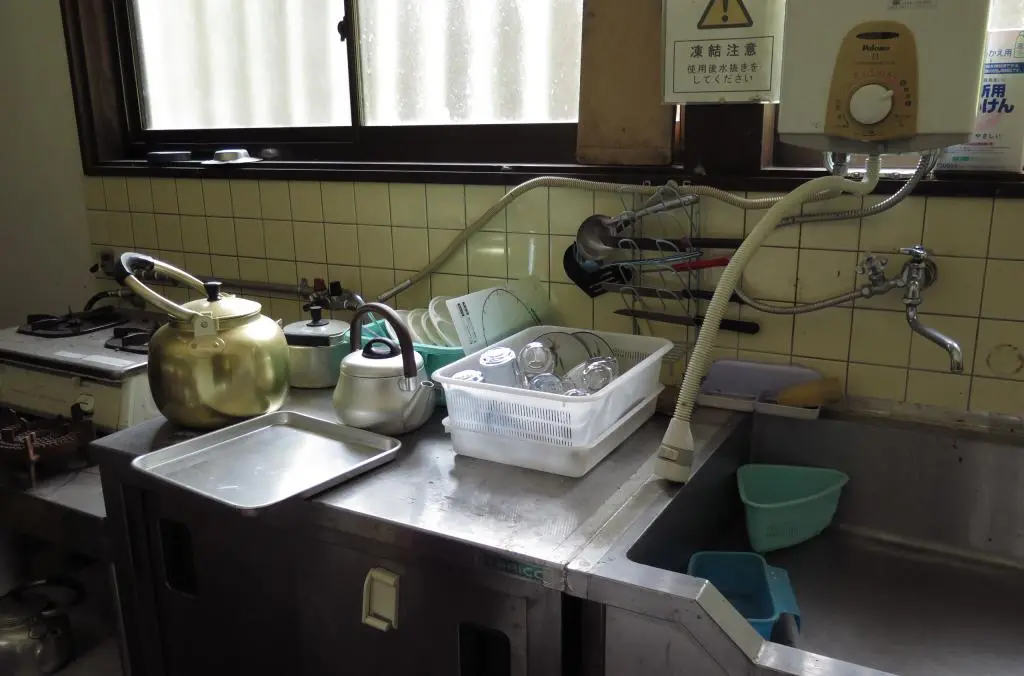
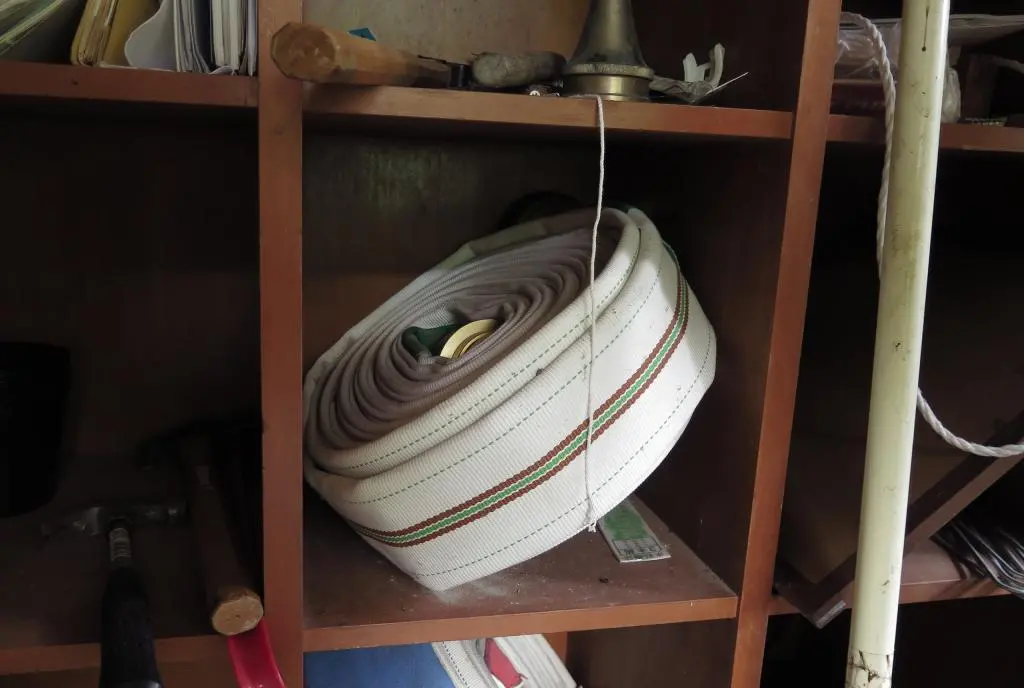
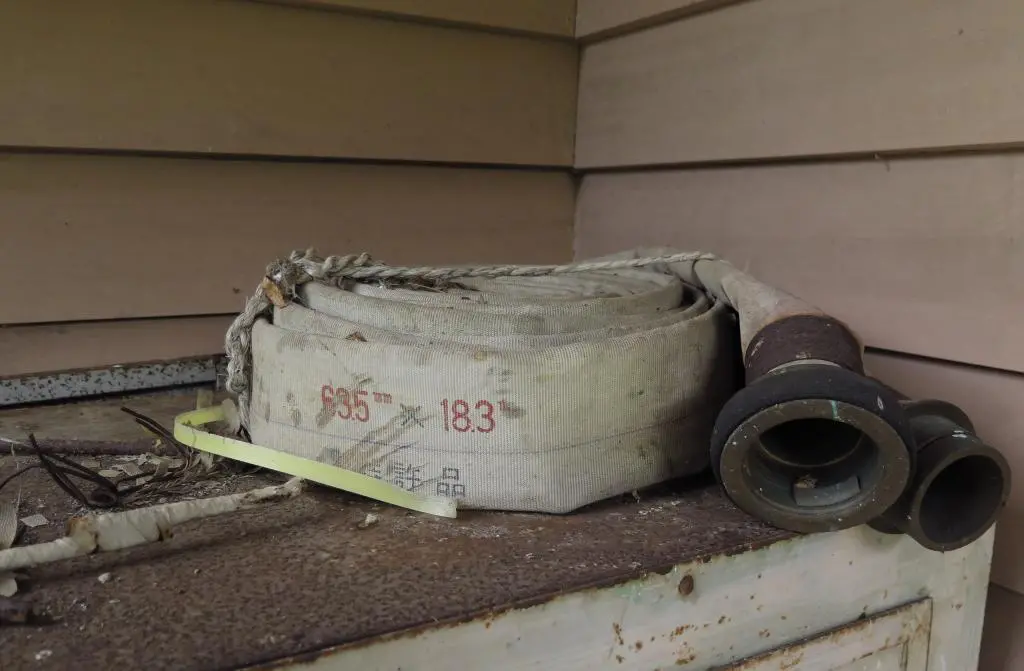
There were glasses in the drying rack, which seemed like people were still probably using the kitchen. There was a lot of firefighting equipment near the entrance, so maybe the volunteer firefighters used the sink for water after doing drills.
The kitchen is one of the oldest parts of the building. While all schools have their own kitchens, branch schools were unique in that homeroom teachers would live in the buildings. Just as weather would make it dangerous for students to travel to the main school, it would be dangerous for teachers to make the trek to the branch school each day. So, while the branch school was in use, the teacher would live there.
There was a 5-point scale used to determine the remoteness of a branch school. This grading was determined by how difficult travel would be to a grocery store, post office, and other social facilities. Each full point on the scale added a bonus factor to the teacher's salary for the time they had to live in the school.
Sugio wasn't too far away from the main village, so it was probably rated as a 2 or 3 at best.
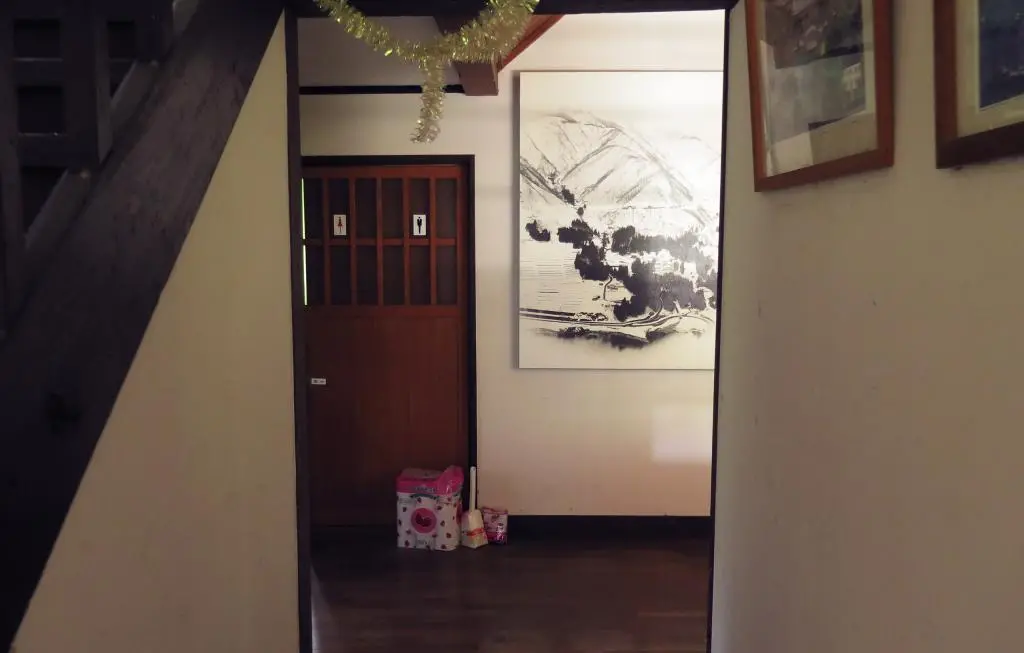
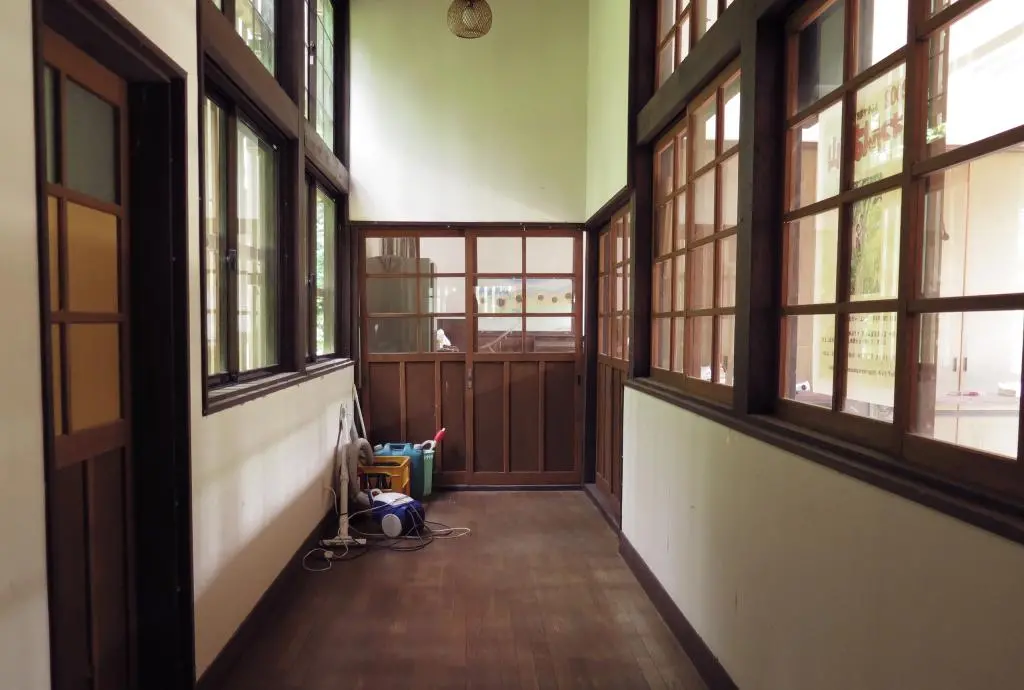
Next to the kitchen were the bathrooms. They seemed slightly newer than the kitchen, so I think they were converted at one point. This is probably where a bath was for the teacher living here.
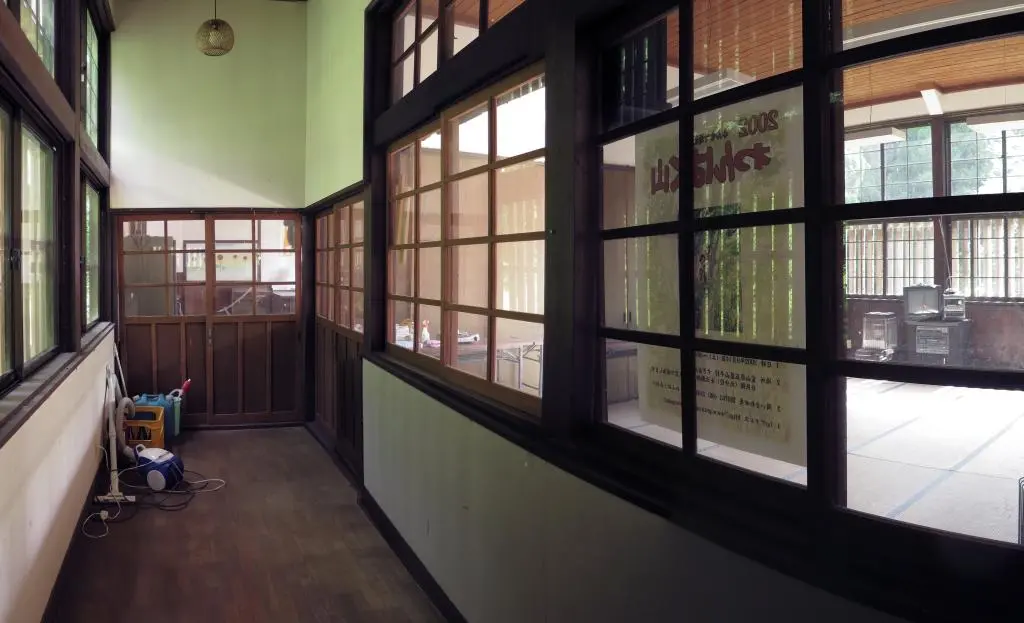
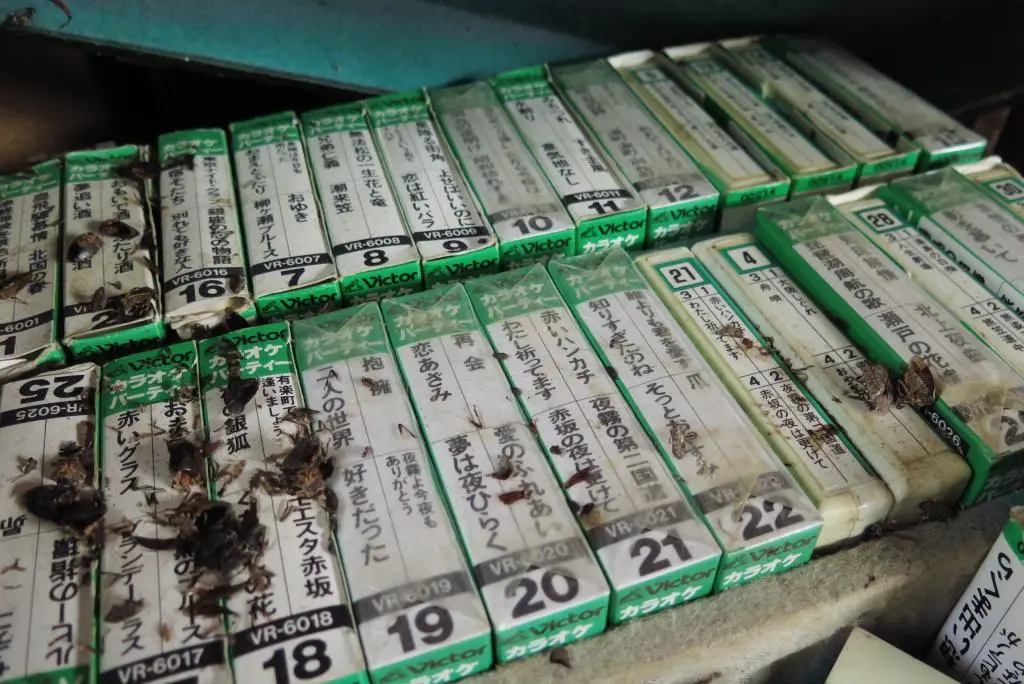
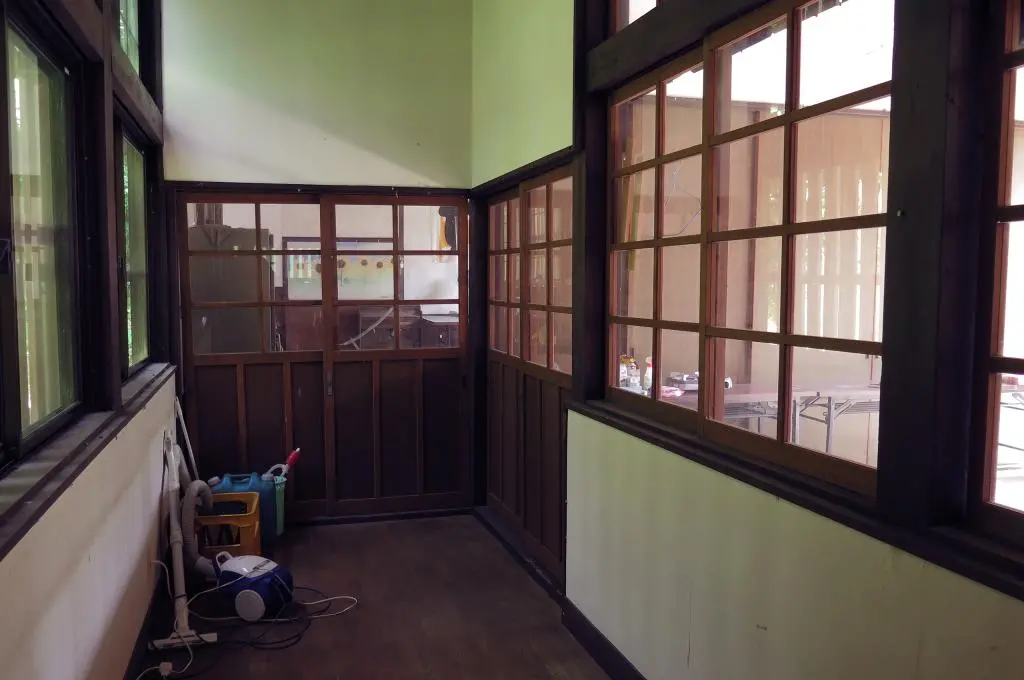
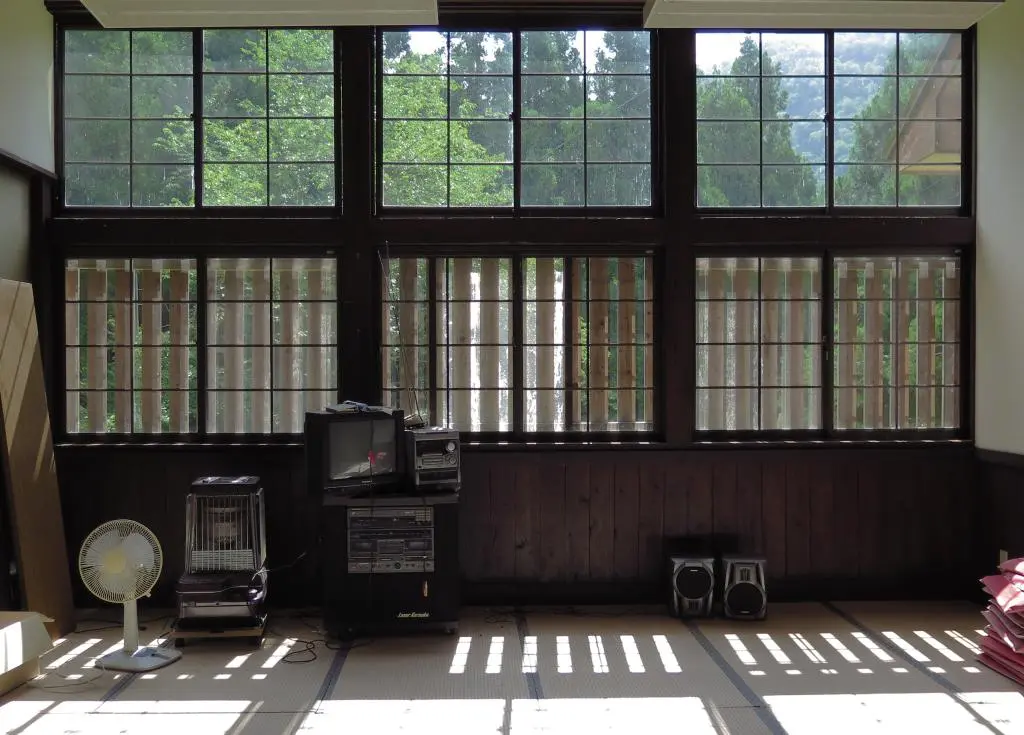
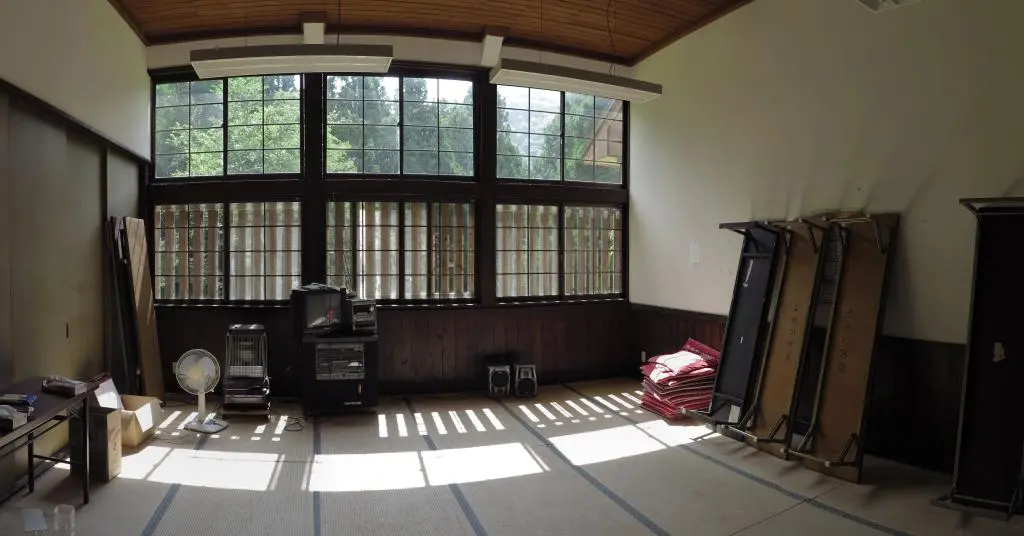
Going down the hall there was a really clean room. It was probably used recently for a community meeting and drinking party. There were tables and cusions. There was also a karaoke machine. :) I suppose the building wasn't so derelict afterall.
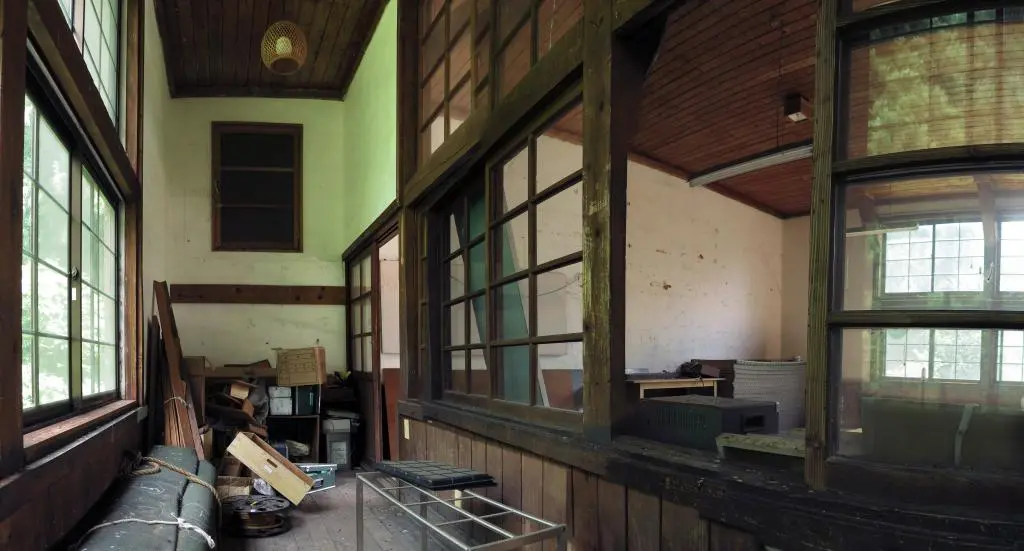
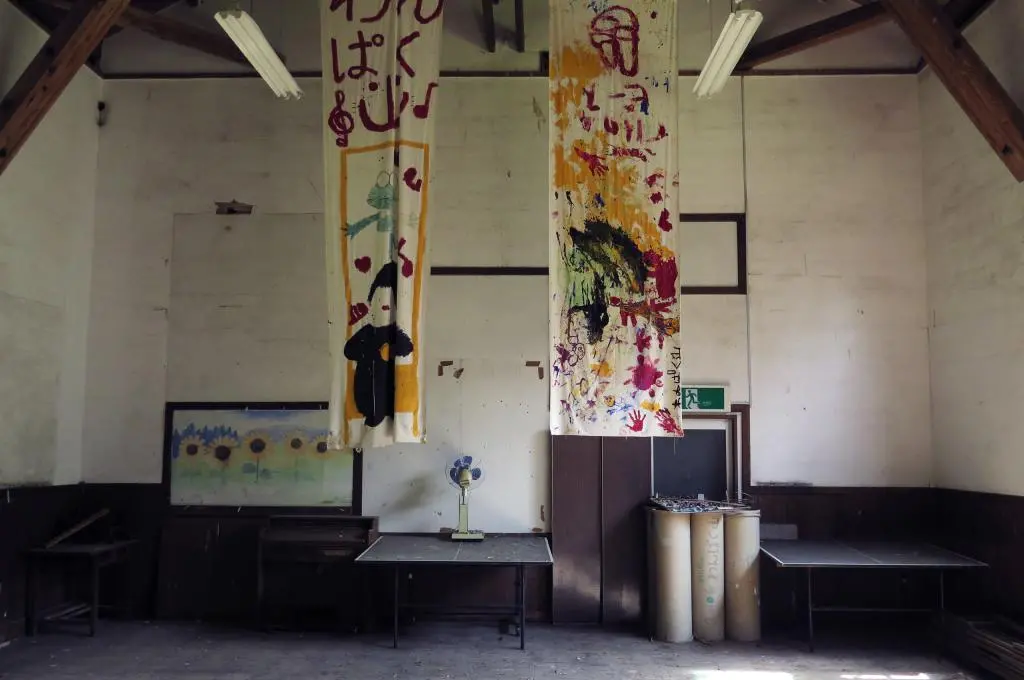
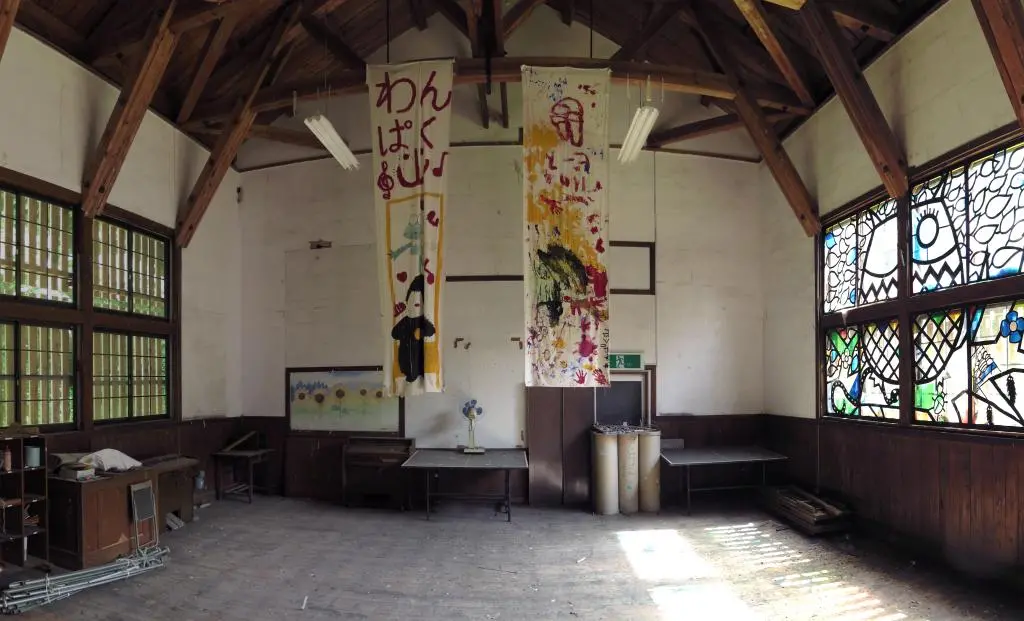
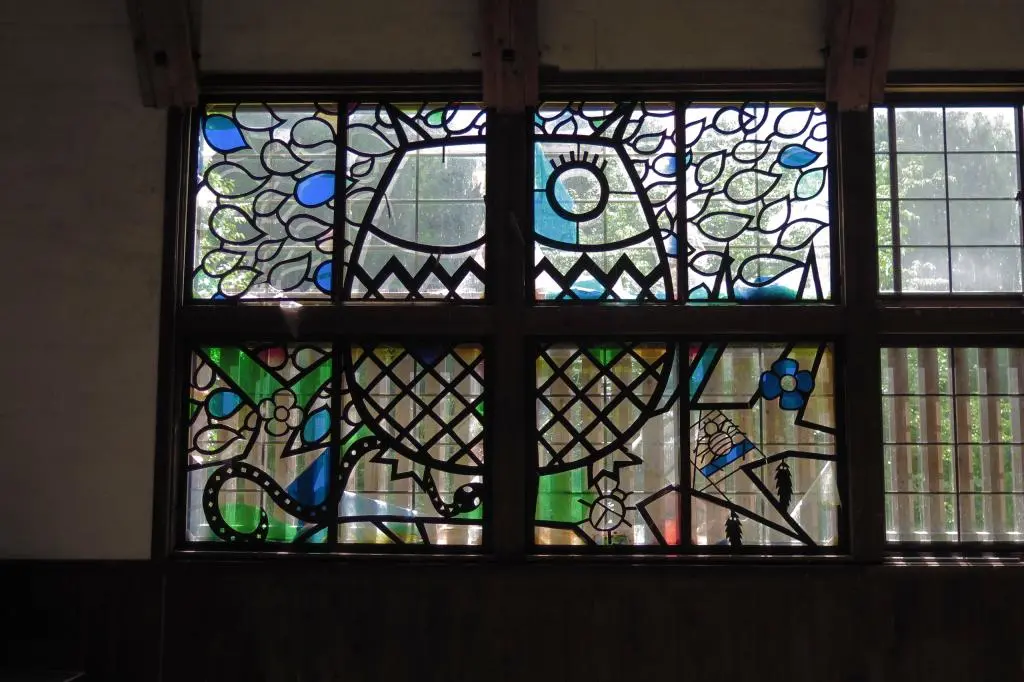
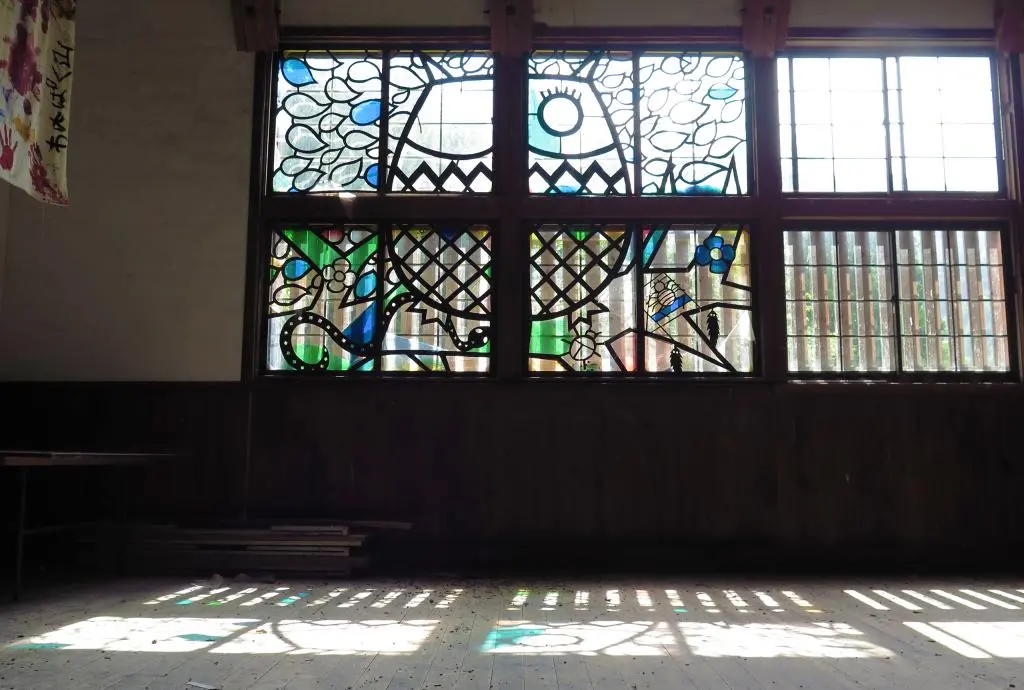
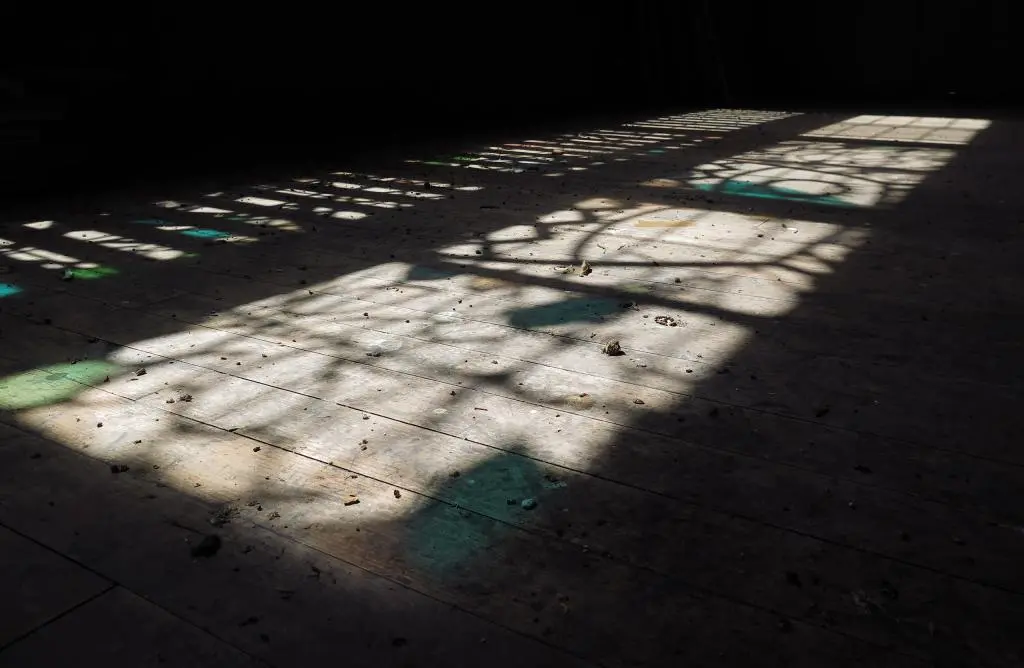
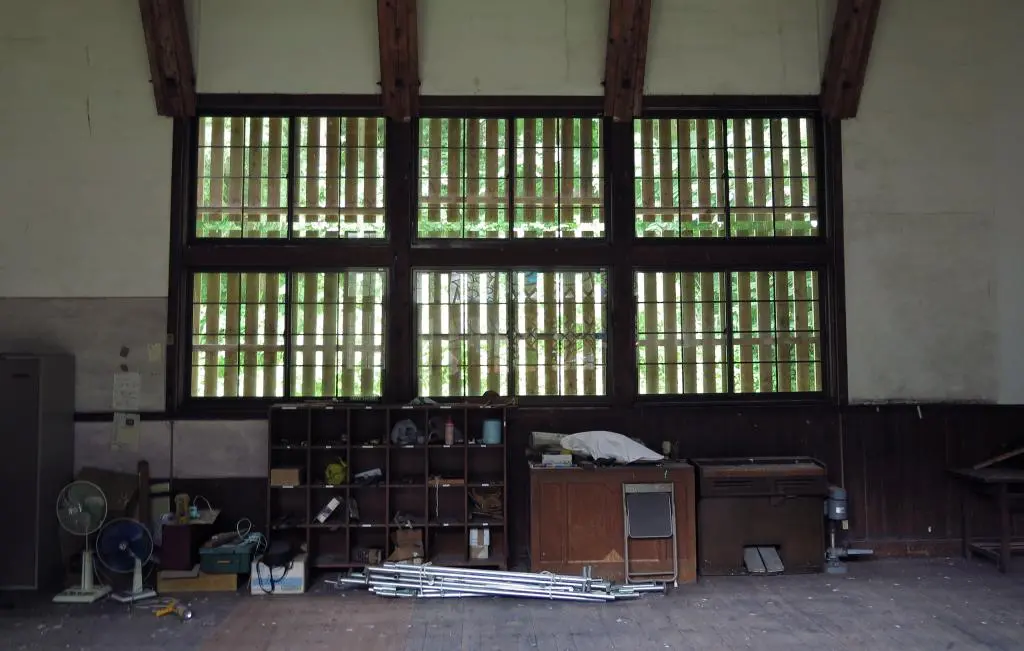
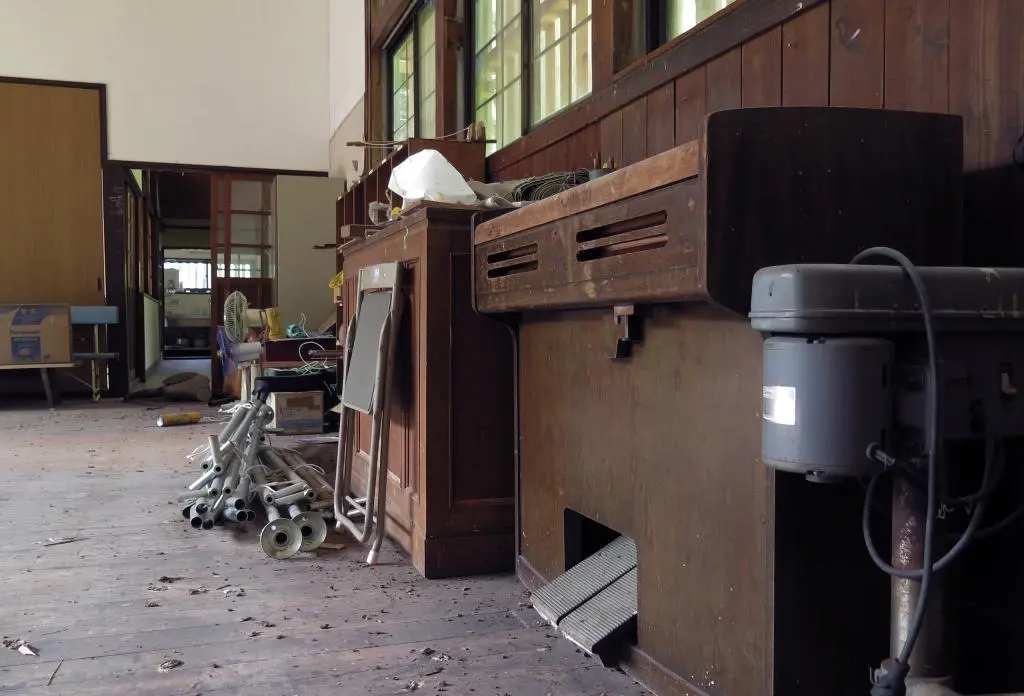
The final room in the school was the open activity area.
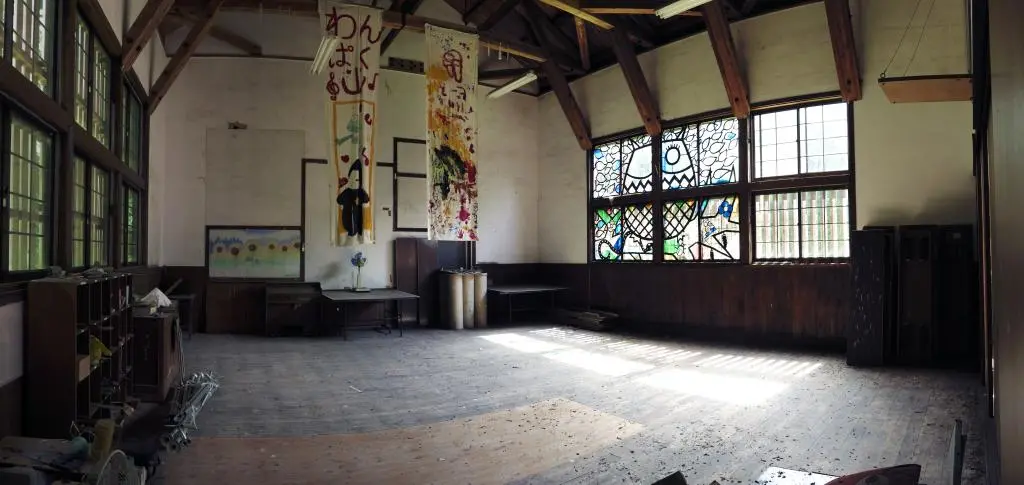
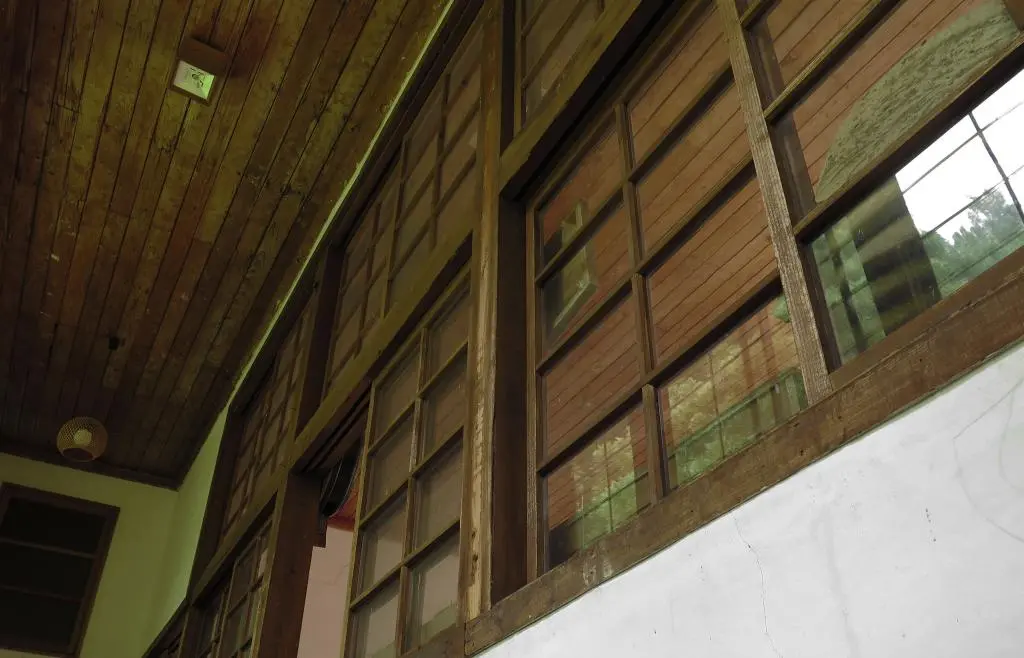
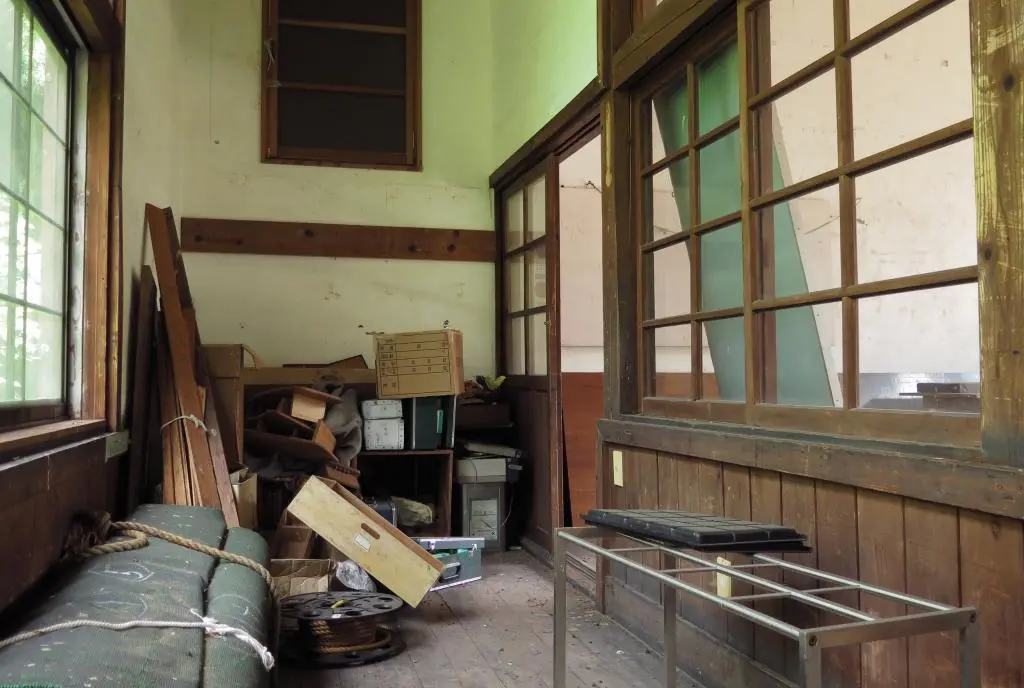
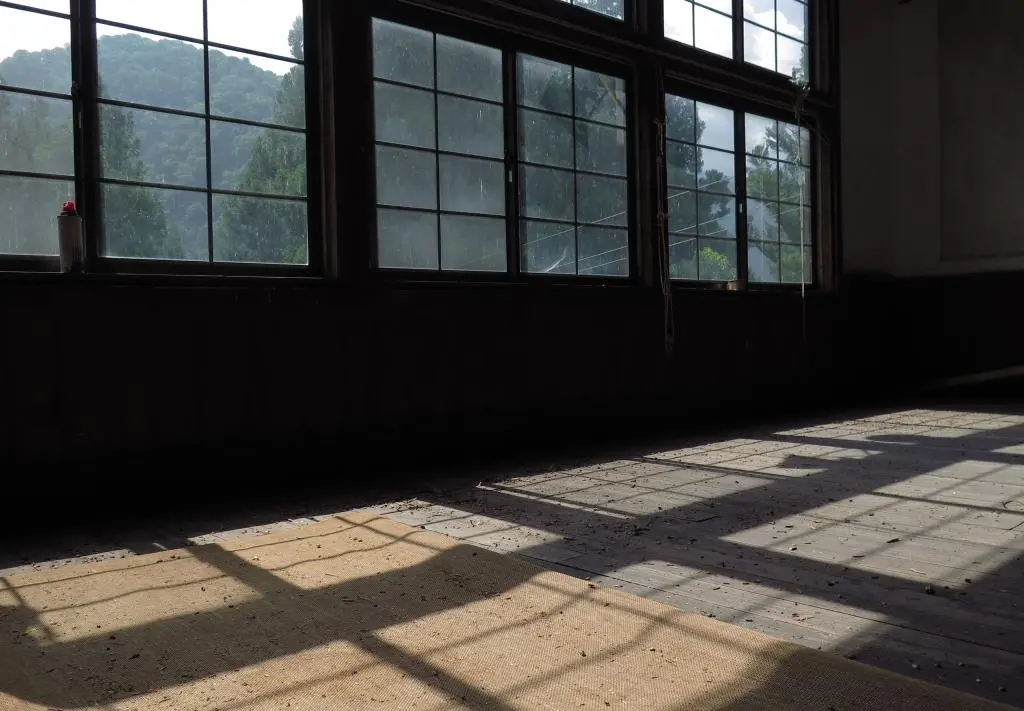
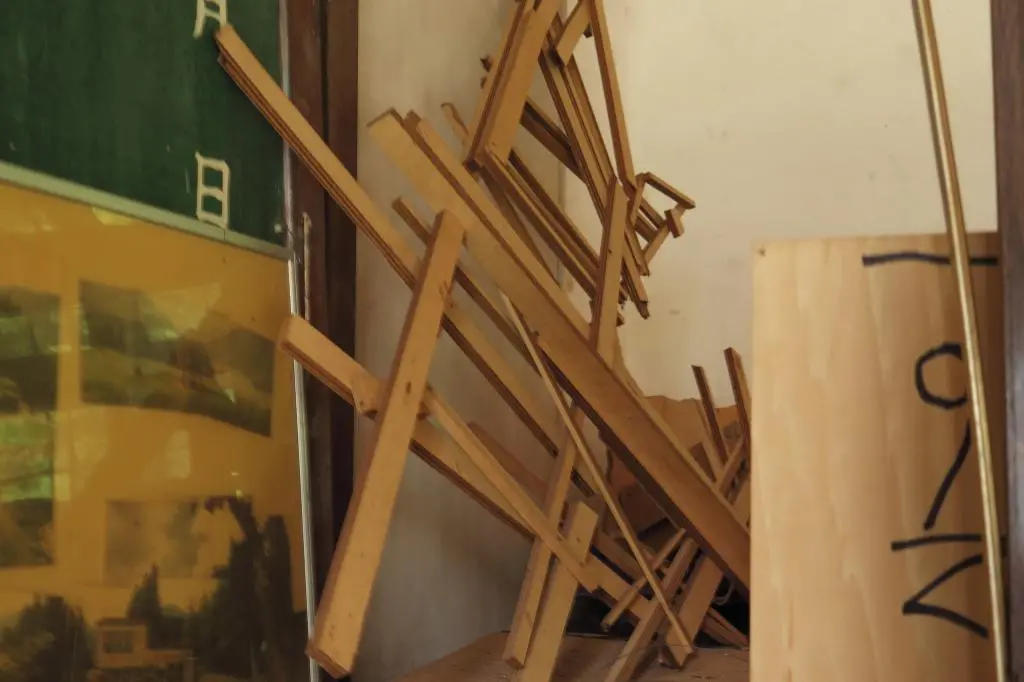
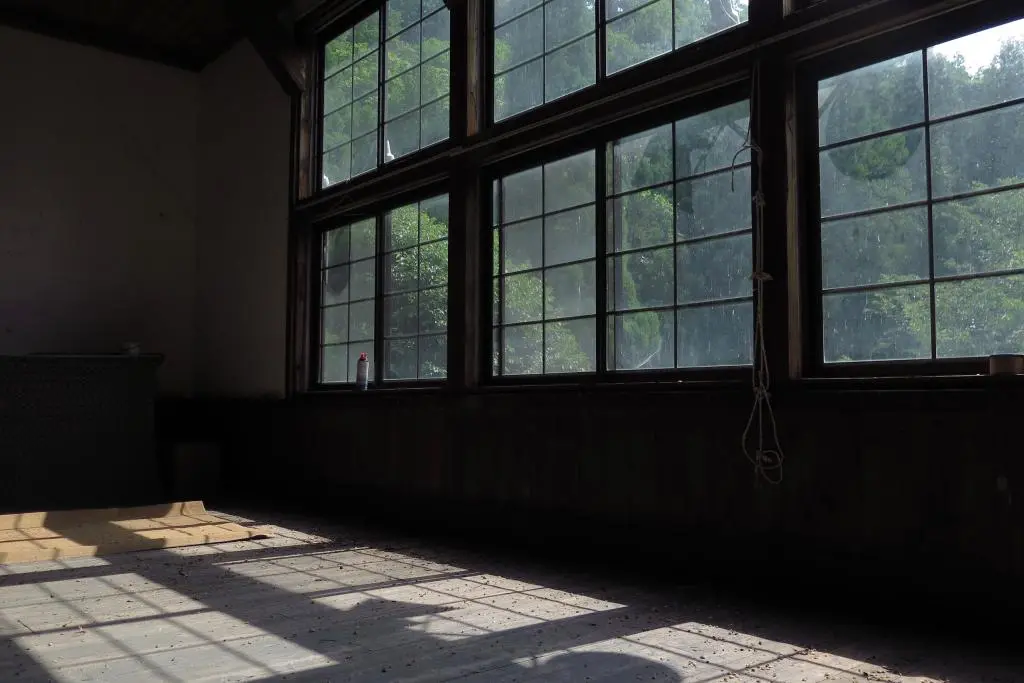
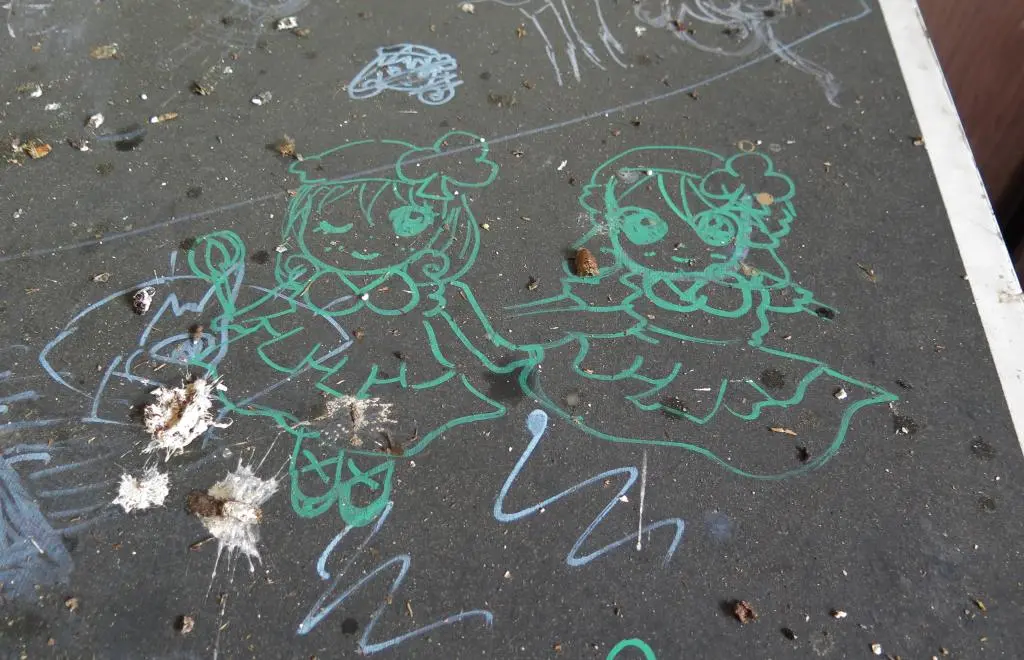
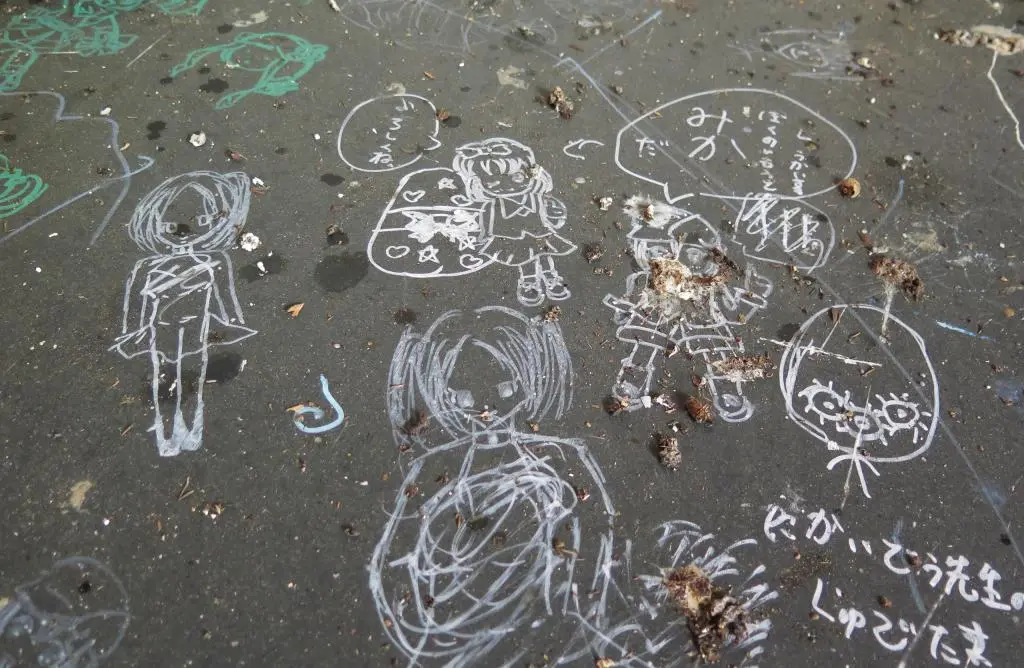
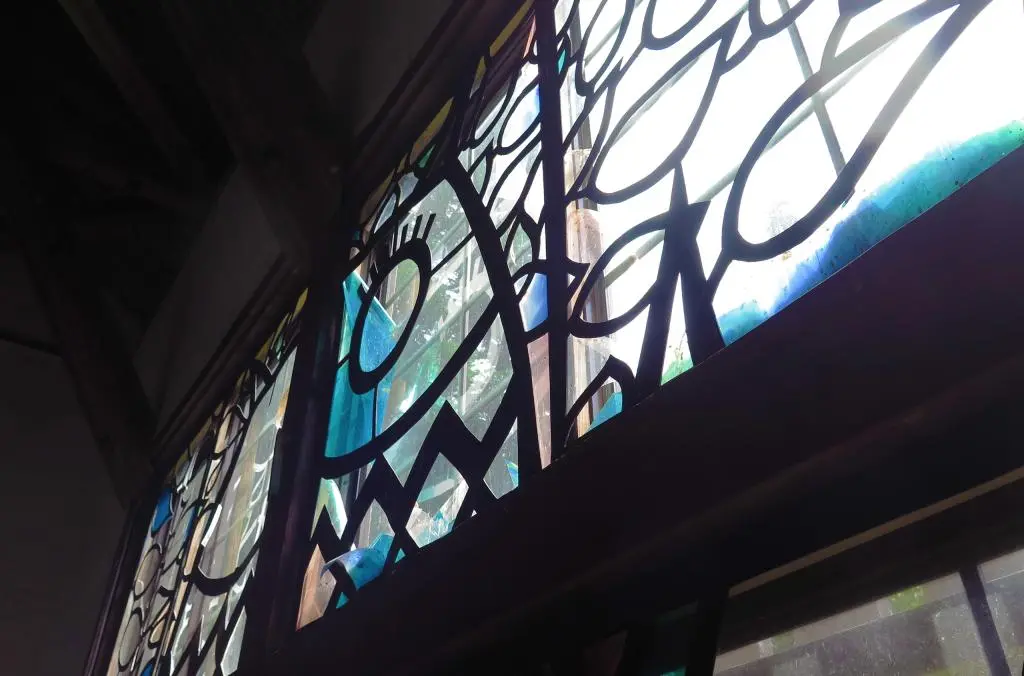
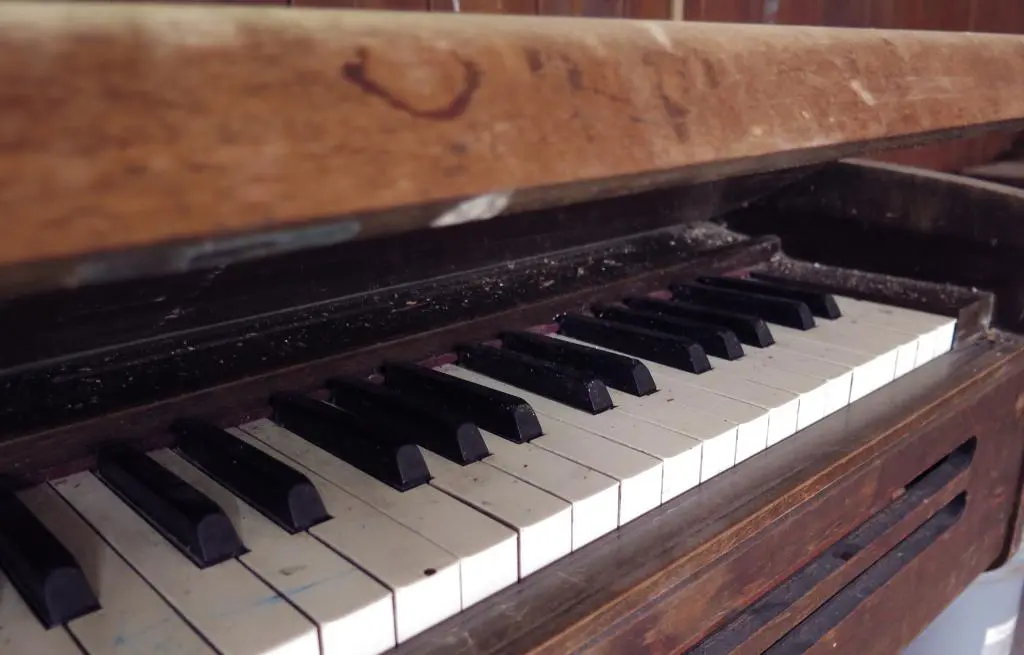
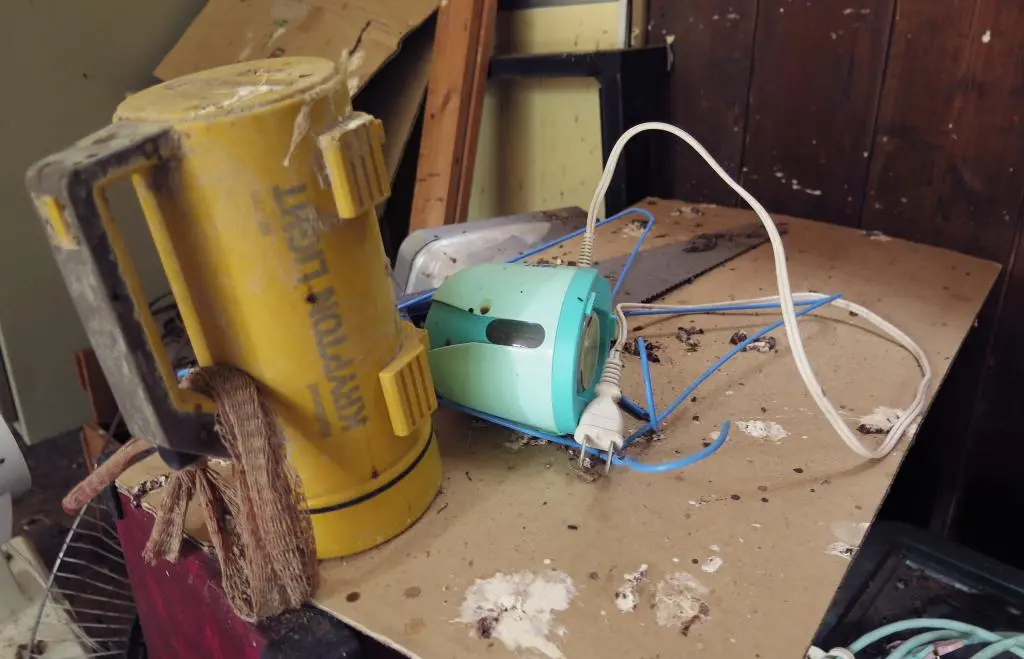
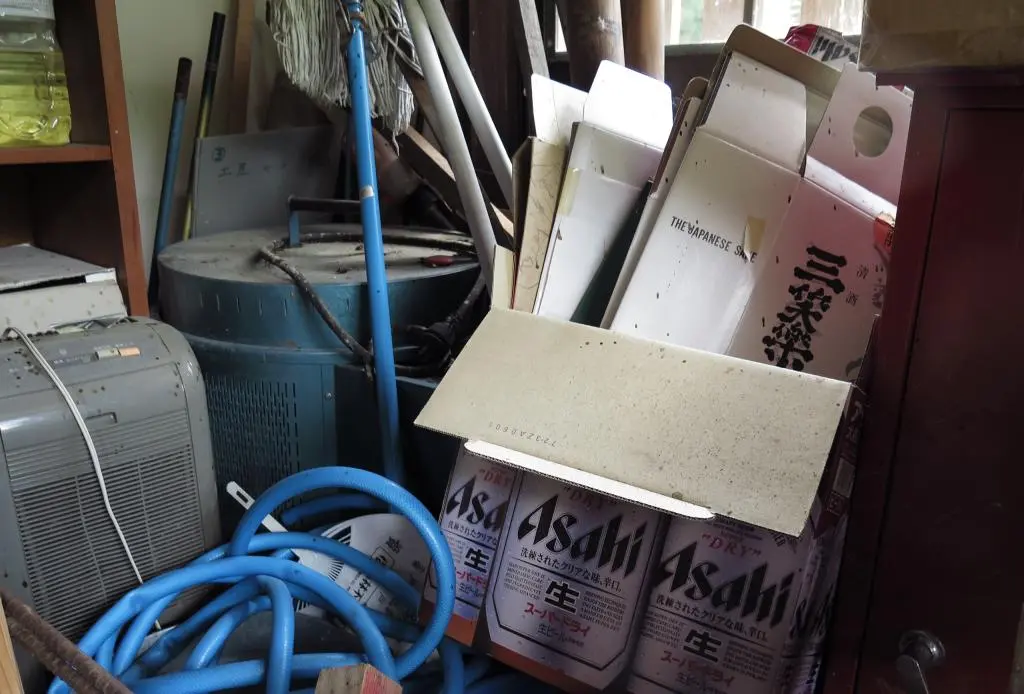
Dust everywhere. Piles of bird (or bat) droppings. Some storage for outdoor tents, and old school equipment that was proably broken.
Going back to that photo above, I'm not really sure how they were able to fit so many children into this building. I think that small party room was a new addition, so maybe the gym area was much more open taking up the entire ground floor? The living or sleeping room for that teacher must've been so so small.
I'm not sure how someone could stand living here. You would almost never have any privacy. And if you stayed on weekends, you would have to become a member of the community.
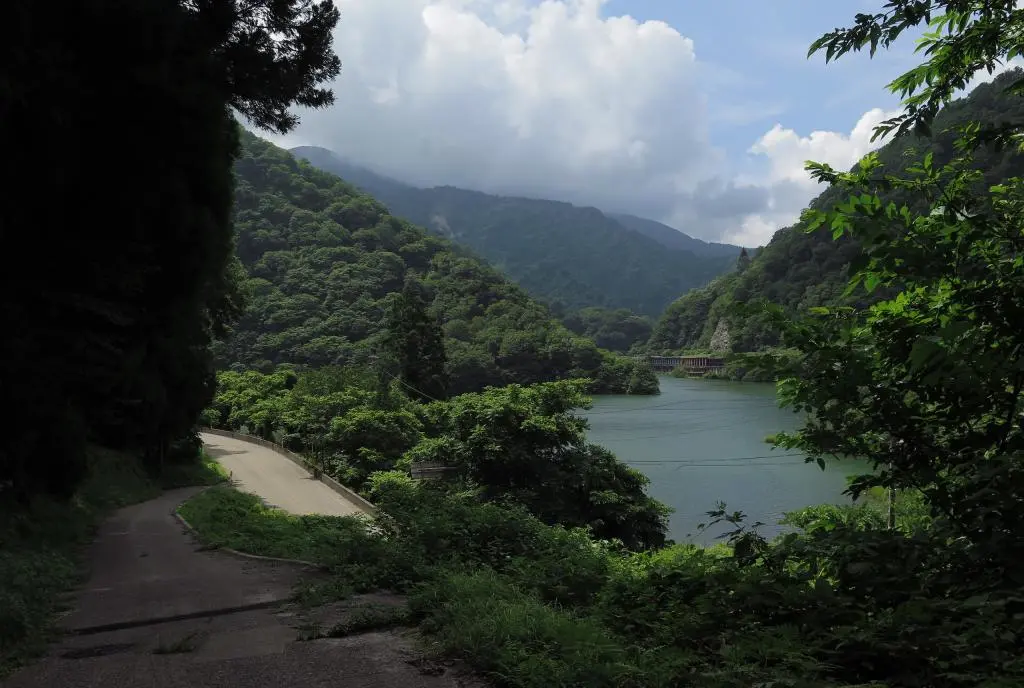
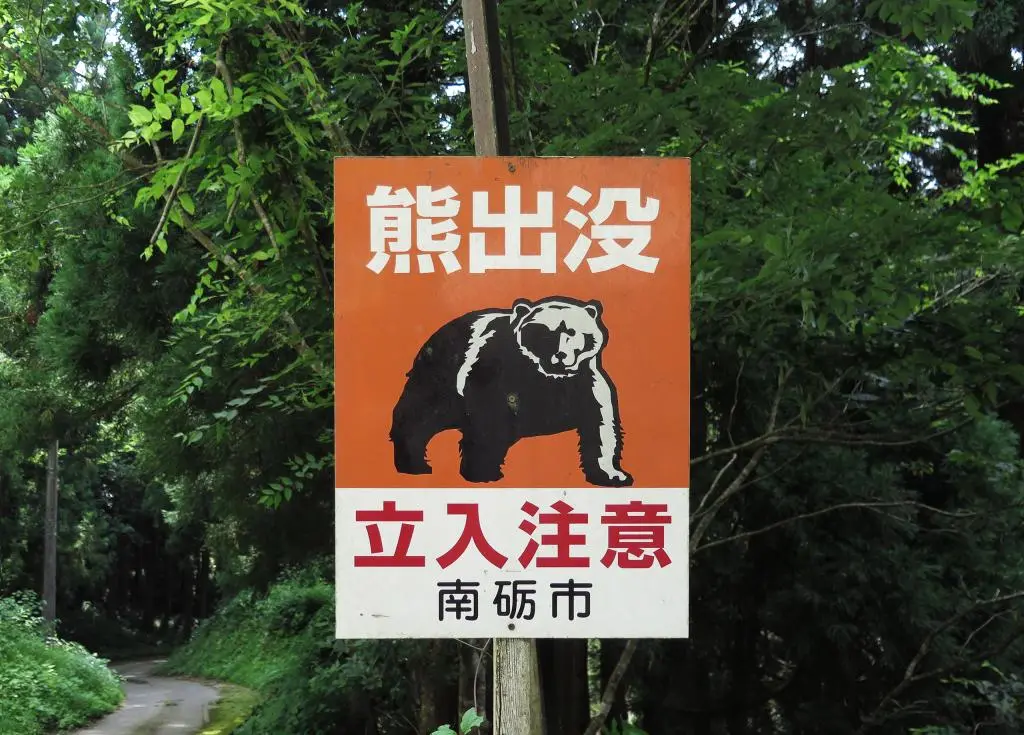
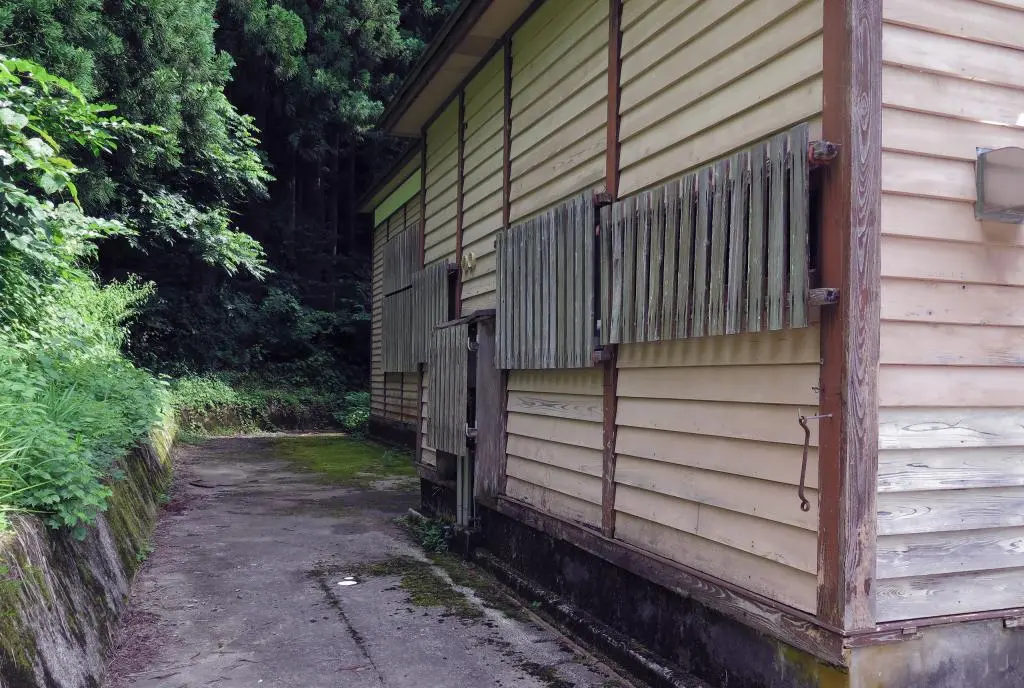
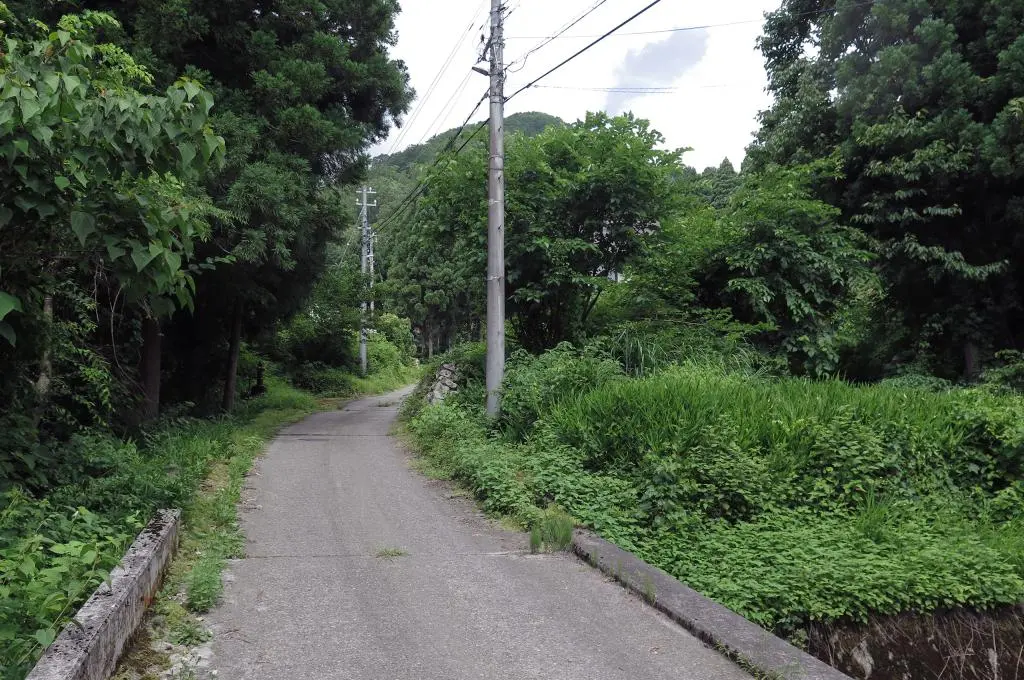
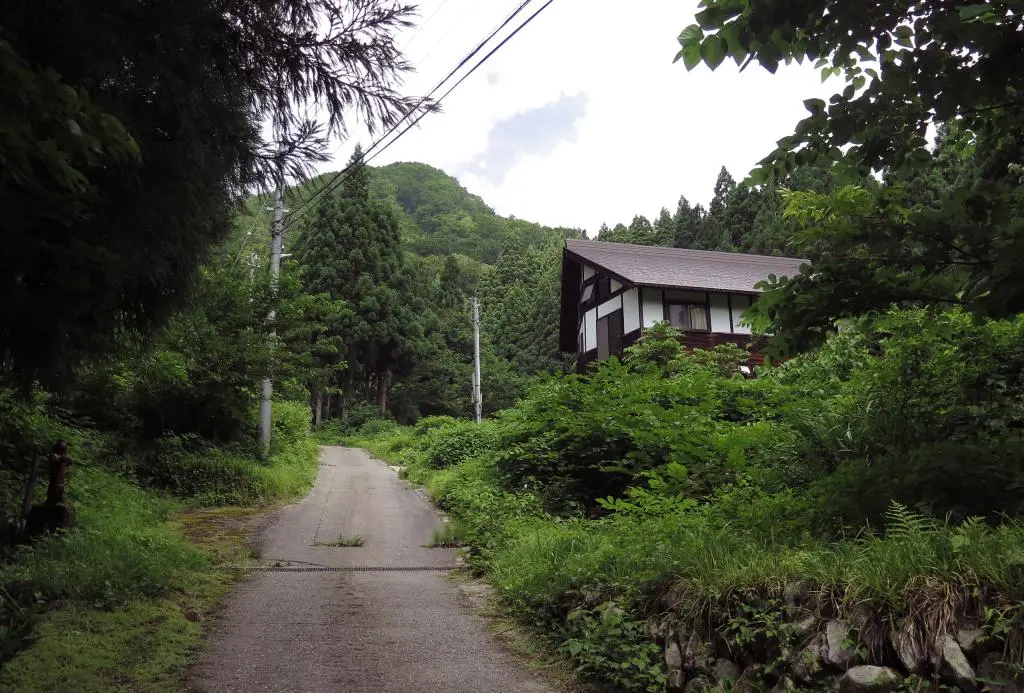
The Sugio Branch School was remote back in the day. But today, it's just up a side road coming off of Hwy 156. Without all the overgrowth, you can actually see a glimpse of it from the road in winter.
Without that road and others, looking at the photo above, you can probably get the feeling of how difficult it would be to travel 5km away.