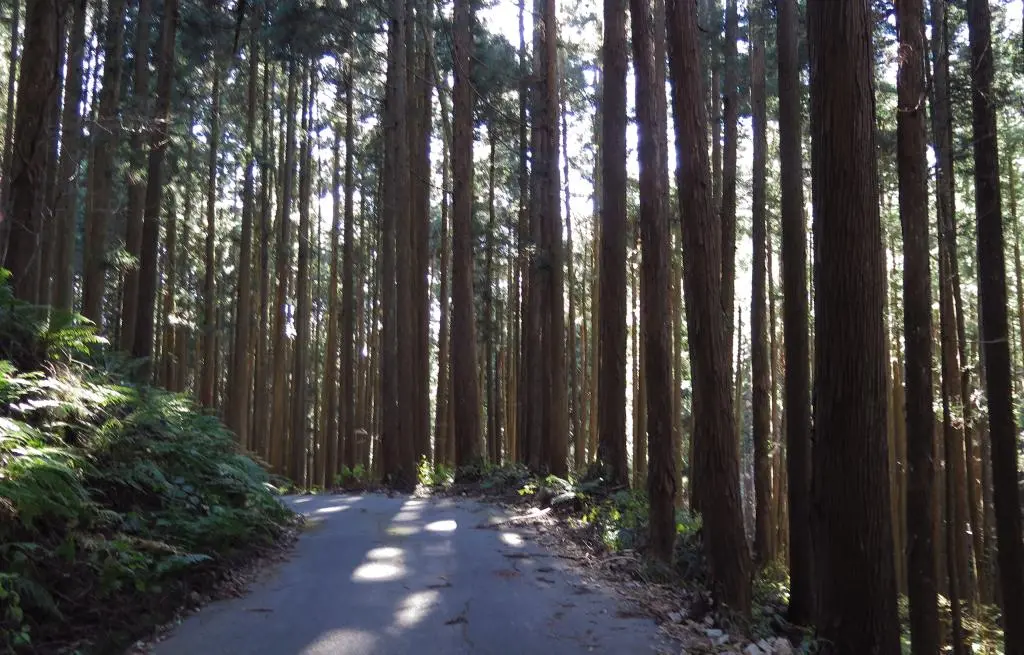
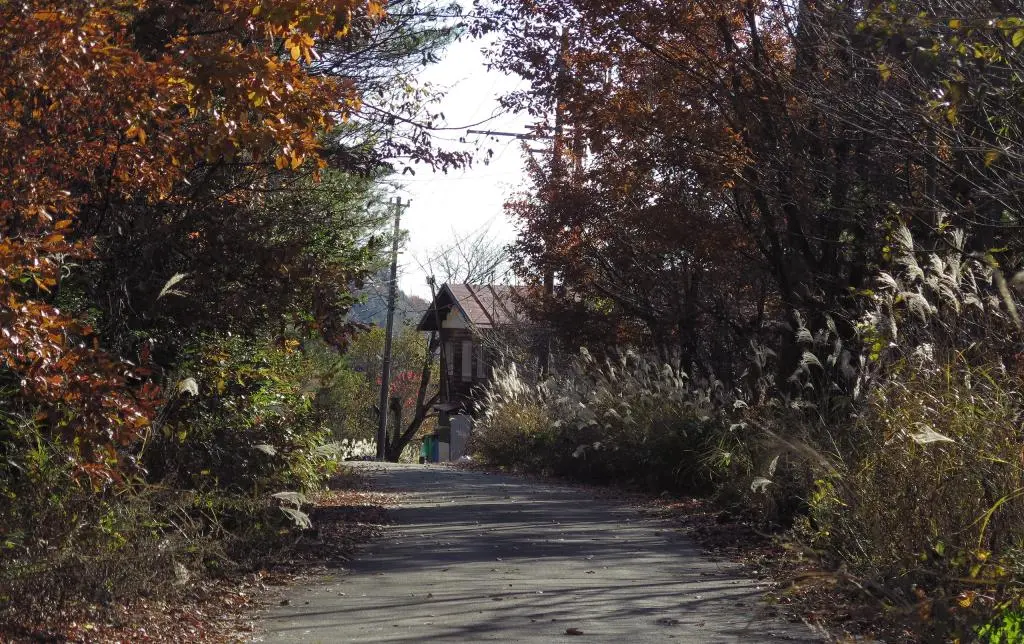
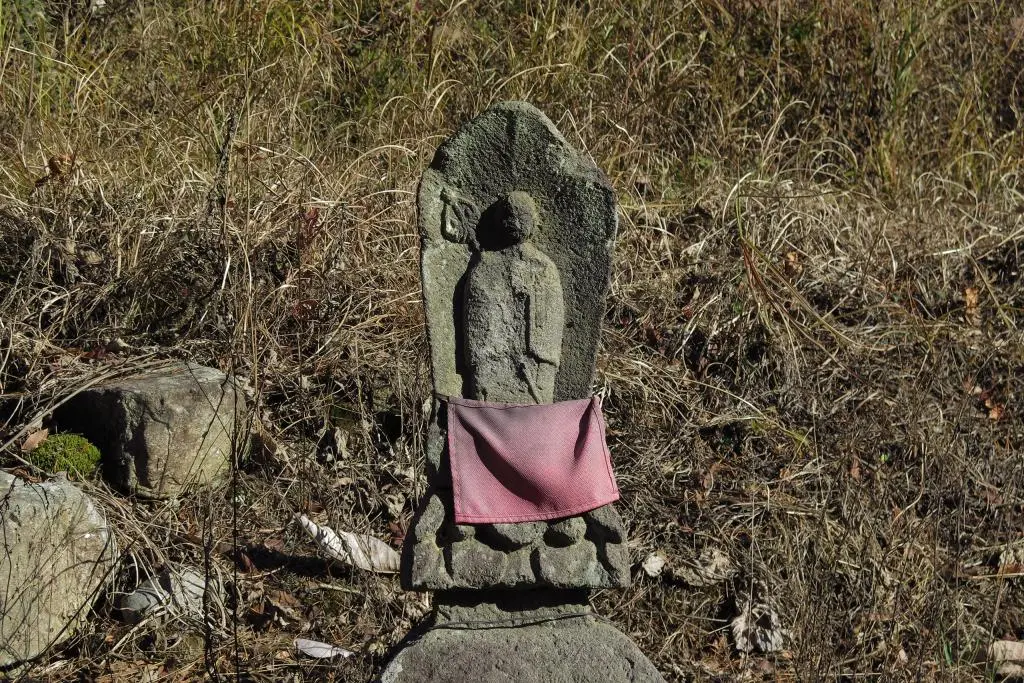
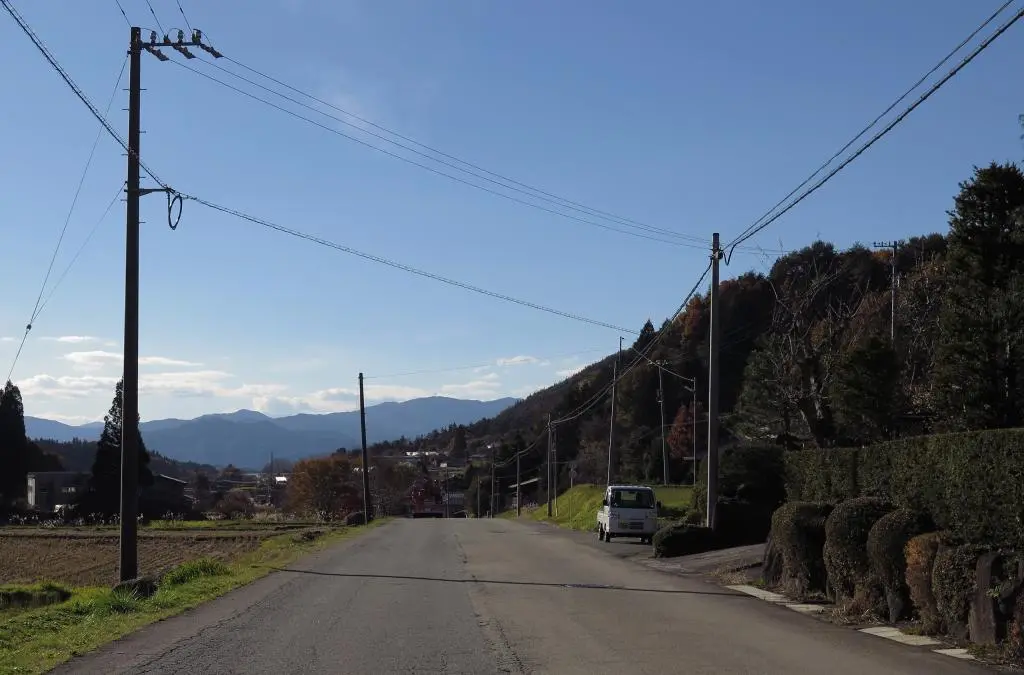
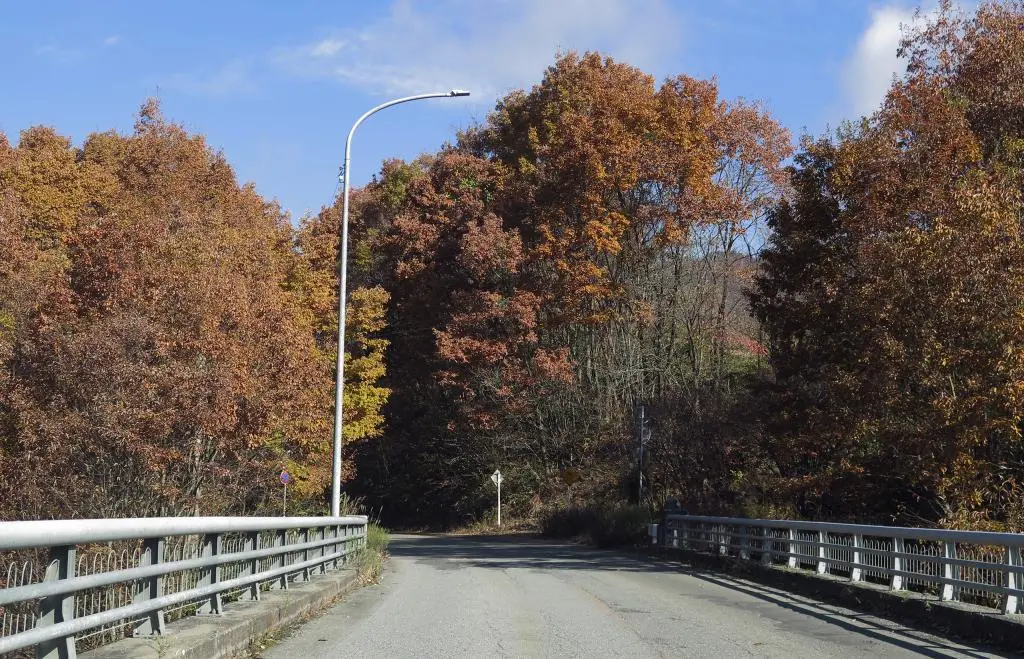
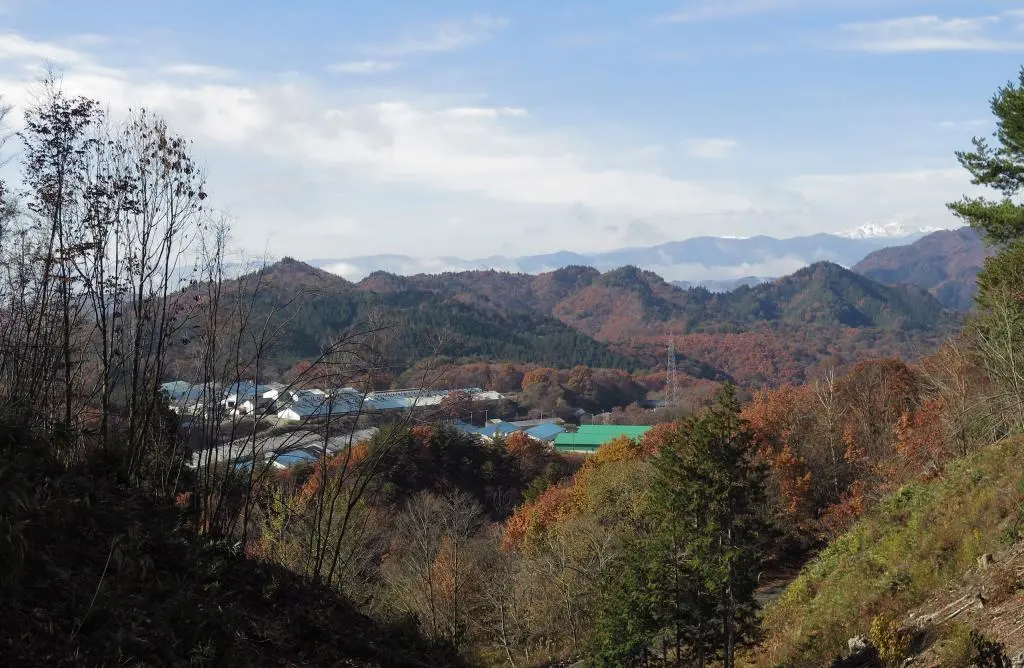
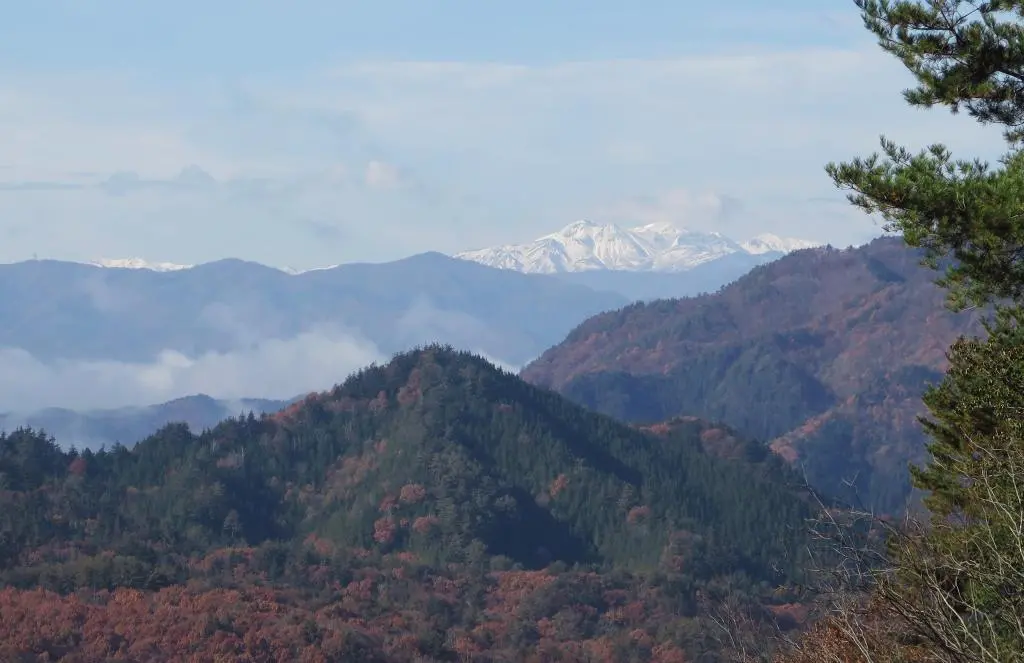
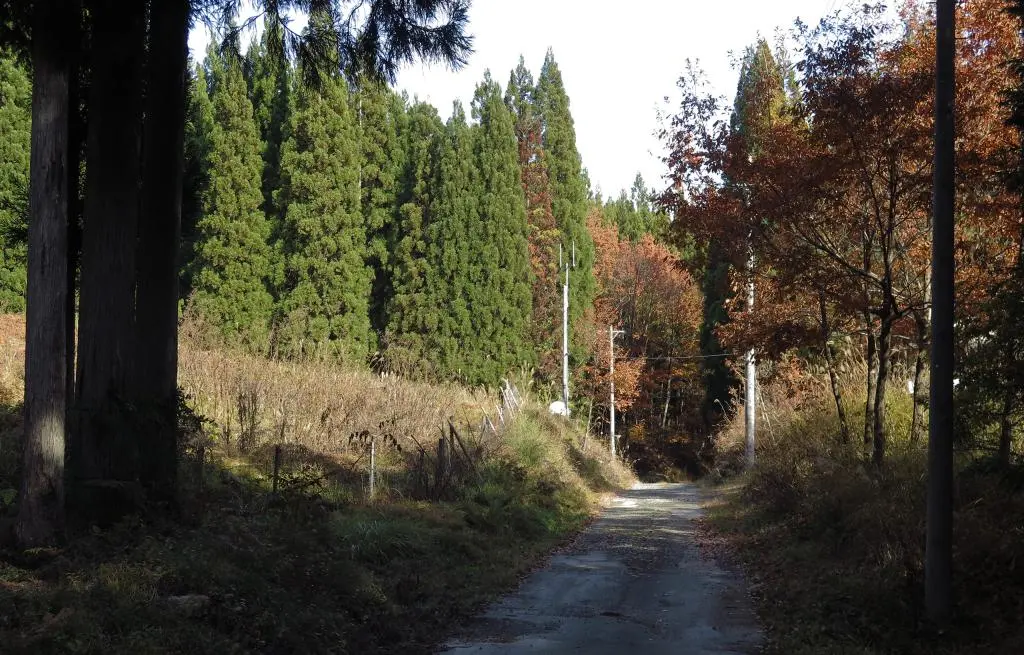
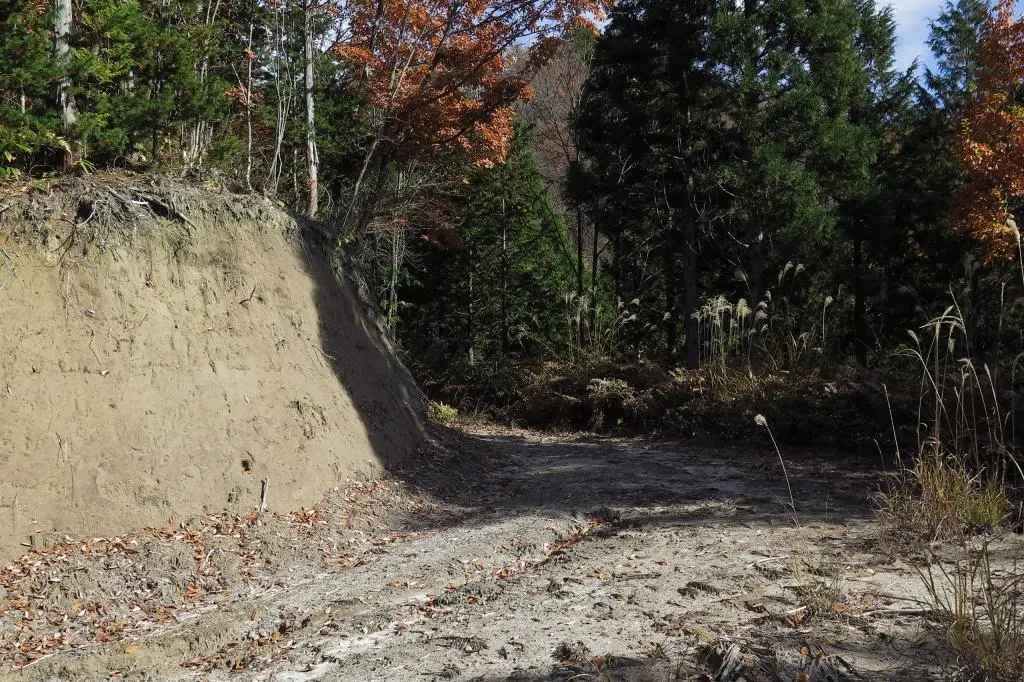
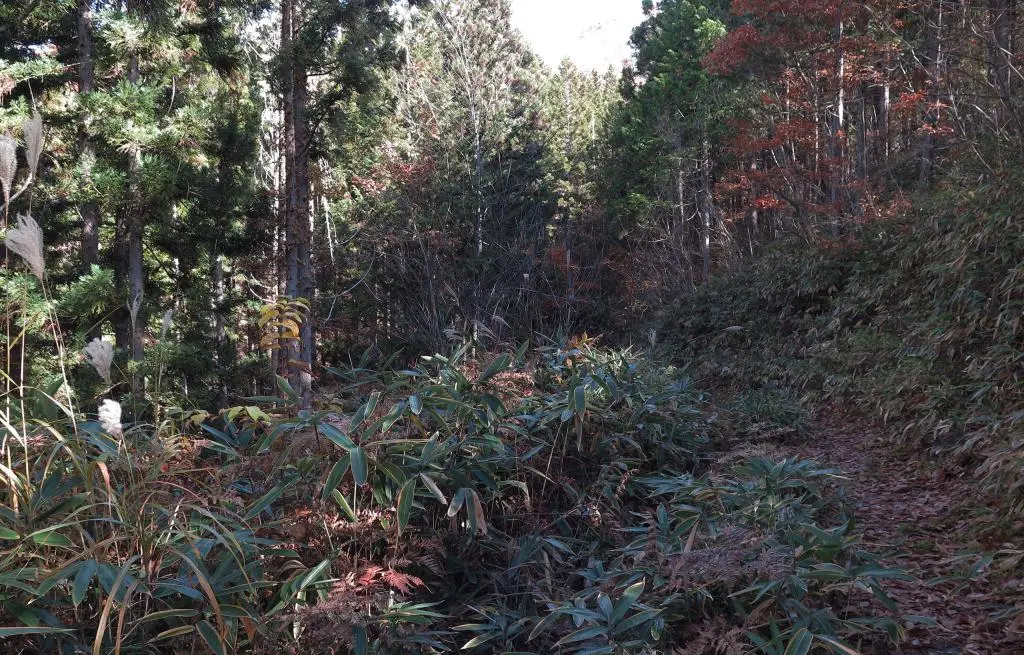
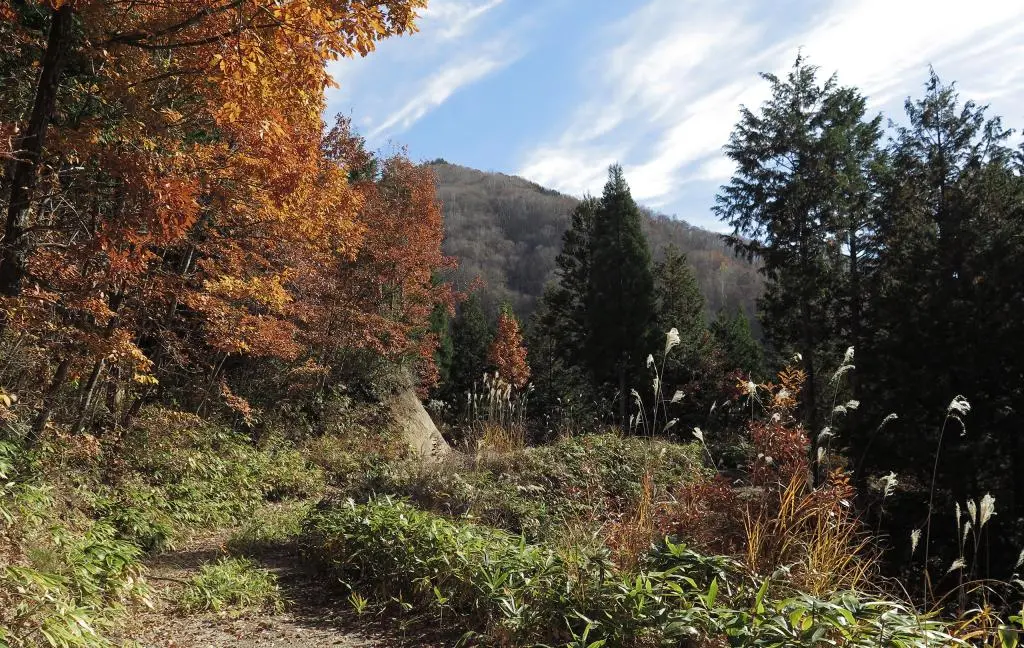
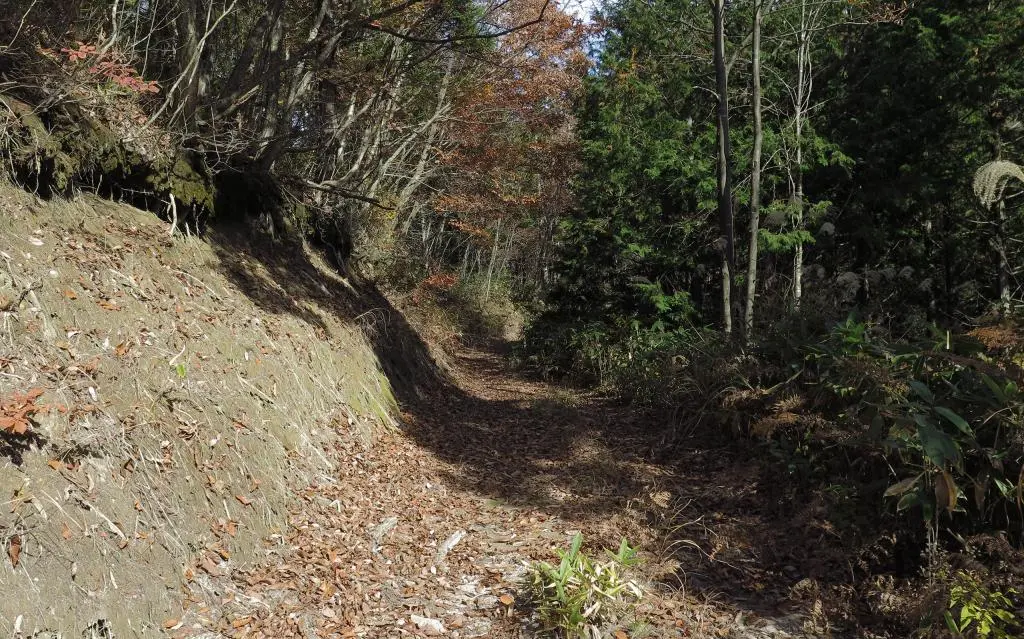
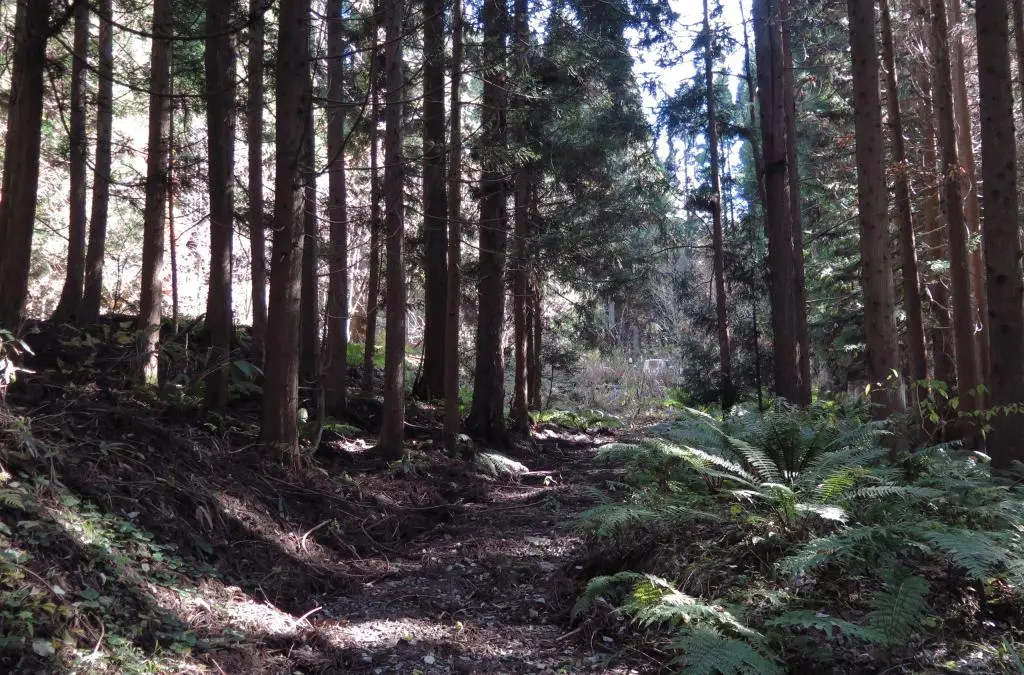
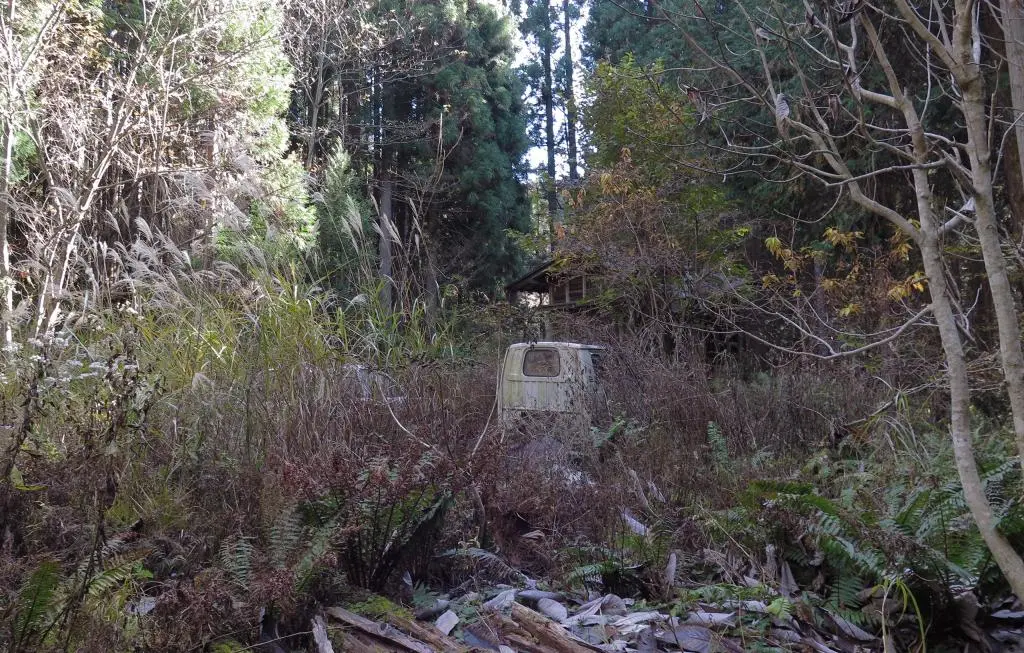
While driving through the mountains in Japan, there are often narrow side roads that veer off from the modern path. These paths are sometimes paved and only accomodate a single vehicle. They often led to a small neighborhood of homes, or act as a service road for an electricity pylon or a mining operation for a construction company making cement. You see these roads everywhere, but the deeper and more obscure the trails you find can sometimes lead to neighborhoods that have been abandoned for over half a century.
Often the best way to find these neighborhoods is by researching old branch schools, and one of the more prominent researchers of these old schools is a fella named Heyaneko. He has been posting about old schools for almost 20 years. One of his pages from 2013 indicated an old neighborhood not too far from where I live.
There was an old shrine near the same area I had marked on Google Maps, too. I wanted to visit there back in April except the road was apparently closed for the winter. I finally found some time recently to give it a try.
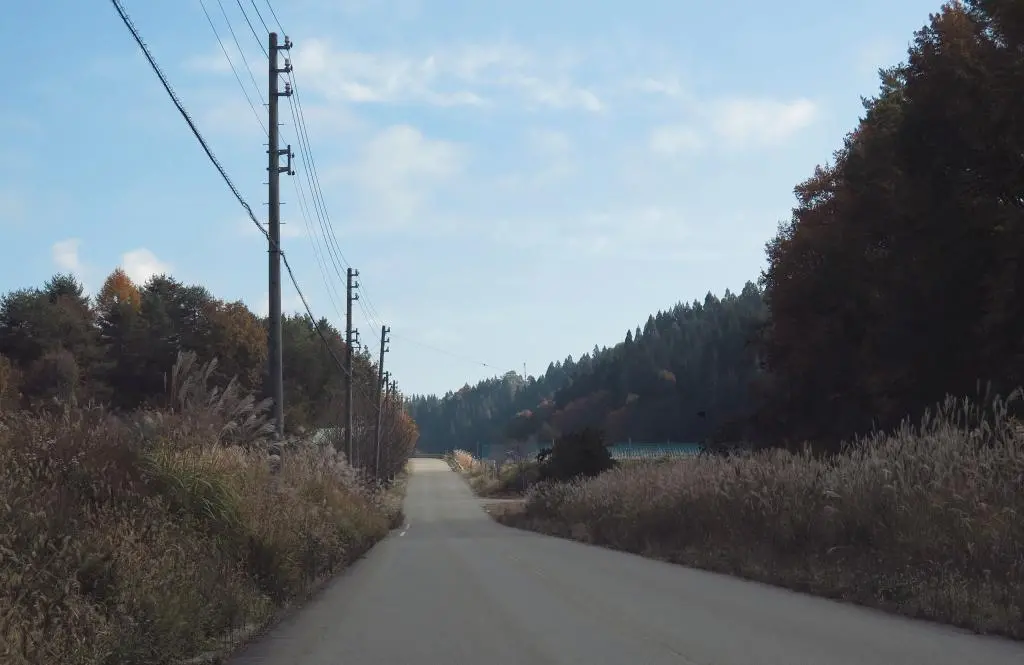
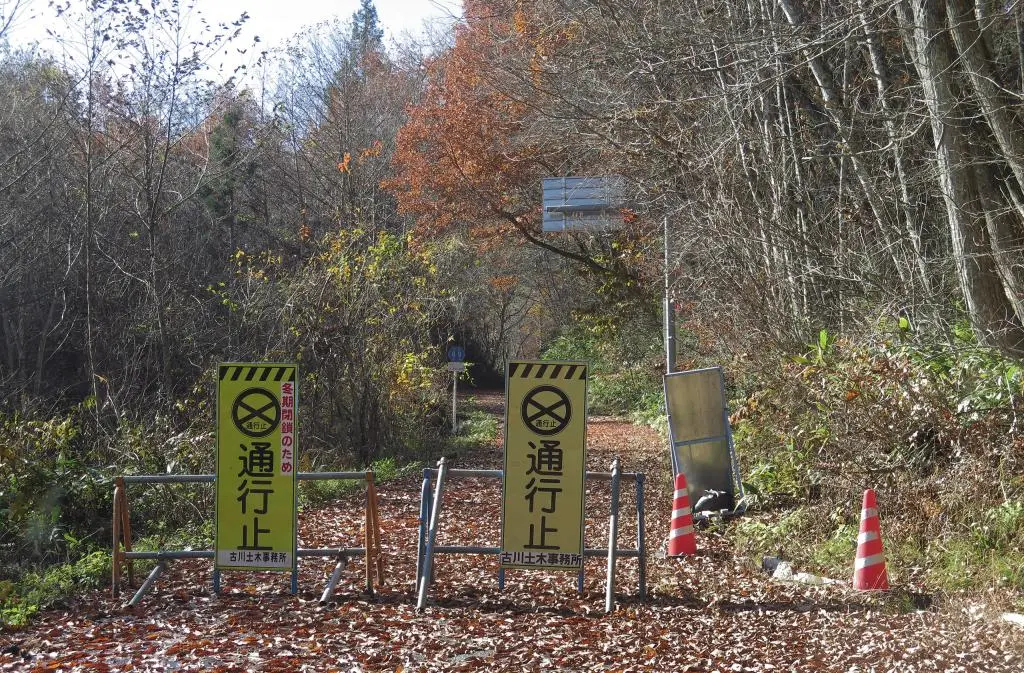
Nyukawa is only about a 10 to 15 minute drive from Takayama. Ohara Village didn't look too much further on the map, but it eventually took me 45 minutes to get there. There was one road closure I had to drive around, but the overall path was clear to the shrine and the entrance to Ohara.
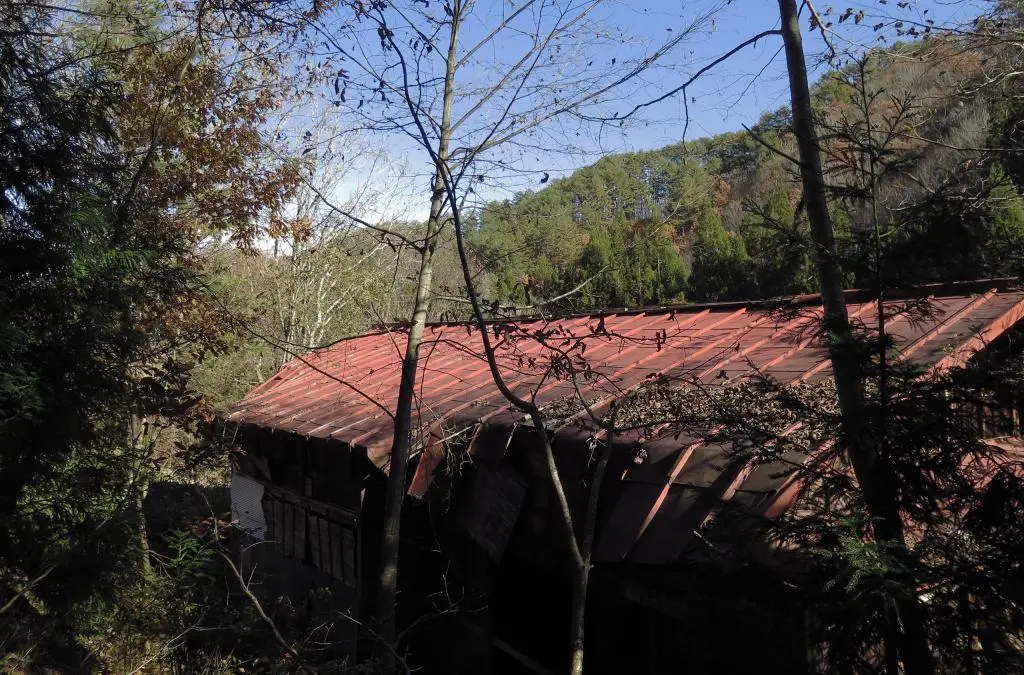
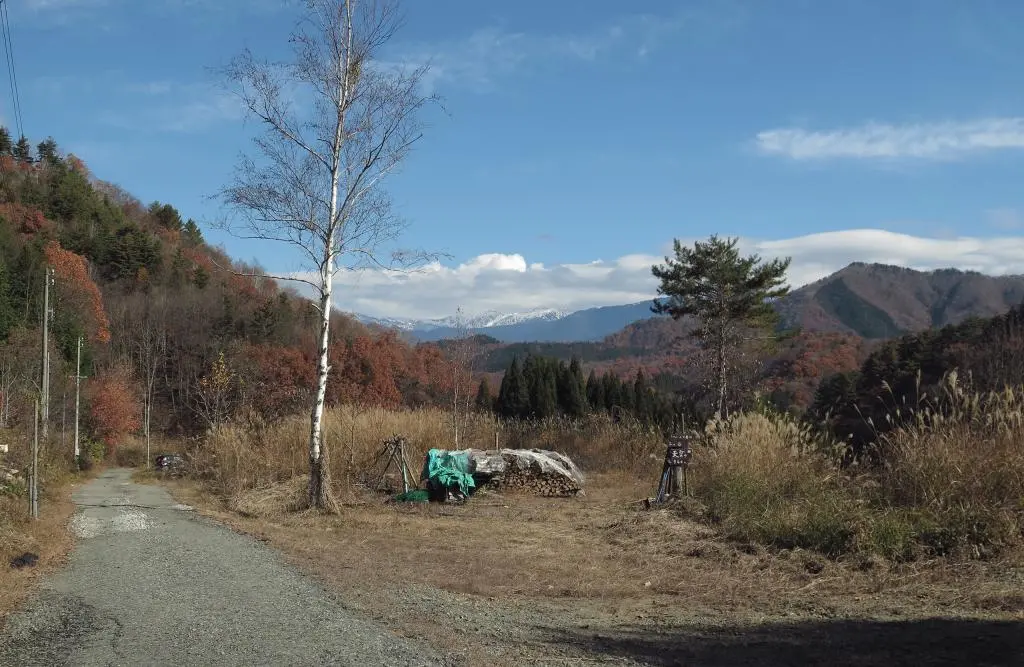
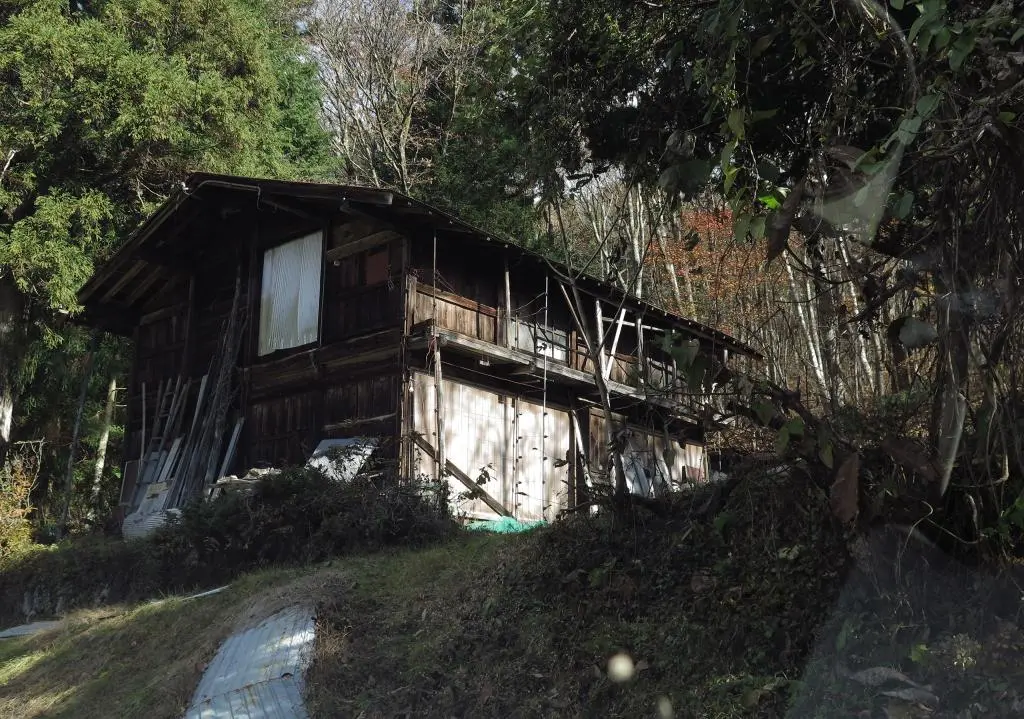
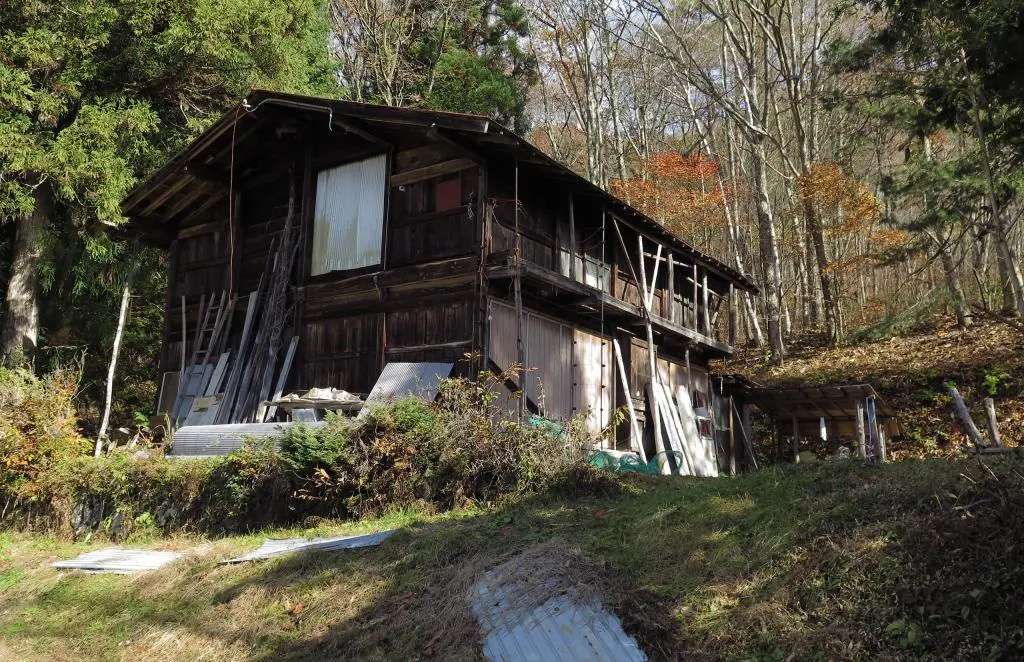
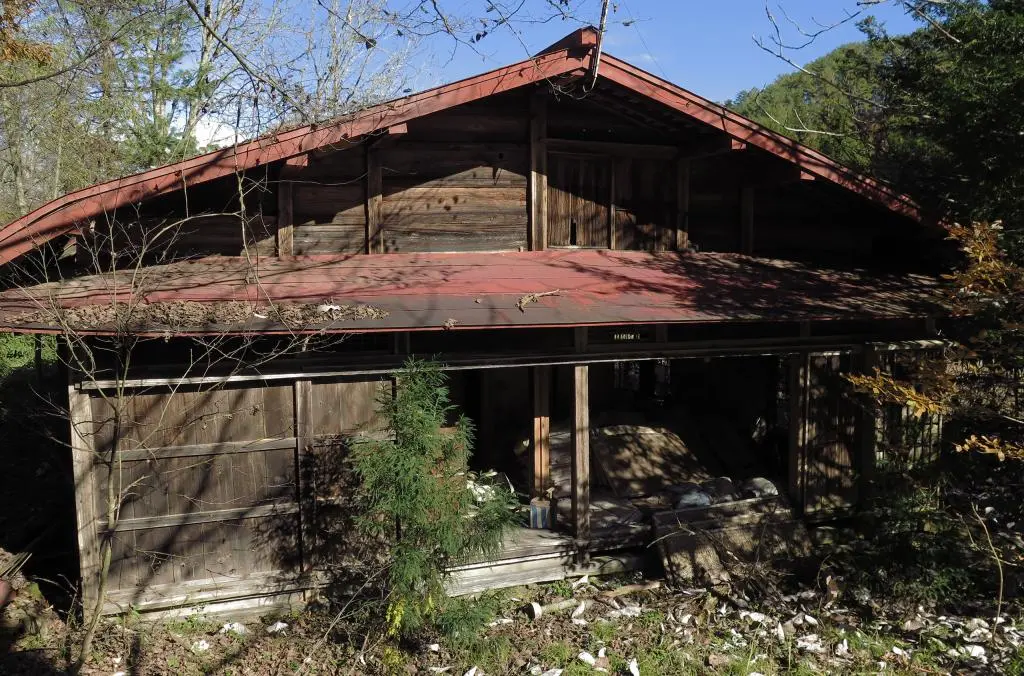
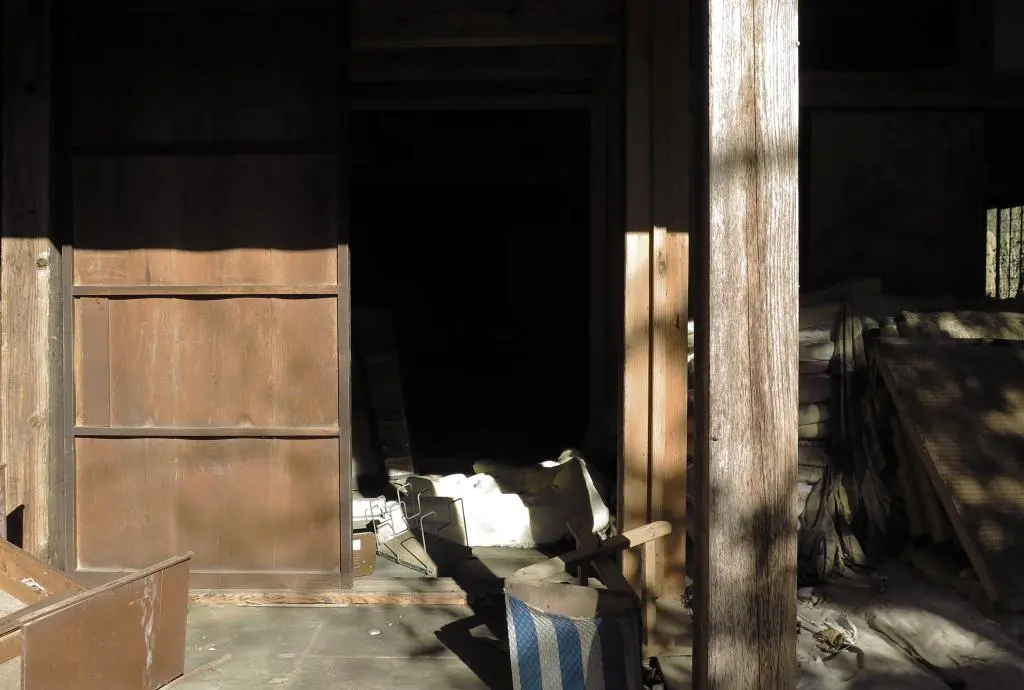
Near the entrance to the shrine was a home that looked abandoned. I had a past a few parked cars earlier of people who were attending to their vegetable fields, so it could be their home or a relative's home. I did not investigate further.
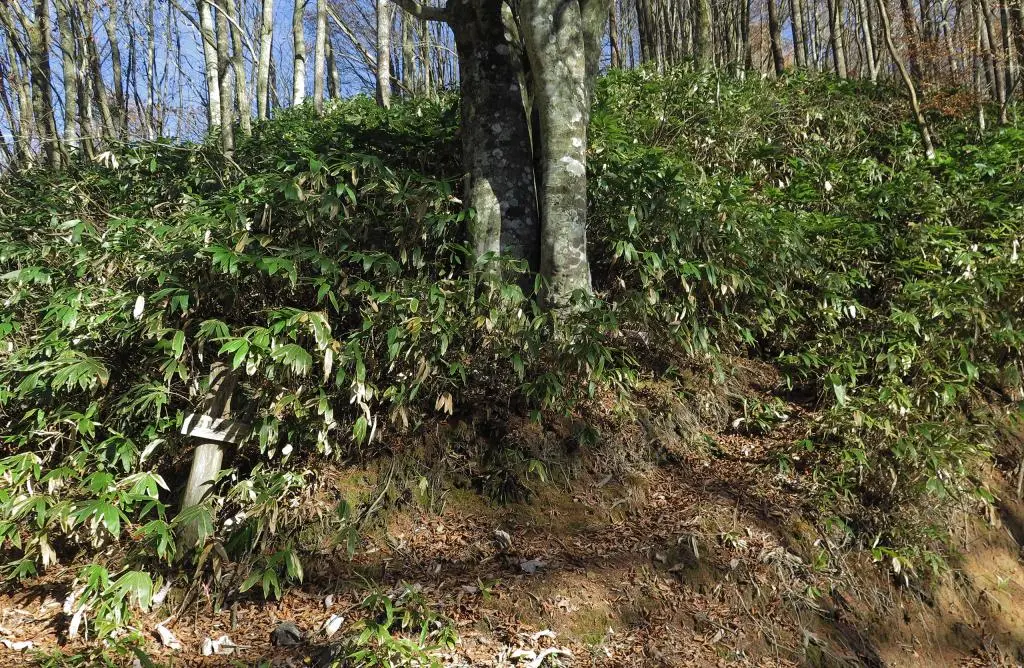
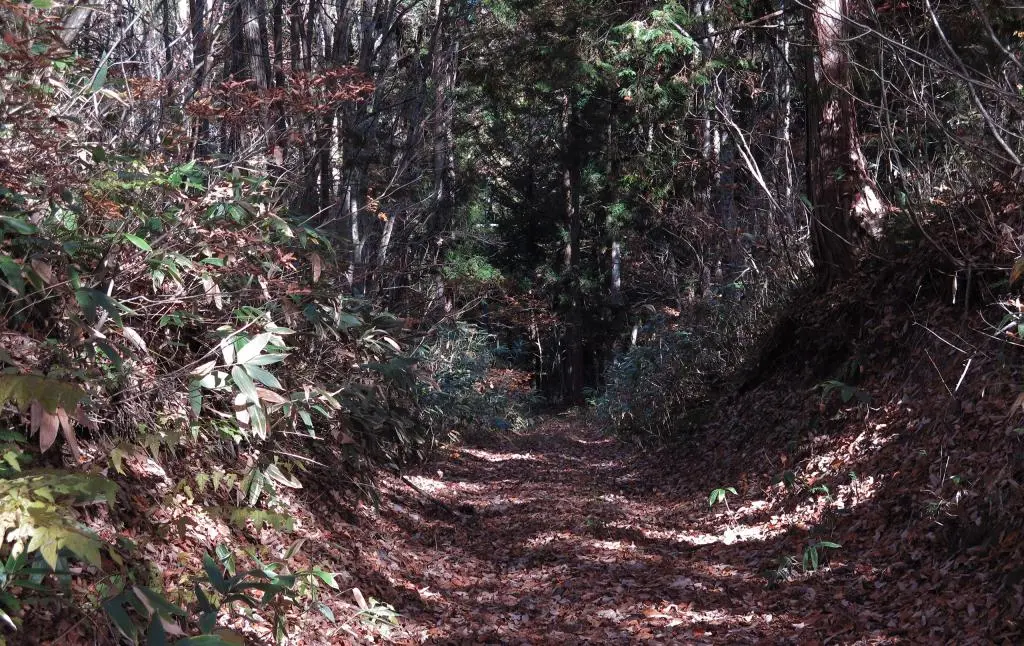
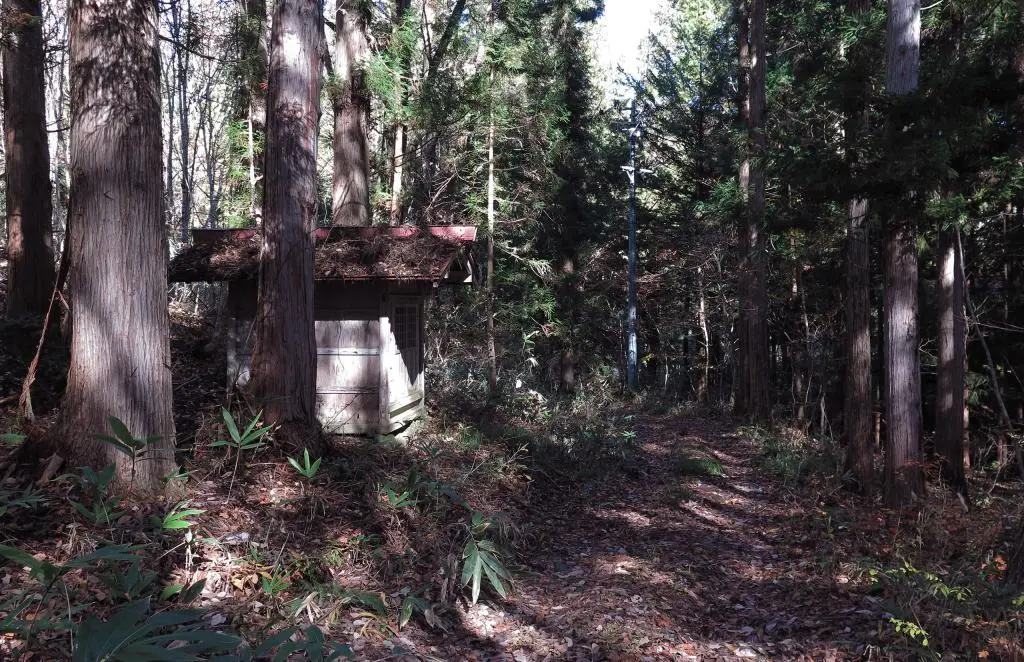
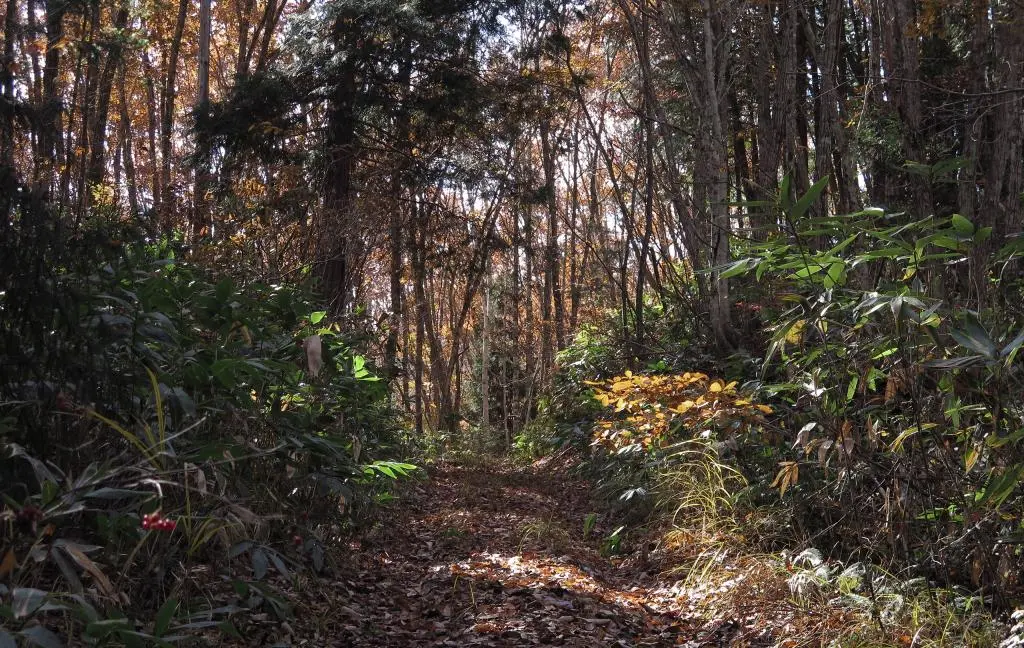
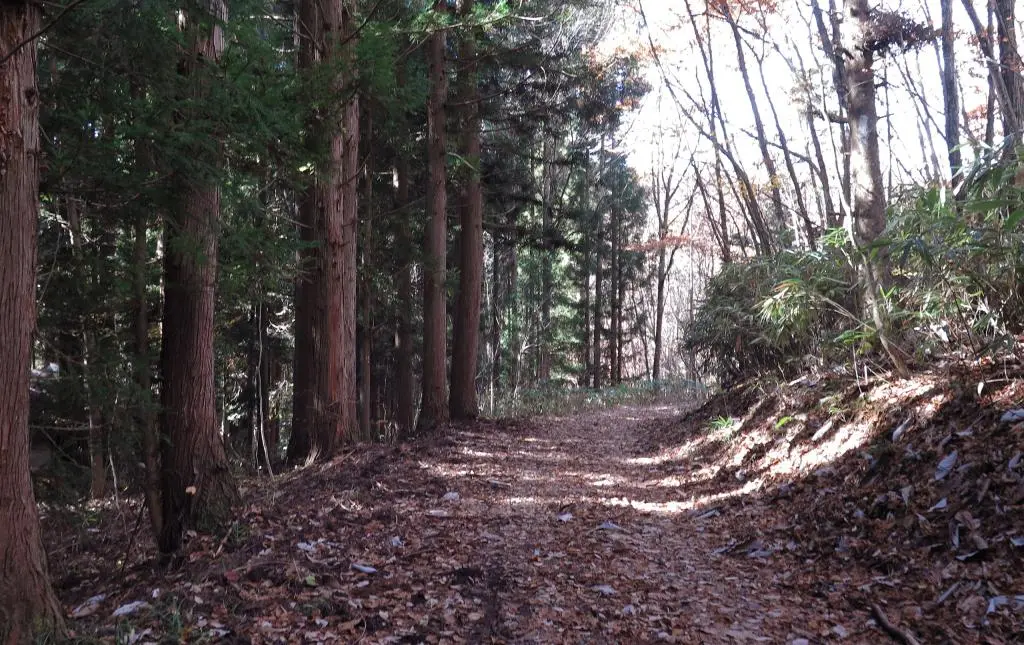
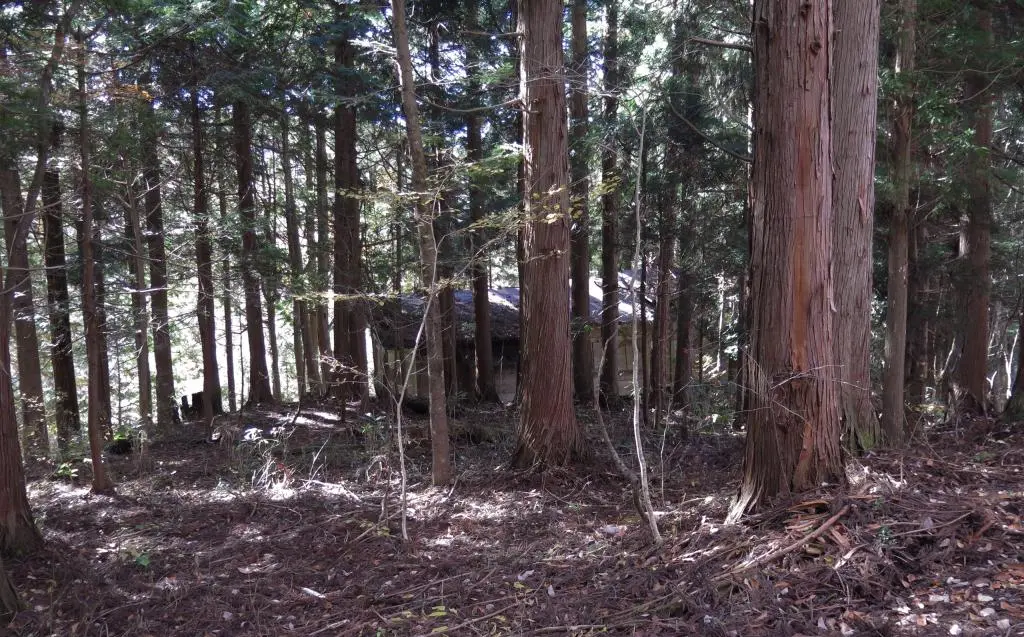
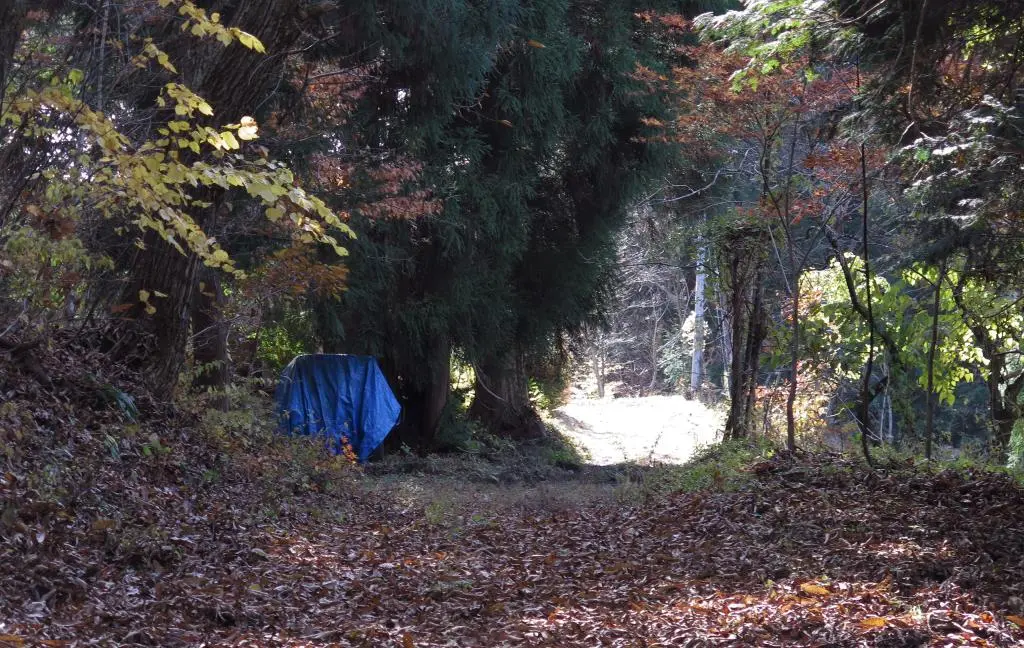
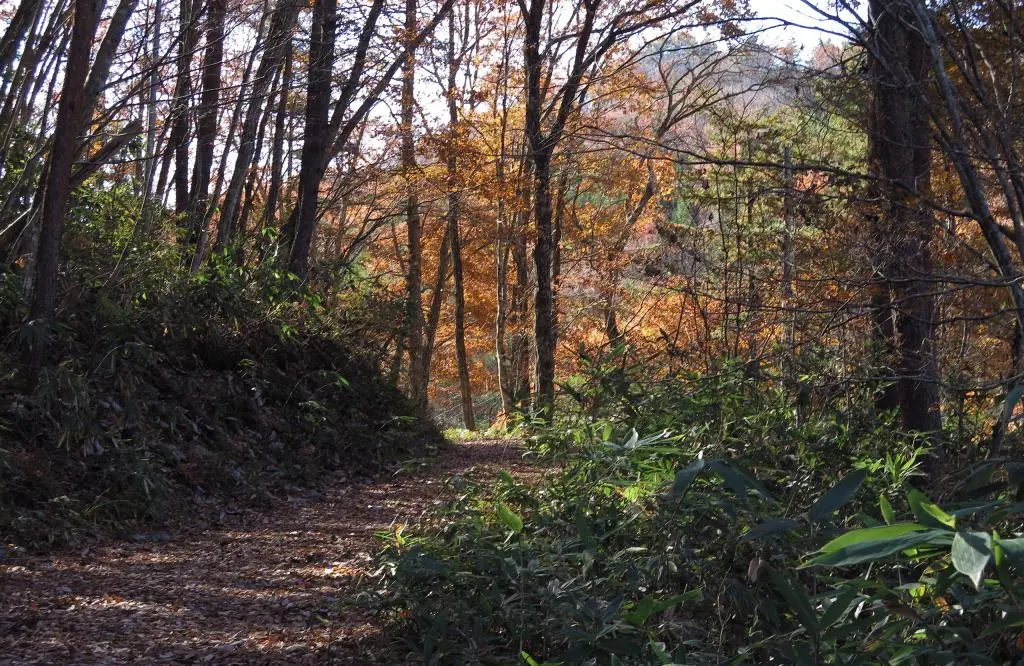
I parked my car next to the unpaved path covered in leaves that led to the shrine. Around 200 meters that shrine revealed itself.
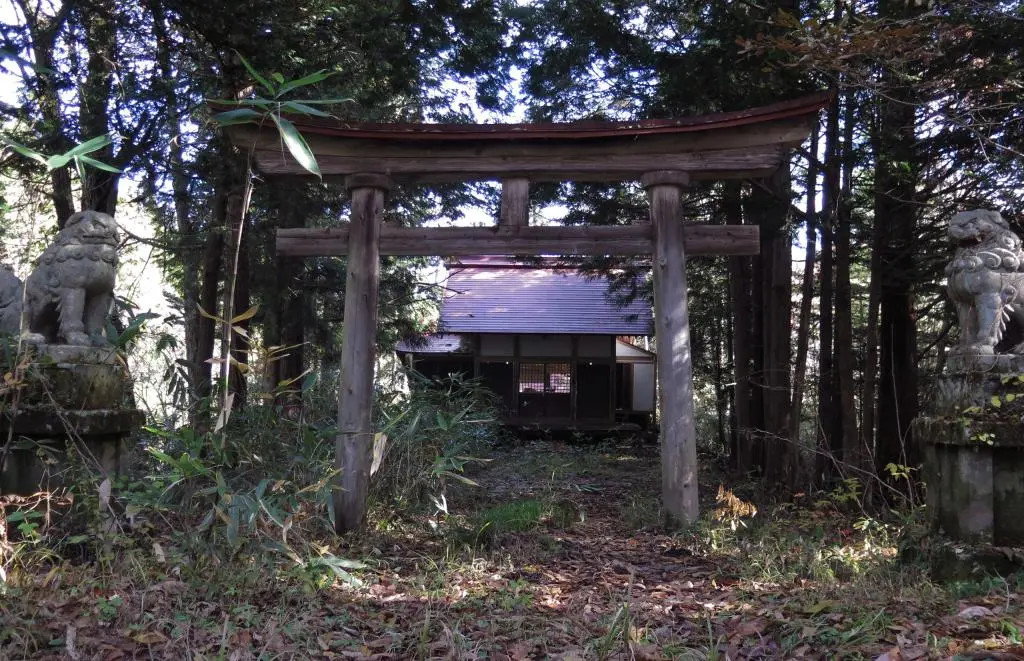
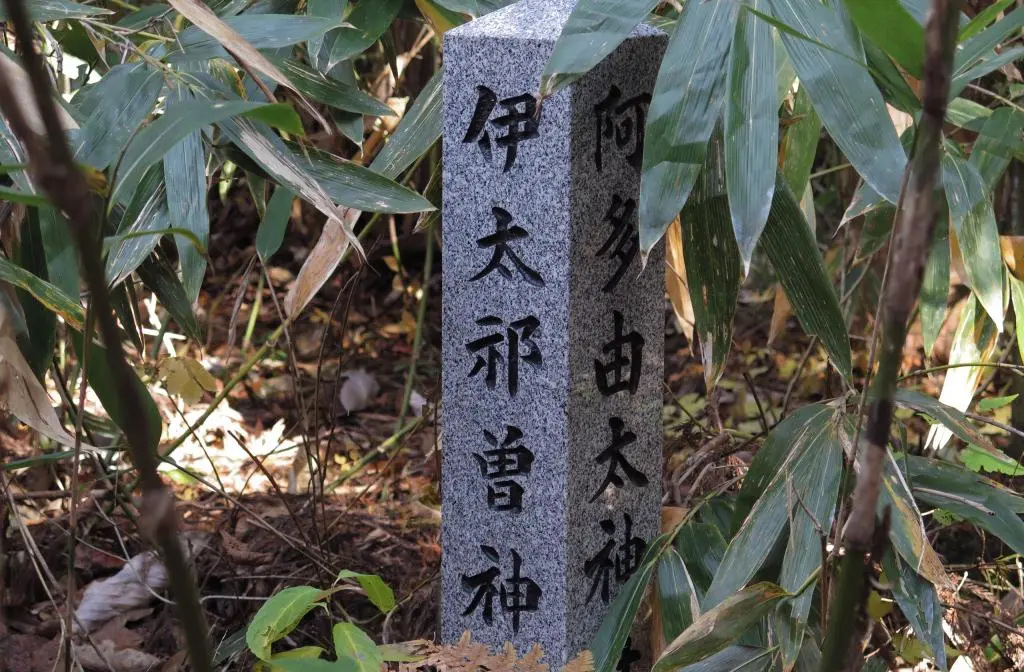
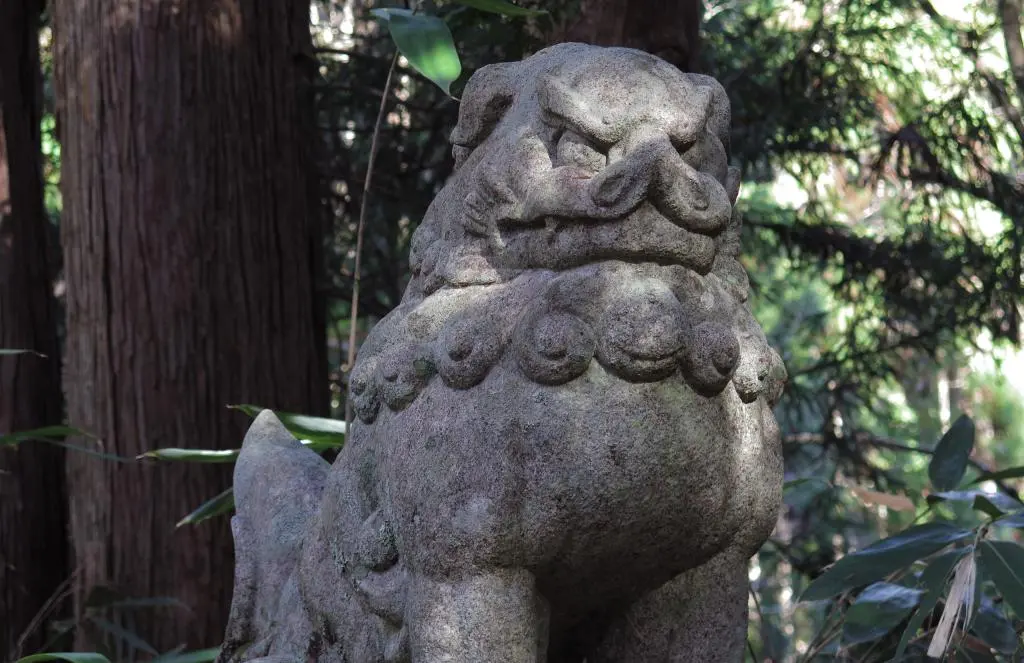
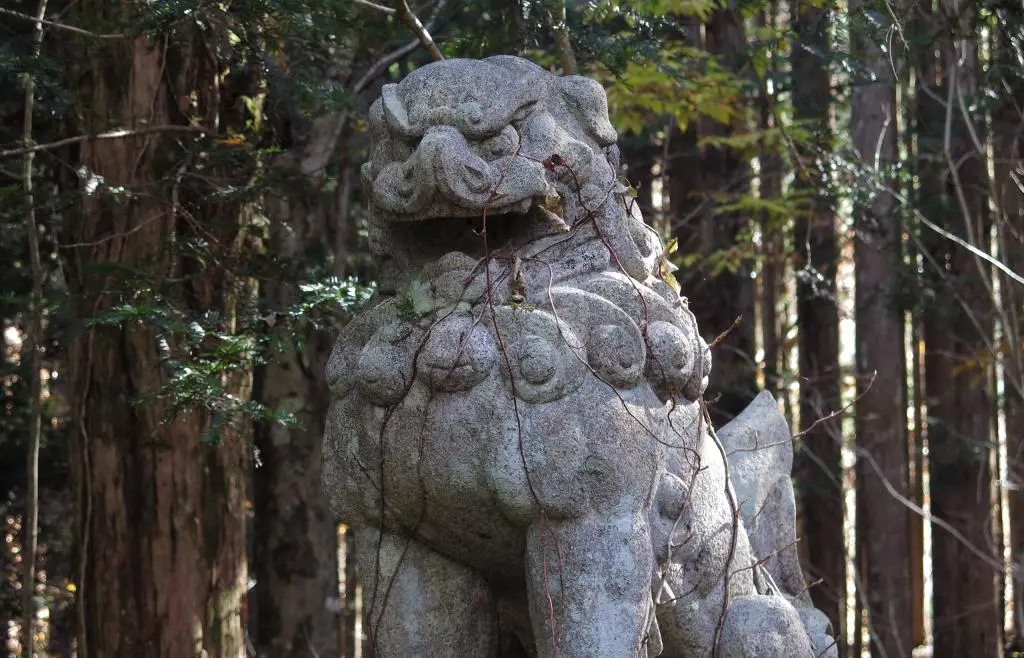
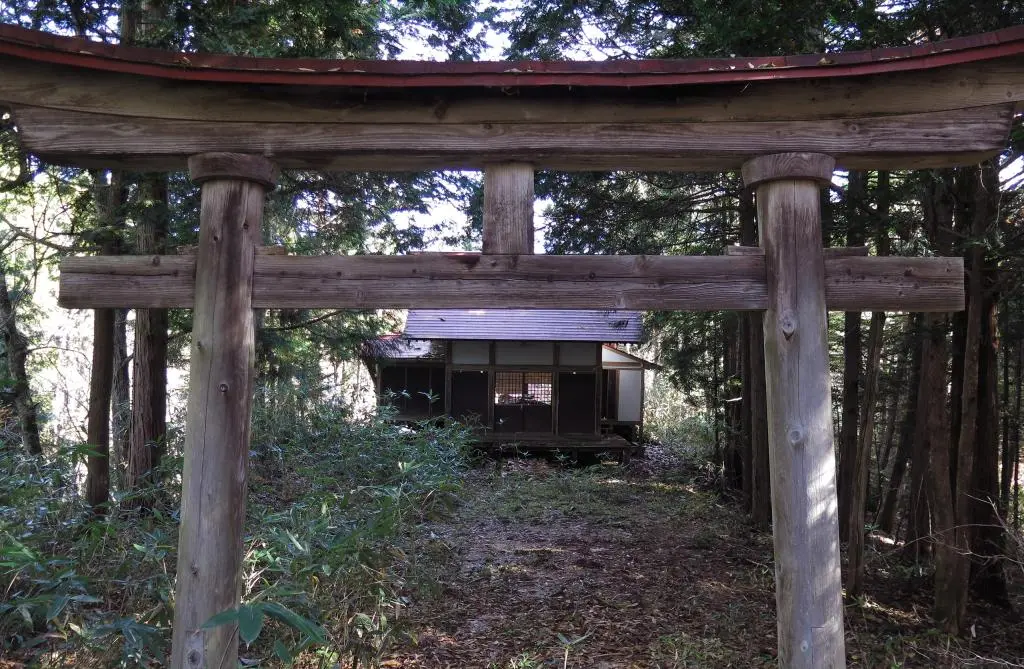
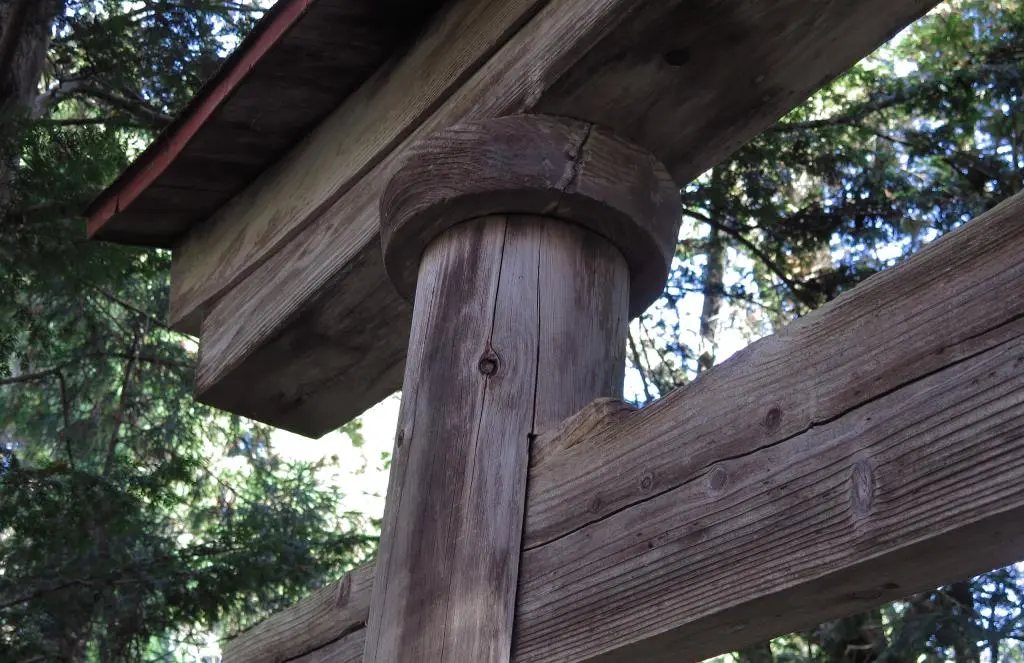
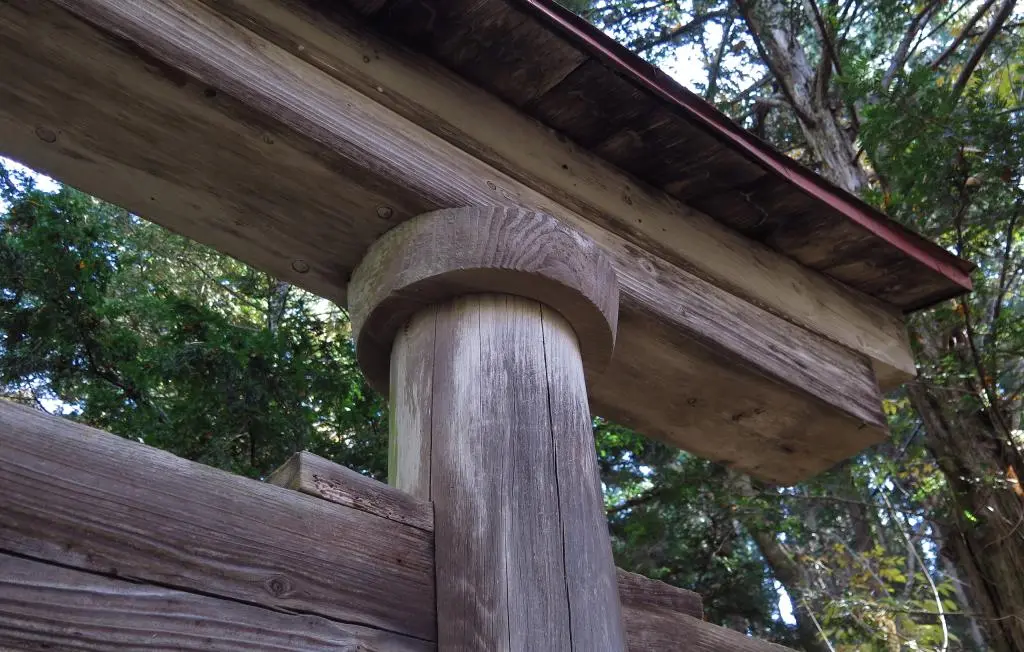
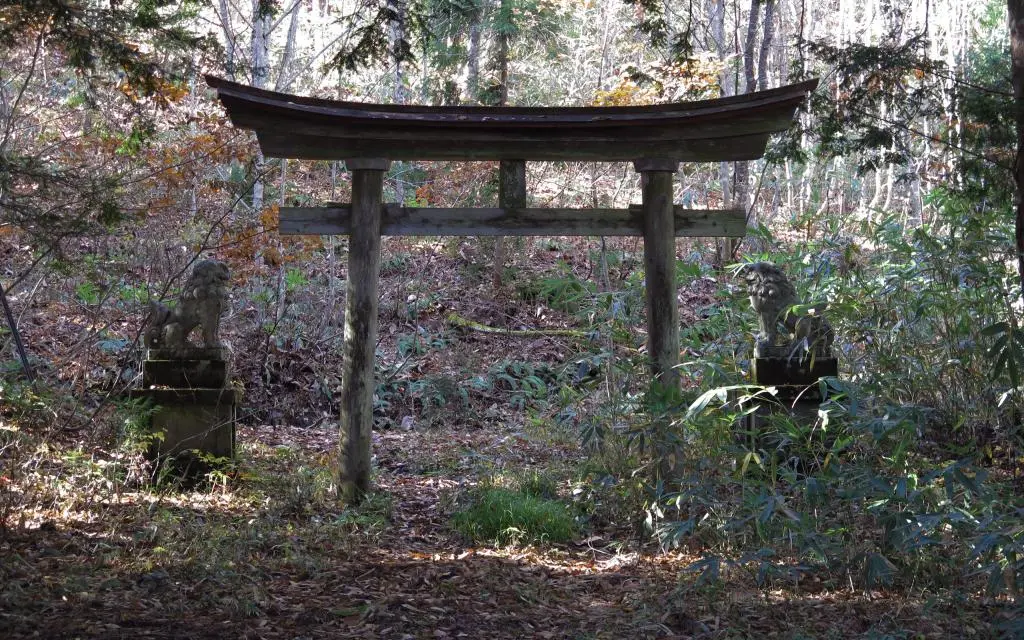
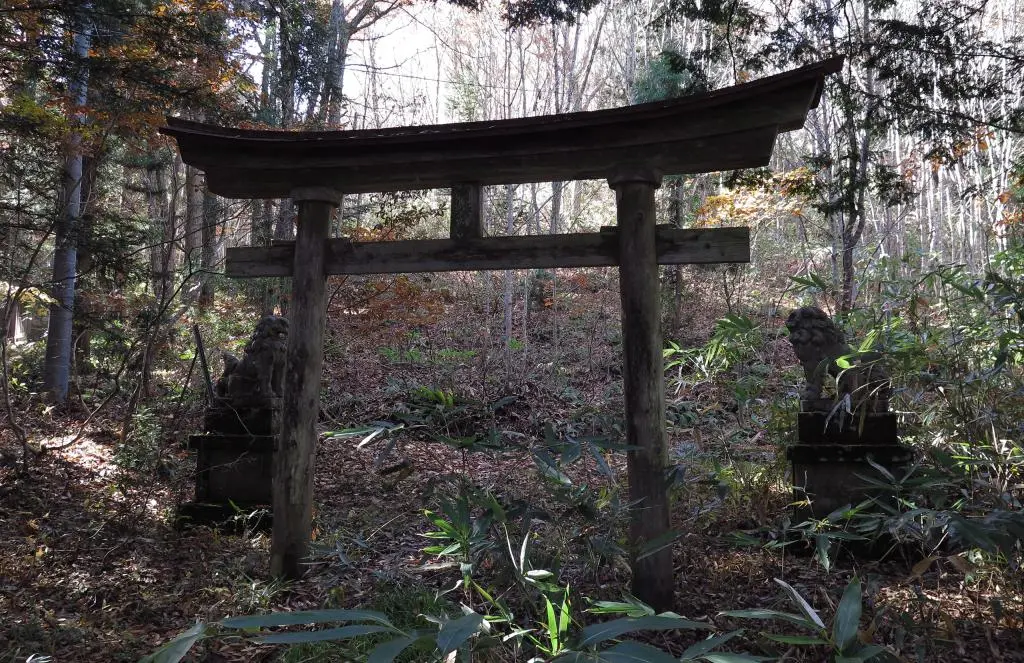
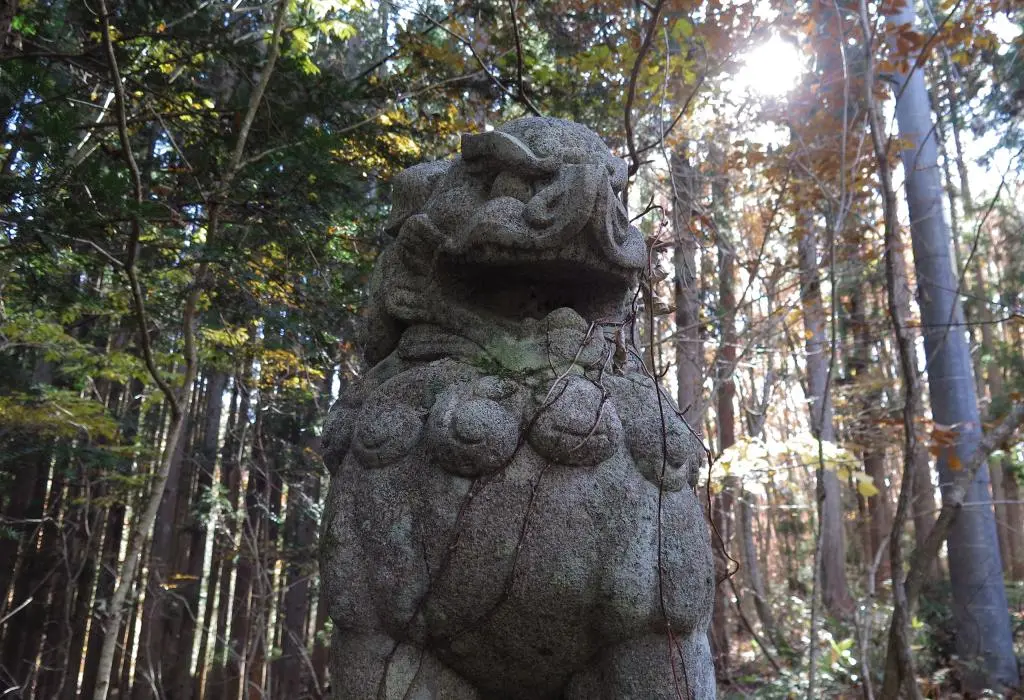
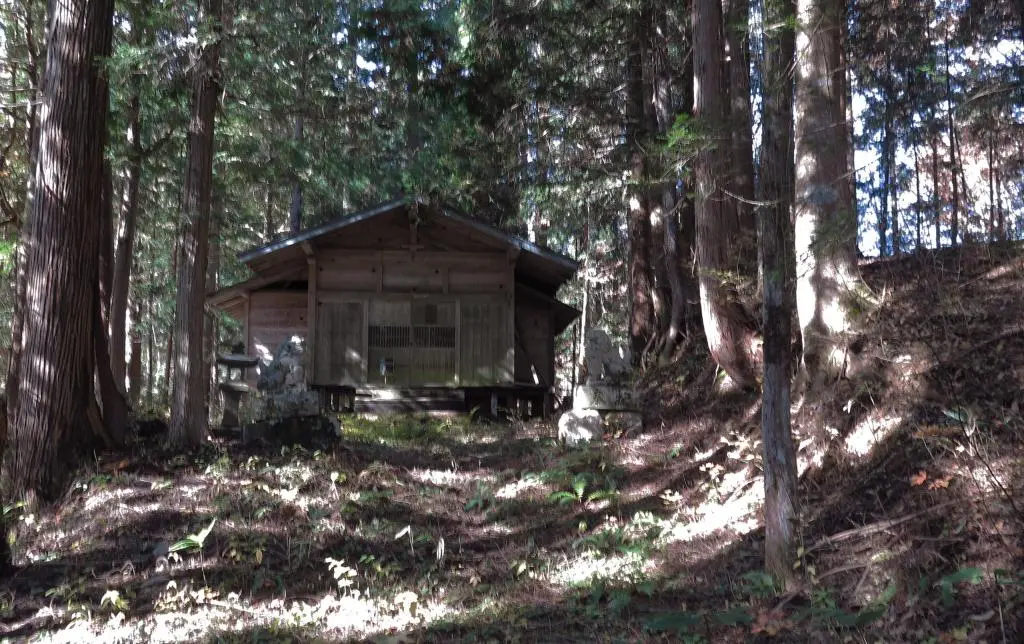
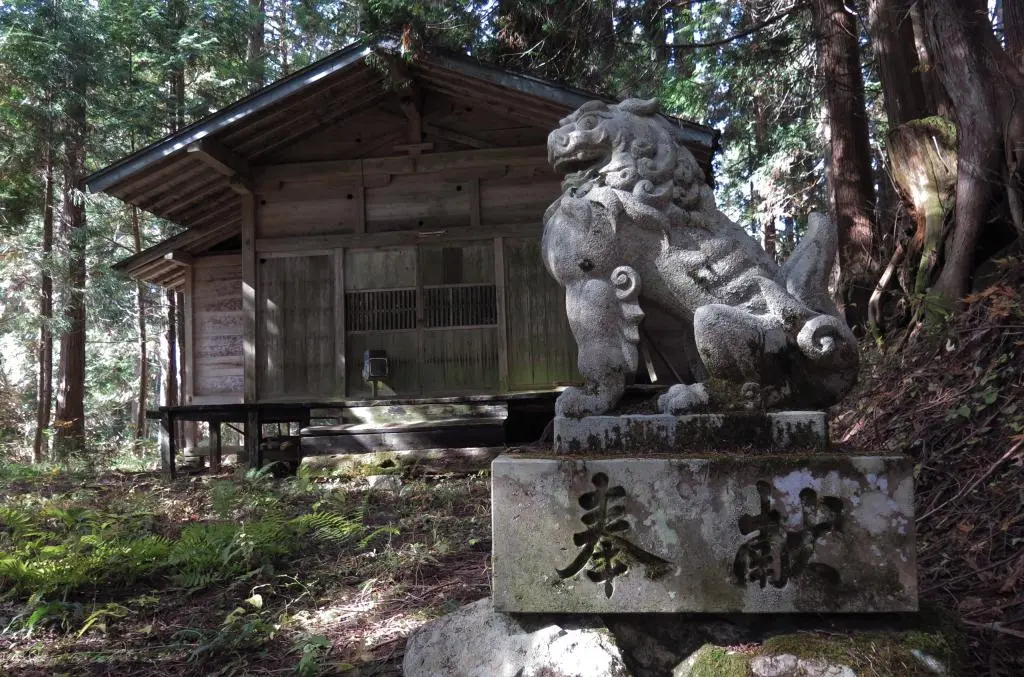
This is the Itakiso Shrine 伊太祁曽神社. Almost all shrines found in the mountains have an arched gateway made from stone, but this one was made from wood. I suppose that indicates two things. One, the shrine is very old. Although all shrines up in the mountains are just as old. And two, the people of the village were either poor to the point where they couldn't afford a stone arch. Or the area was abandoned or depopulated so much at the point other shrines were upgrading to stone arches. Or the remaining residents thought the original wooden gateway was better.
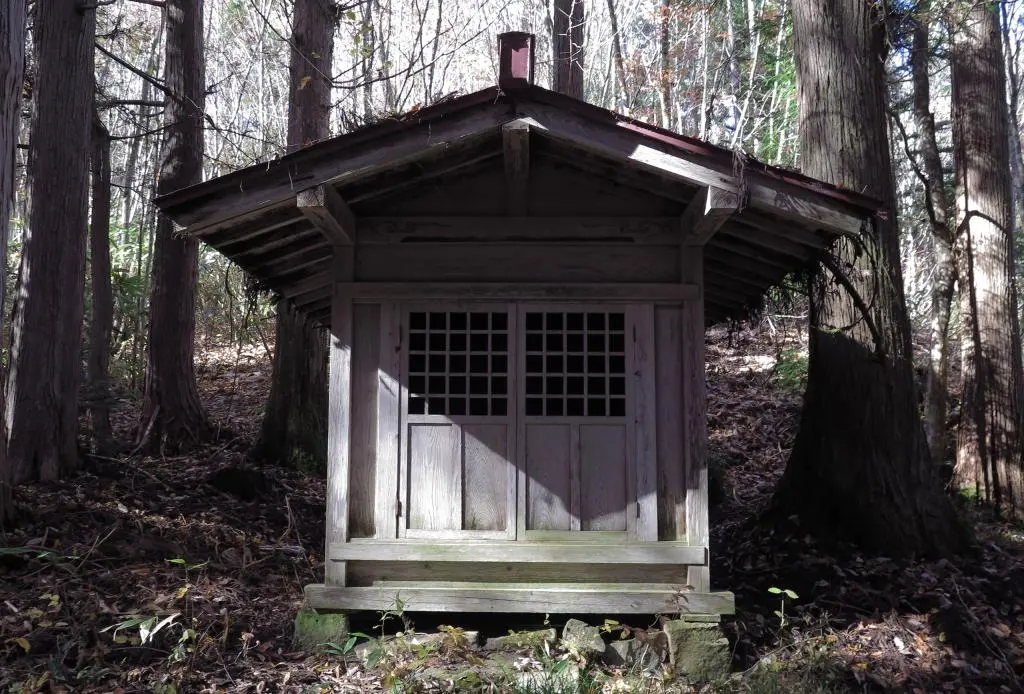
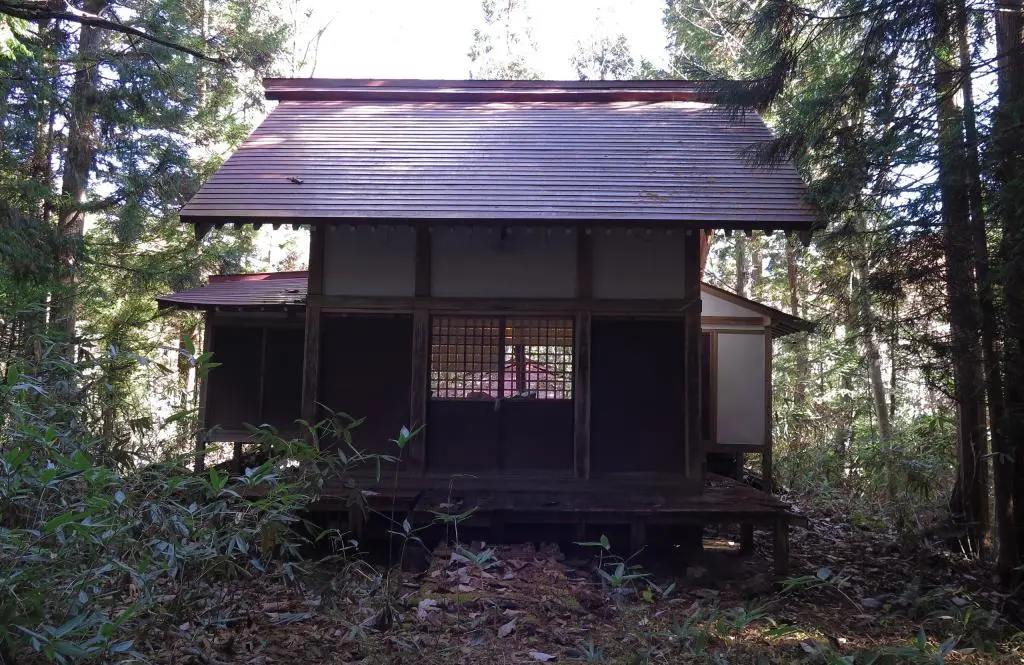
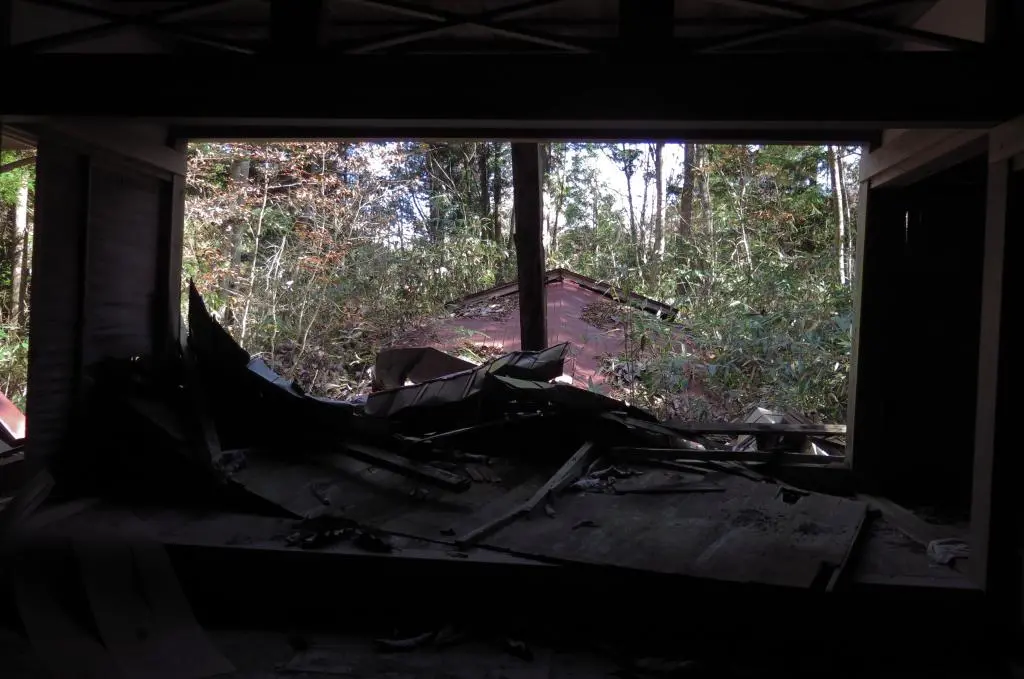
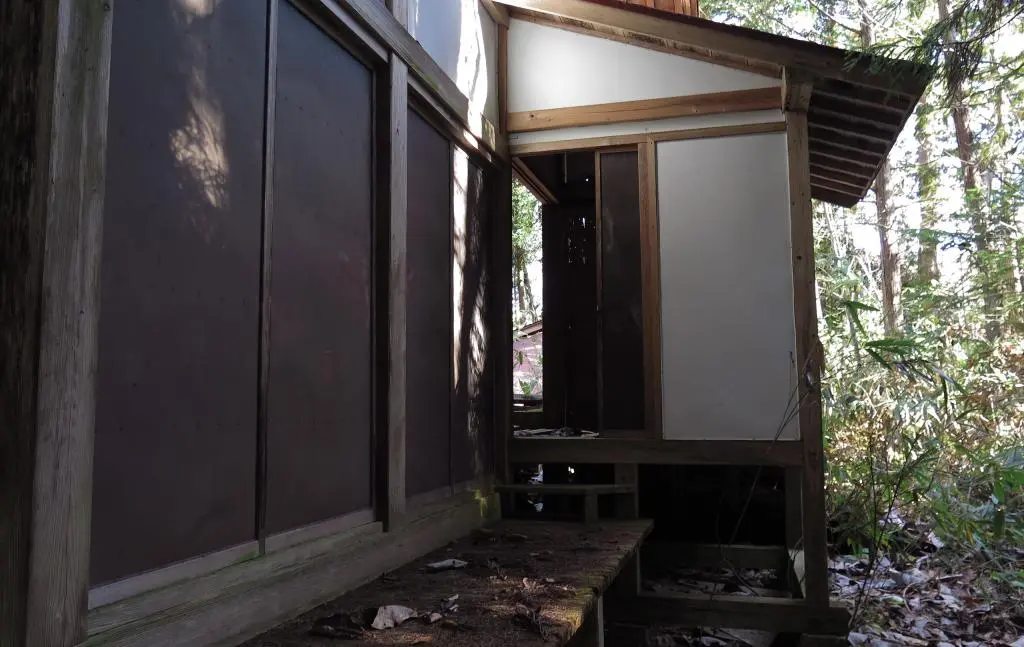
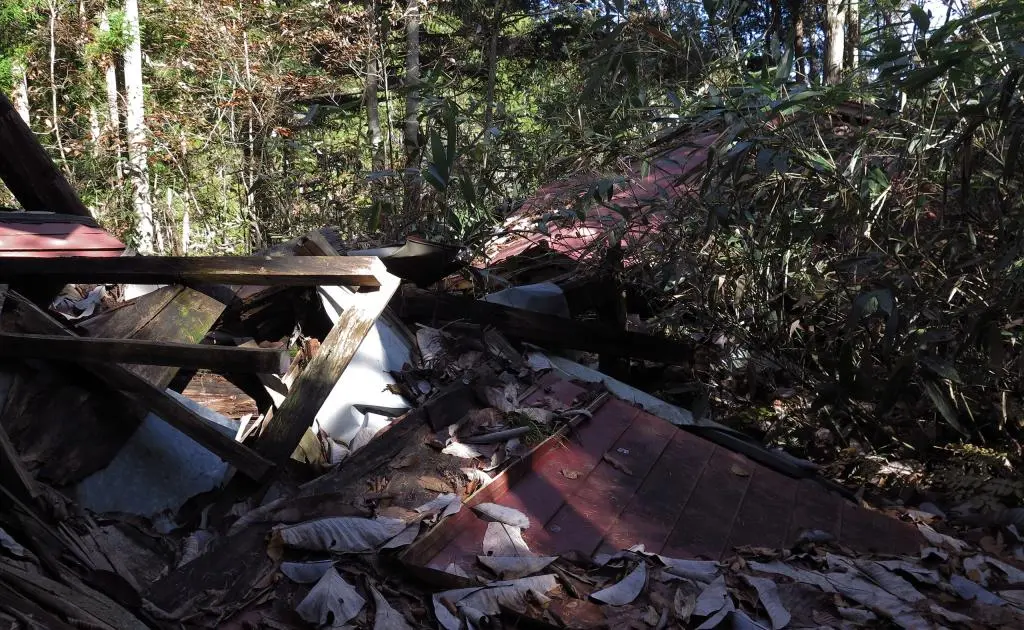
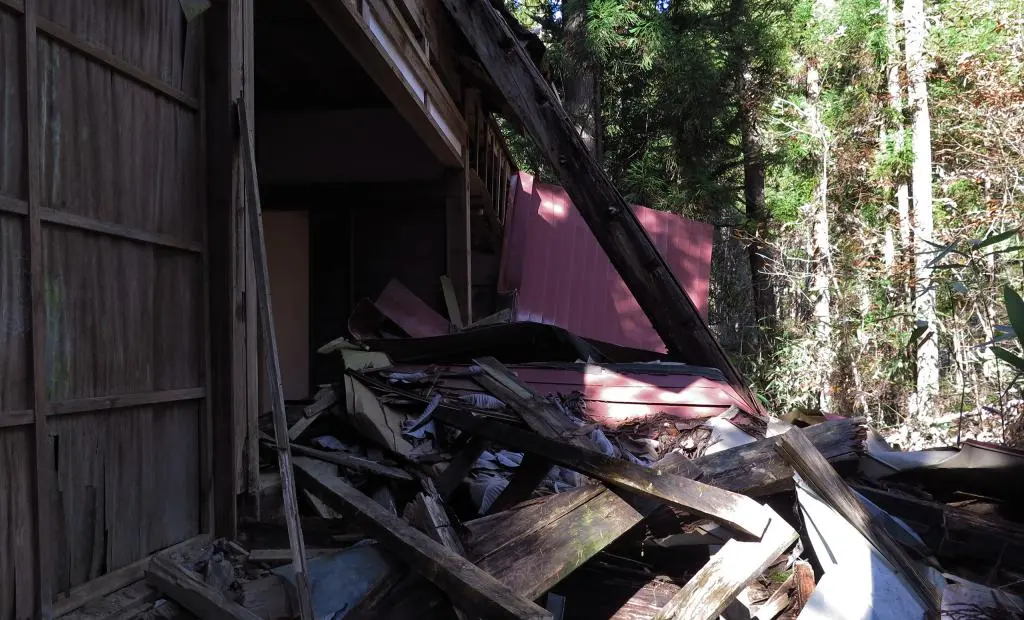
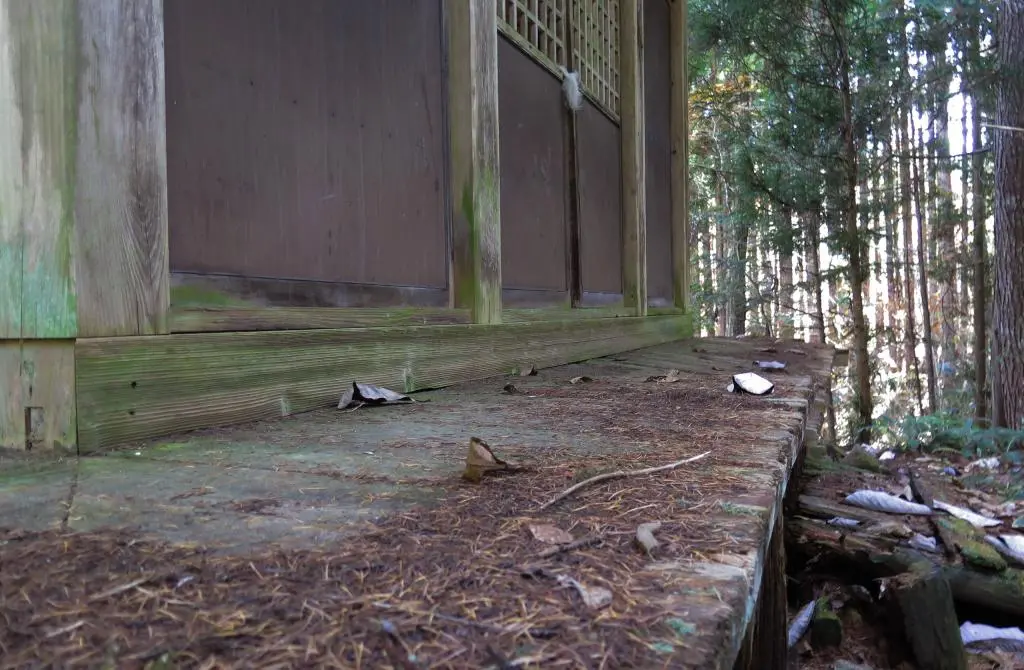
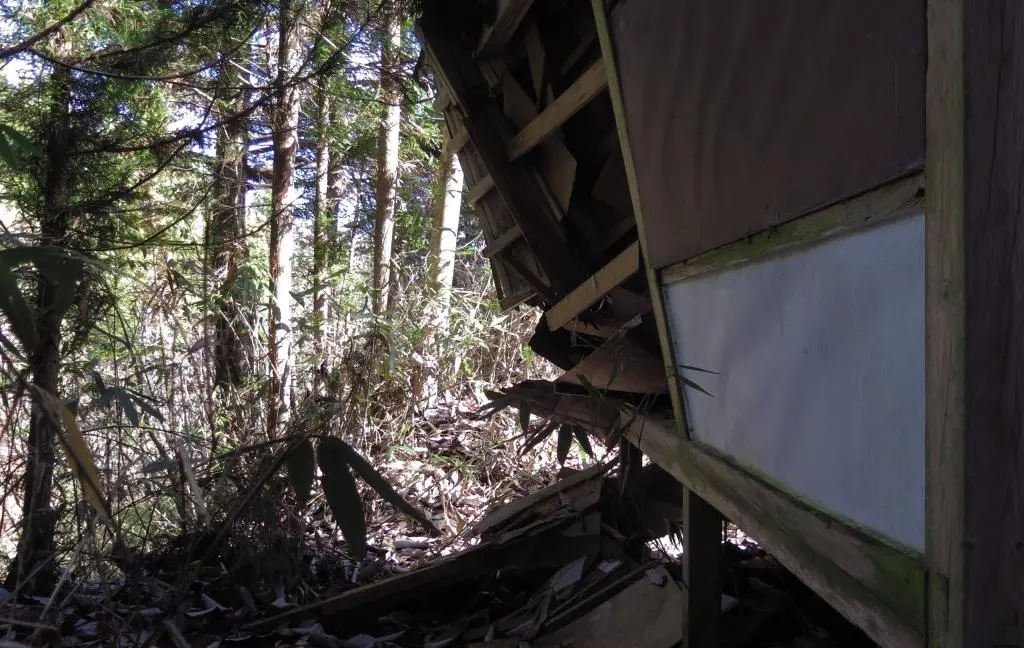
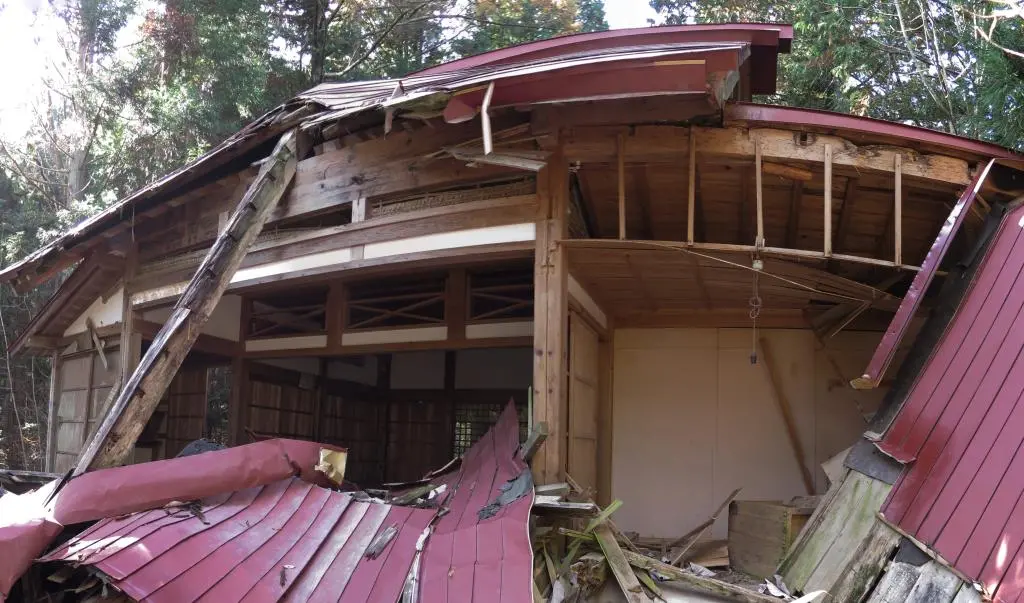
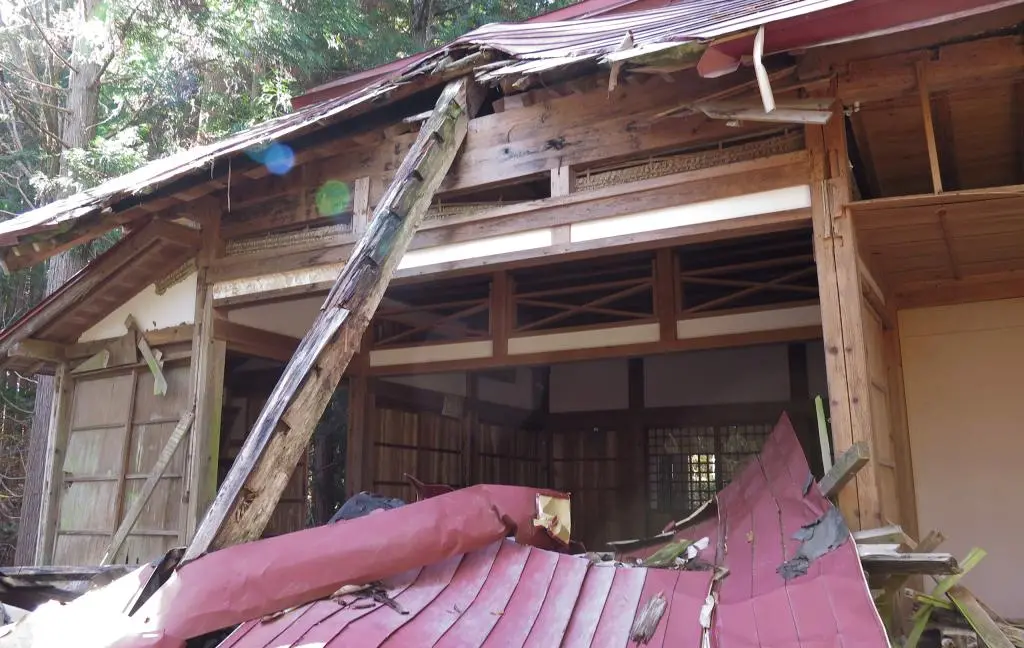
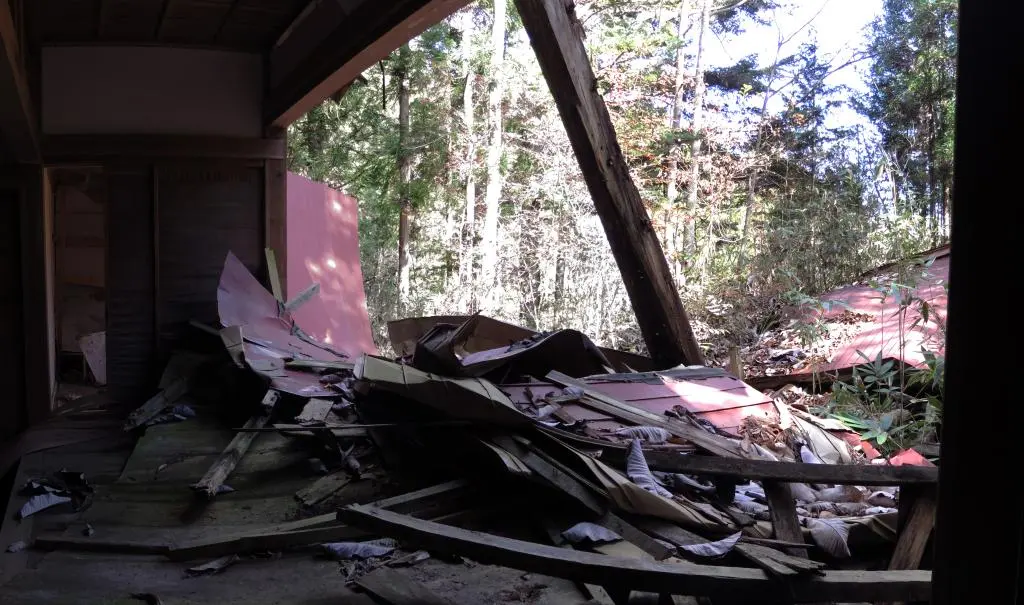
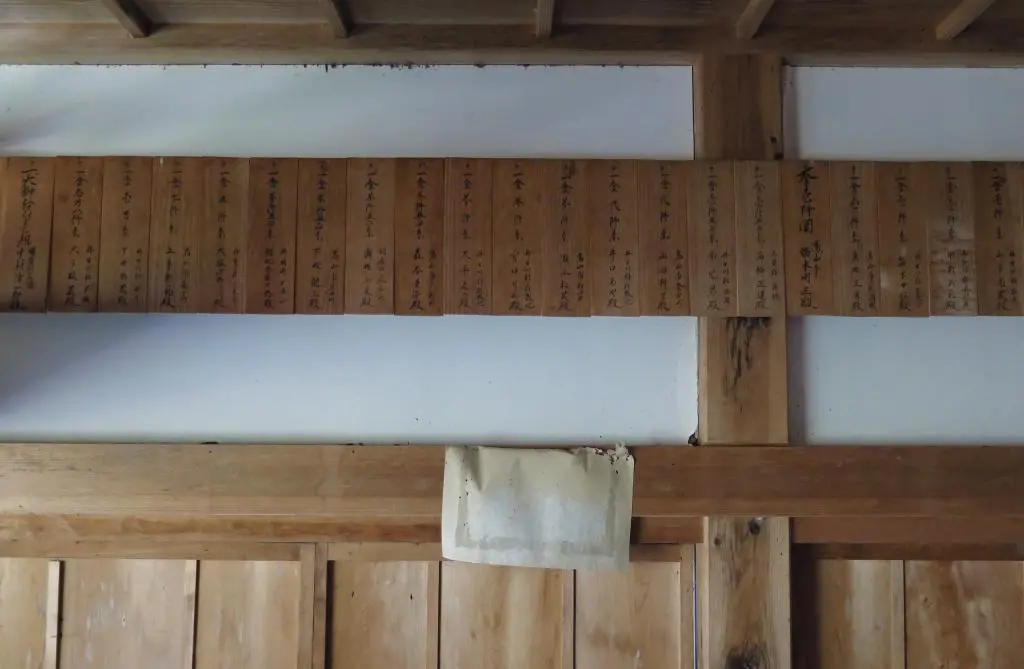
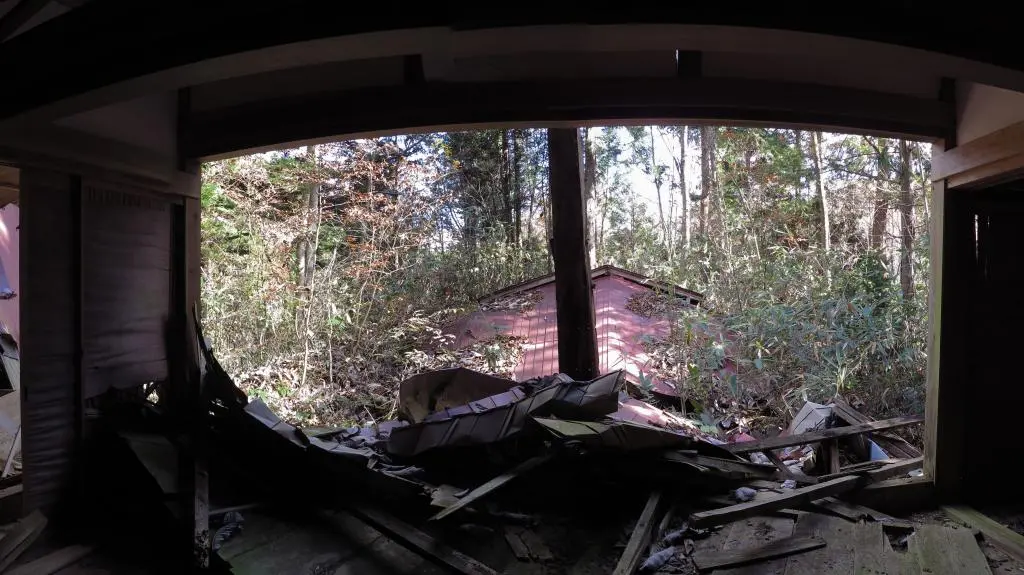
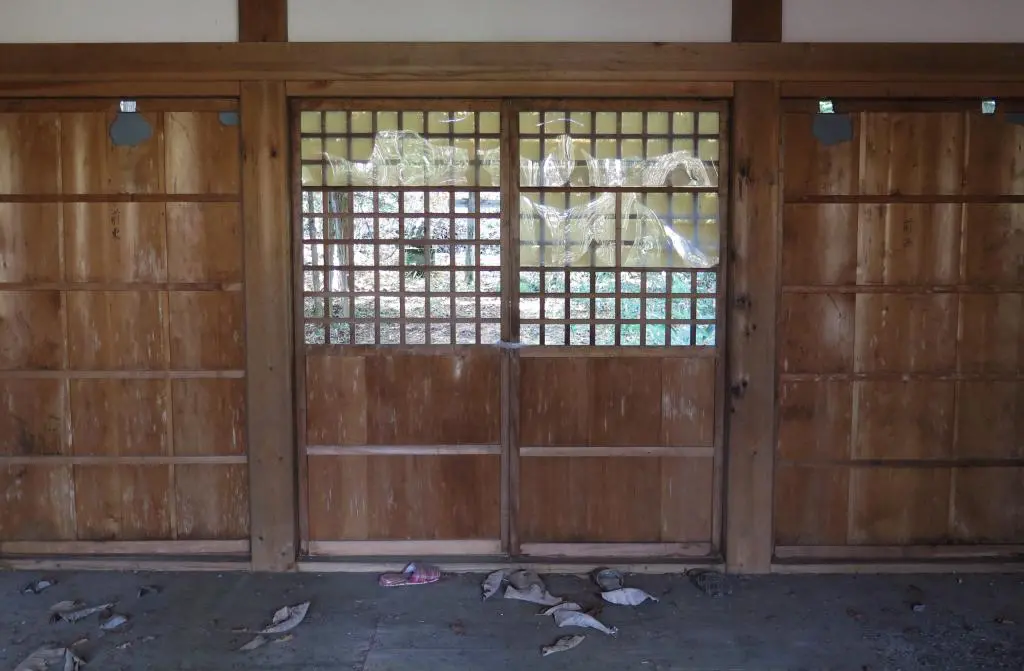
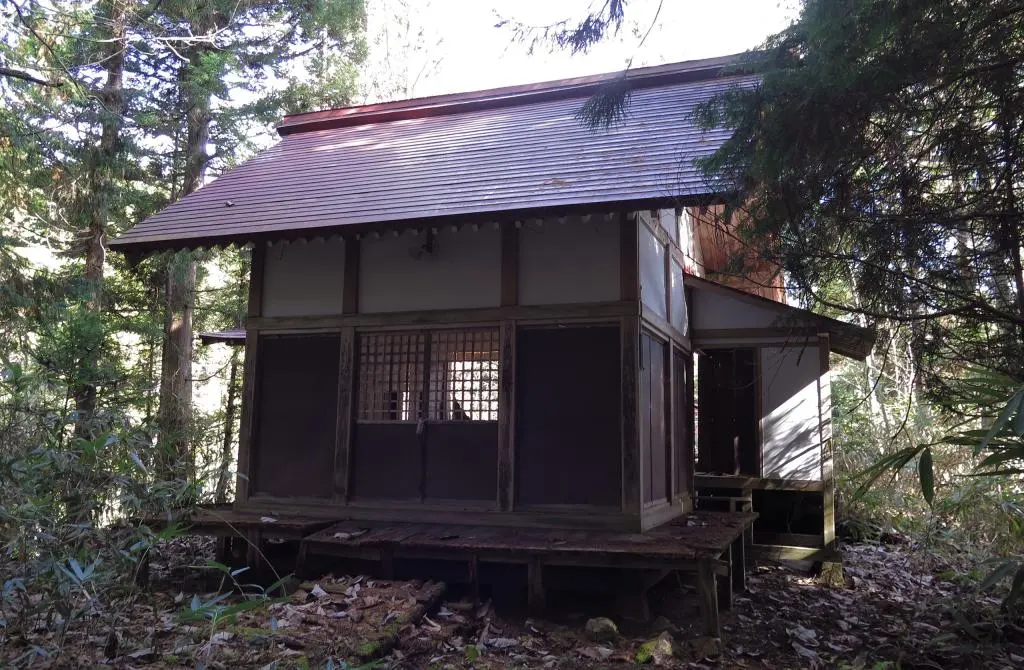
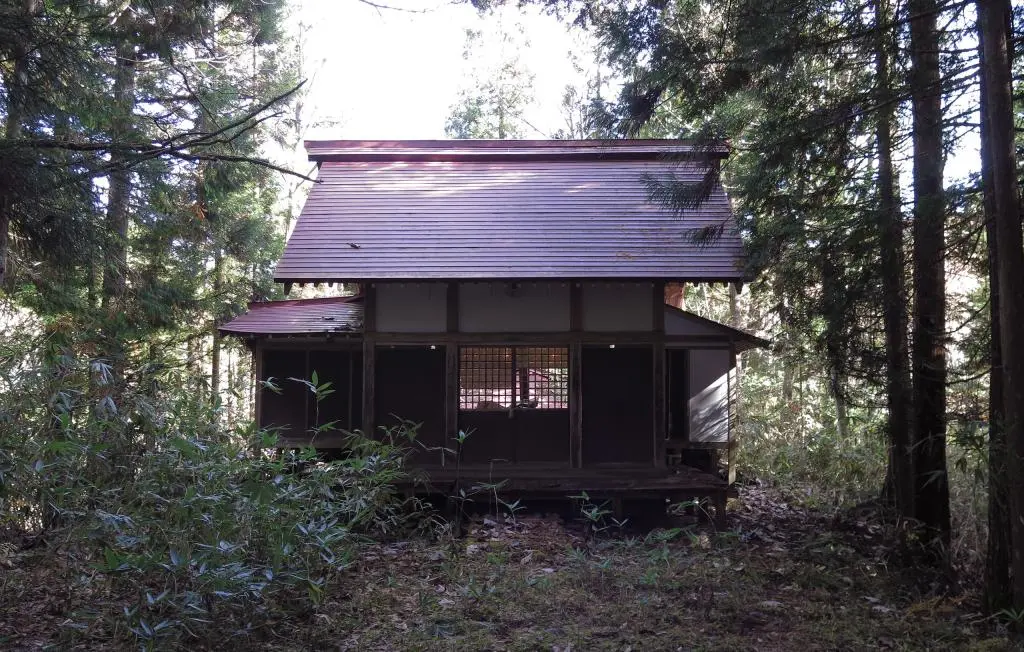
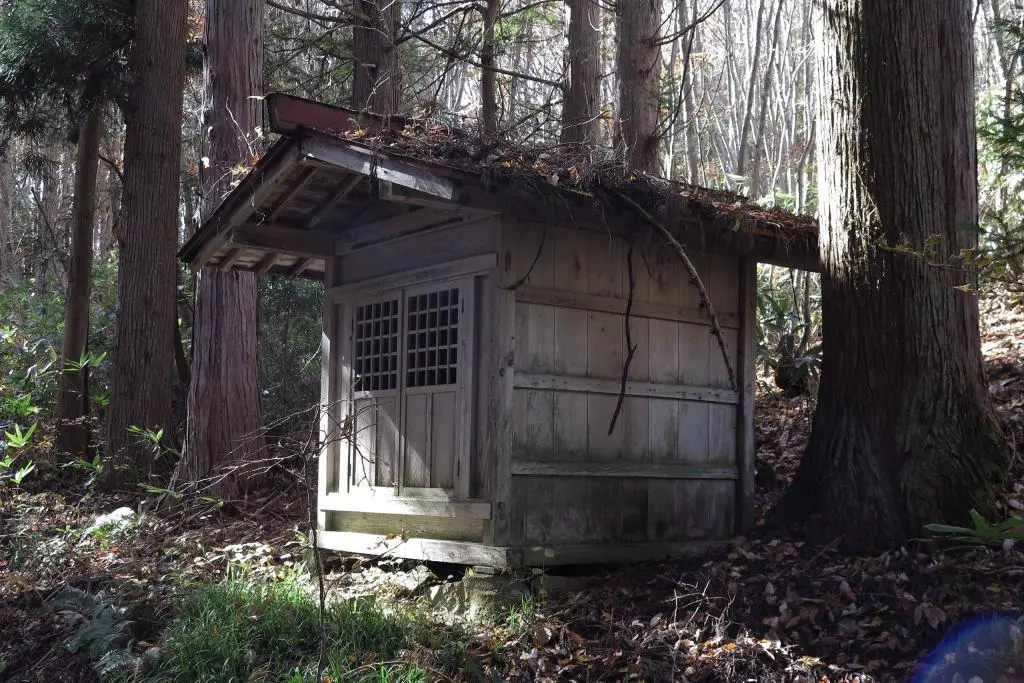
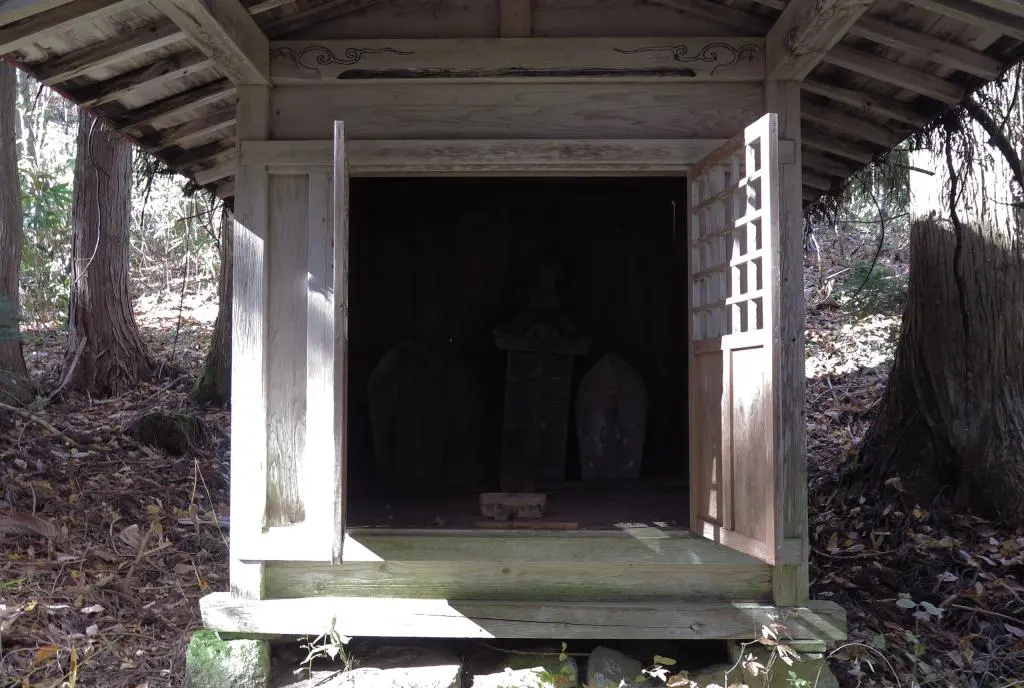
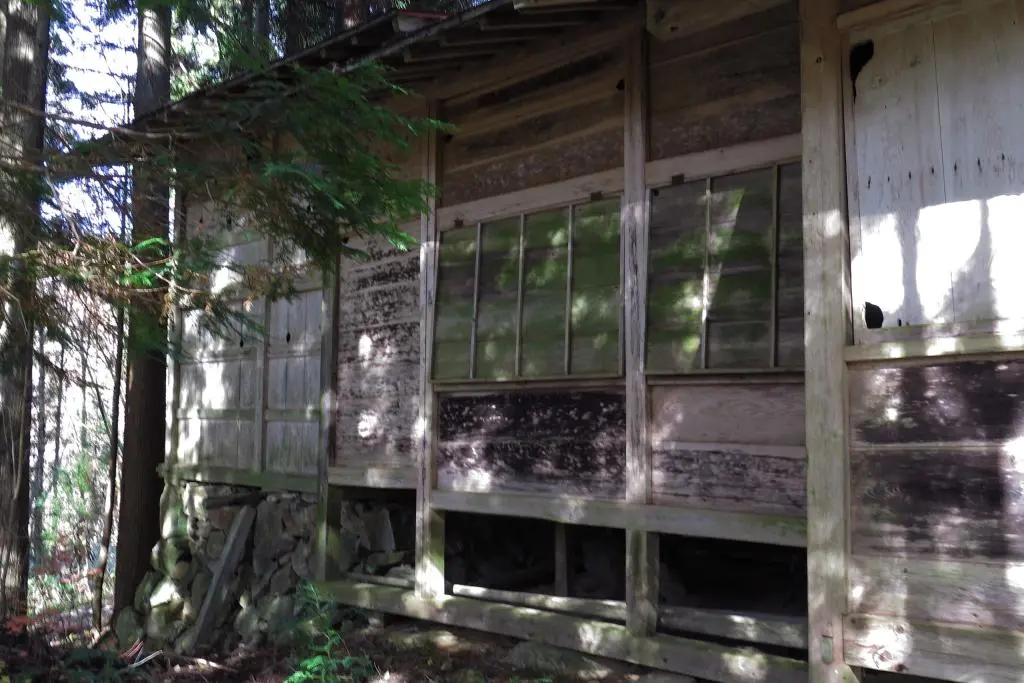
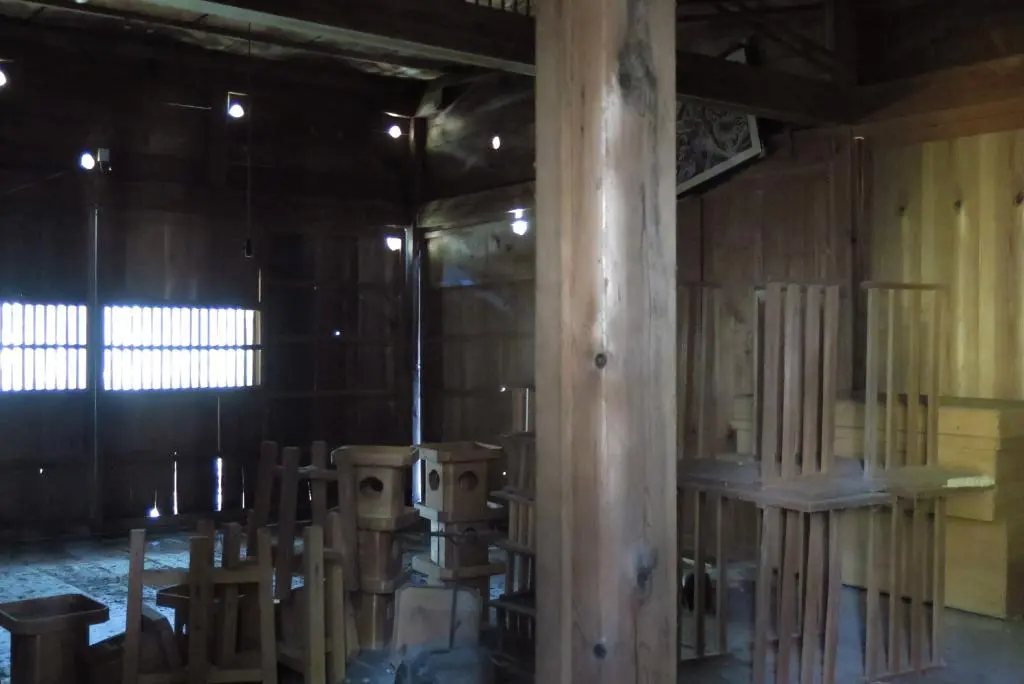
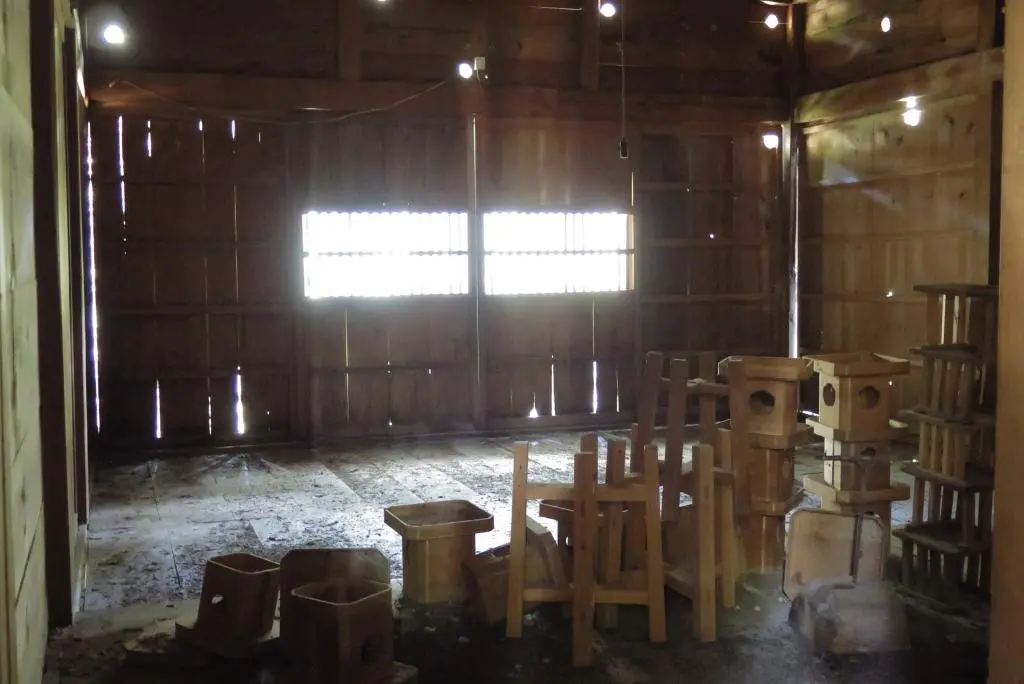
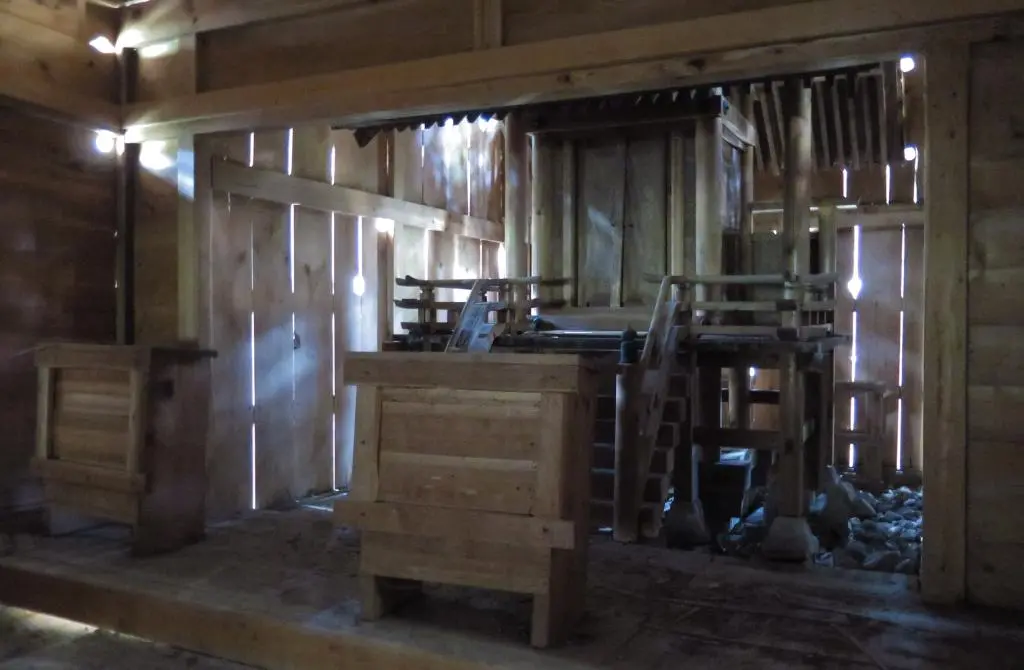
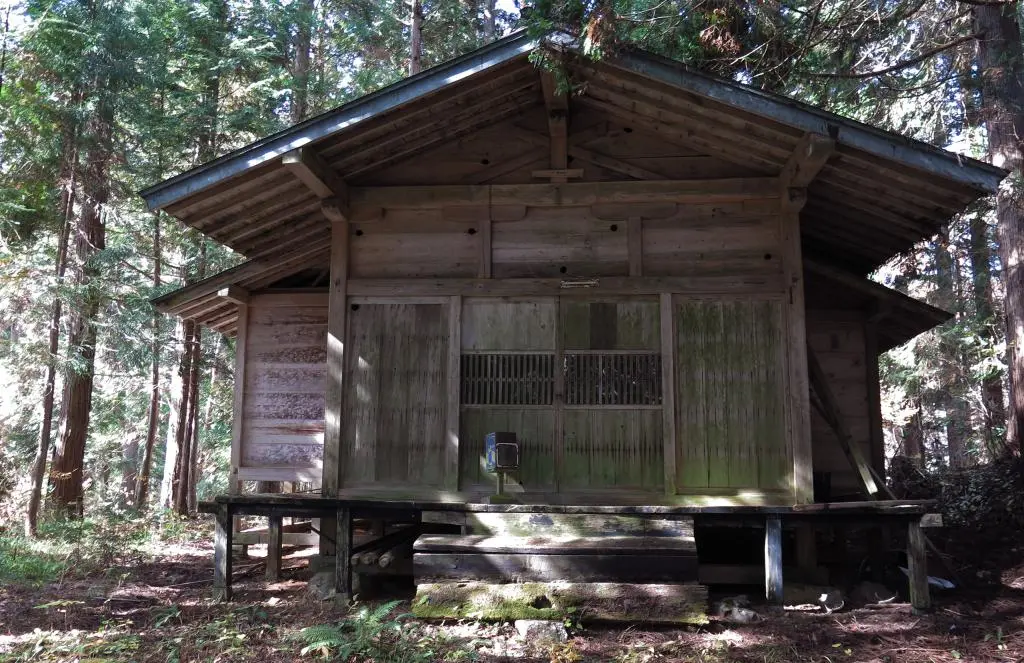
Going through the gateway, you are greeted with the shrine. Looking from the front, the shrine just seemed old and abandoned, but after looking through the door and walking around the side, half of the building had collapsed.
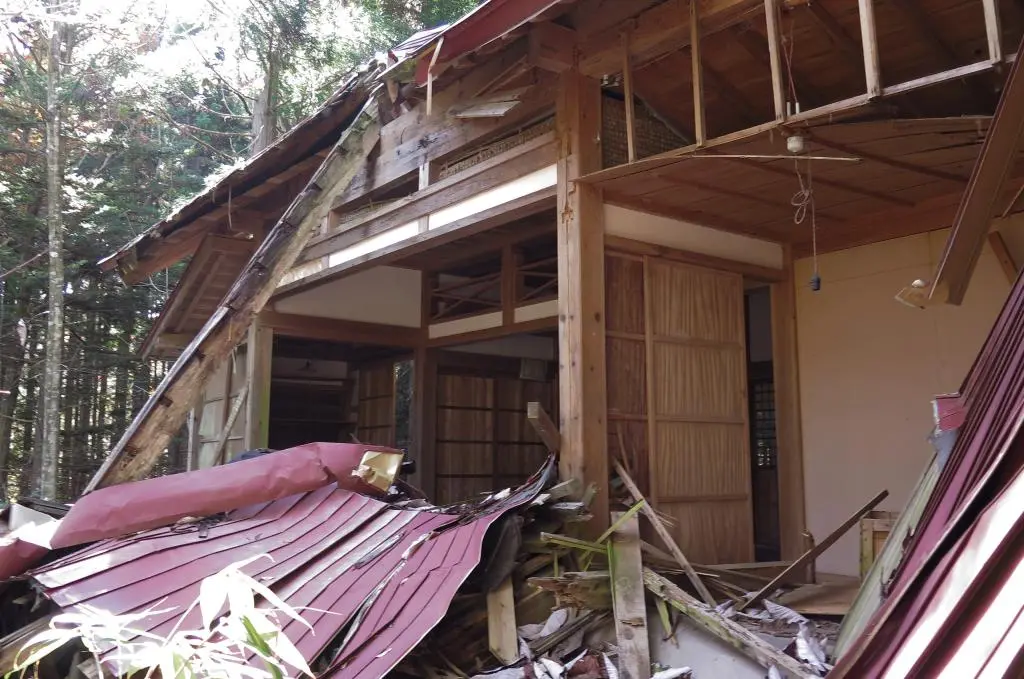
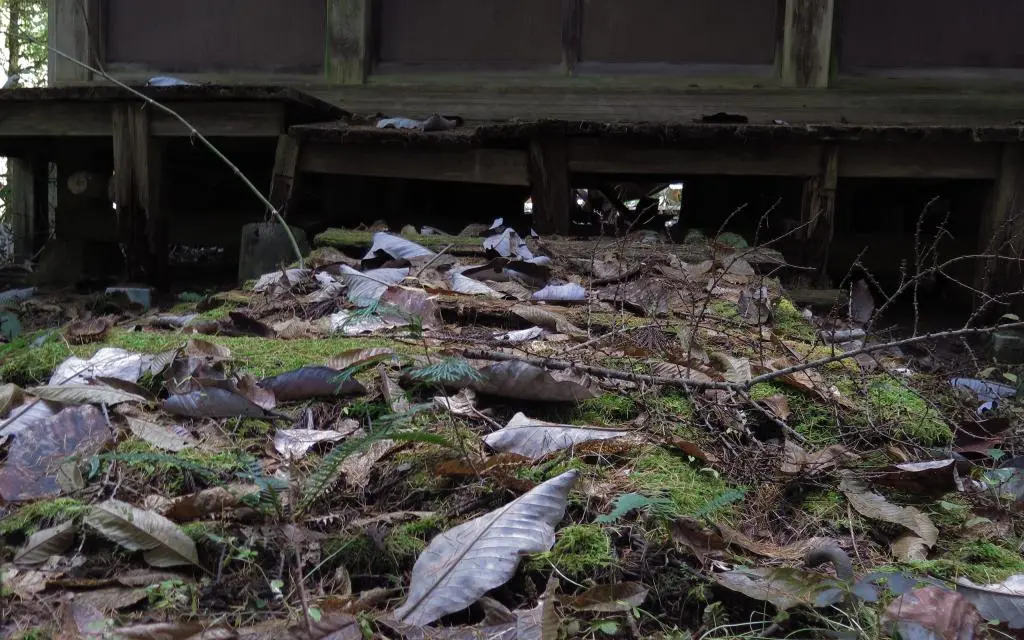
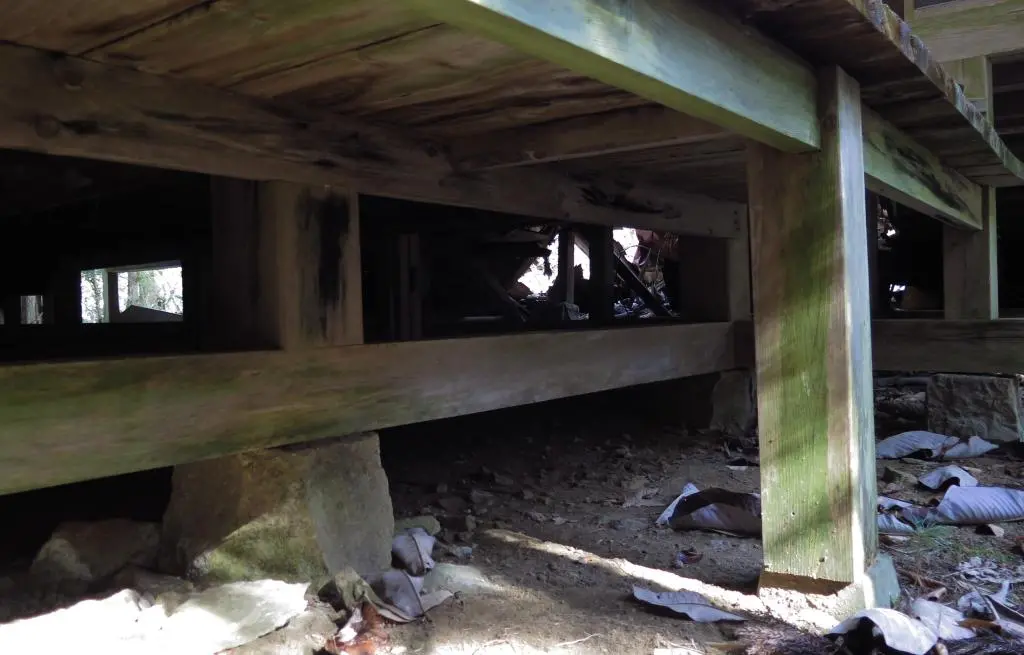
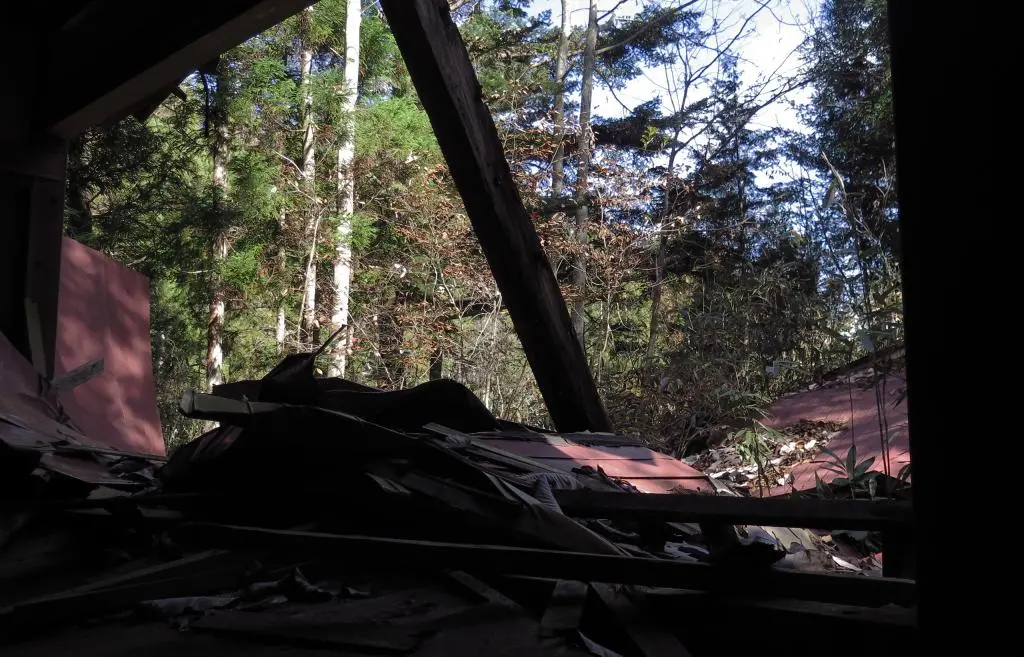
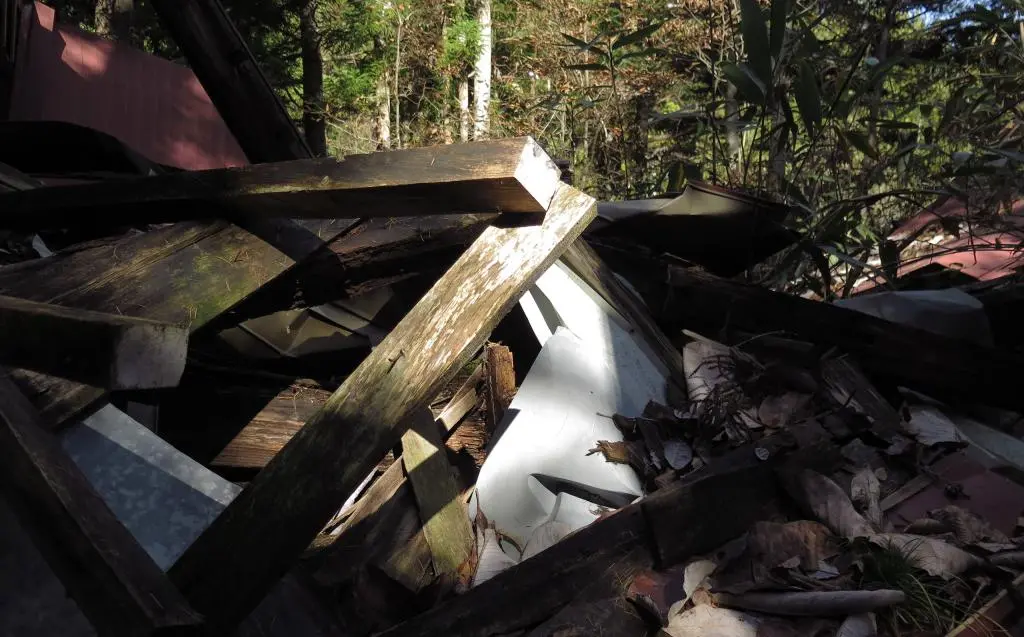
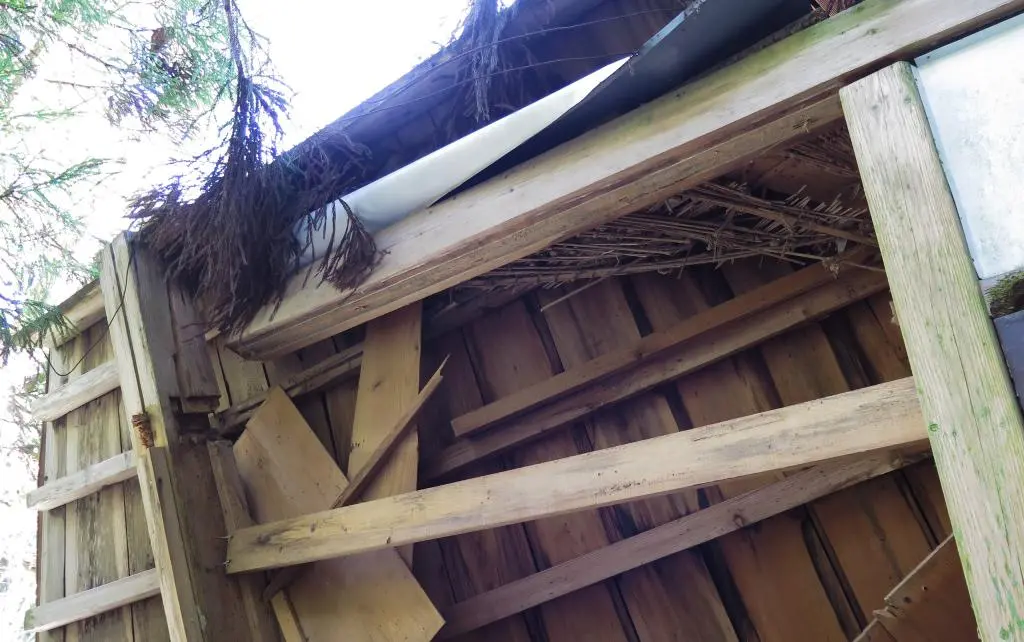
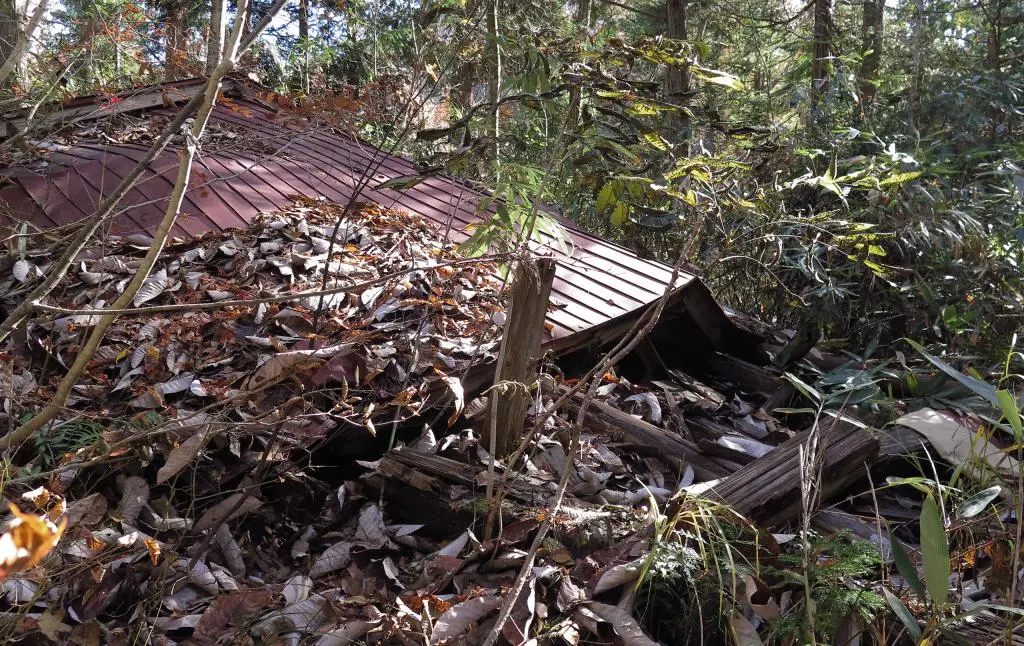
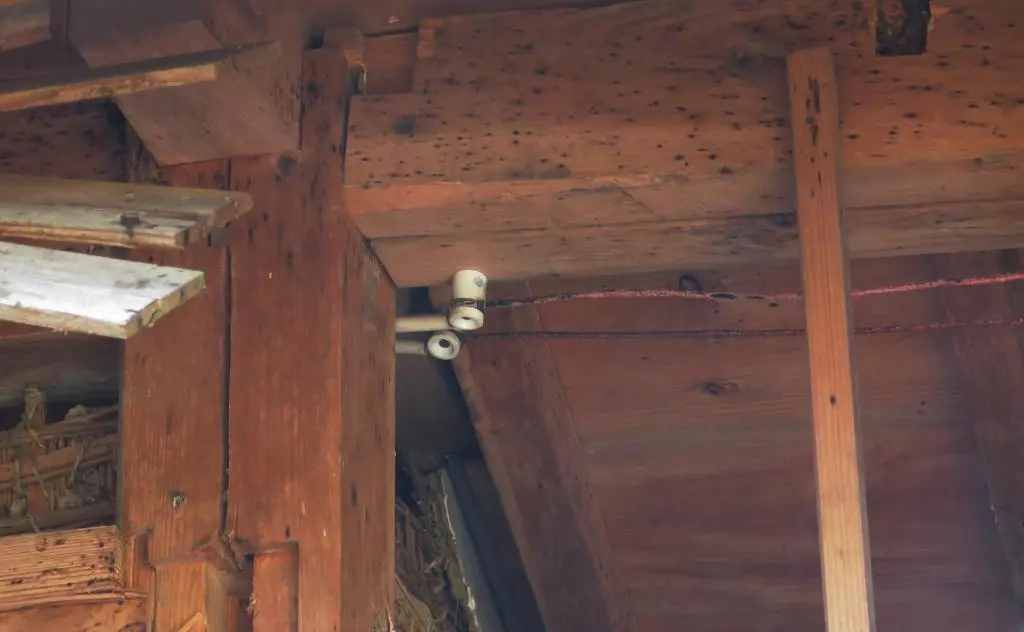
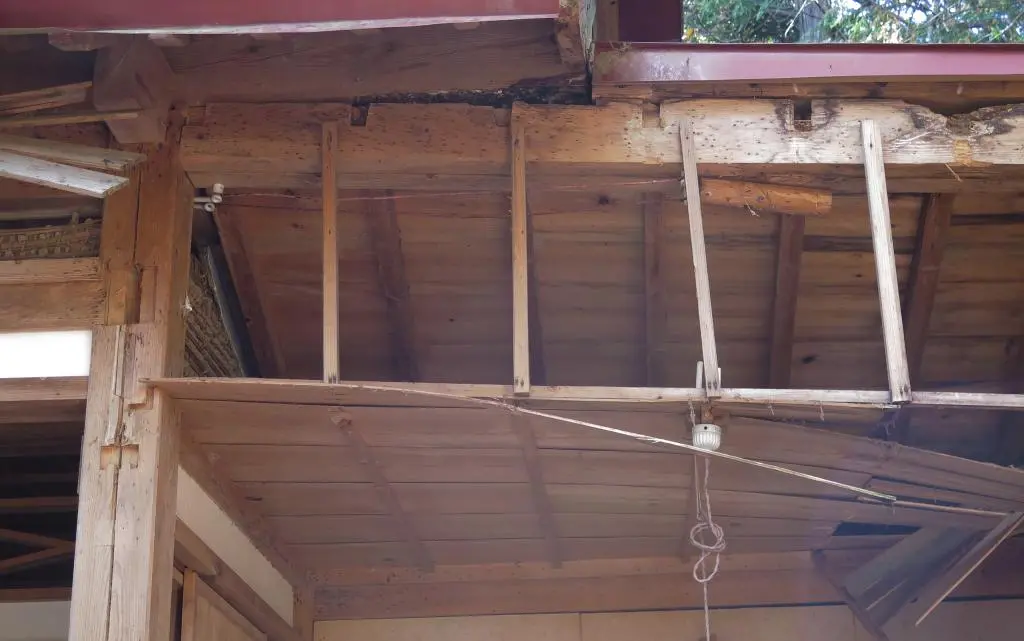
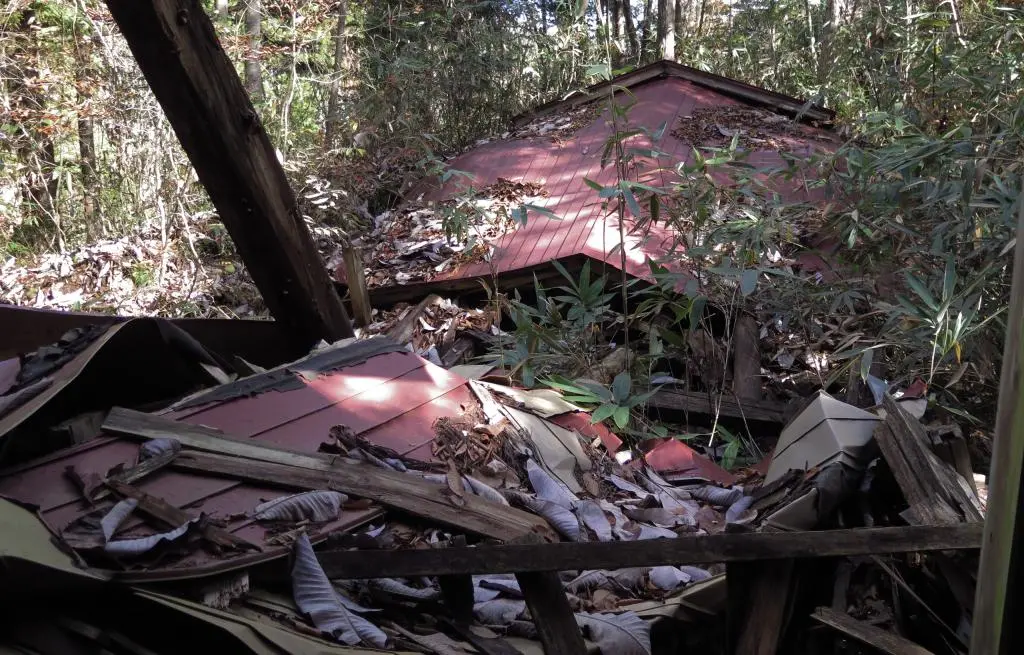
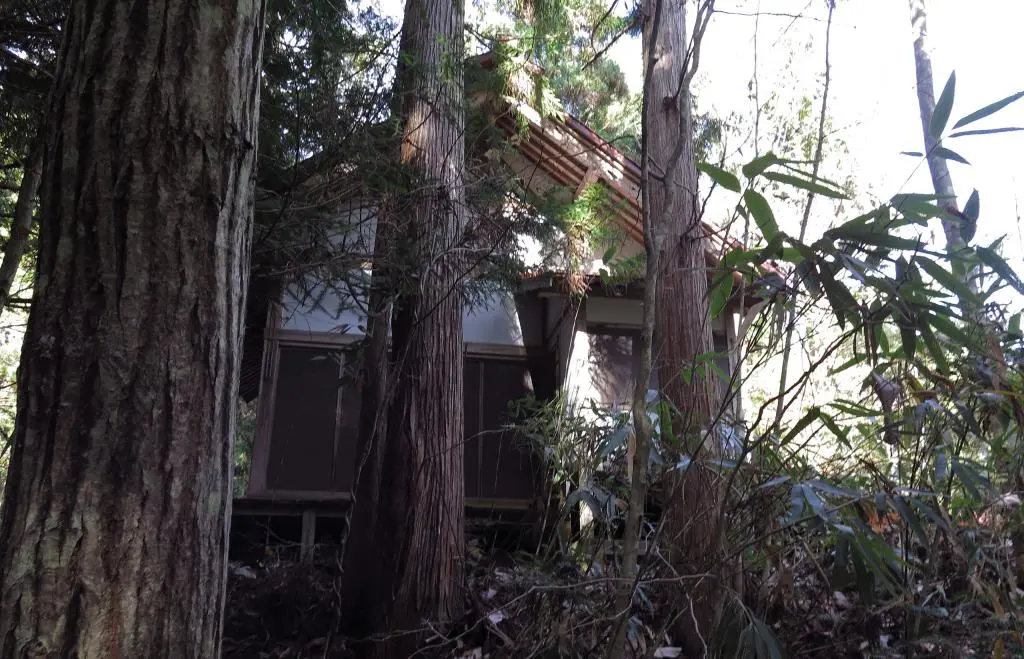
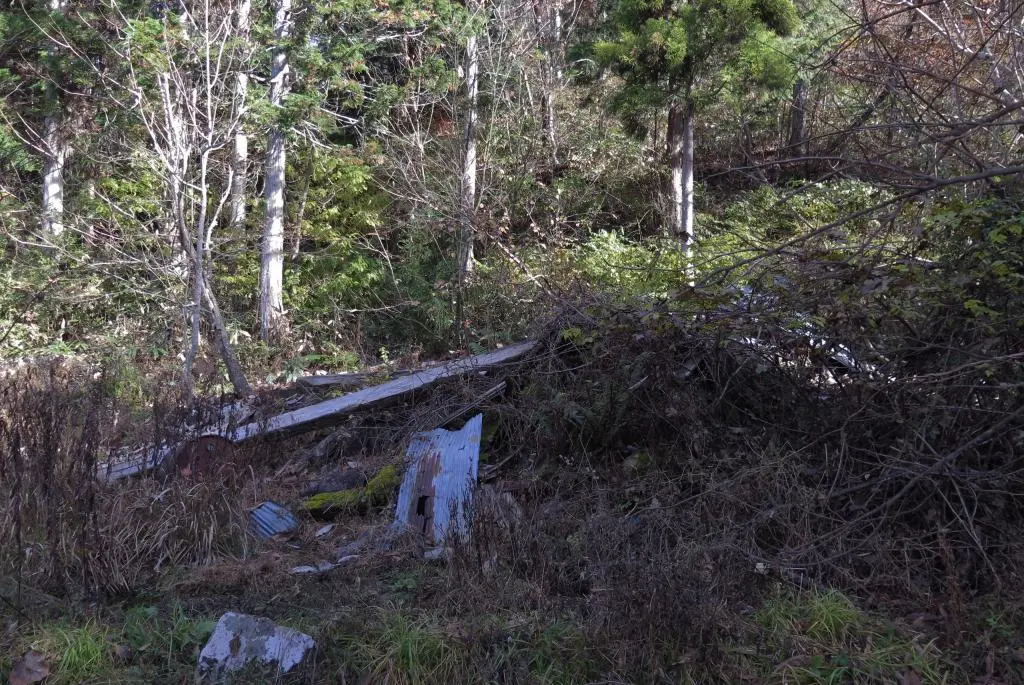
The god's chamber and the hallway leading to it had completely collapsed, probably from a combination of termite damage and decades of winters with heavy snow weighing down the roof.
Thanks to global warming, we haven't gotten all that much snow in Takayama lately. However, the city area tends to be 5 degrees warming than all the surrounding mountain areas, like this location. Usually when it rains in late autumn and early spring, these areas get snow. And prior to recent years, there have been winters in Takayama where we have gotten METERS of snow in short amounts of time. There's hardly any wind in Takayama, too, so it all just piles up rather than blows away.
I can imagine a scenario where this singular building with its thin roof had around two meters of snow on top. Then all that snow slowly melted and refroze into ice weighing tons. Then more snow would fall and build to that ice. Winters and winters of this would finally create a crack in its roof. Or termites or other insects would create microfractures that would destablize its load-bearing beams.
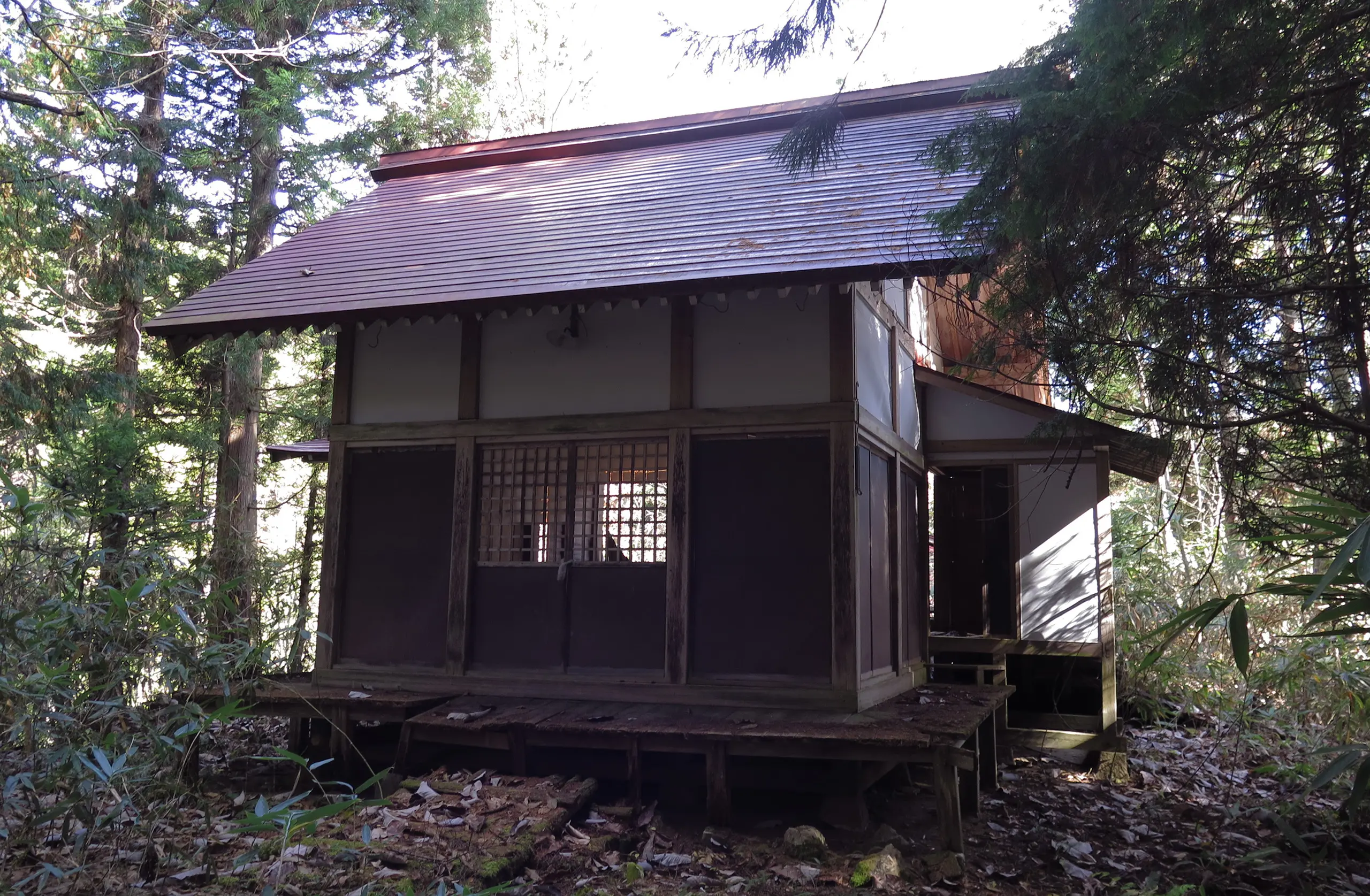
It's so weird how looking at the shrine from the front makes it seem like nothing is wrong. I suppose the front of the building was shielded by the neighboring trees. The back of the building was more exposed to open sky.
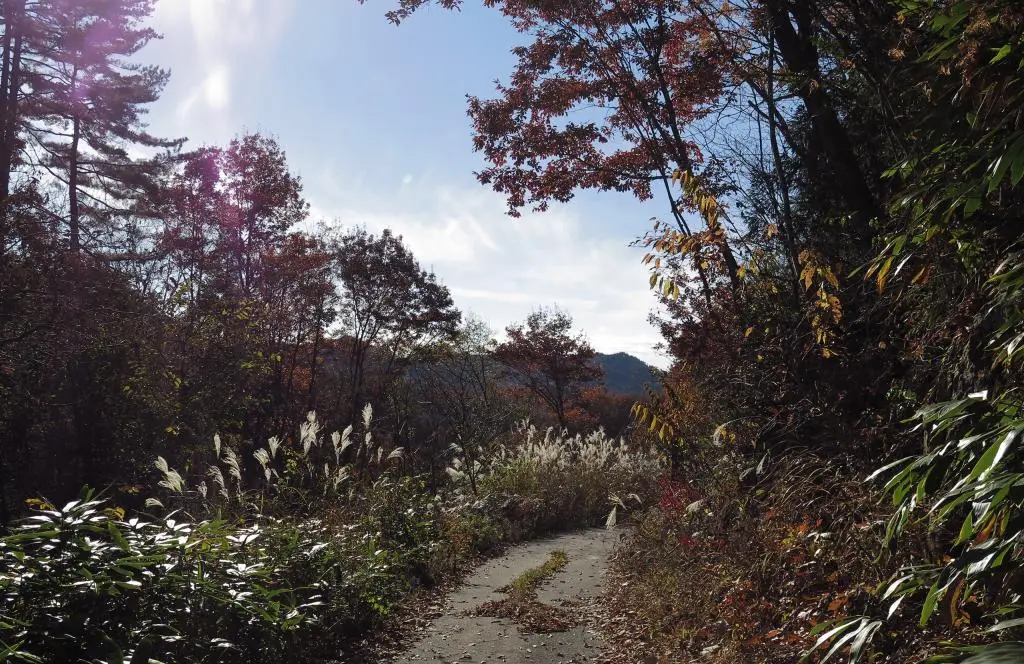
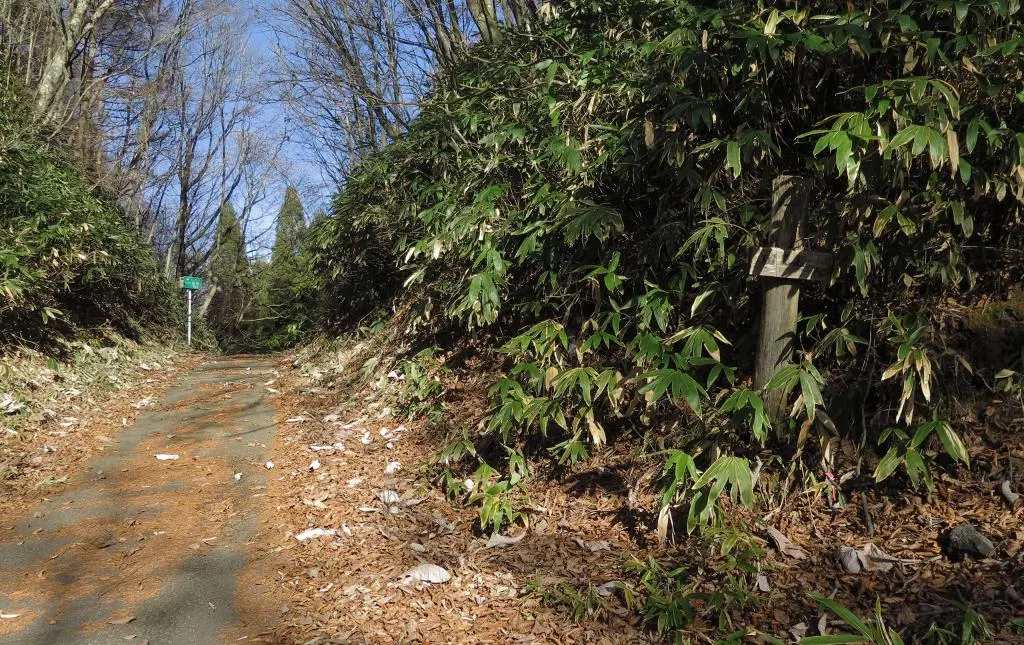
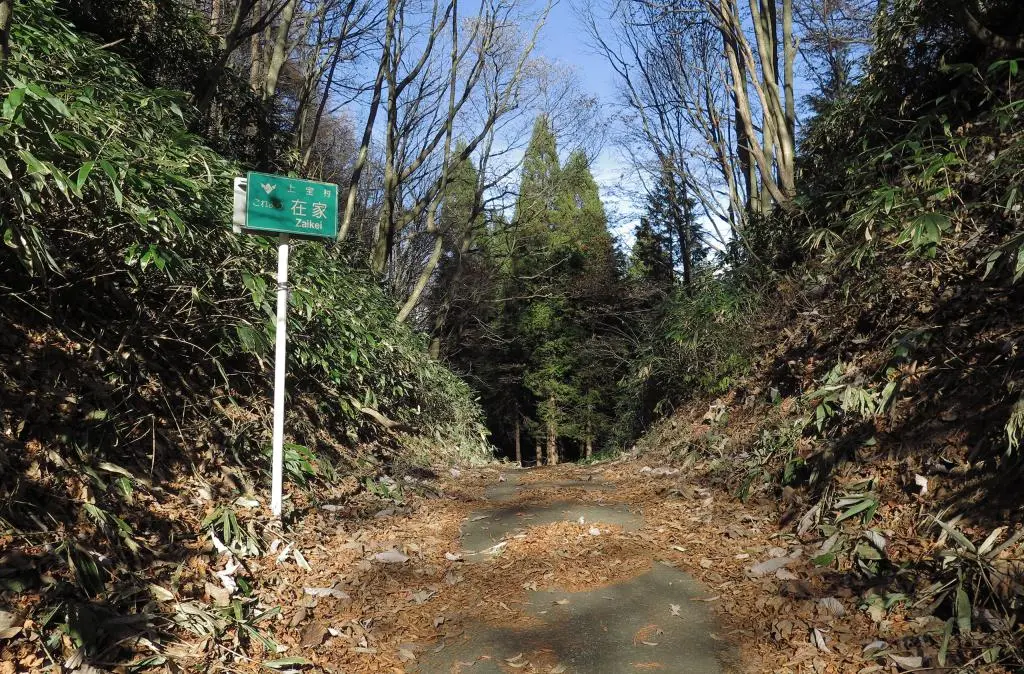
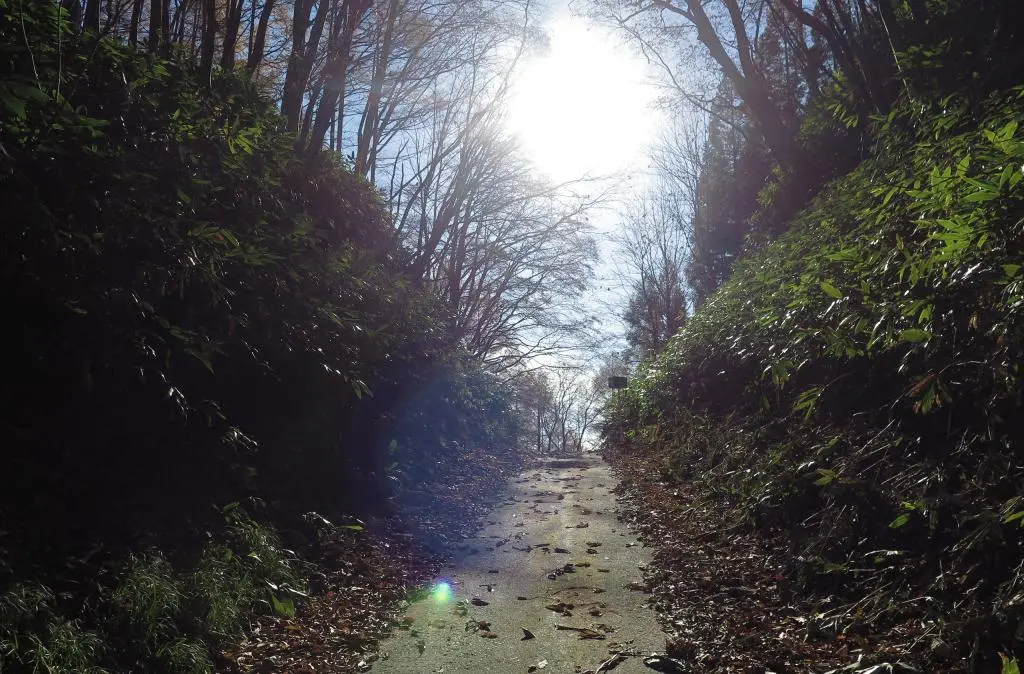
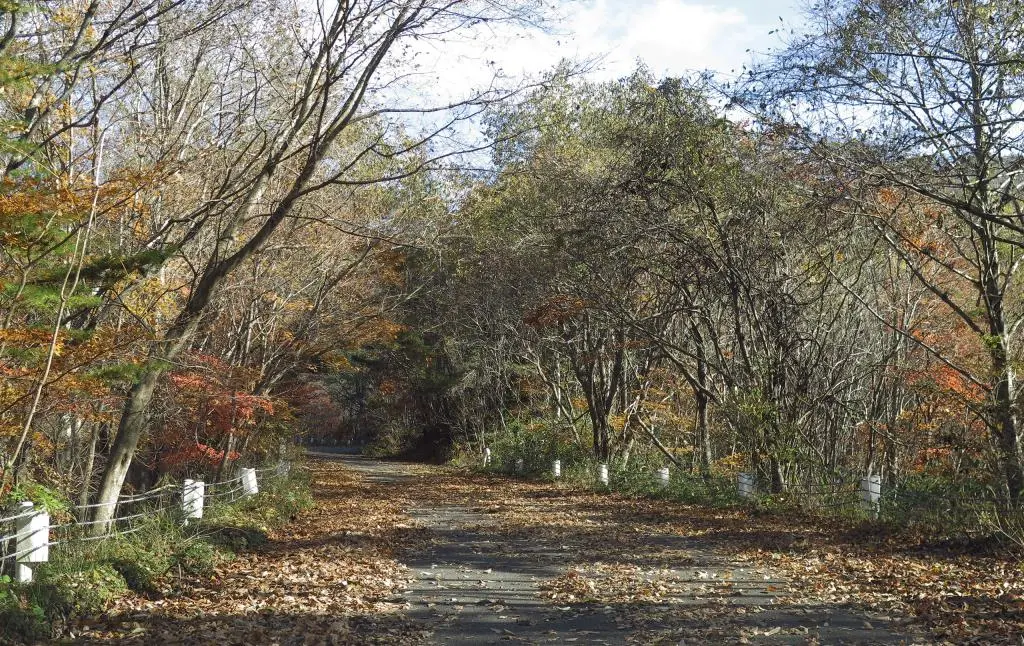
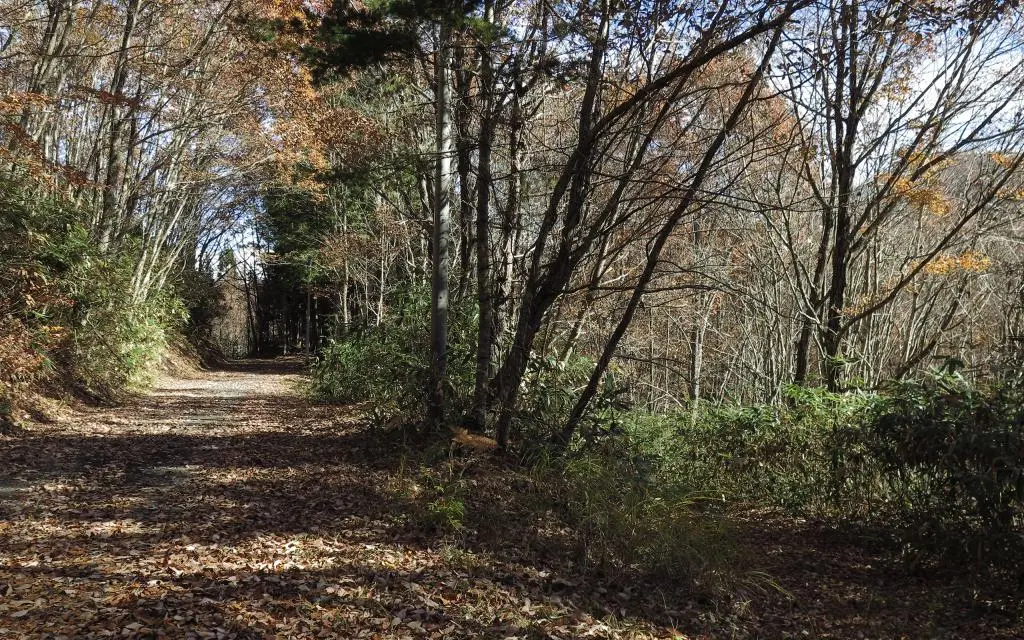
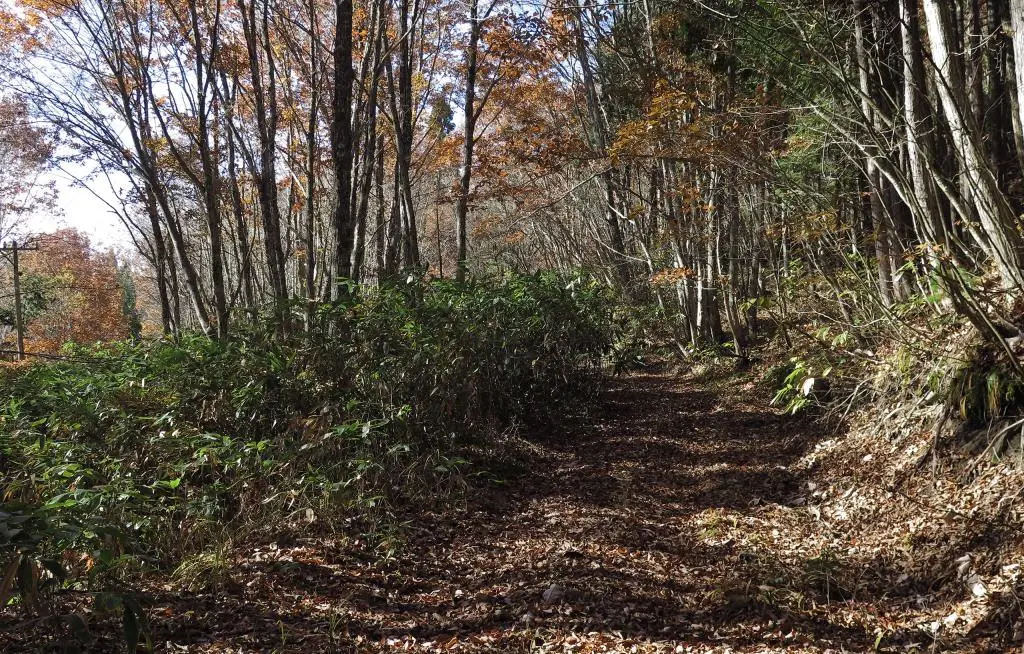
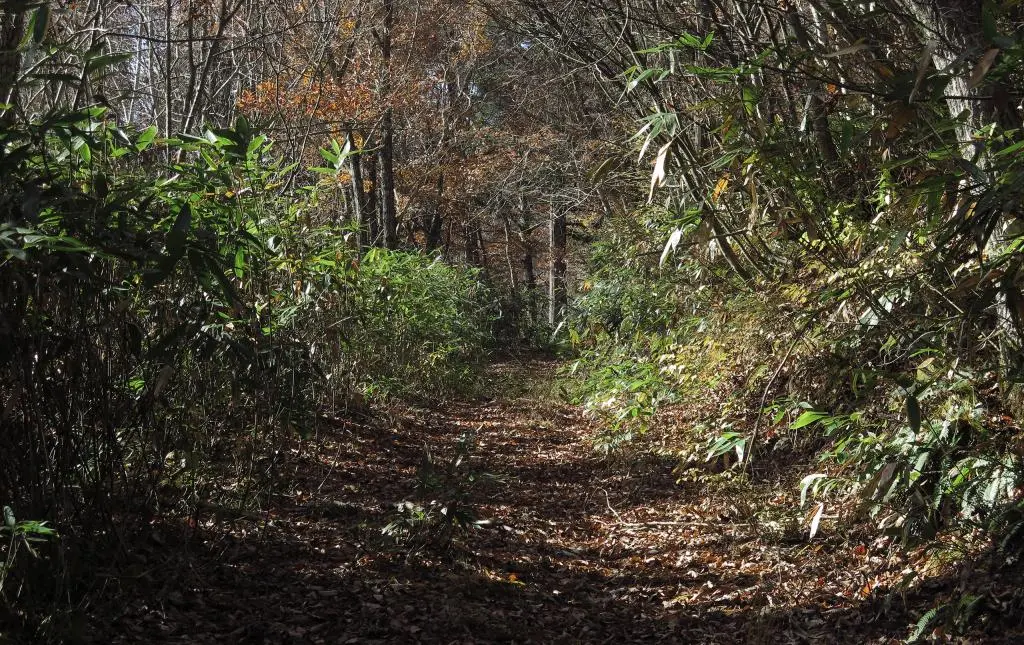
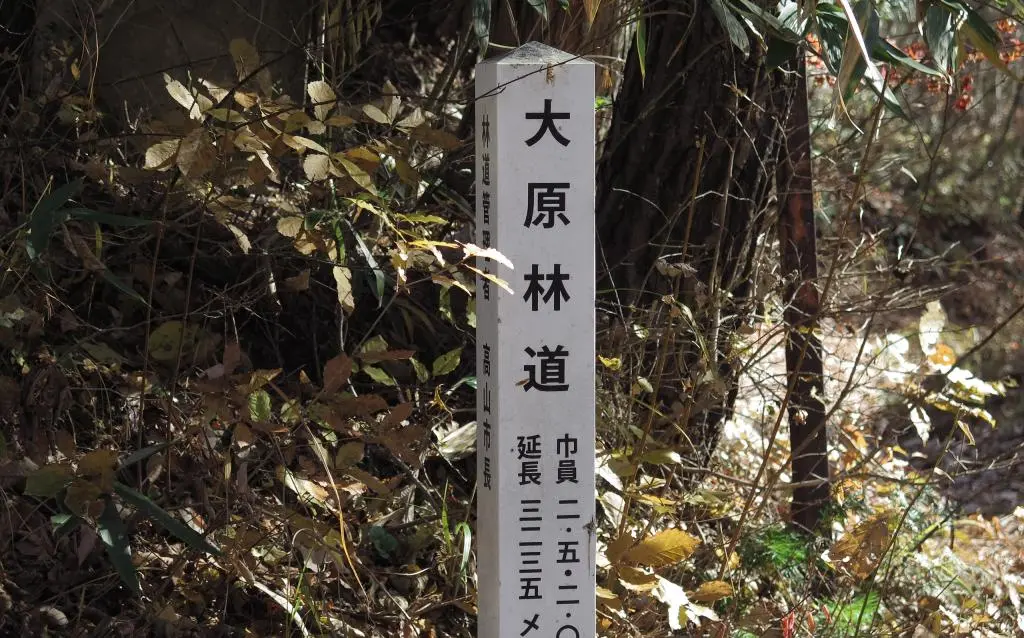
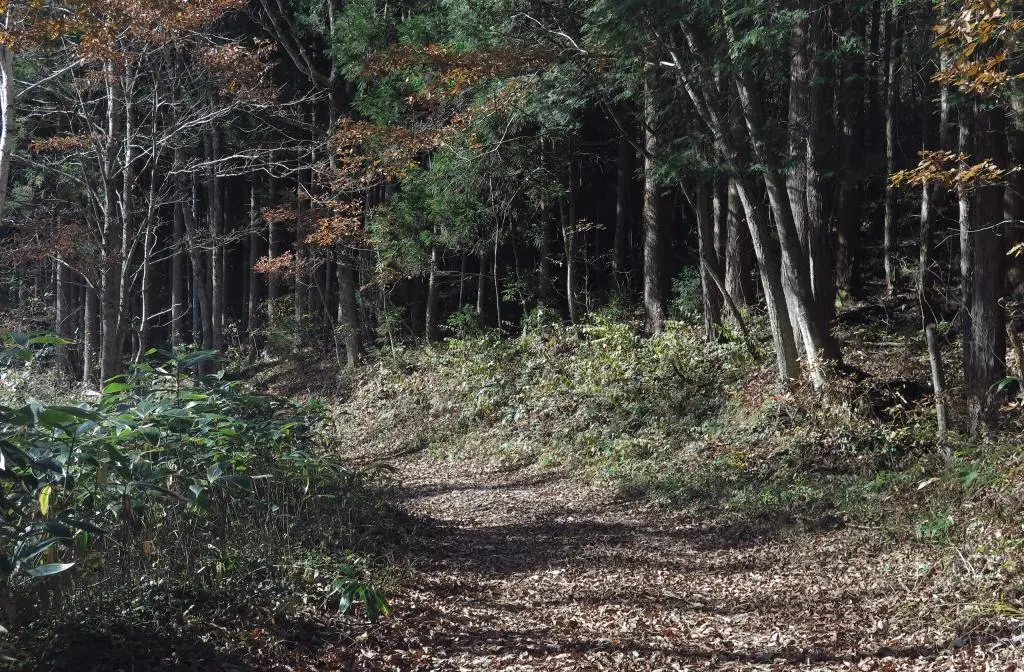
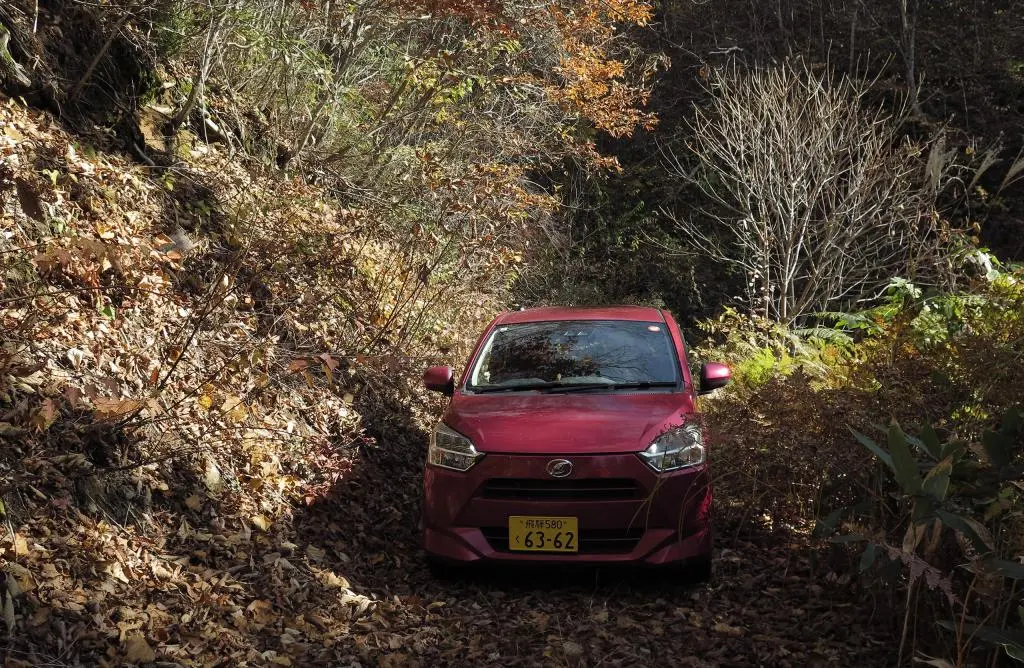
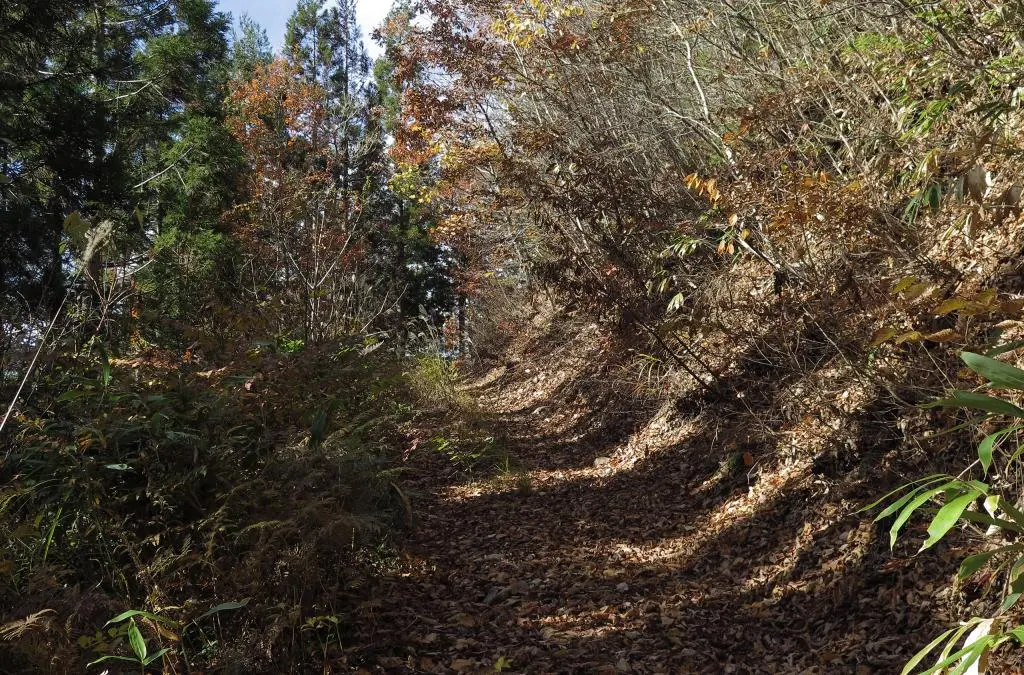
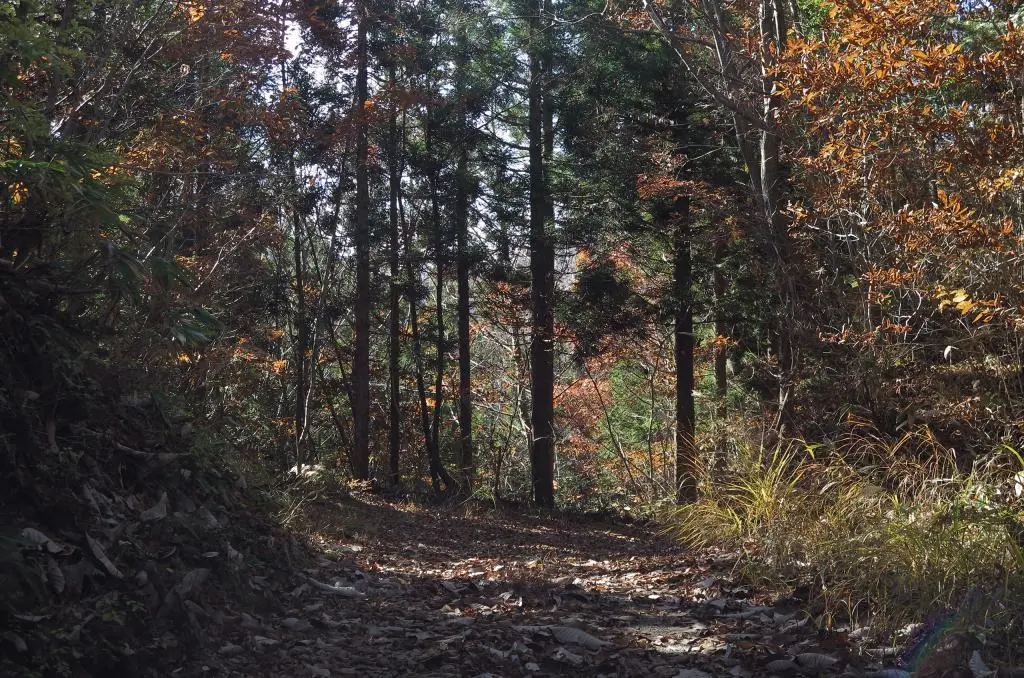
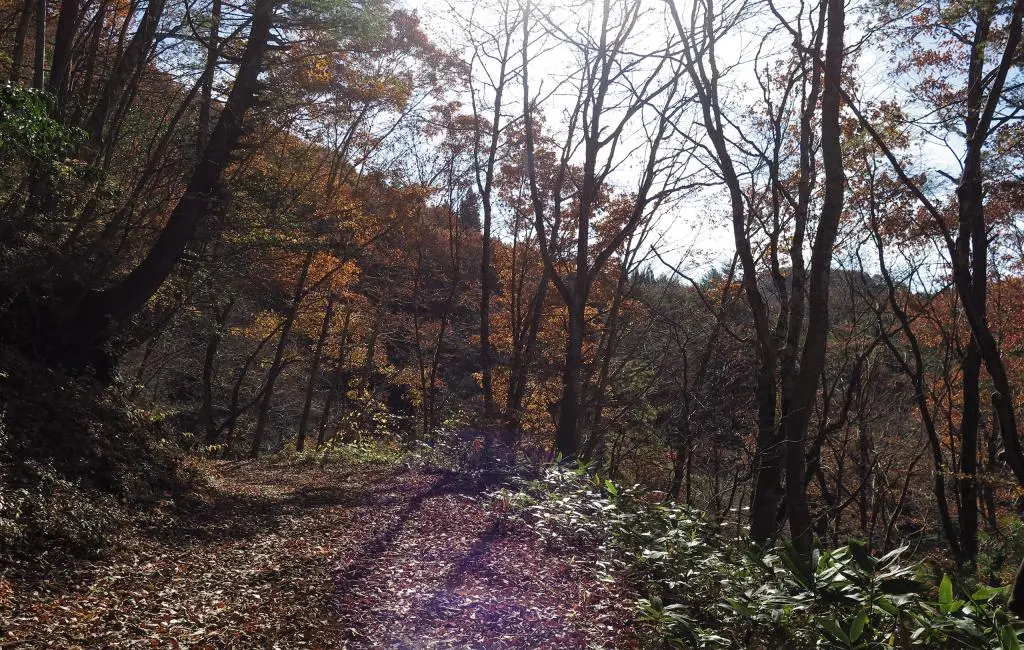
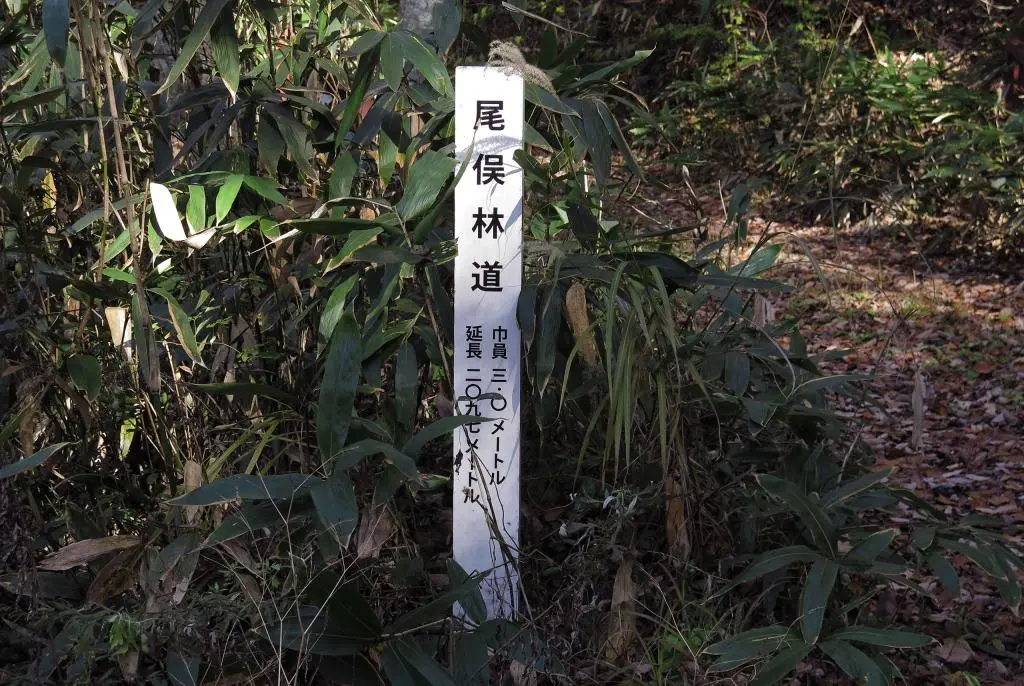
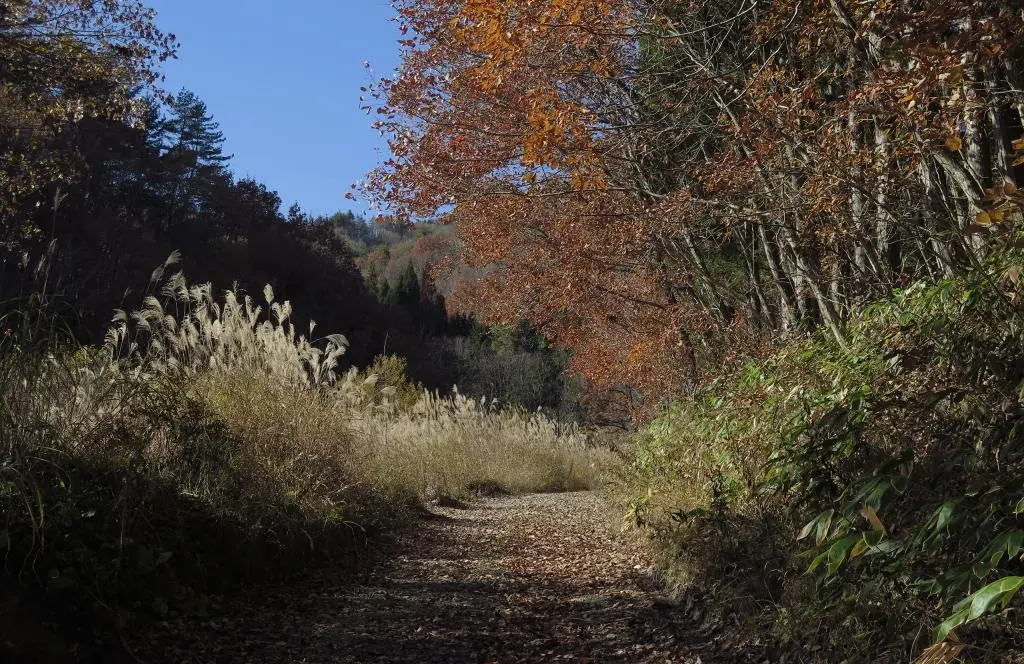
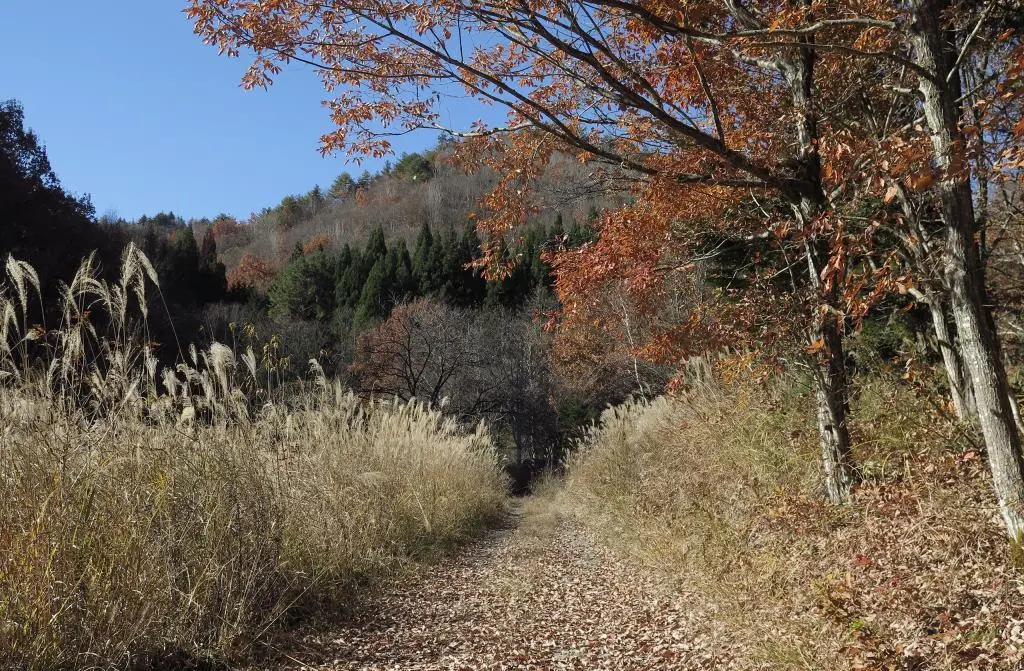
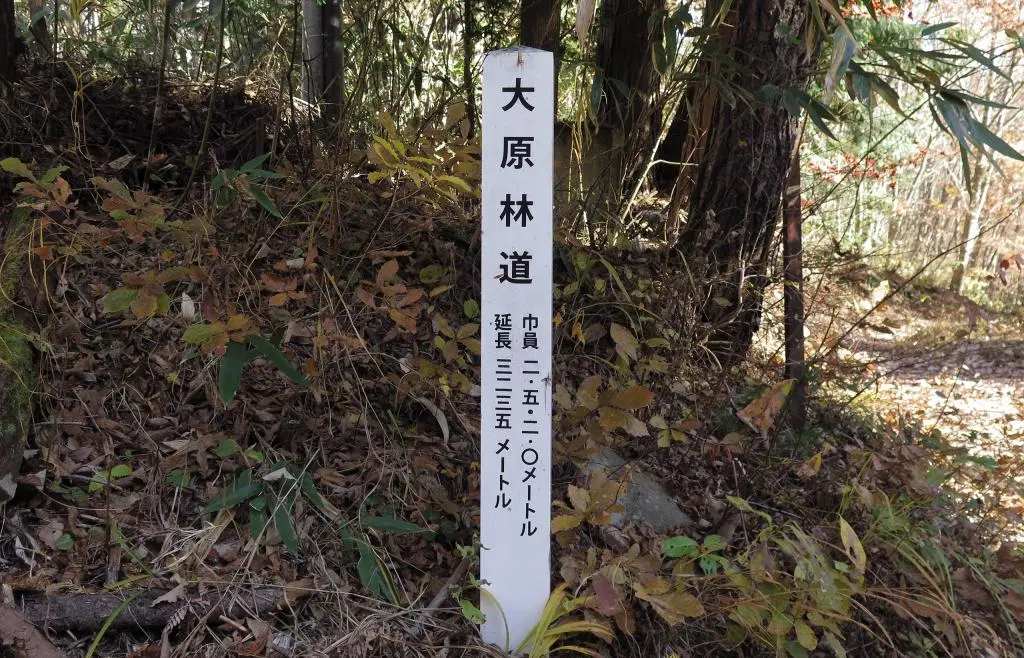
After observing the building, I returned to the road. The path to the Itakiso Shrine was pretty close to the junction for Ohara village. This road was also completely covered in leaves, but there were indentations that showed it could still be used by cars. I wouldn't have to get out and walk.
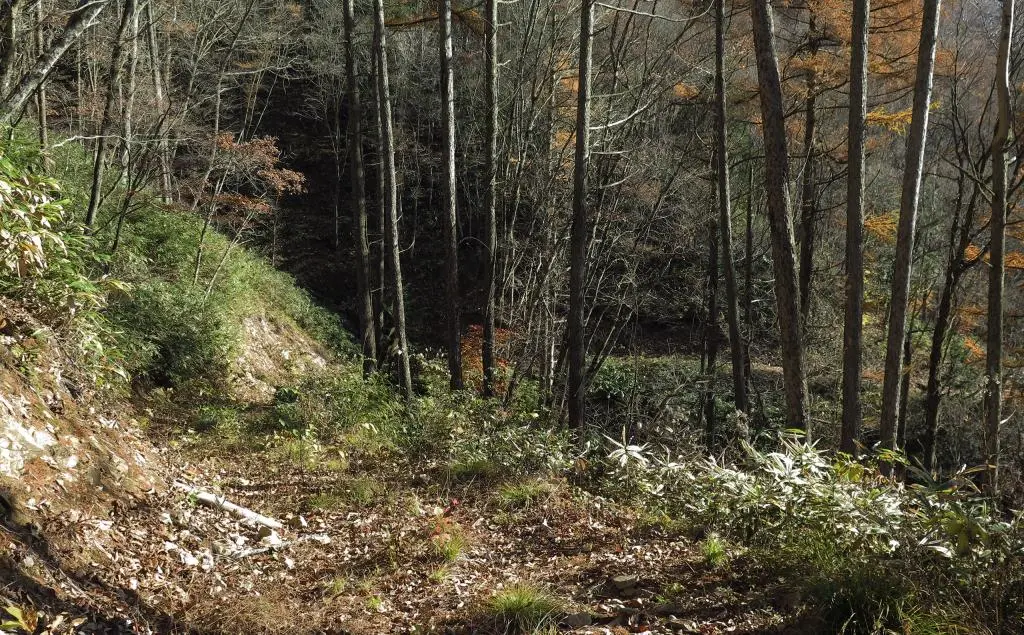
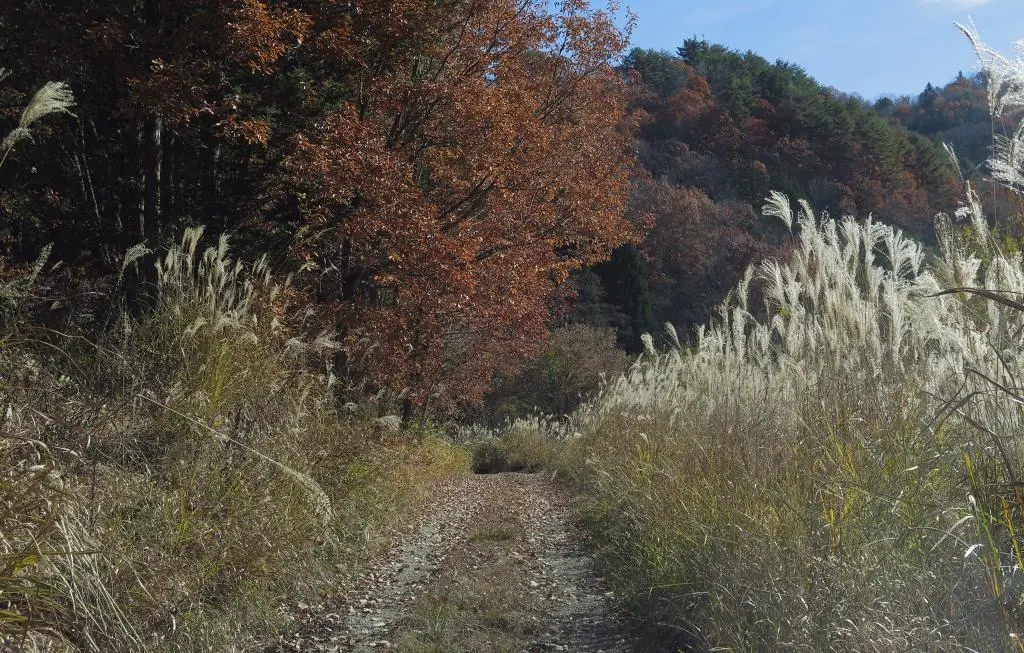
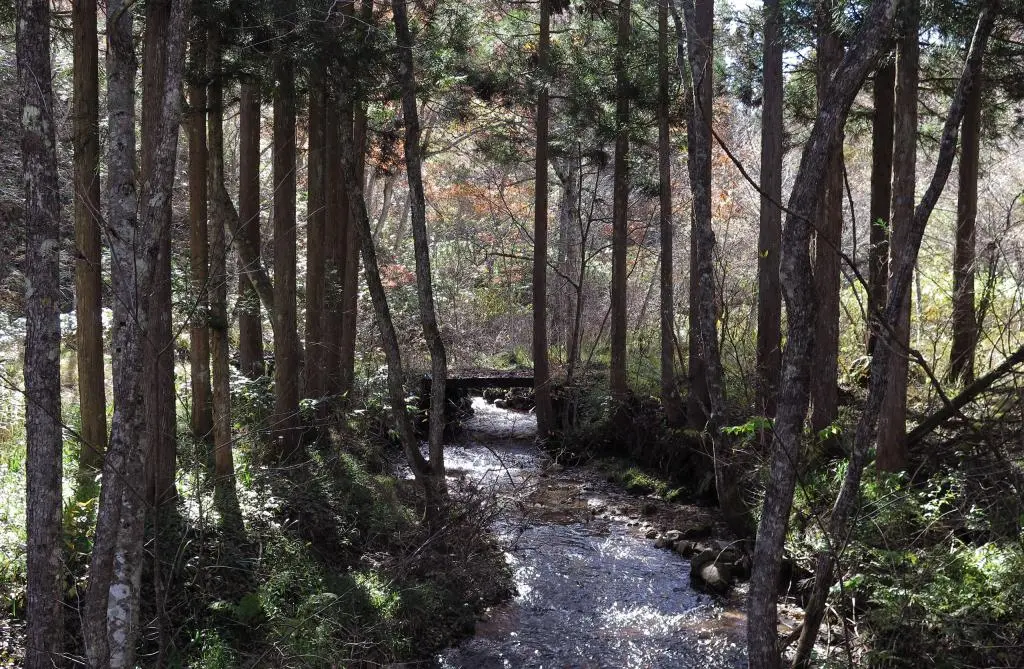
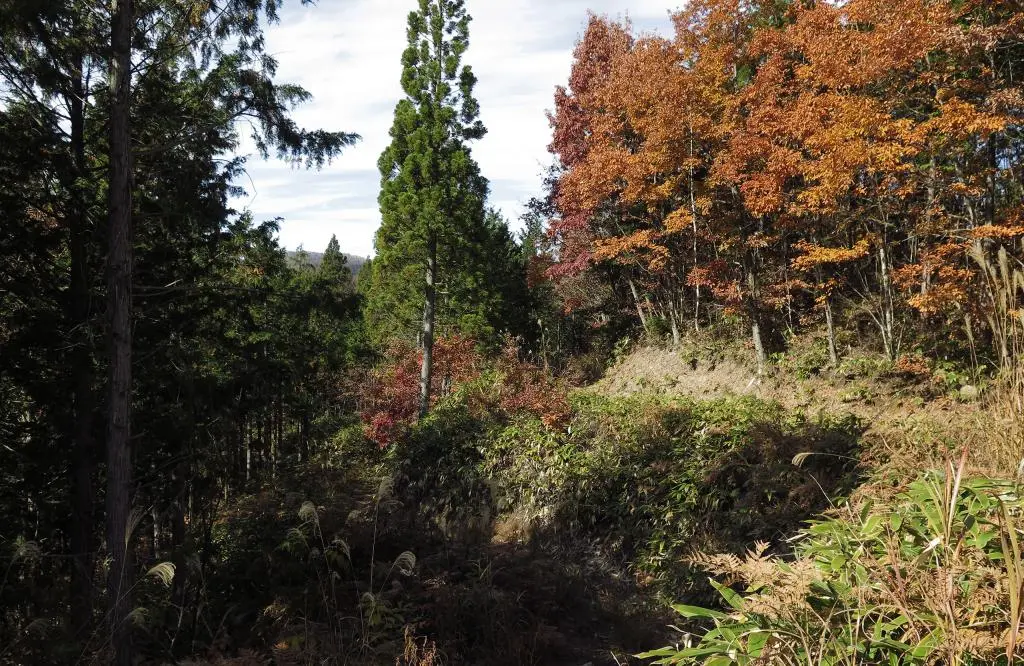
The road first led to an open field, then over a stream, then it began snaking along cliffs.
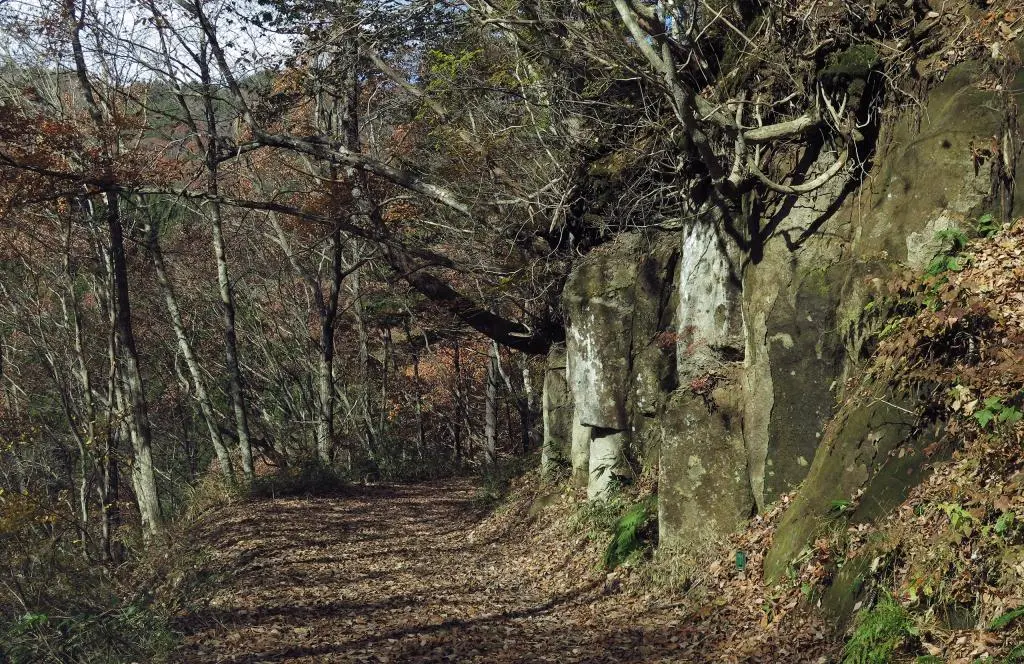
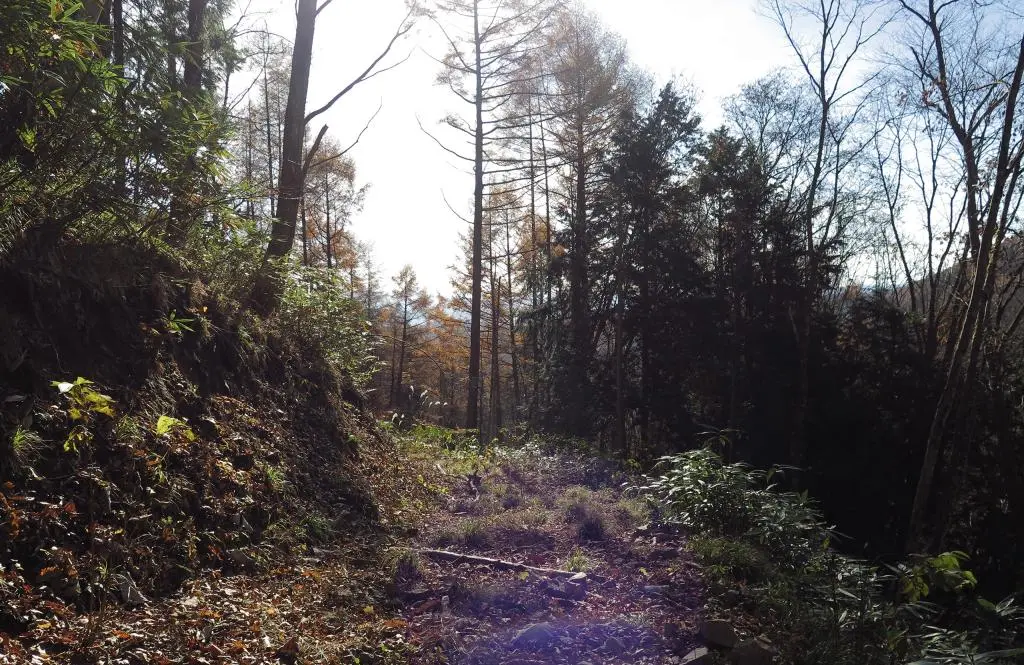
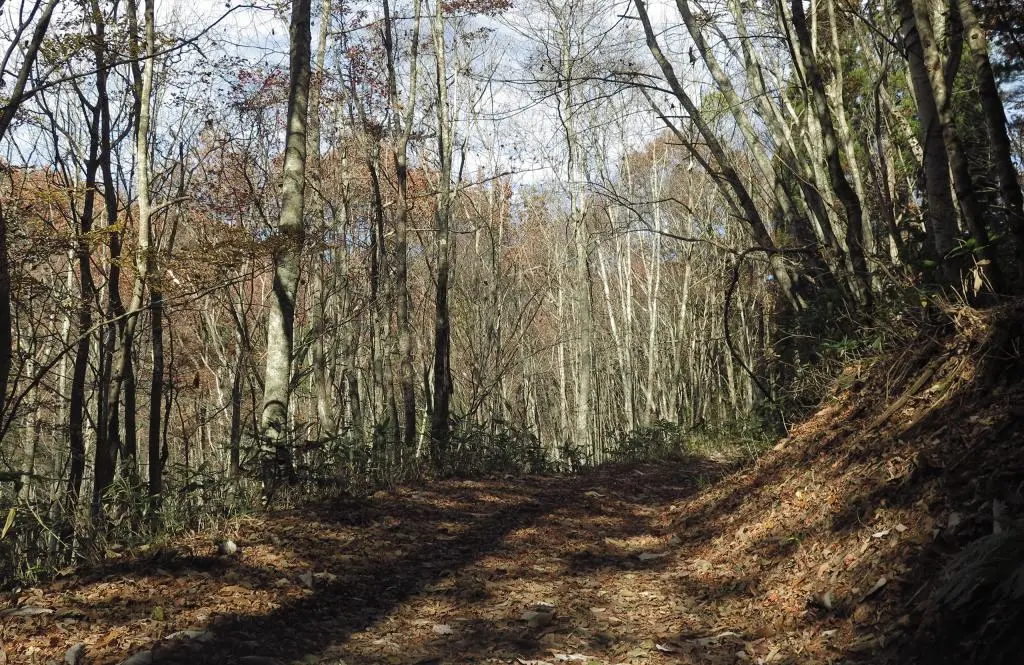
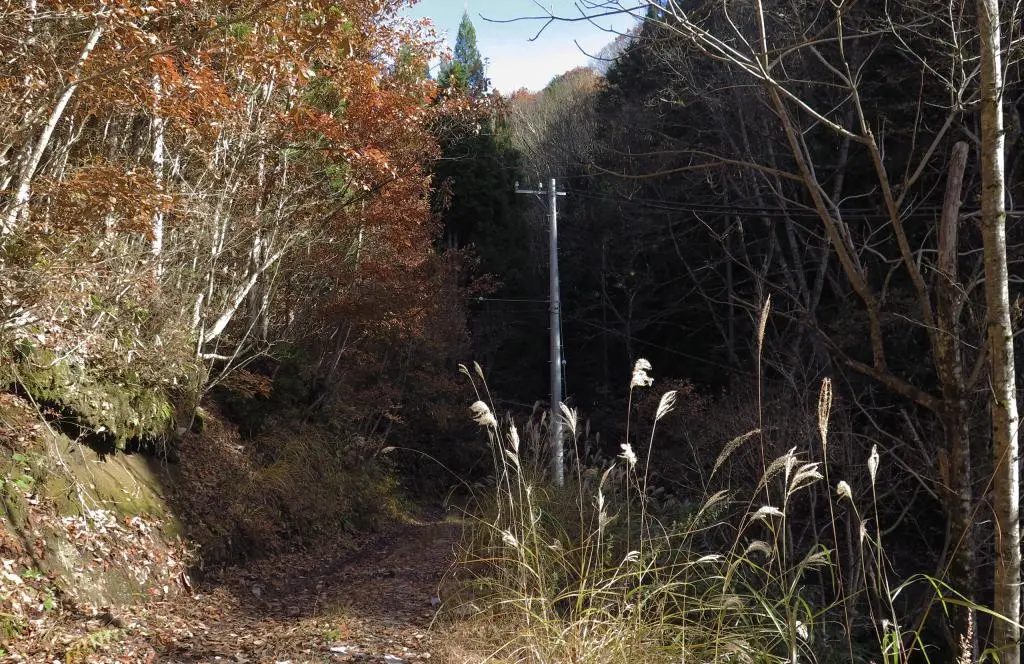
The road along the cliffs was pretty familiar to other mountain road I've traveled. Occassionally, I would need to stop and remove fallen rocks from my path to prevent damage to my car. After climbing up an ascent, the road would widen out a little bit.
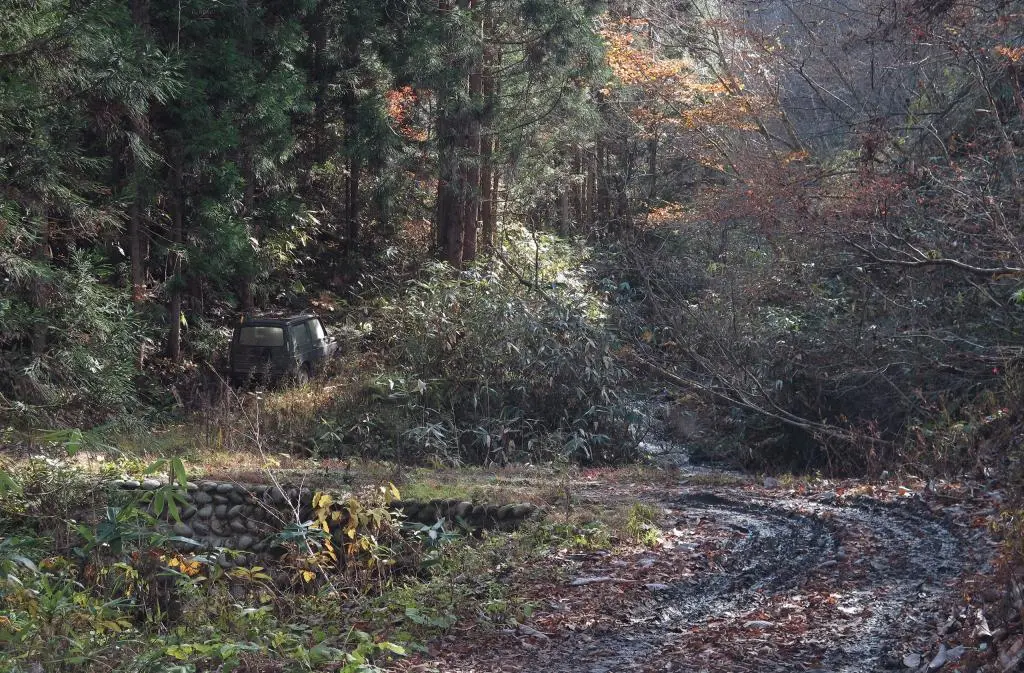
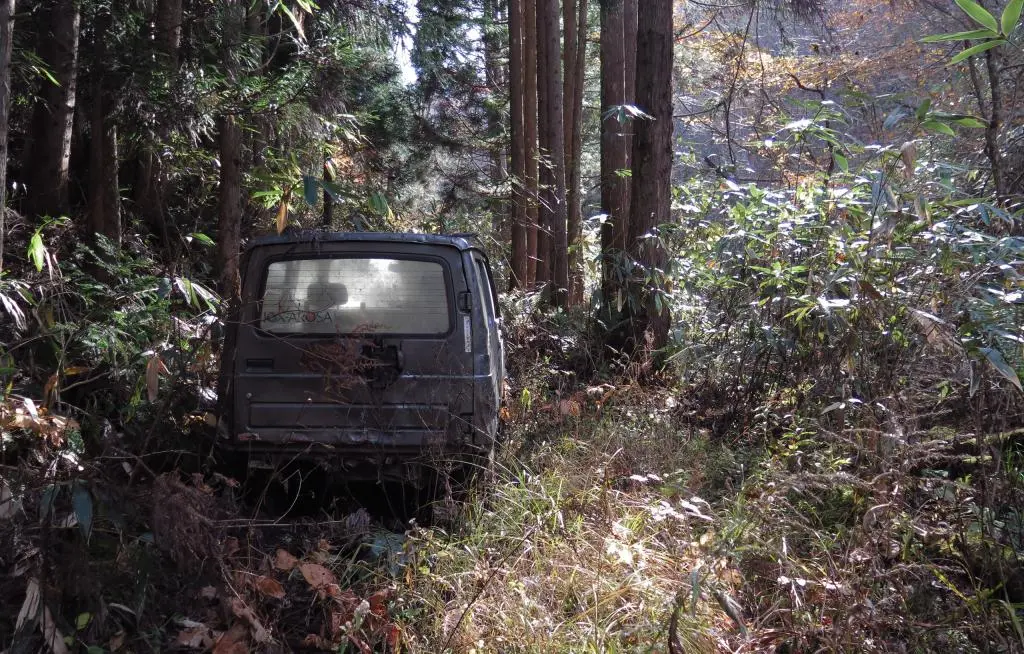
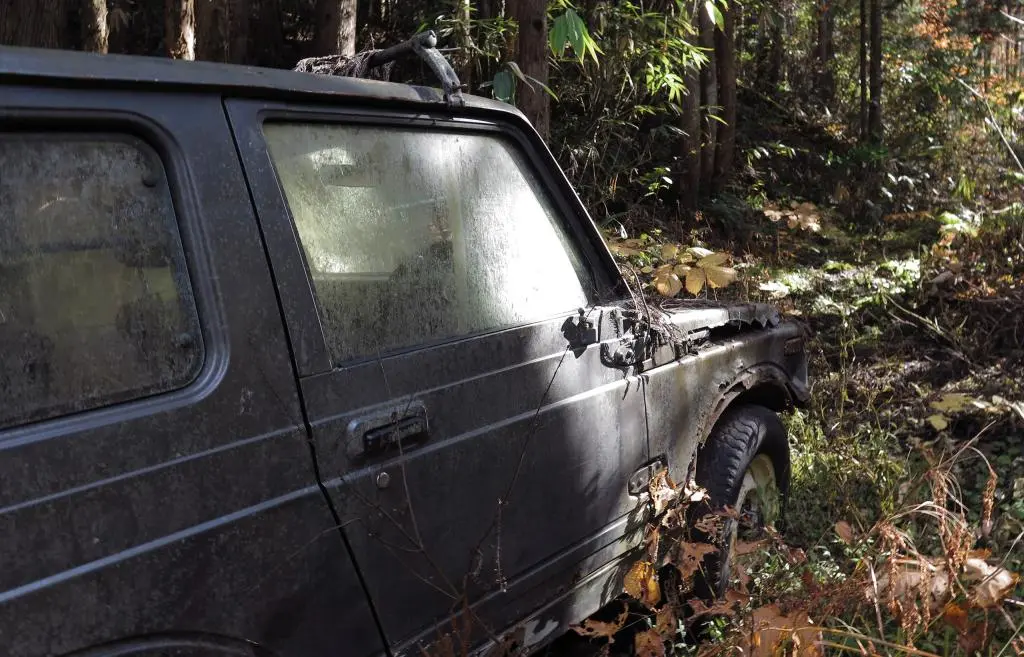
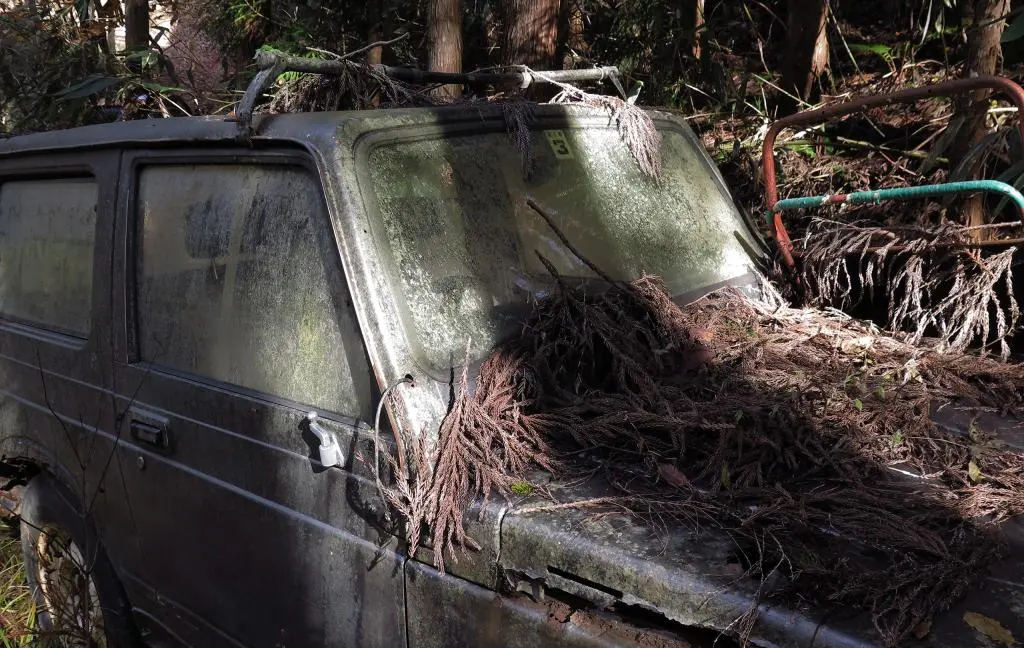
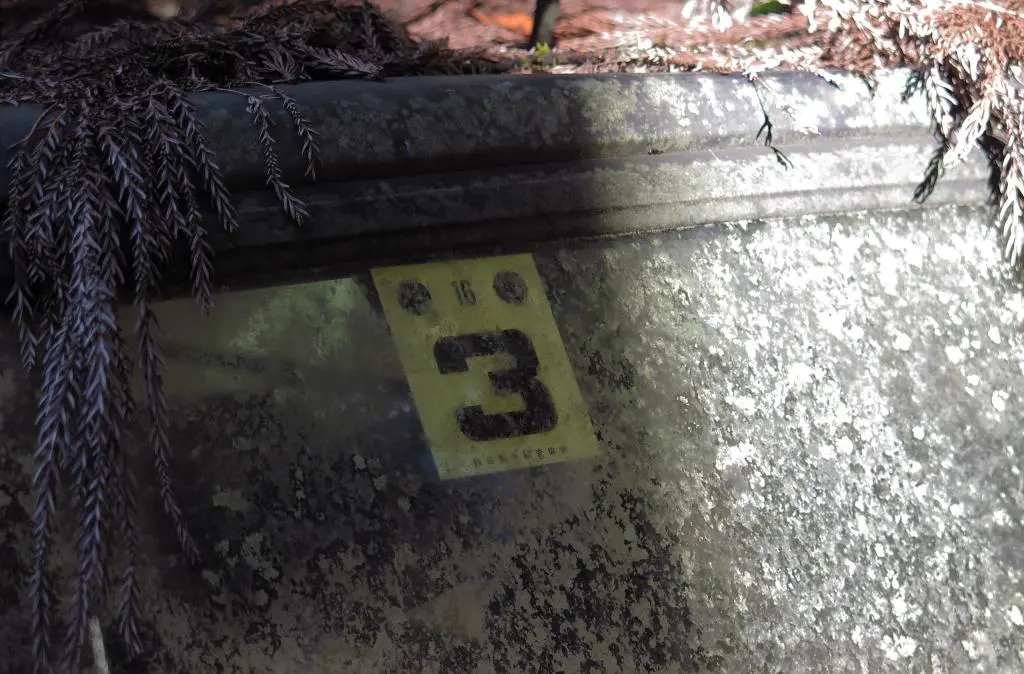
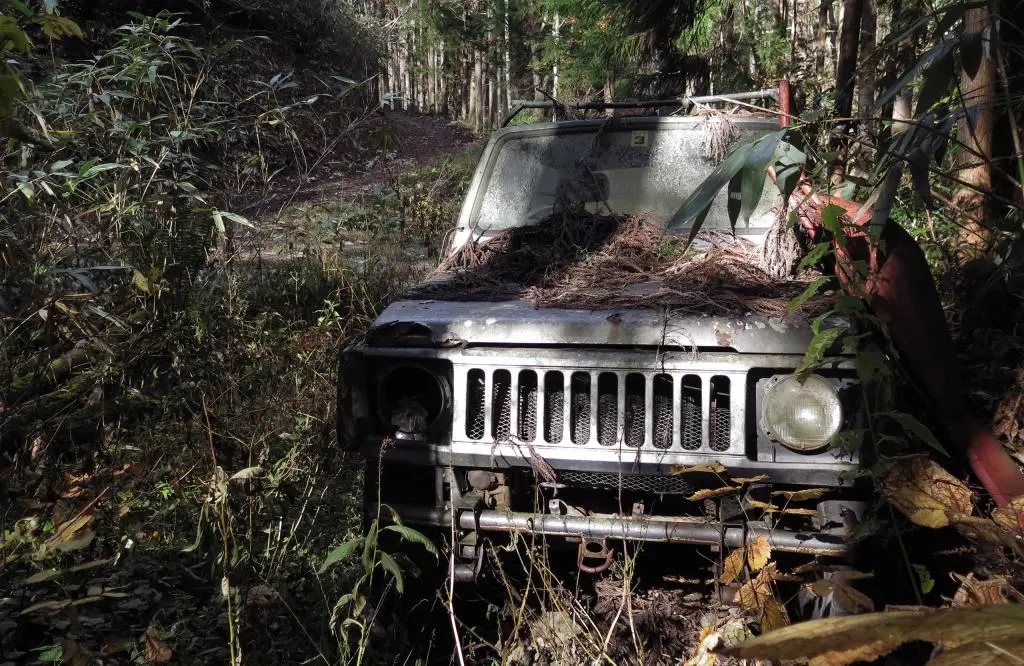
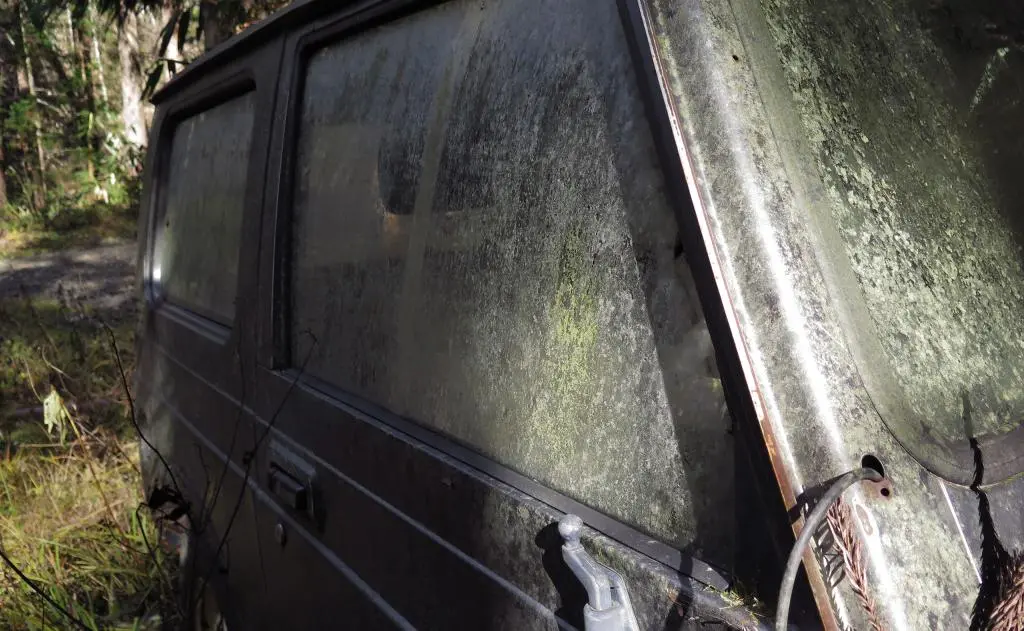
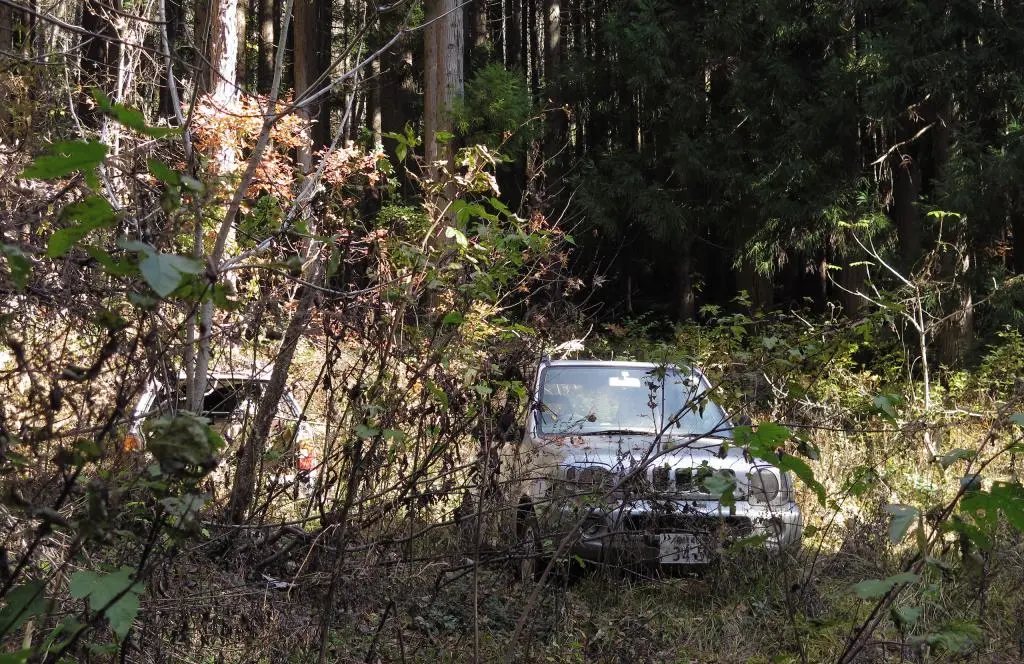
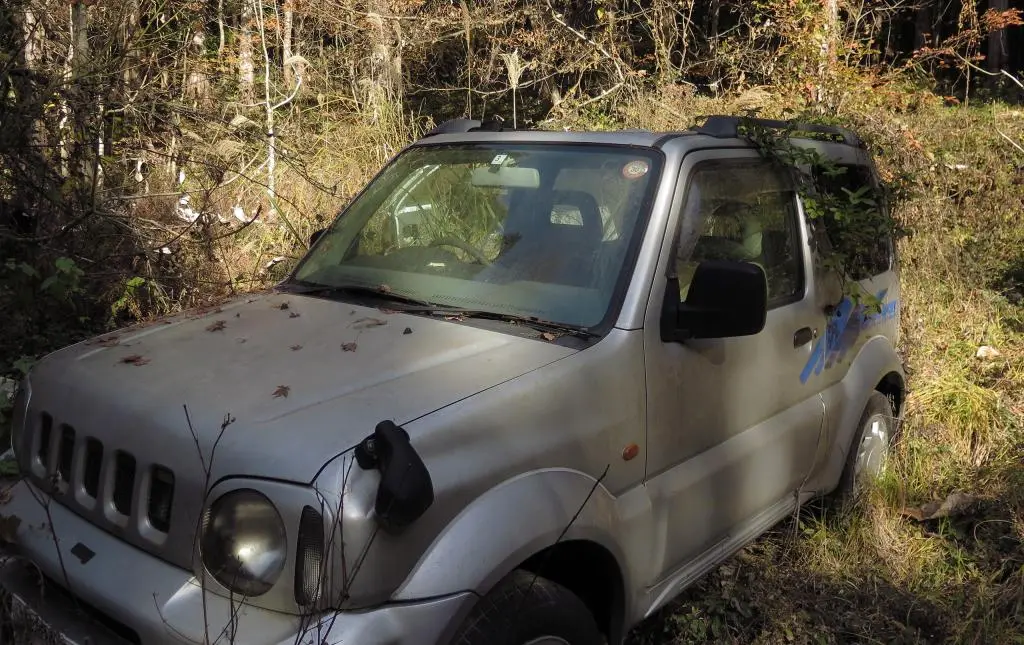
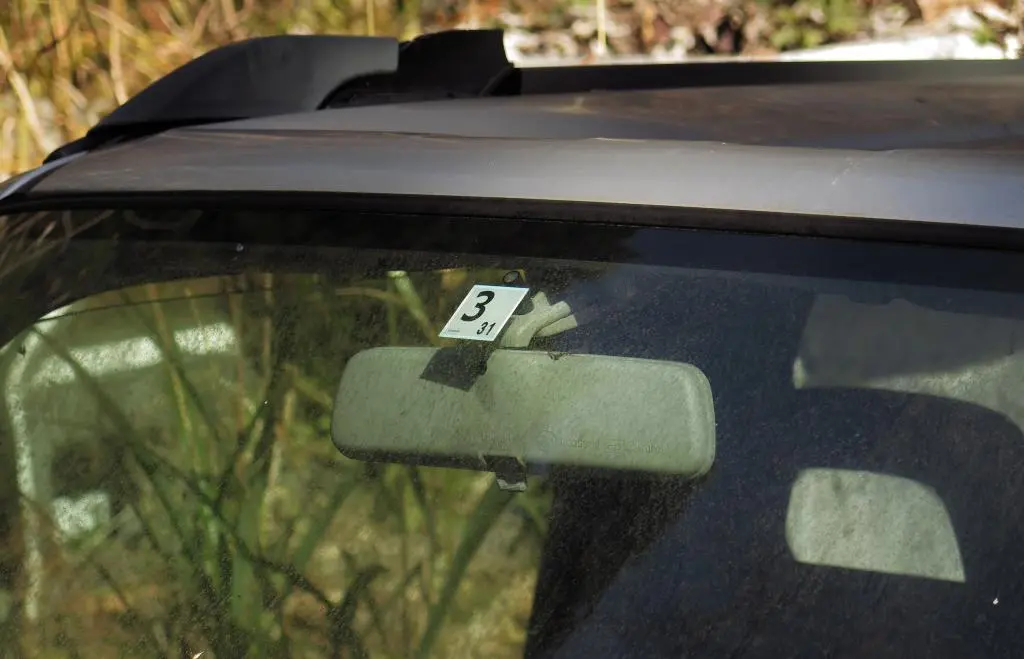
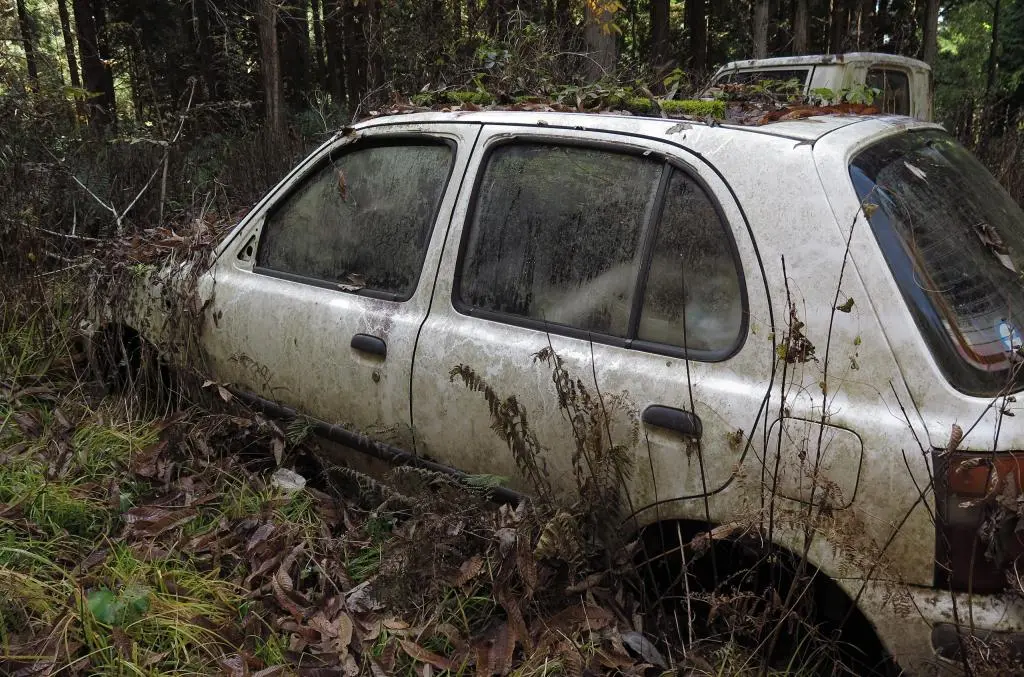
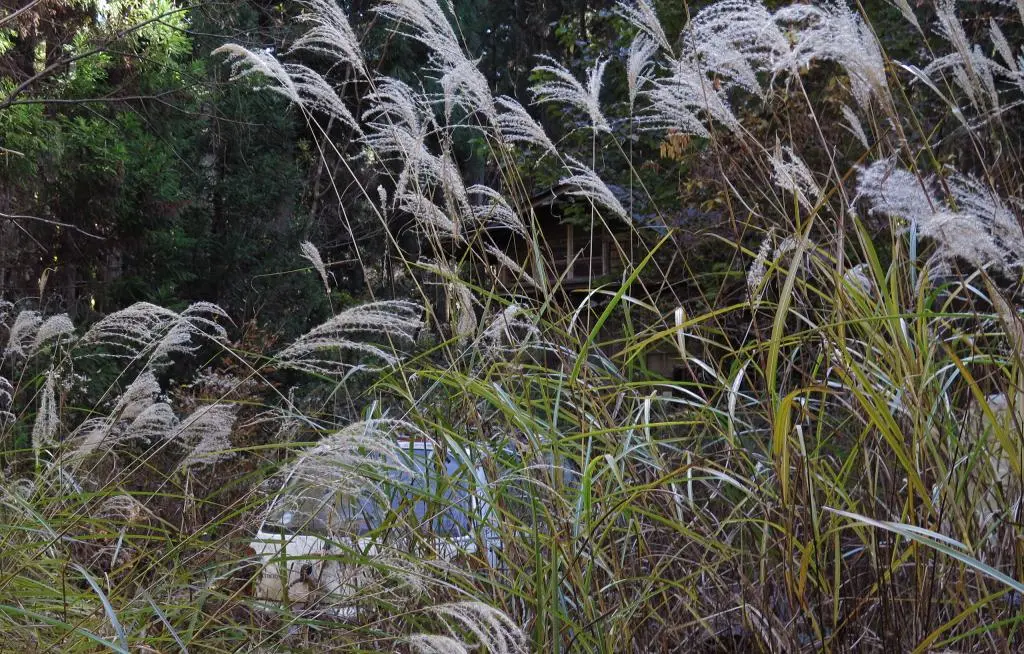
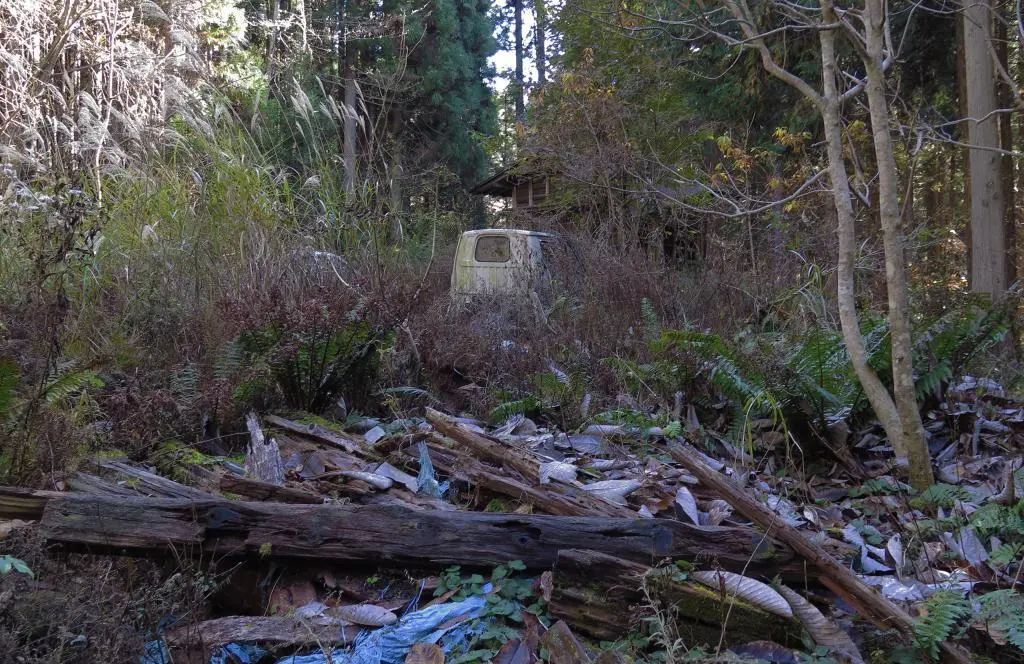
I came across an abandoned car that felt very Jurassic Park. I'm not a car guy, so I'm not sure what it was. The license plate and other marking had been removed. The shaken sticker was still attached to the windshield. It read 16, which I would assume is 平成16, heisei 16. In normal years, that would be 2004.
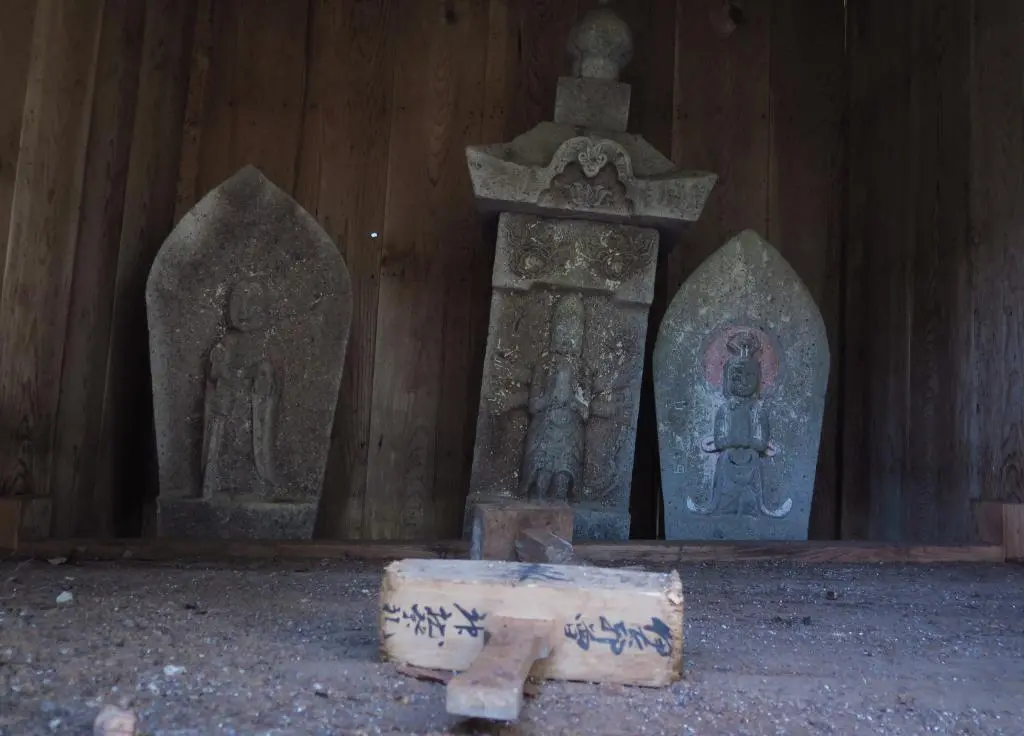
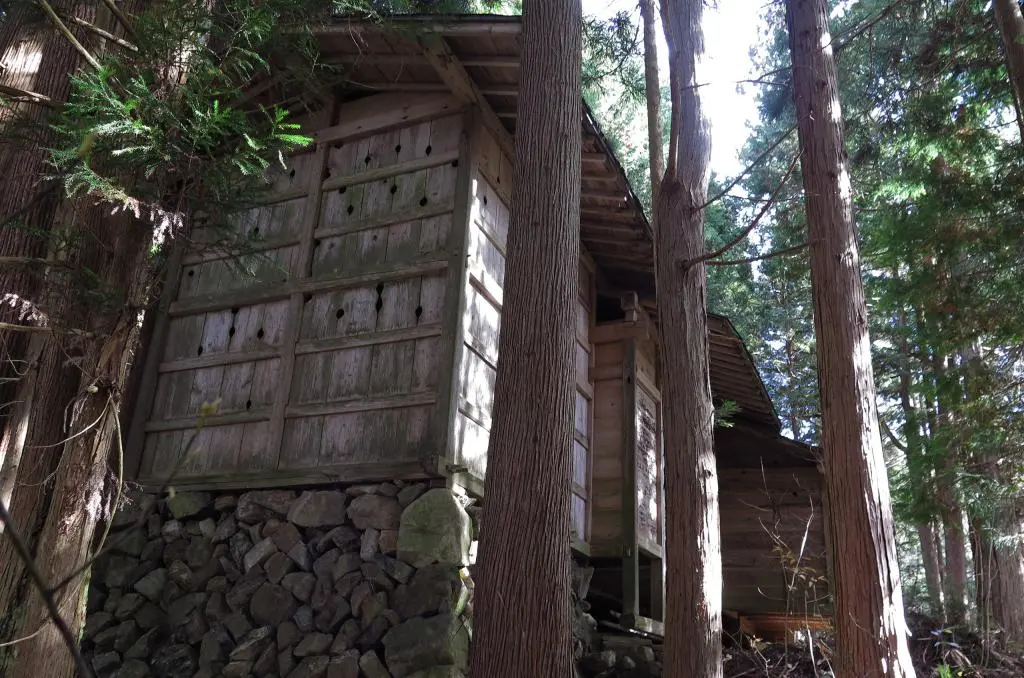
Continuing up the road, I came across the first structure of Ohara village, the Hie Shrine.
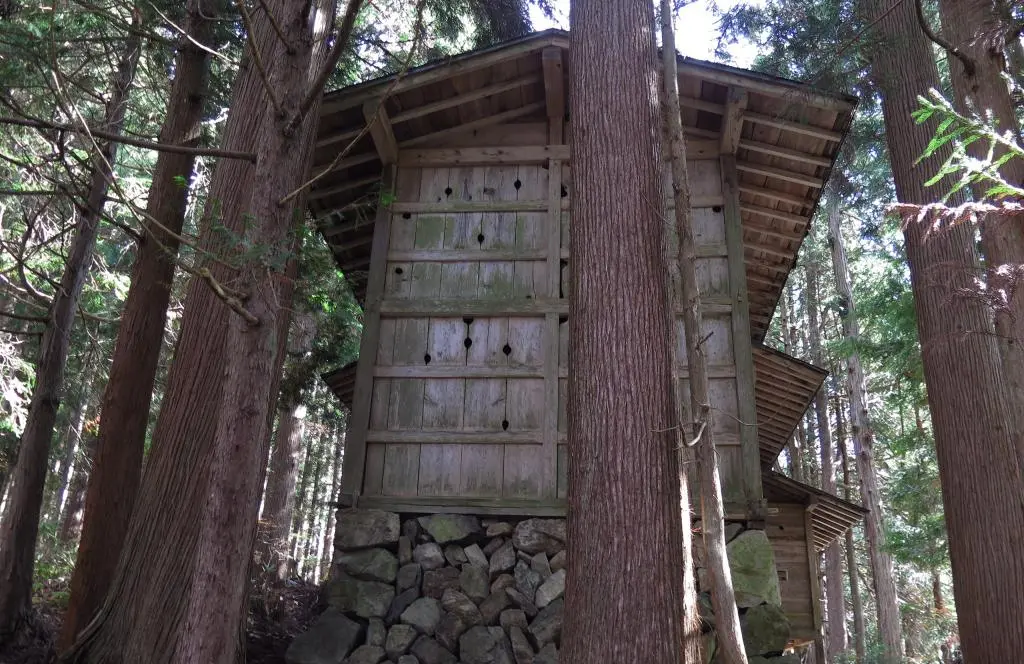
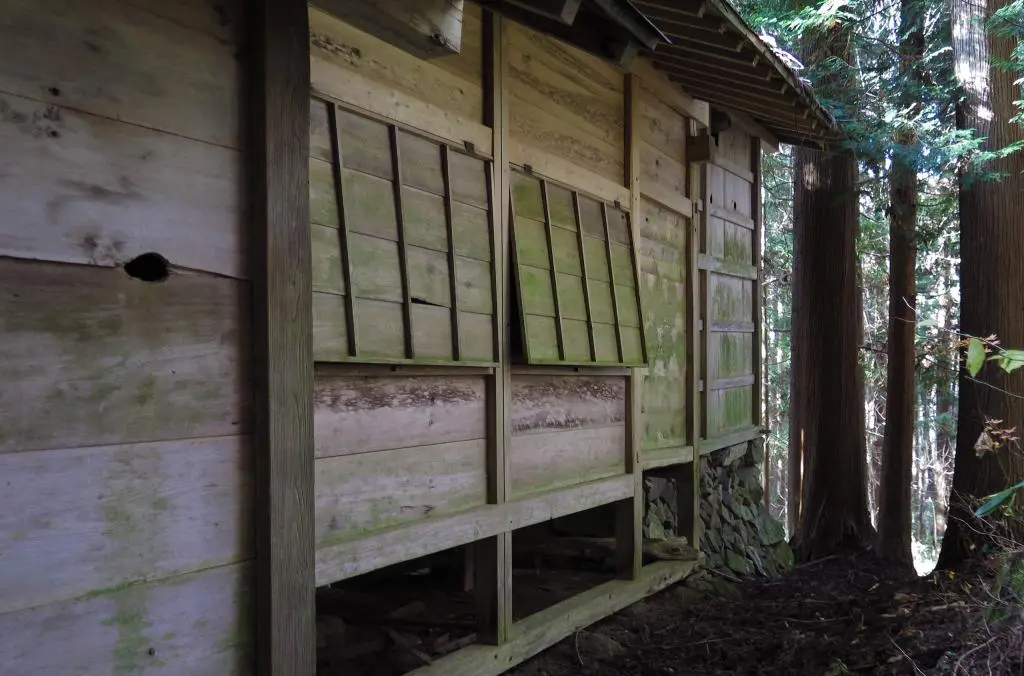
It was in much better shape than the previous shrine. It was completely surrounded by tall trees, so I guess they provided excellent cover from sun, snow, and other weather.
The back of the building towered over the road while driving up. The road then continued climbing and snaking around the cliff. When coming back to the building, I was now above it. The entrance to the shrine was still further down the road and around a turn, but I parked my car and went down the hill to greet it.
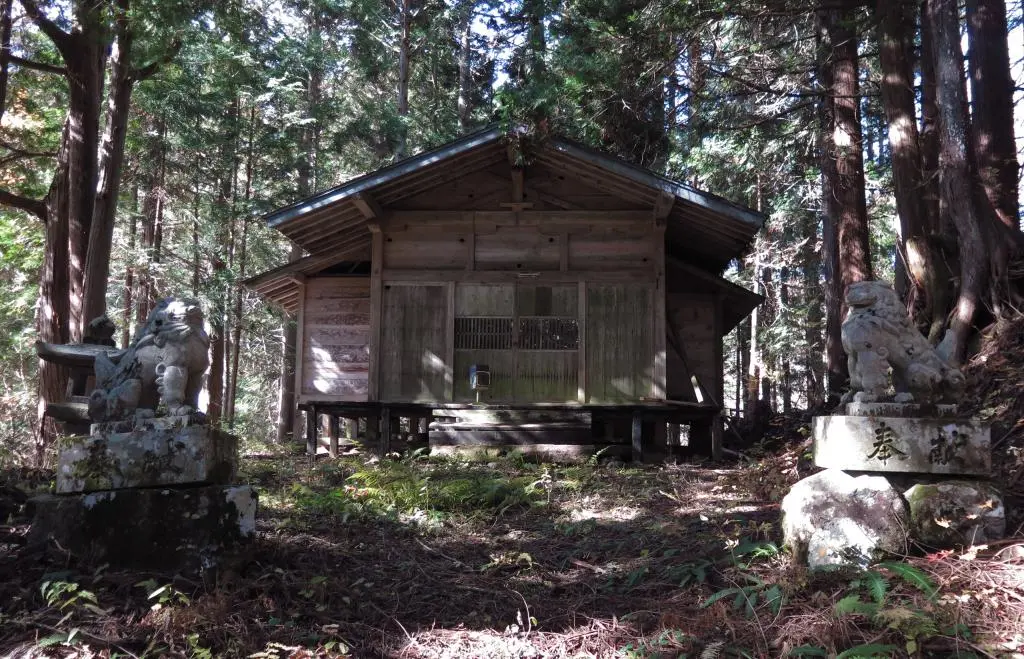
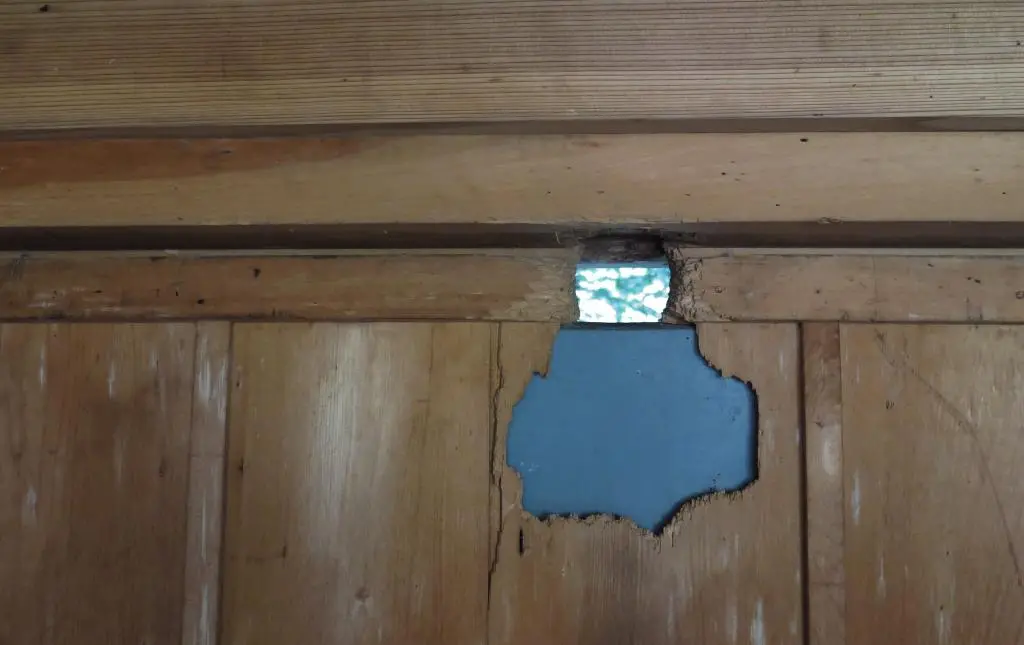
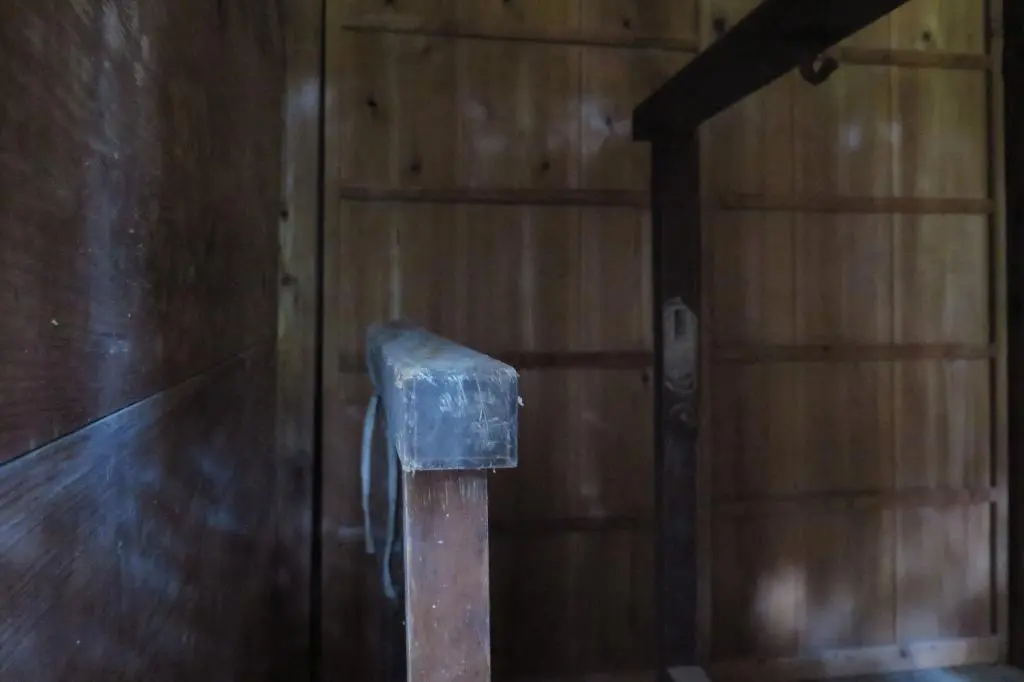
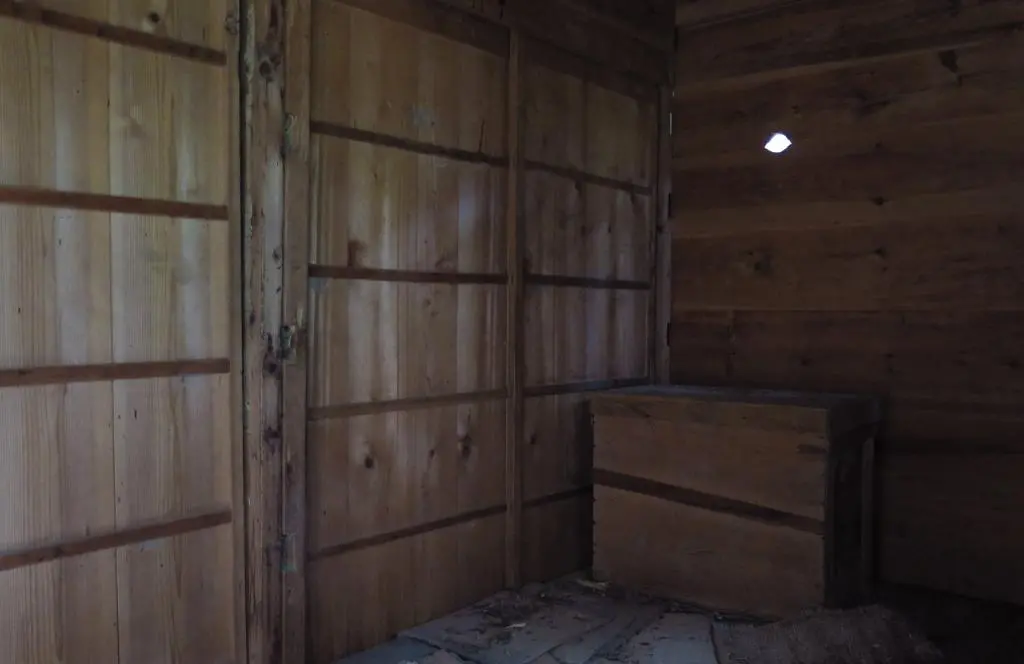
While the building is still standing, there are holes all over the exterior of the building. Maybe holes from woodpeckers? Are there Japanese woodpeckers? I don't think any insects make holes this large. Termites, bees, and other insects do chew through wood but not in such a uniform matter.
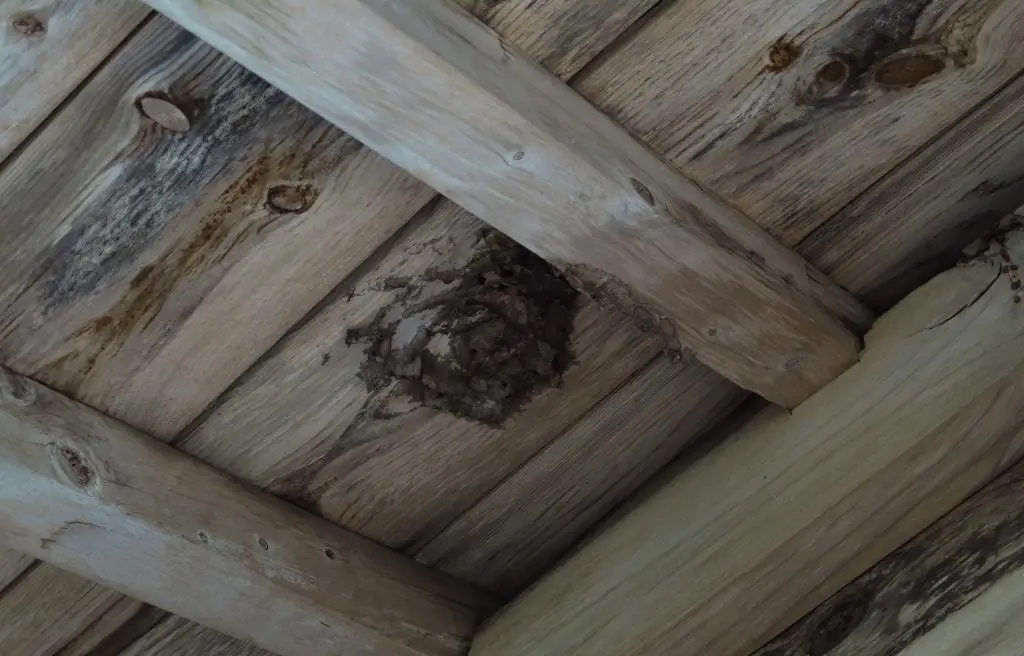
On the outside, I did notice that someone had cut down a wasp nest, so it seems like the building was still being maintained. The roof seemed in decent shape from the bottom. Looking at the photo, it looks like there are some possible fractures, but no part of the roof has collapsed.
While continuing around the outside of the building, I heard a sharp crack from the forest that sounded like a gunshot or an explosion. I didn't know what it was. Besides the few farmers from long ago, I hadn't seen anyone out here at all. No movements. It seemed somewhat far away, though. I ignored it, went back to my car, and continued up the road.
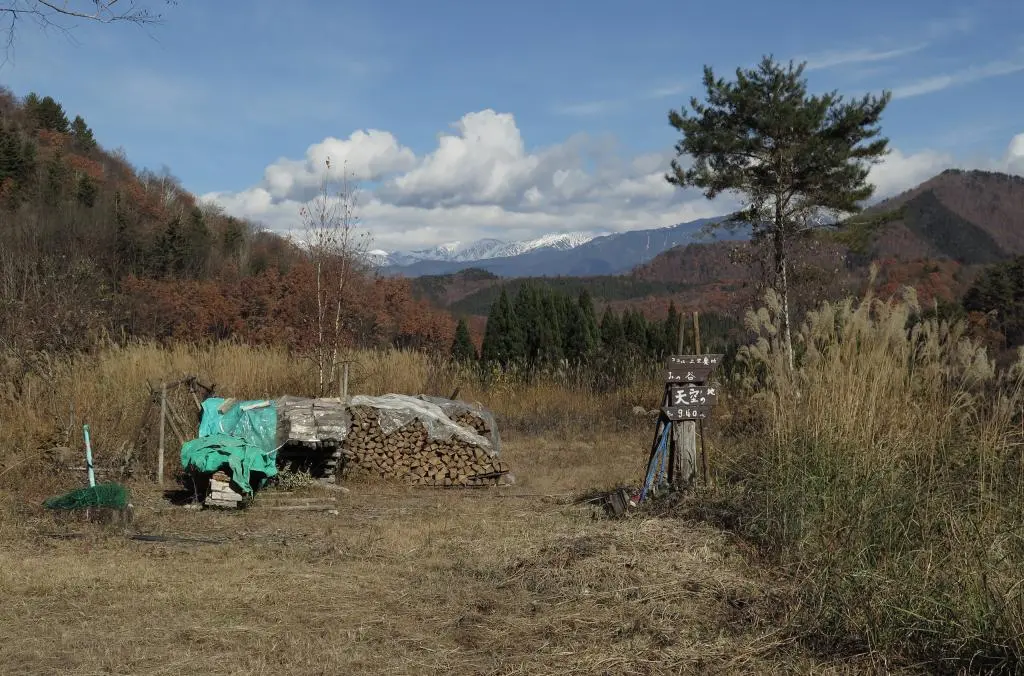
Just a few minutes away, I reached the remains of Ohara village.
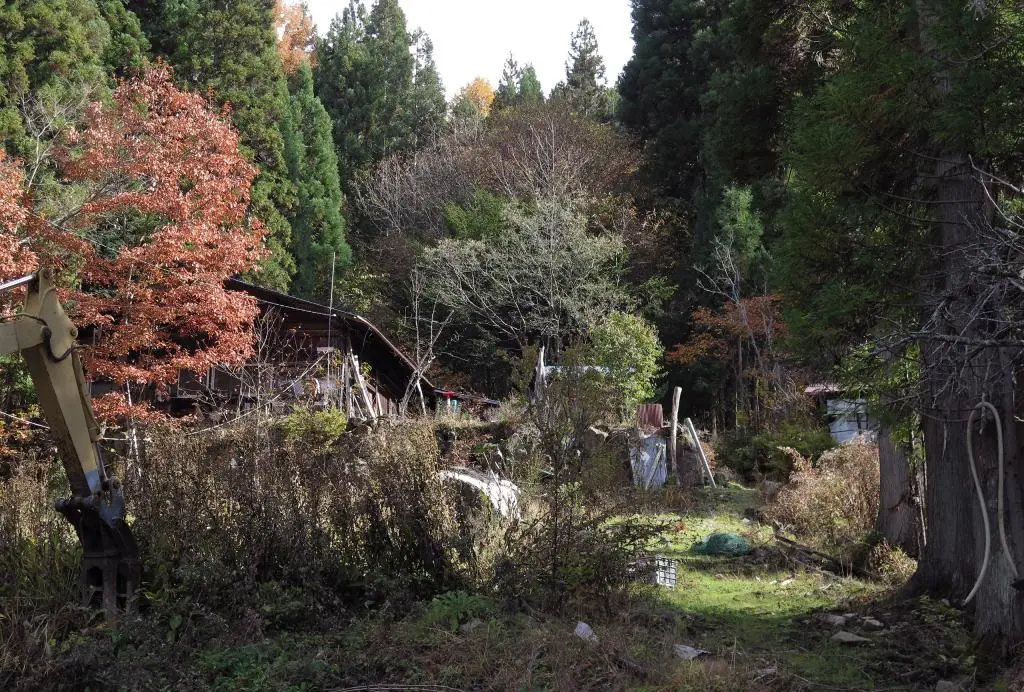
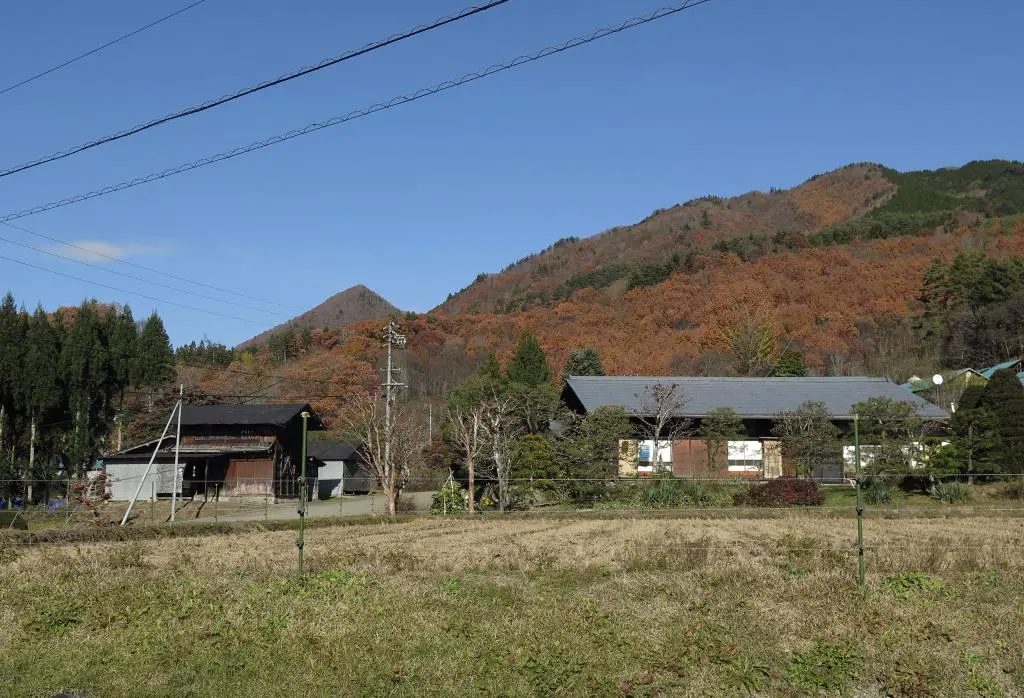
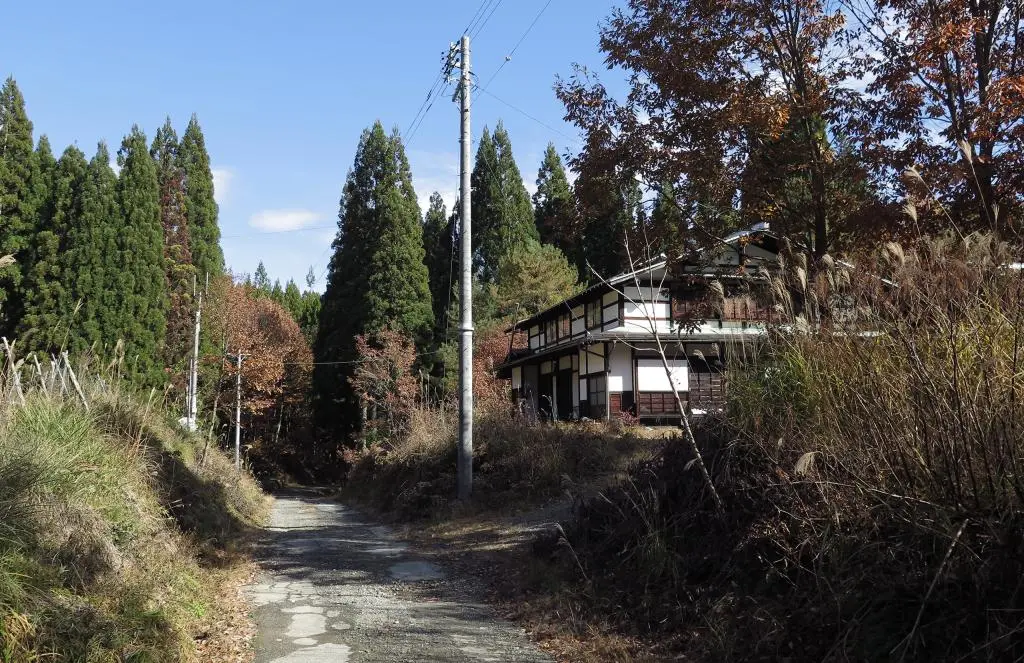
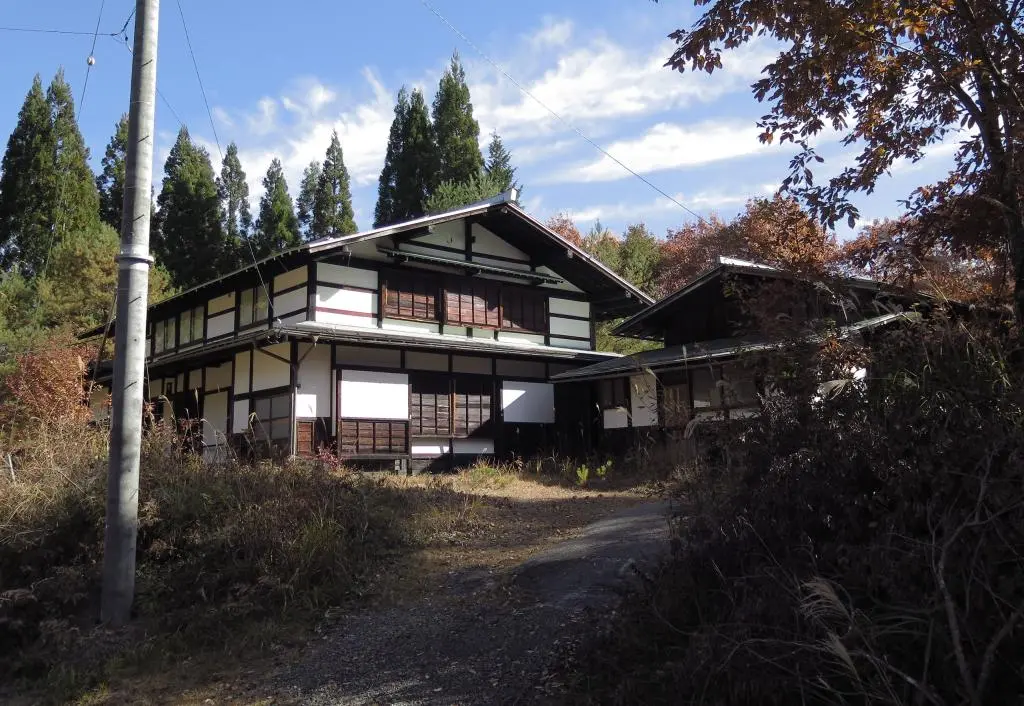
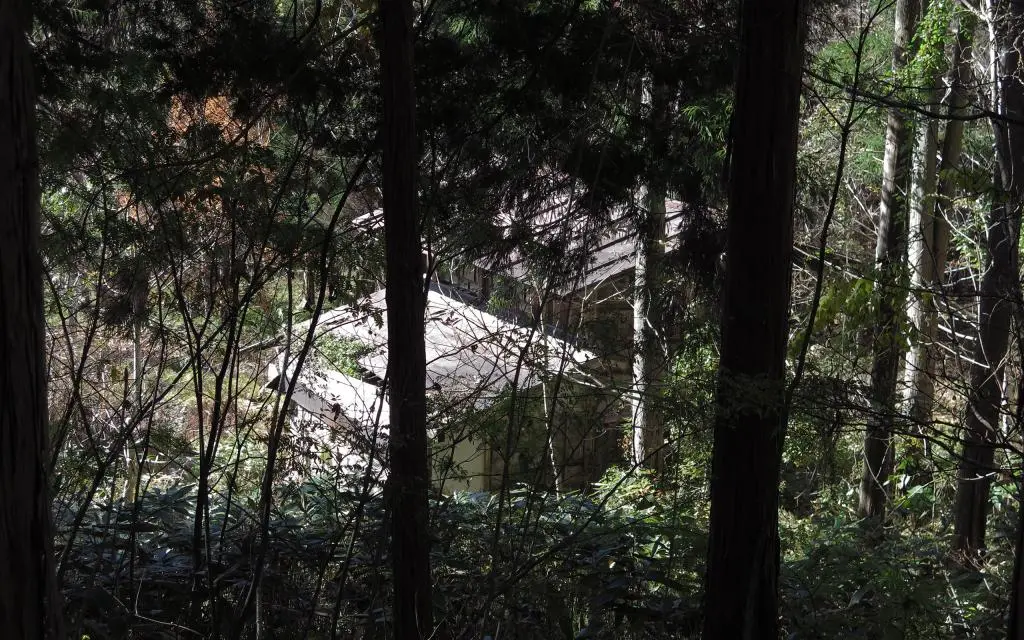
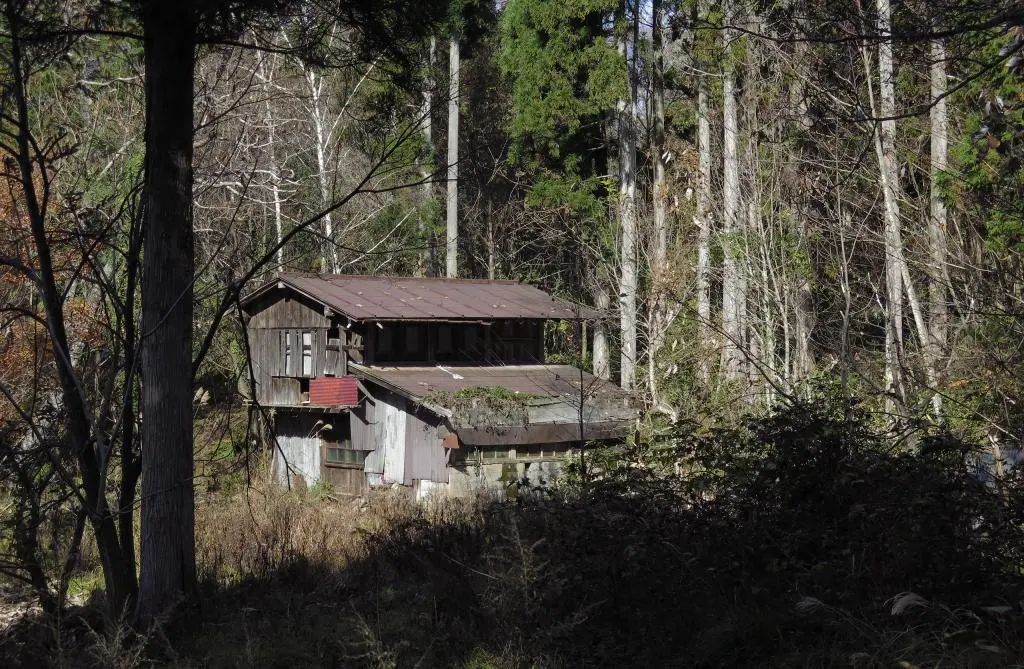
It's somewhat hard to see in this photo, but there's a home up there. It wasn't occupied at the time (no cars out front), but I think someone still lives here. Back in the Heyaneko post from 2013, he talked with the woman who lived here about where the old school was located.
His post mentions that the whole scene felt surreal. Throughout the whole dense forest, there was this one open area. A radio was hung from a window in the home that played old music from an old channel that made it feel like he stepped in the past. A pocket of time isolated from the rest of the world where an old women lived alone, the last resident of her dead neighborhood.
I stopped my car and took a few photos, but after only a minute or two, that gunshot sounded again. This time, it was right in front of me. It was coming from the house. I was a bit shocked, so I got in my car and continued along the road.
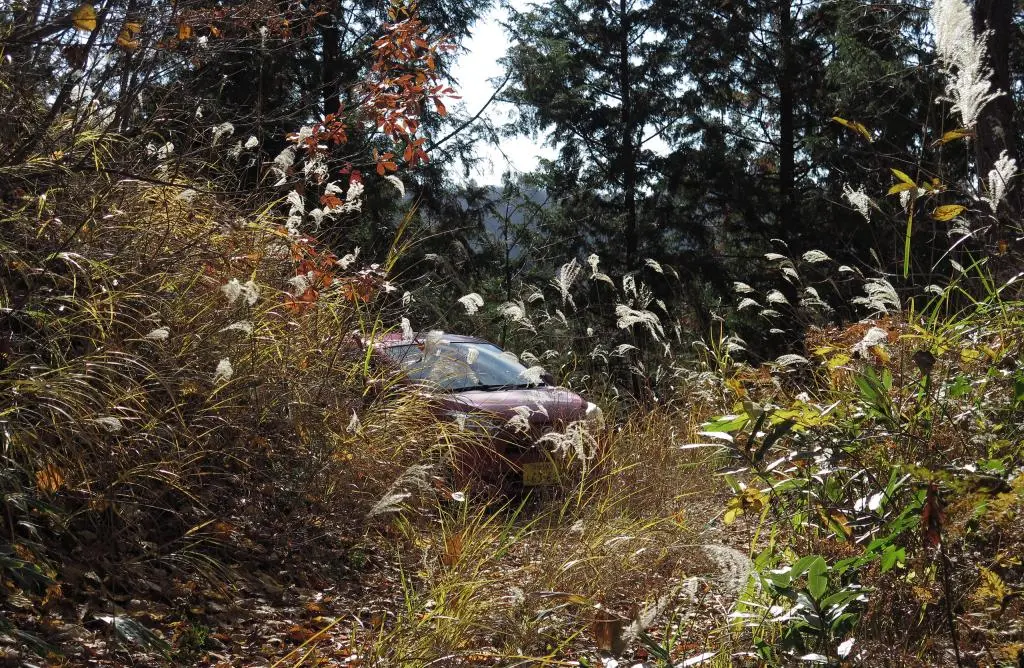
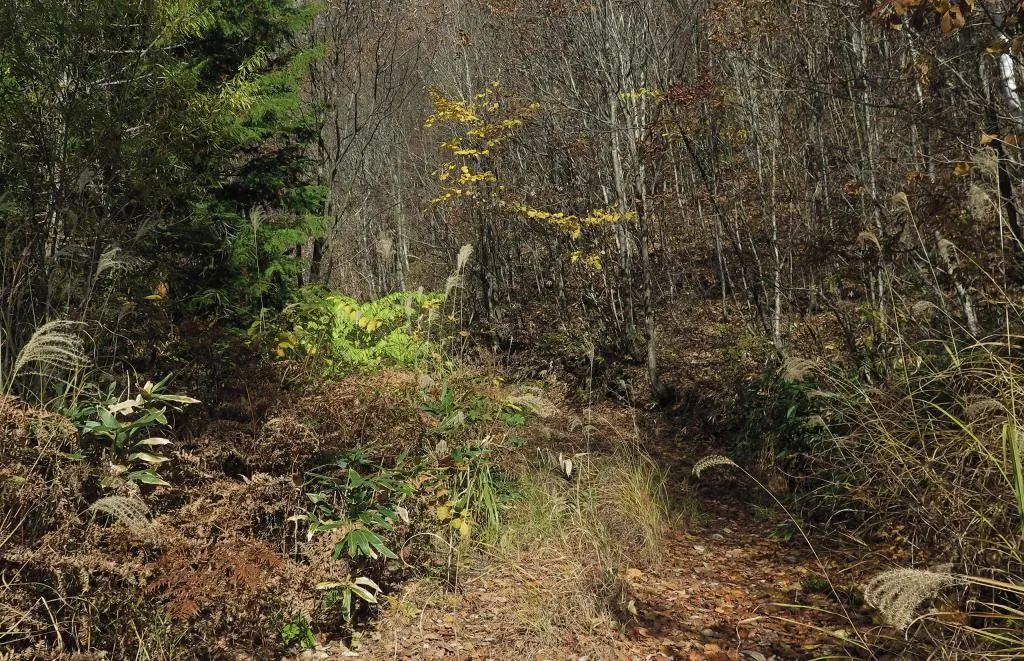
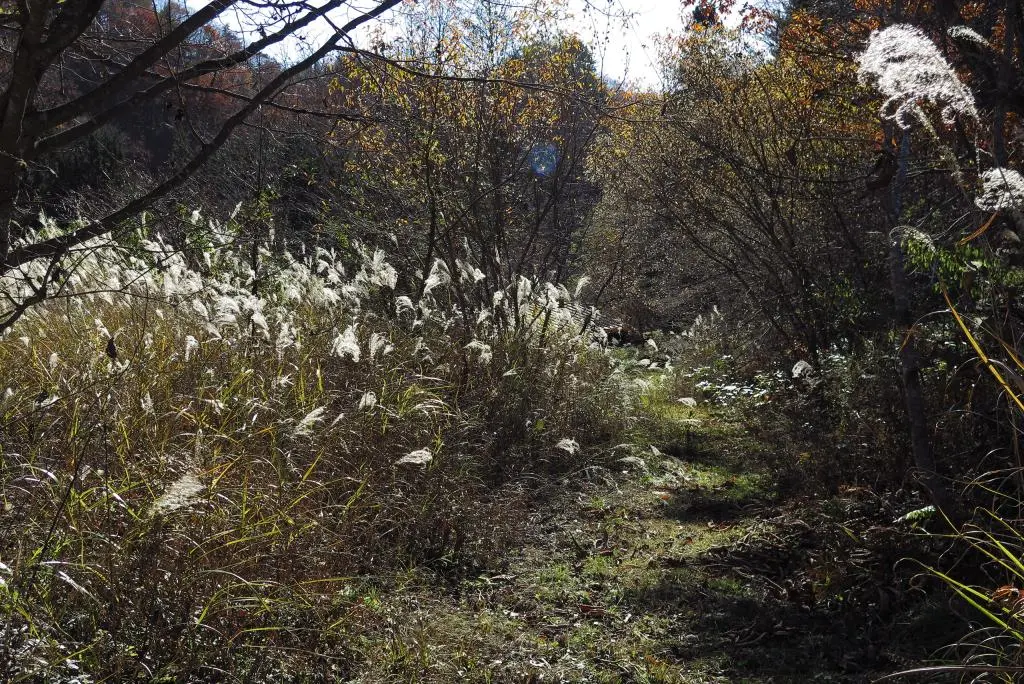
The road continued, but it didn't seem to lead anywhere. It got more and more difficult to move forward with plants covering the road and larger fallen rocks. I think whomever had been using and clearing the roads before was the resident of the house I had passed.
What was that gunshot? Was it actually someone firing a gun? You can't own guns in Japan, so that's not it. Was it an explosion? Maybe that was some damage to the electricity in the house, and a semi-conductor was building up a charge and releasing it every 20 minutes. Or... perhaps it was a wildlife deterrent. The Heyaneko post mentioned that the old woman played the radio to keep bears away from her home. Maybe she bought this gunshot thing as a better means to scare away the animals. It certainly worked on me.
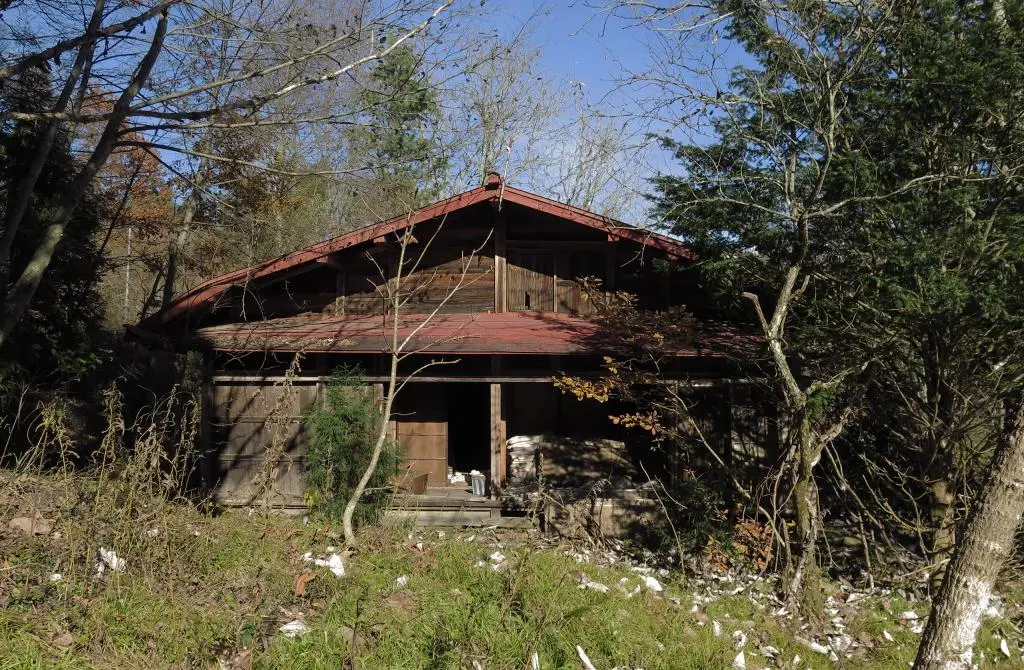
I went back to my car and turned around satisfied with the depths of my travel. While approaching the woman's home again, I stopped and looked around. There was another home in the open field.
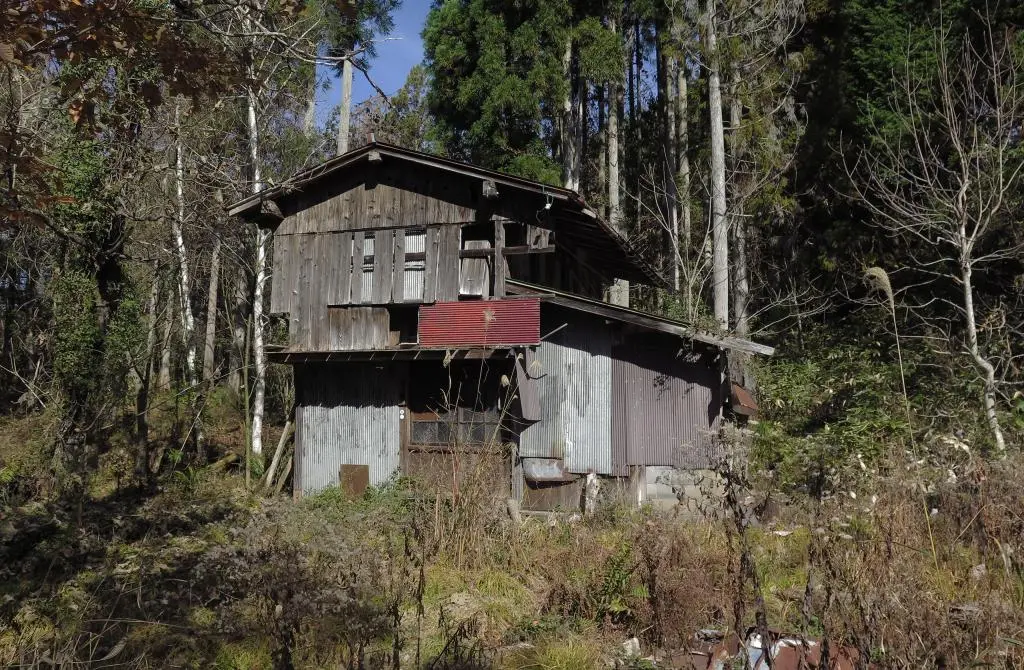
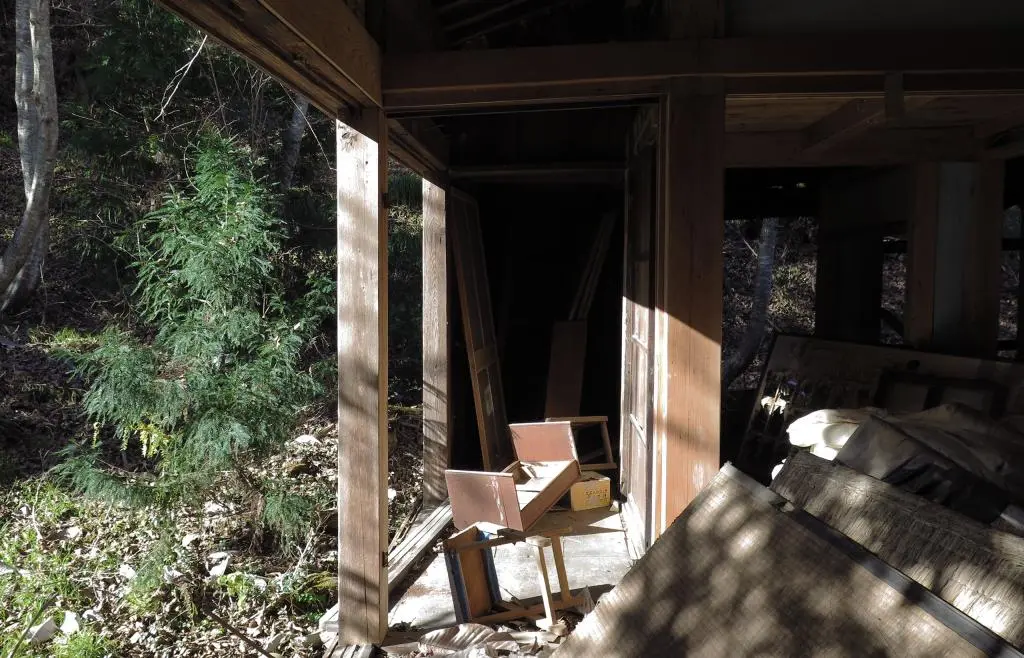
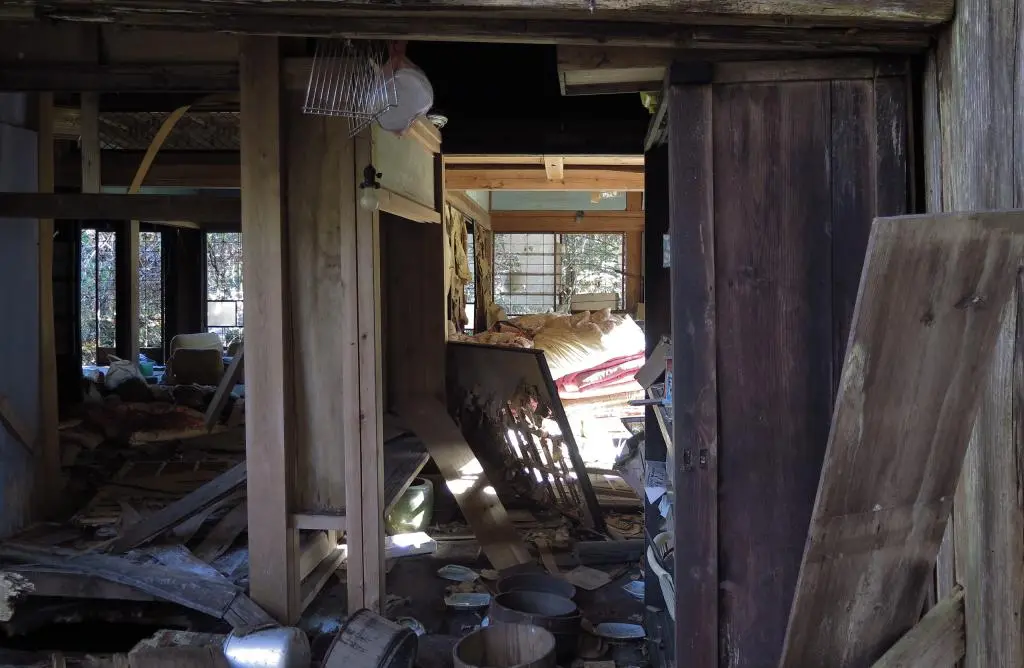
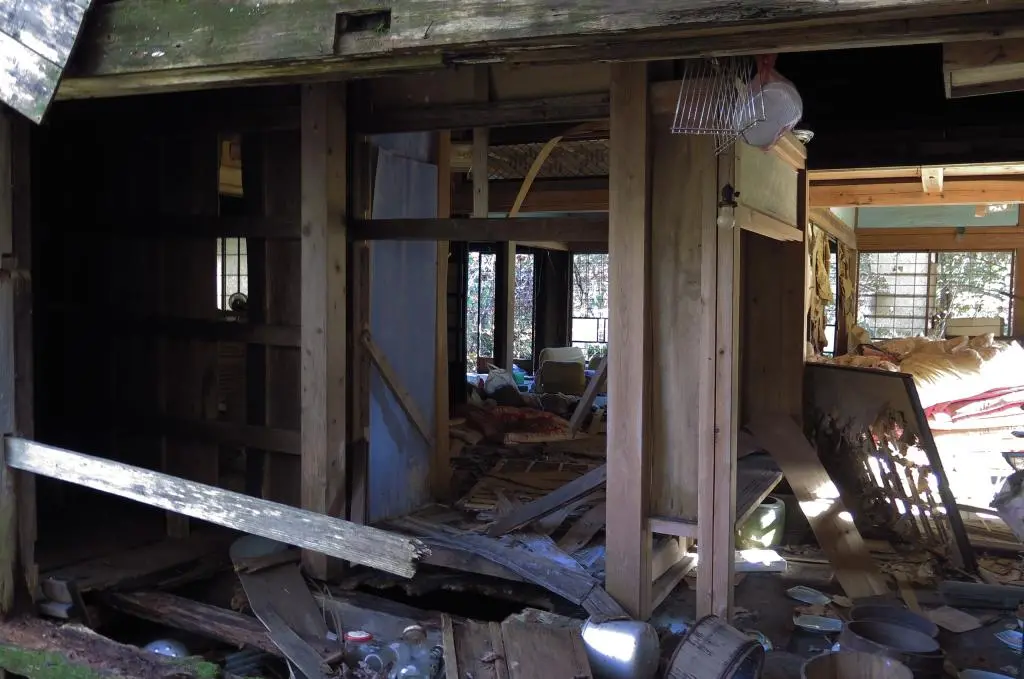
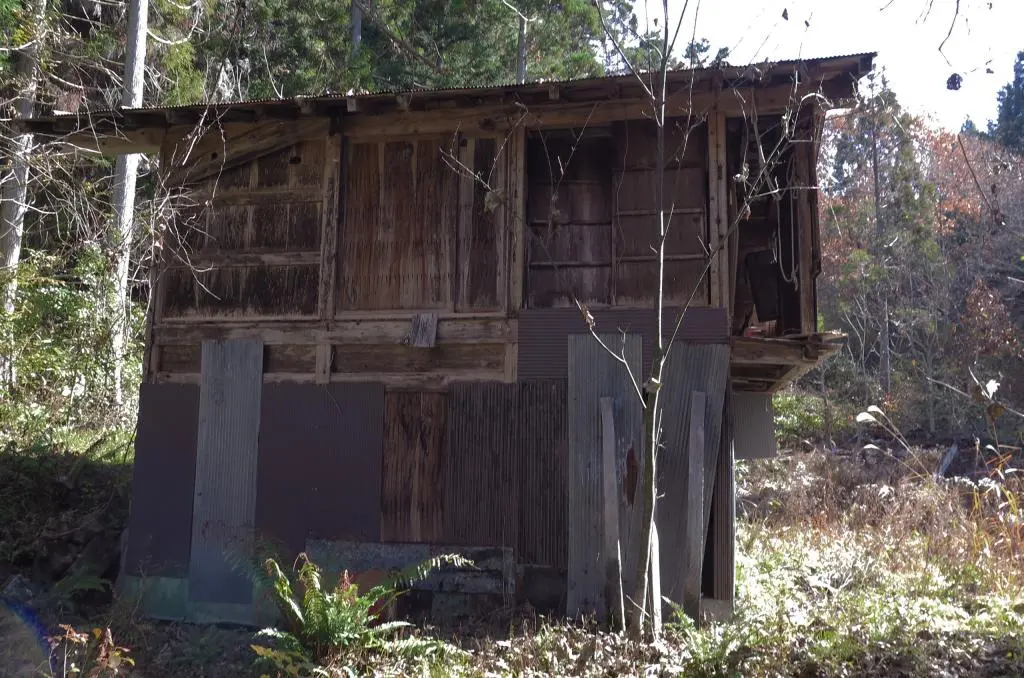
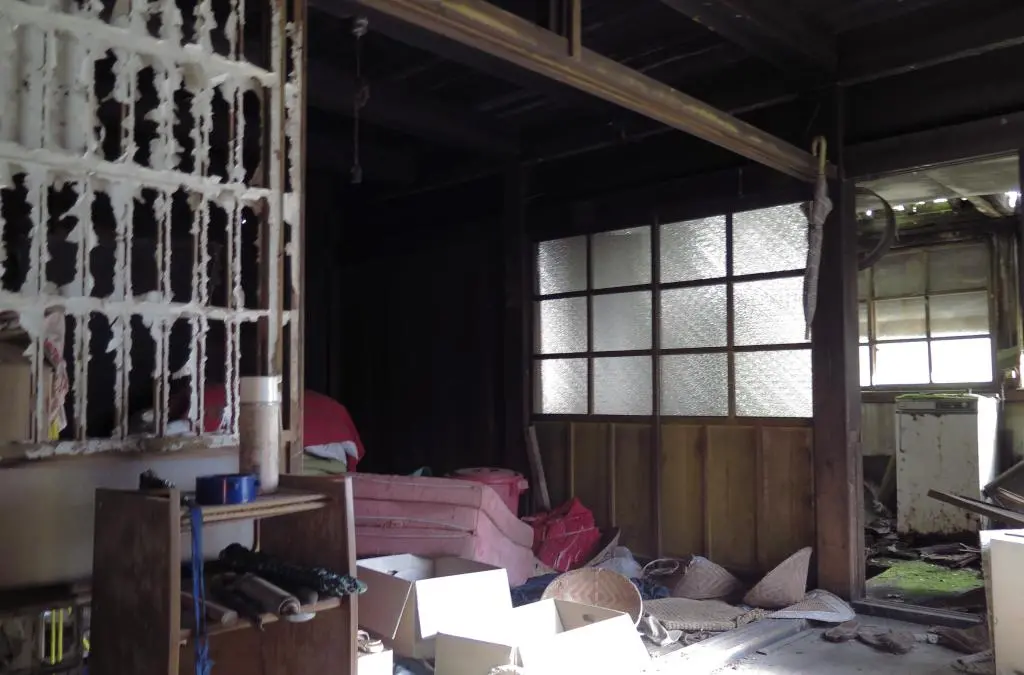
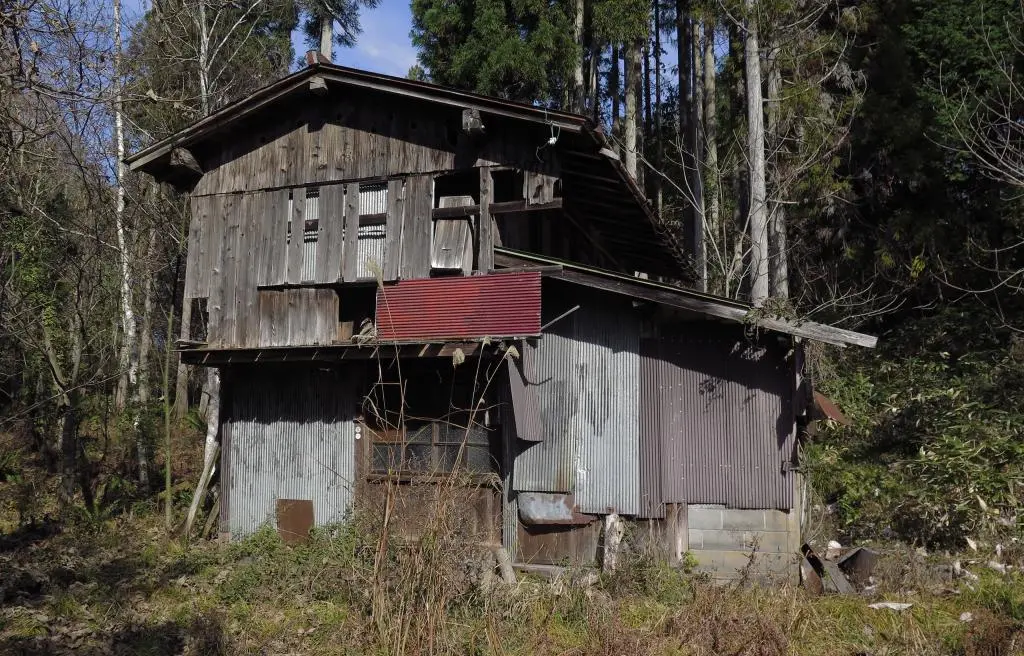
I walked up to the home and took some photos. Part of the outer wall had collapsed. I looked inside, but there was just a bunch of trashed items. Maybe the other home just stored their large unnecessary items here. I tried the front door, but it began hissing! I was so worried about bears and bees that I forgot about snakes! I didn't see a snake, but I backed away anyhow.
I went back to my car, and slowly drove past the woman's home again. I stopped to get a better look of the outside from the road. It didn't seem like there was any damage that could cause a 20-minute explosion. I decided not to go any closer to the home. In addition to the sound deterrent, who knows what kind of traps could have been set up around the perimeter of the house.
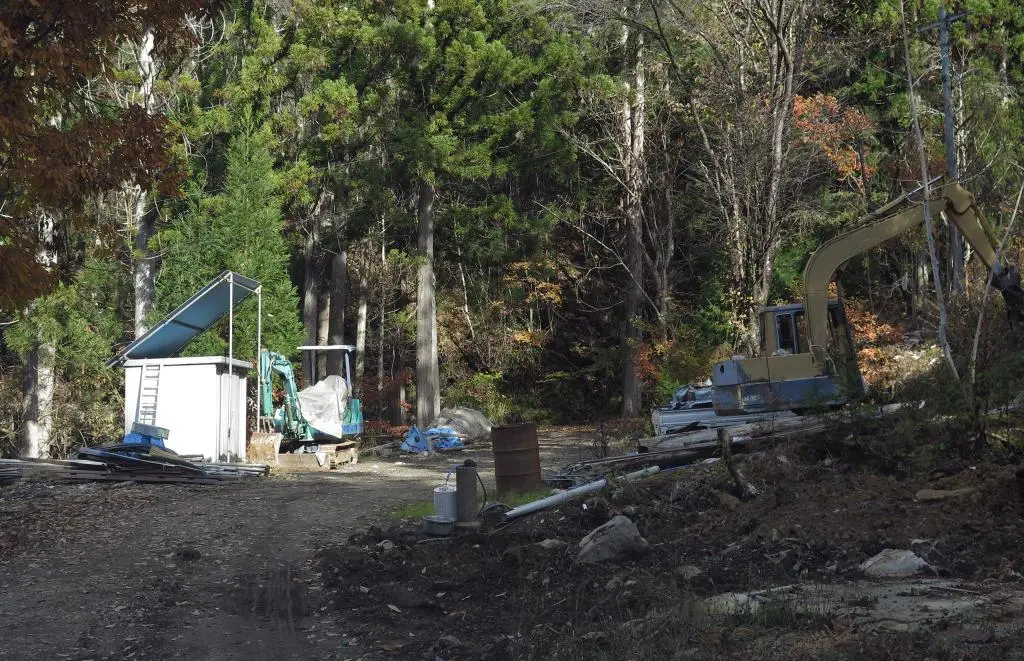
The above photo is of the road outside of the woman's home. Looking at Heyaneko's post, there used to be a building on the right. Now there's just a pile of dirt. According to his post, this was the site of the old branch school for Ohara. It's full title at the time of its closing was Kamitakara Village Hongo Elementary Ohara Winter Branch School 上宝村立本郷小学校大原冬季分校.
It was originally opened in 1912 as a winter branch school of Nagakura Public Elementary School 長倉尋常小学校. The Nagakura School went through many renames until it was merged with Hongo Elementary in 1968. Ohara Branch School was closed the next year, and it is believed that Ohara Village became abandoned in 1970. In 1959, Ohara Branch School had 9 students. (wiki source)
The gunshot cracked again, and I left.
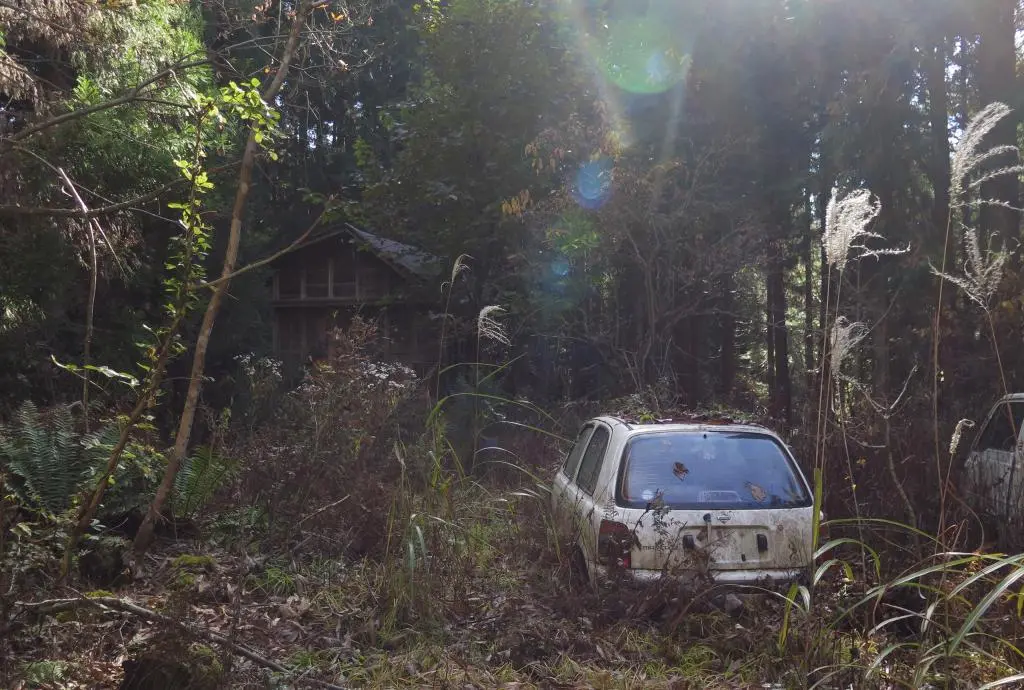
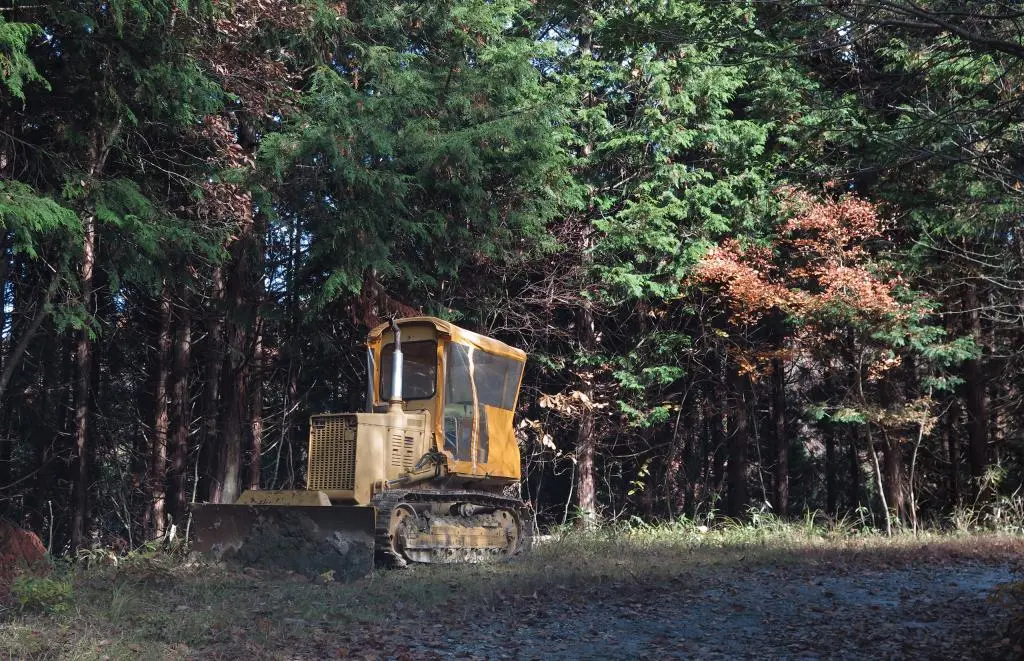
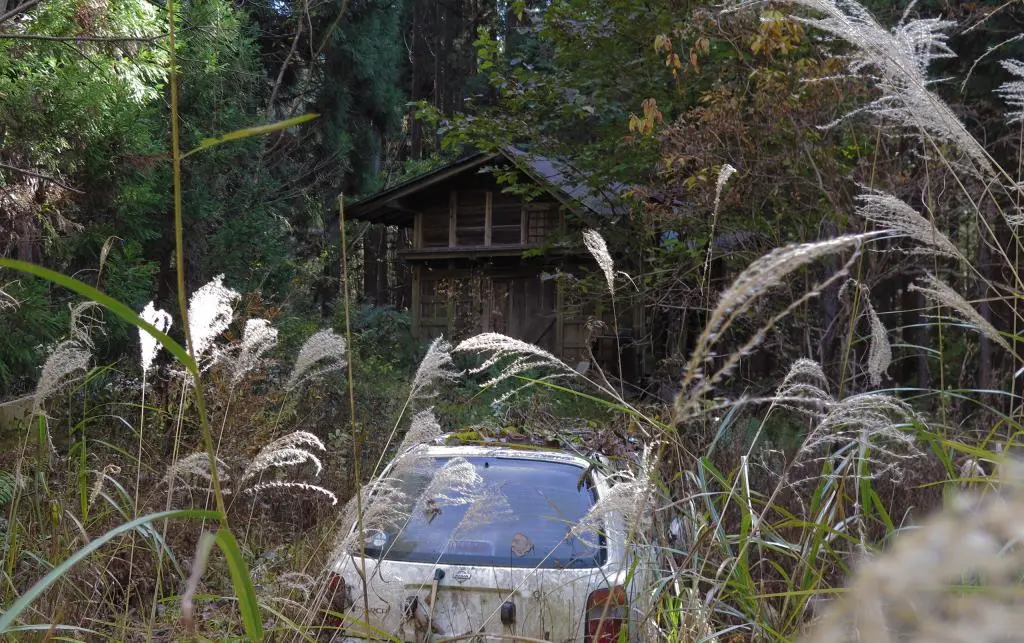
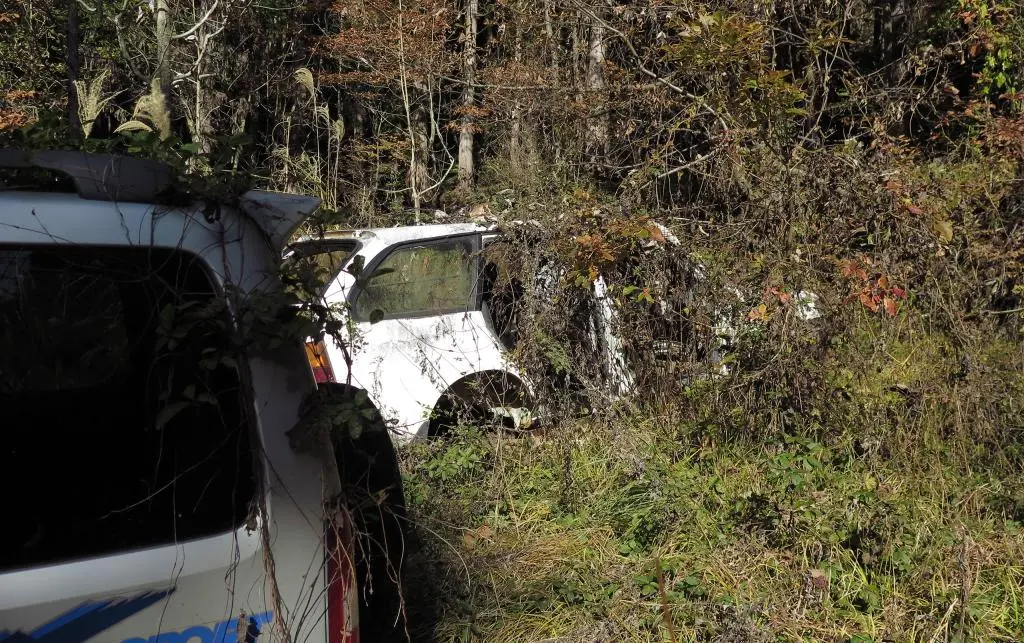
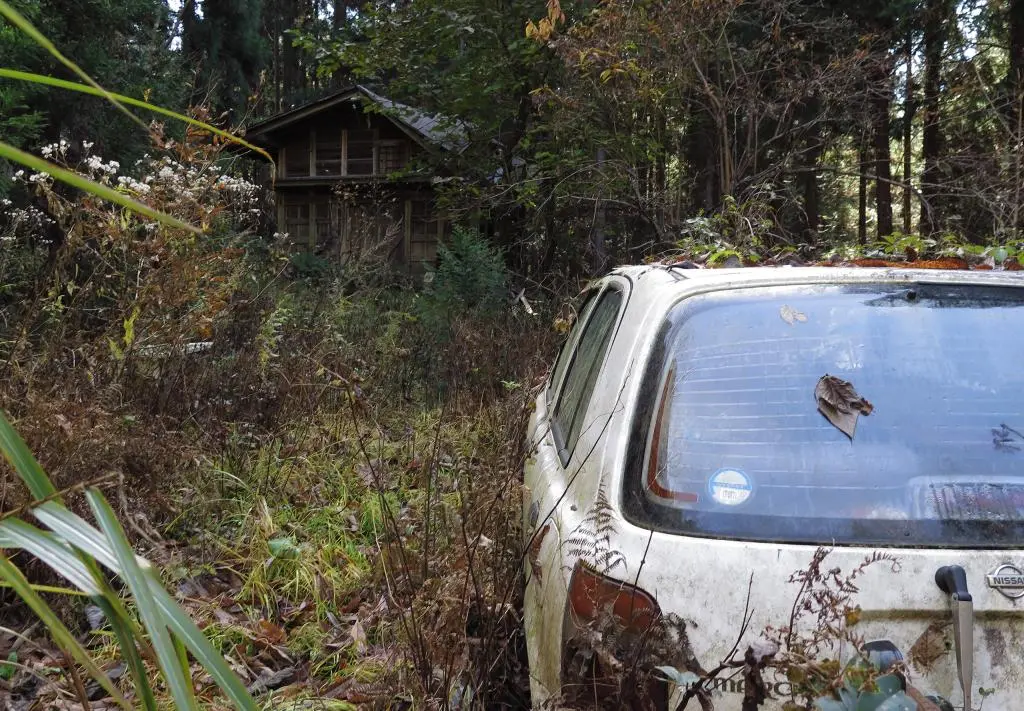
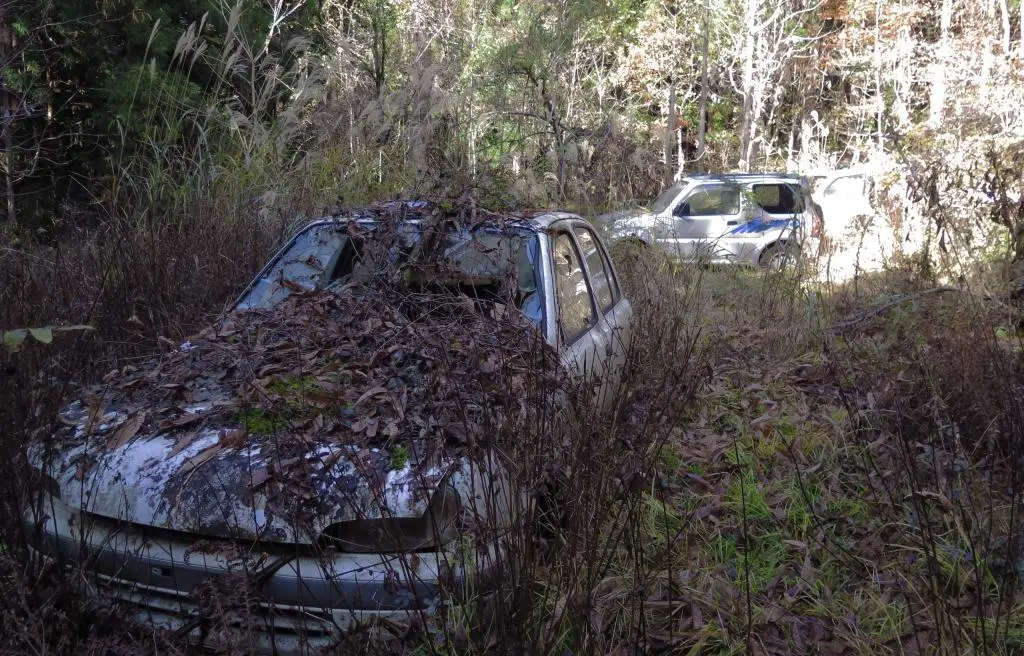
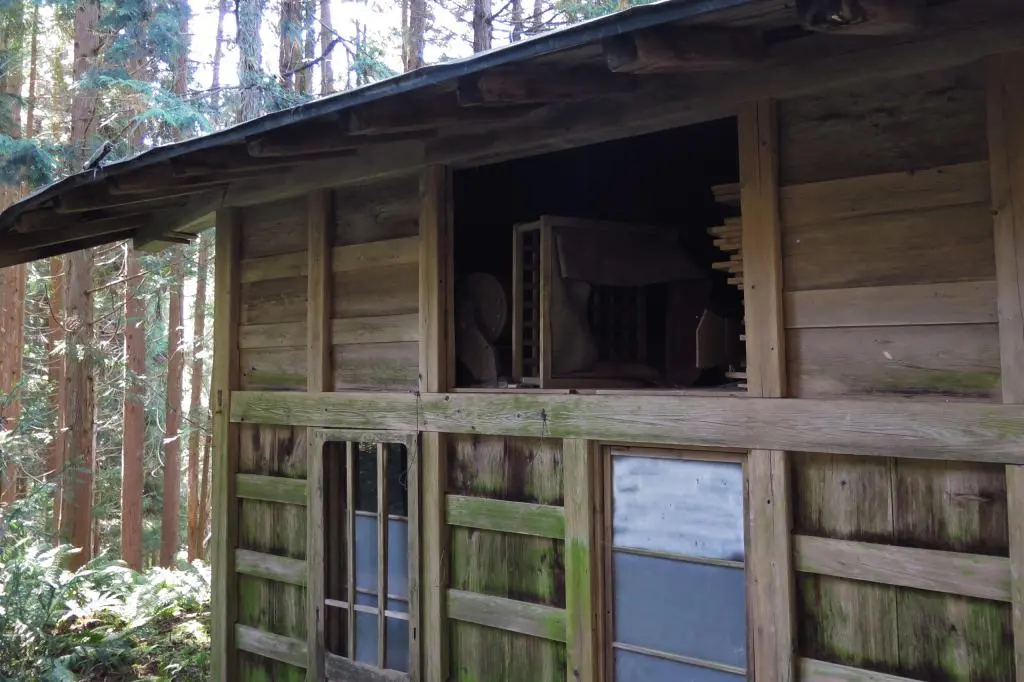
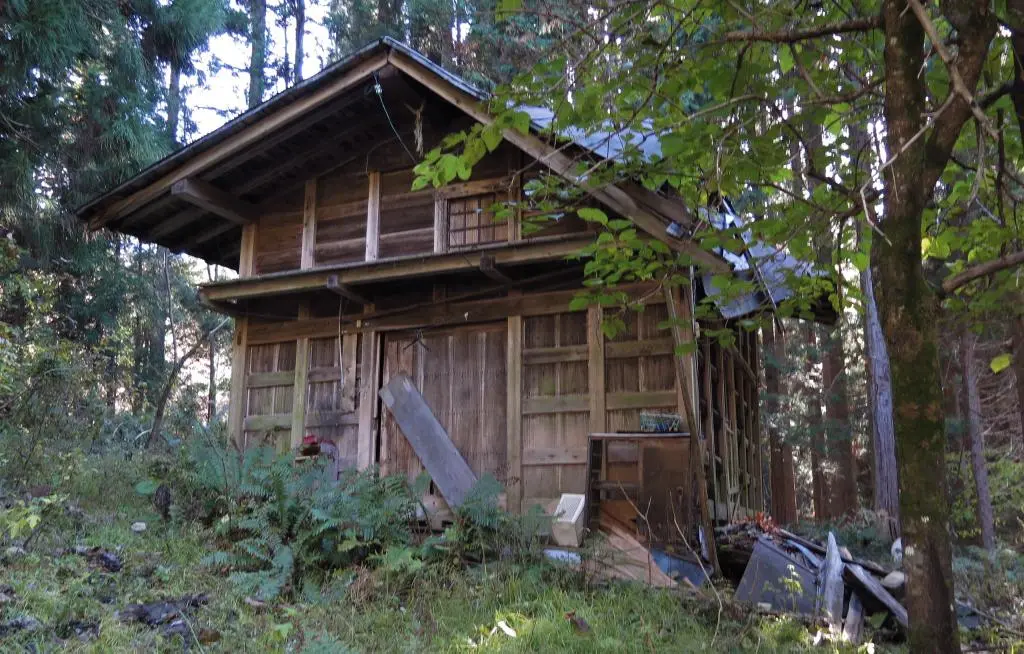
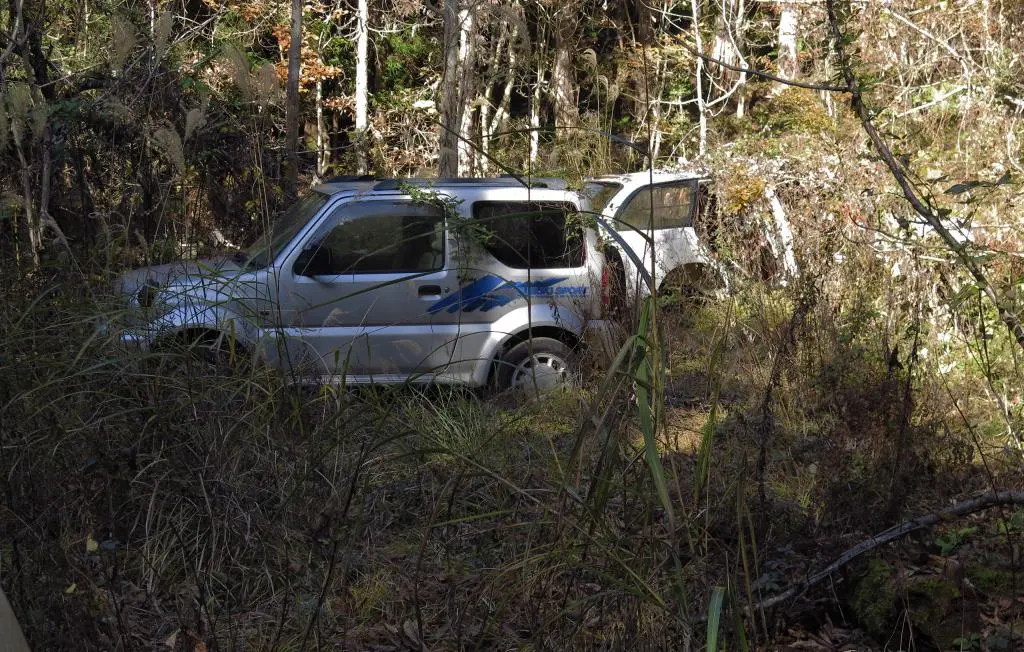
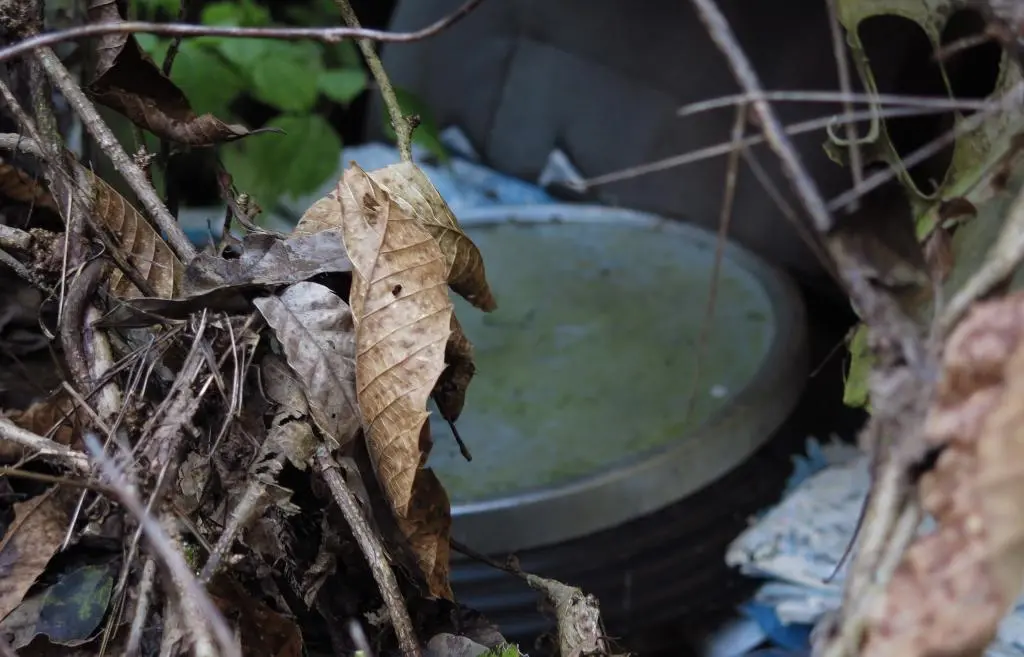
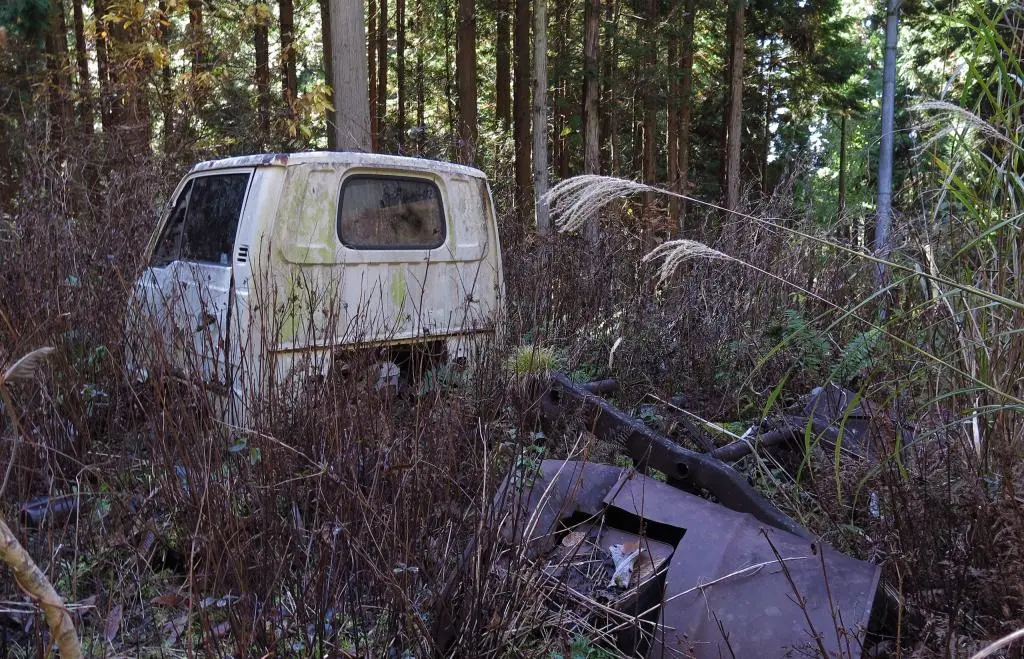
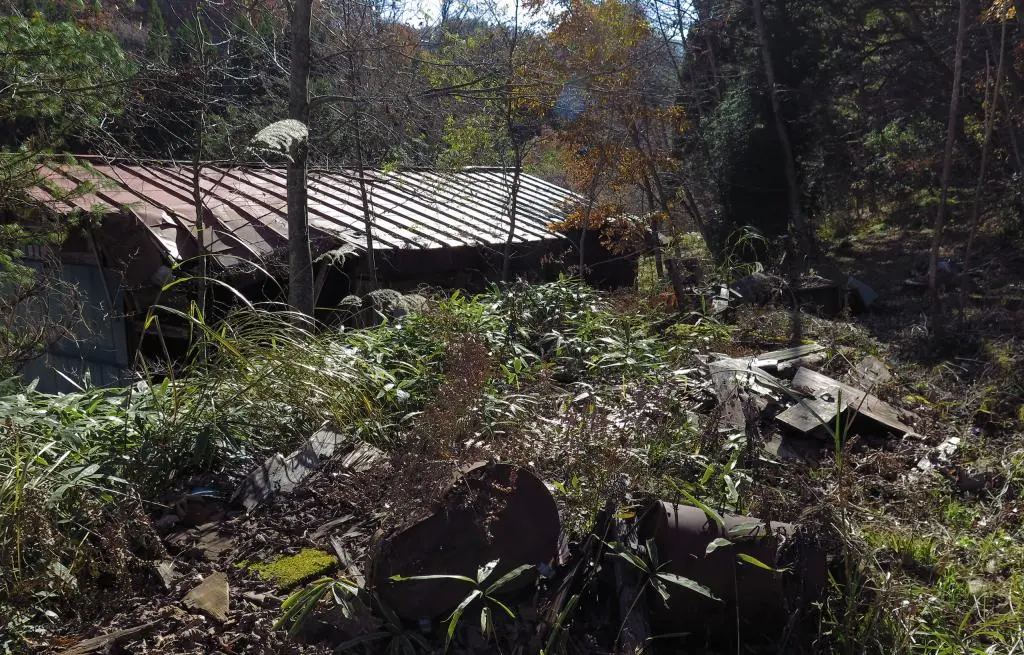
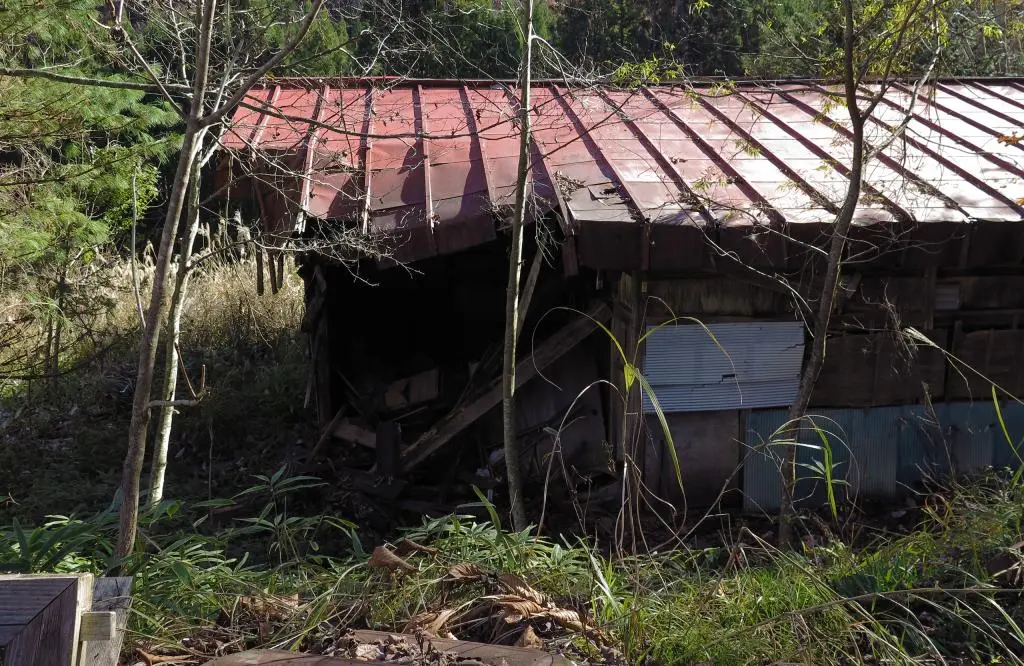
Down the road, I found some more abandoned vehicles which led to an old shack. There was actually a very recent vehicle stashed here compared to the other ones which had been torn apart. It looks like the shaken sticker on this vehicle ended in 平成31, which was 2019.
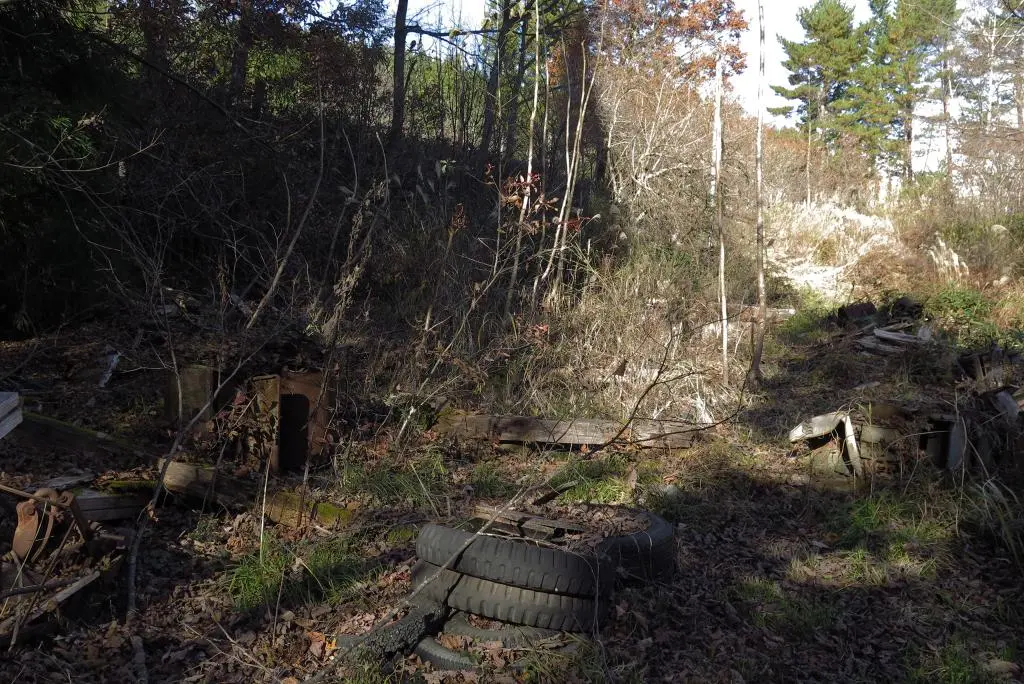
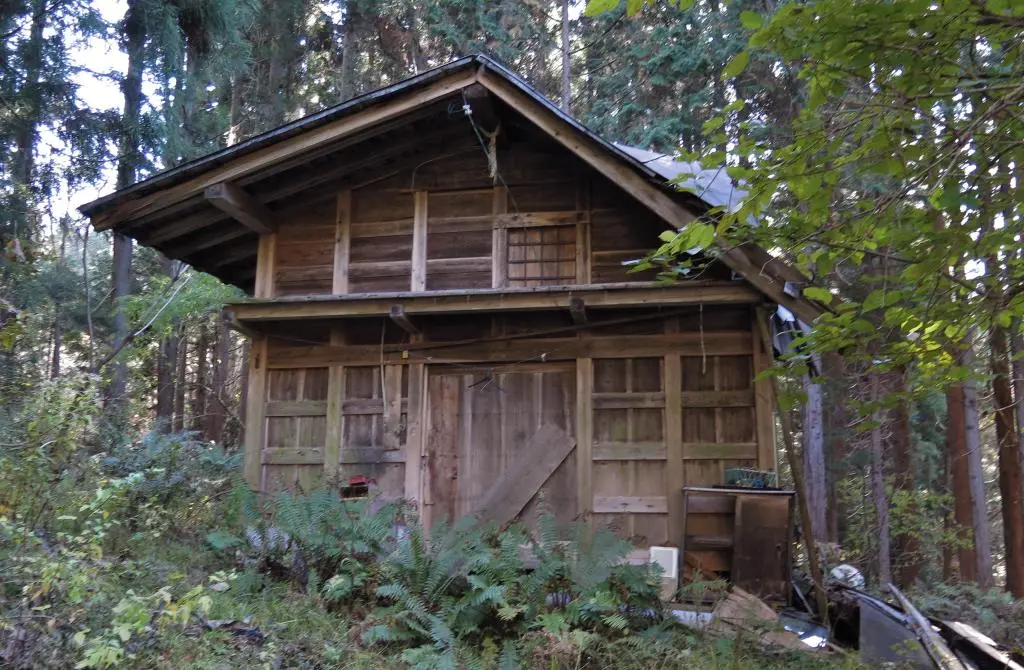
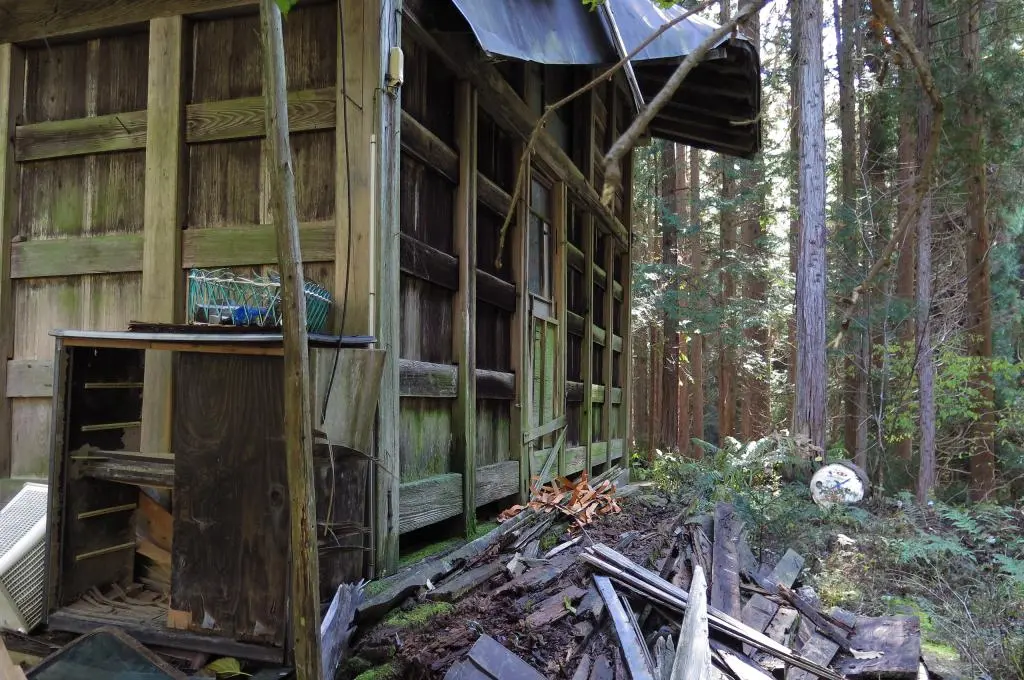
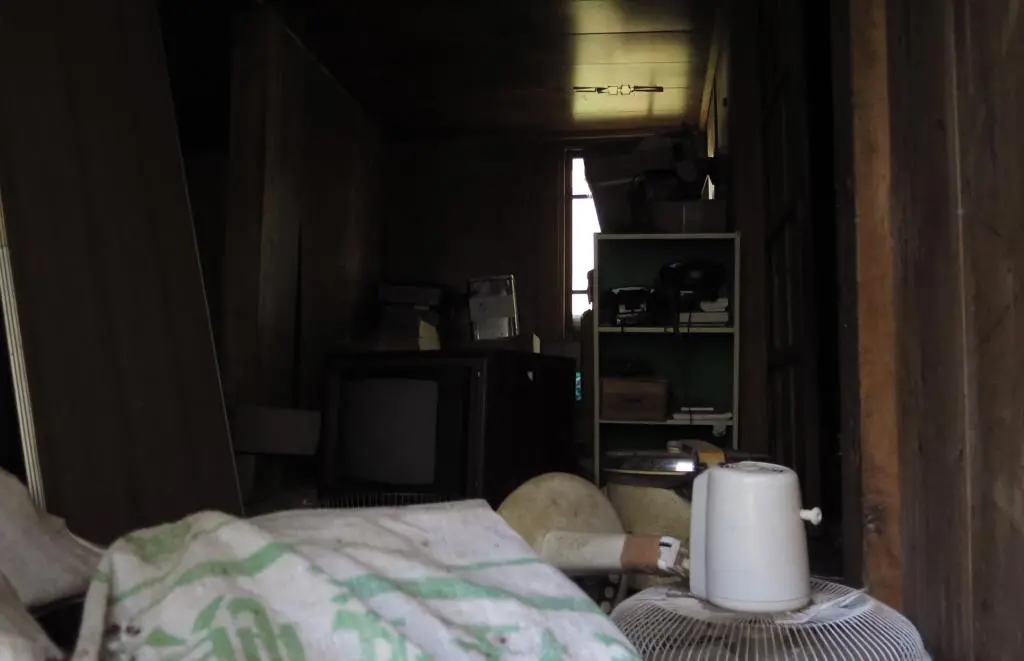
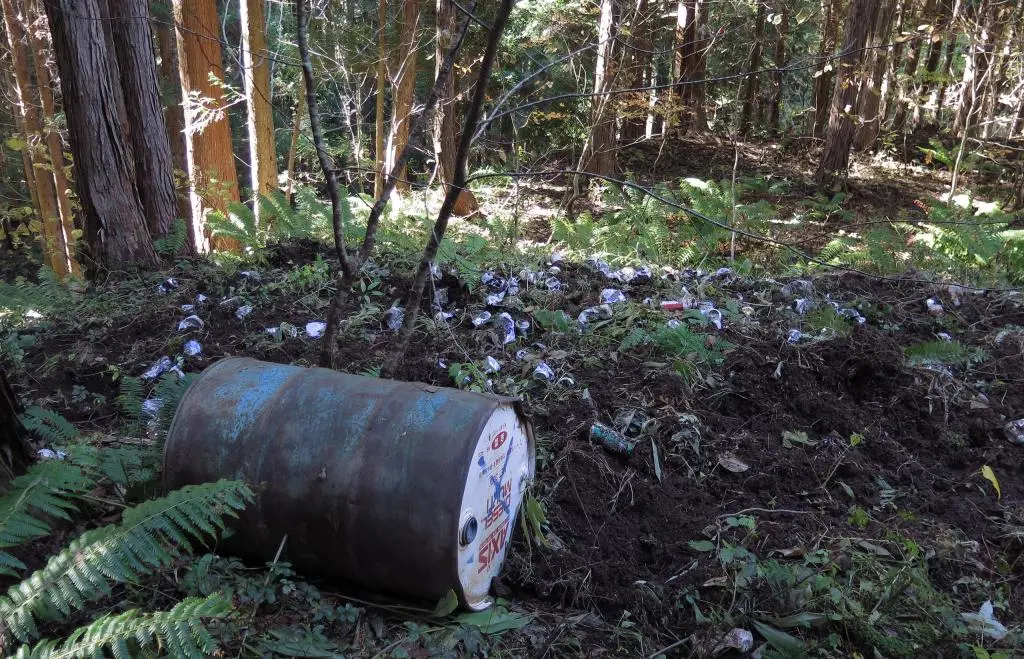
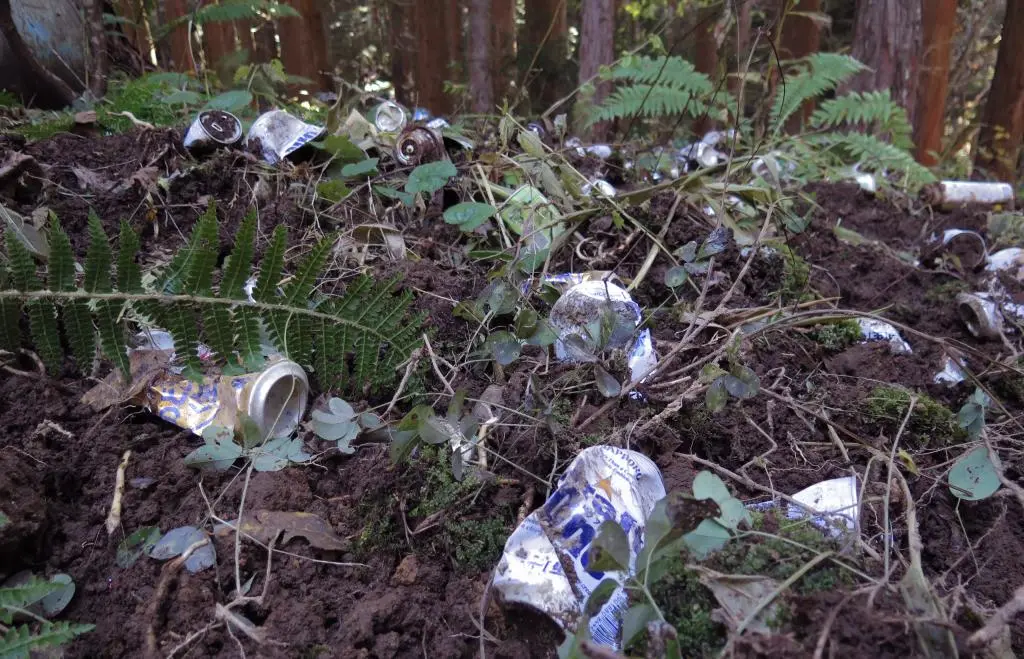
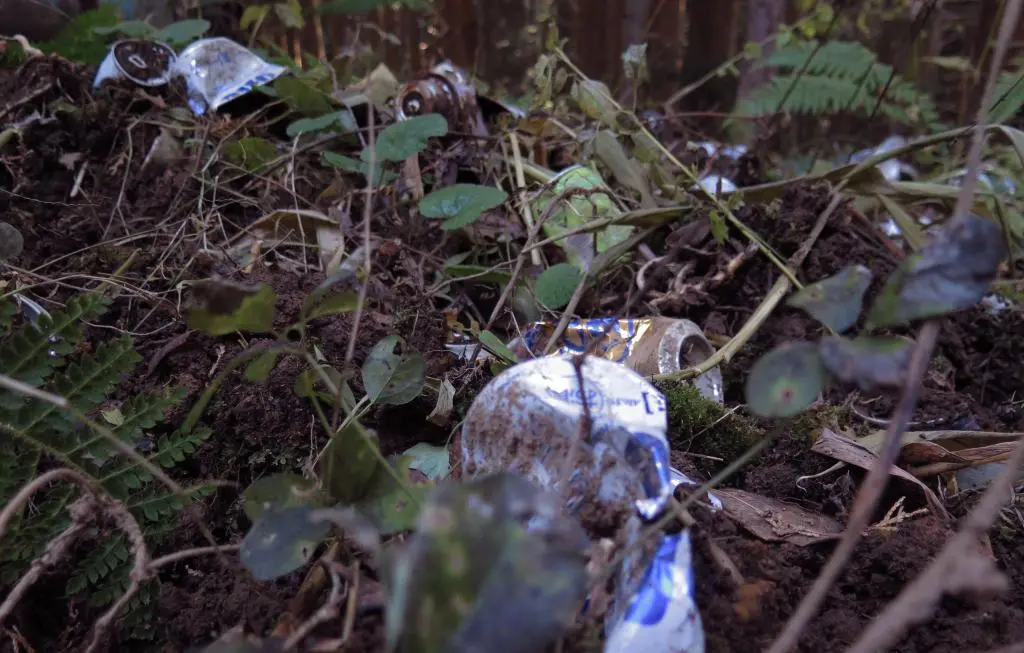
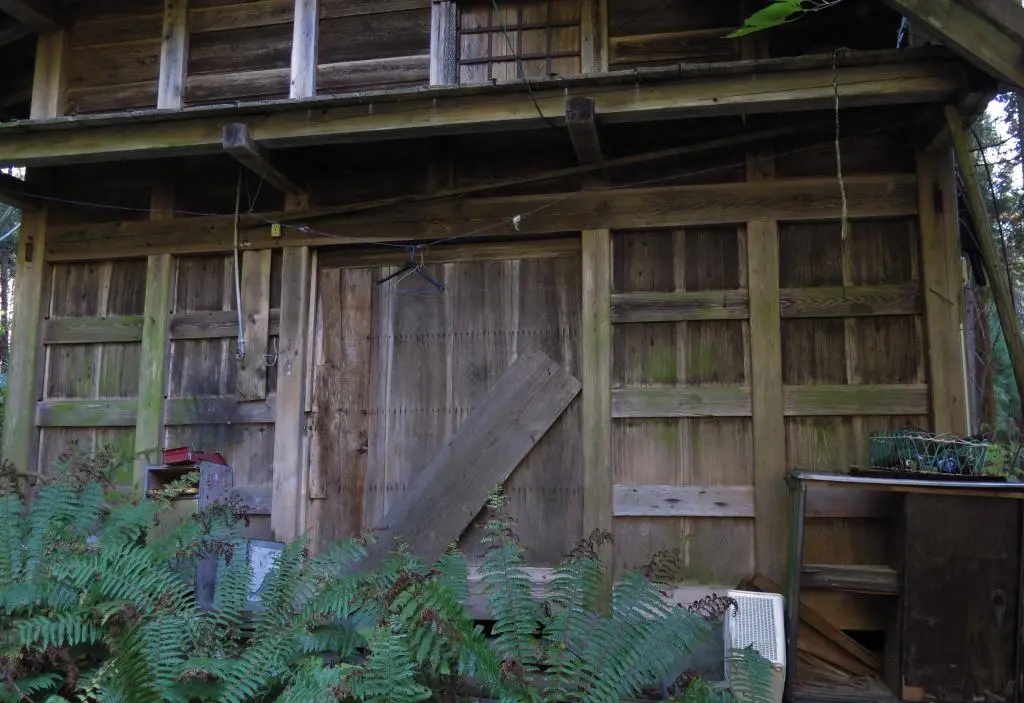
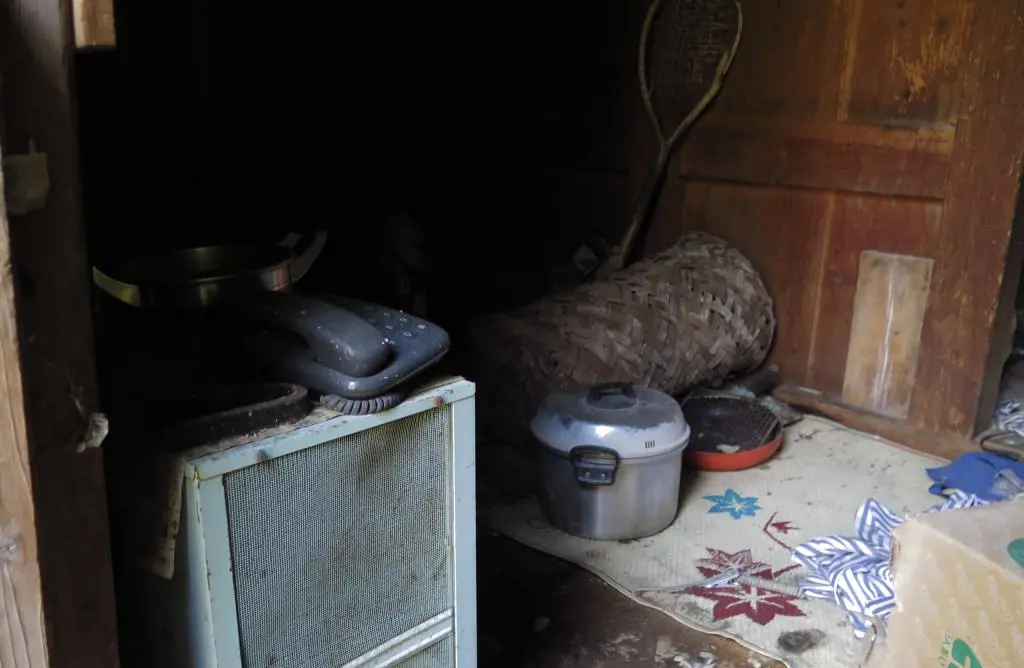
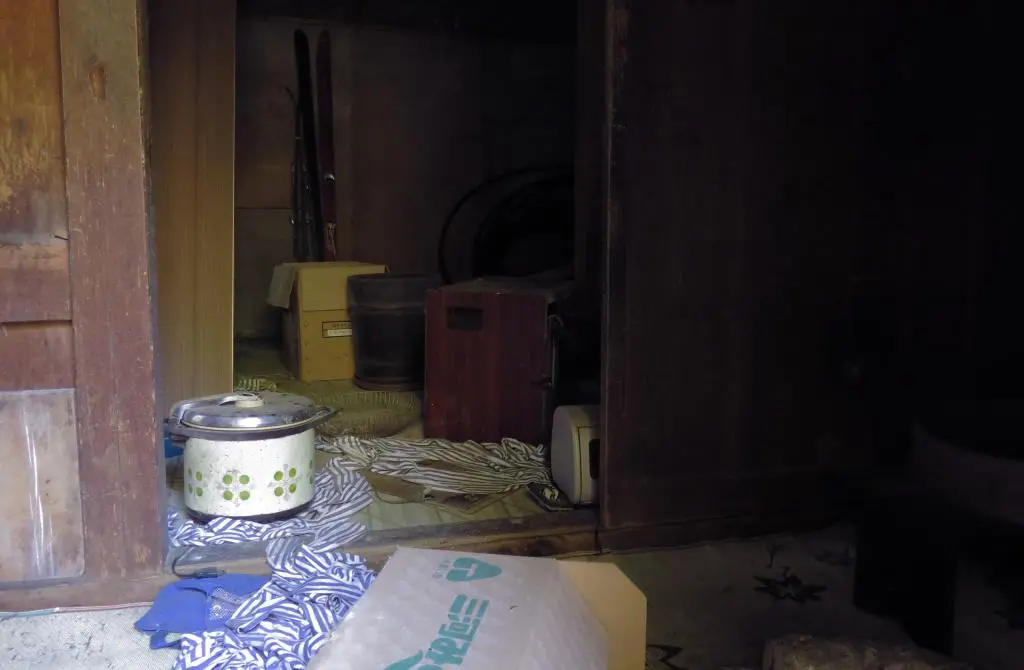
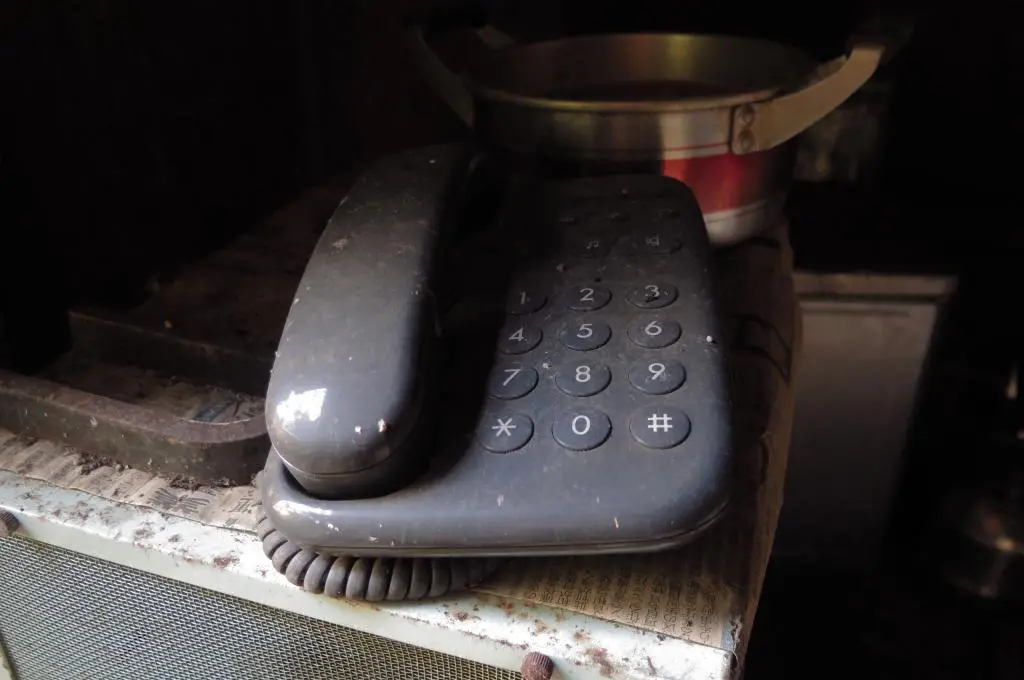
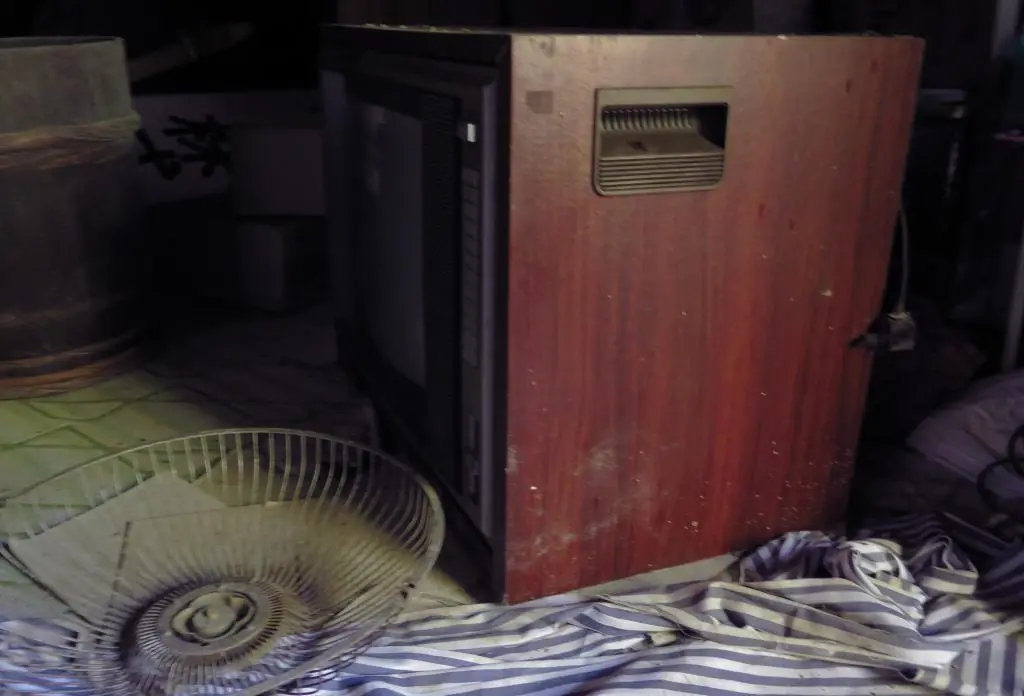
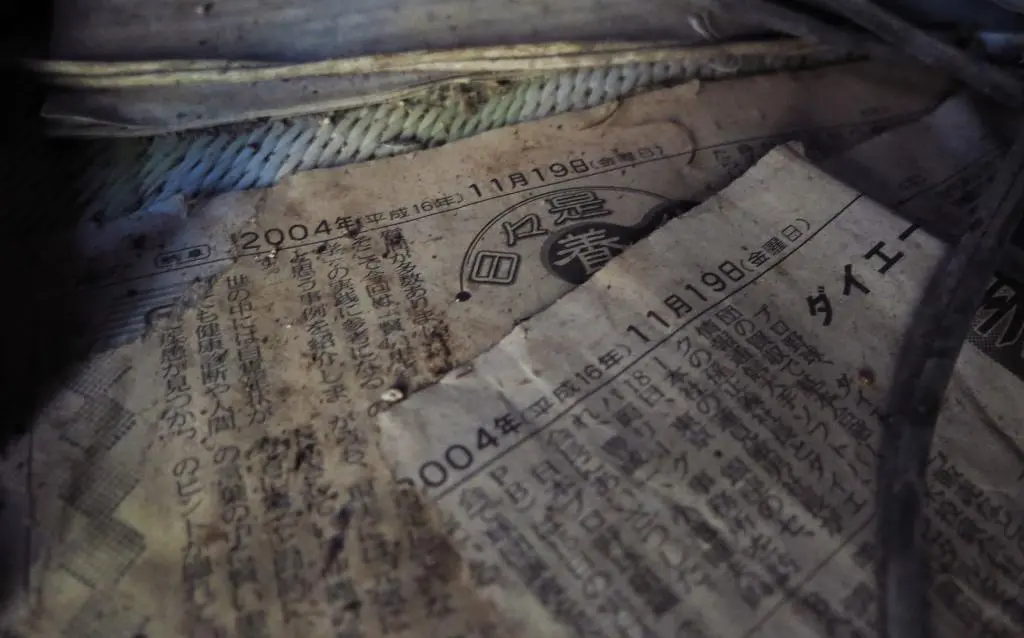
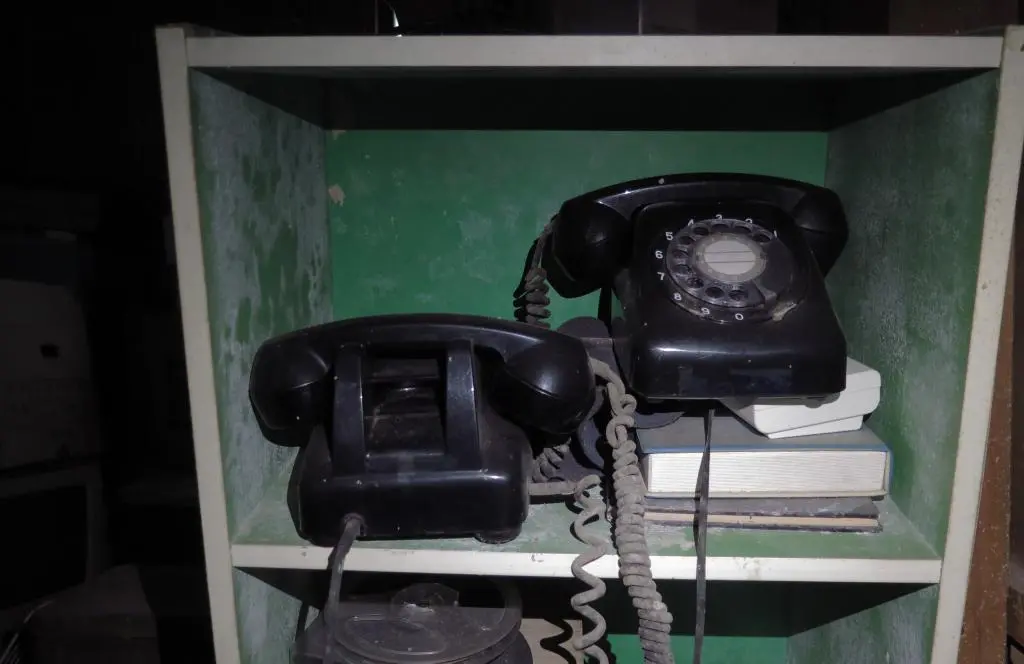
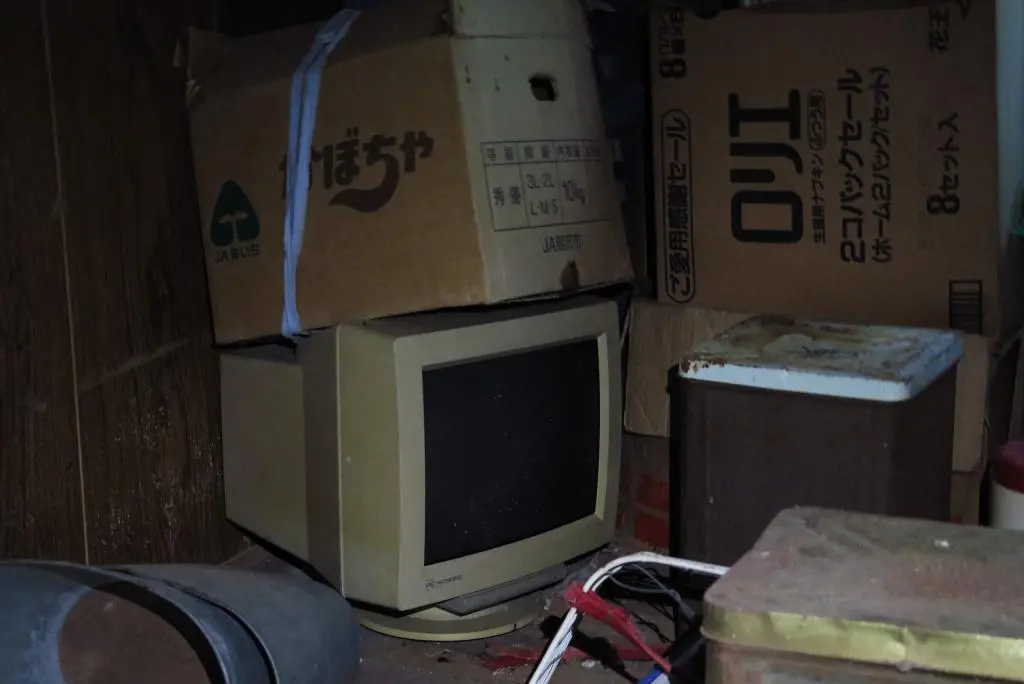
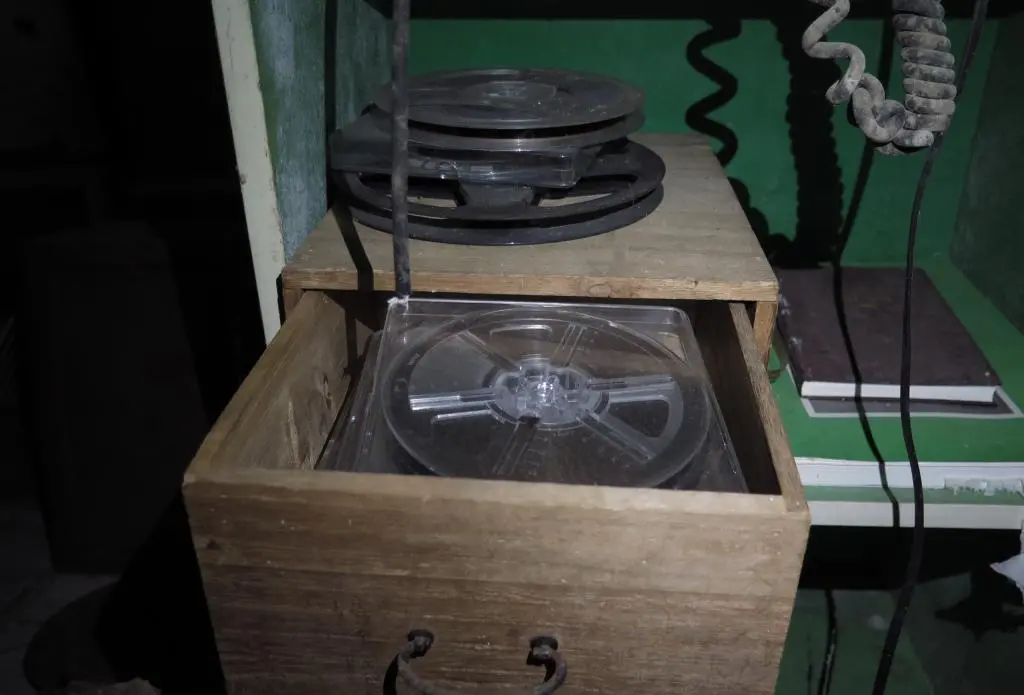
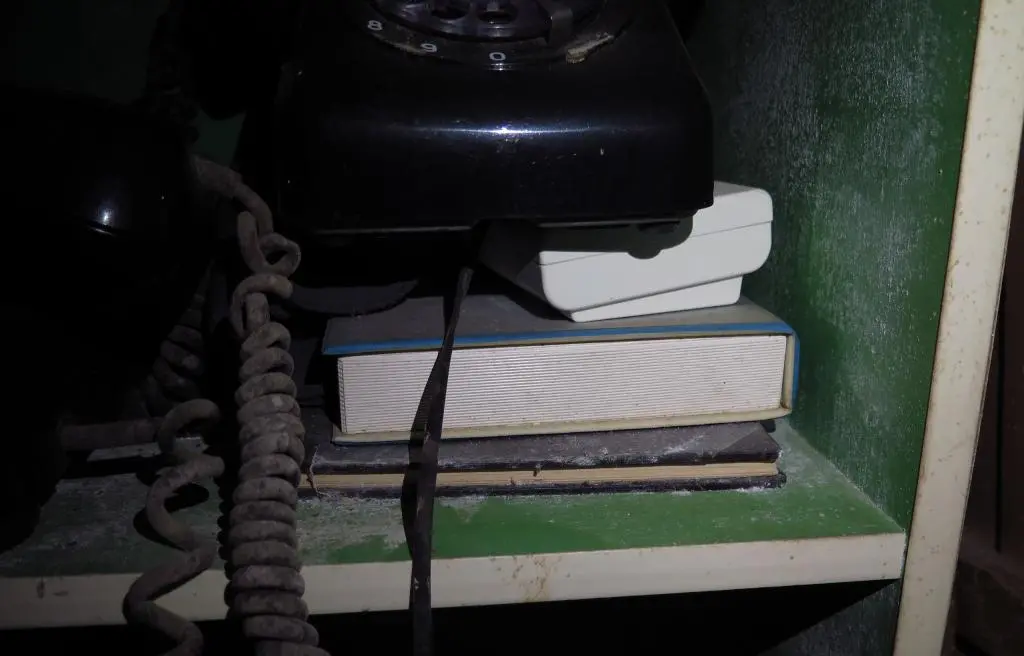
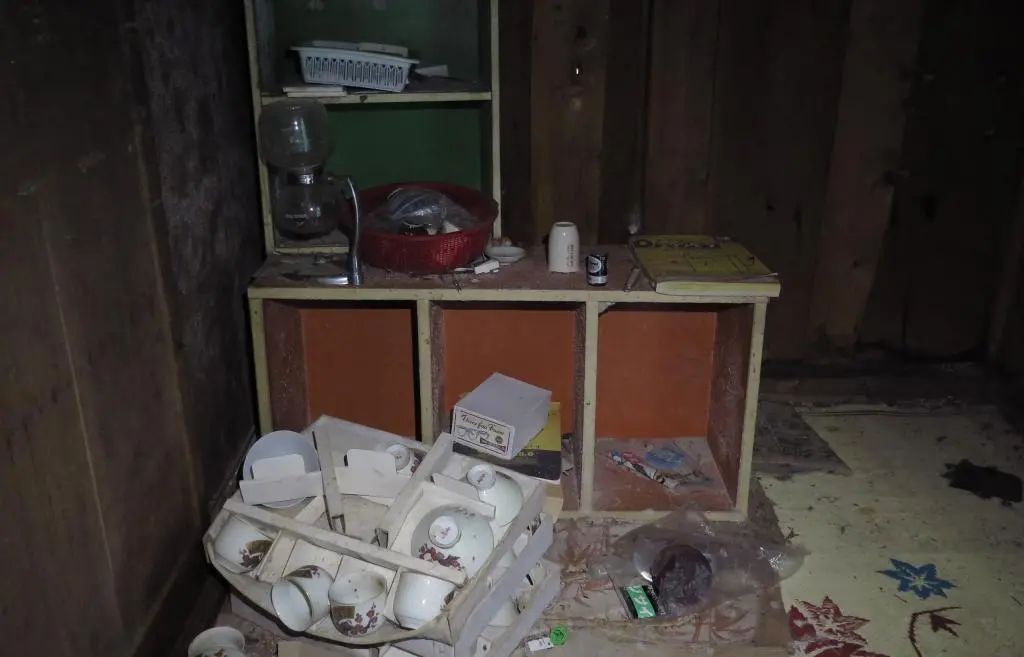
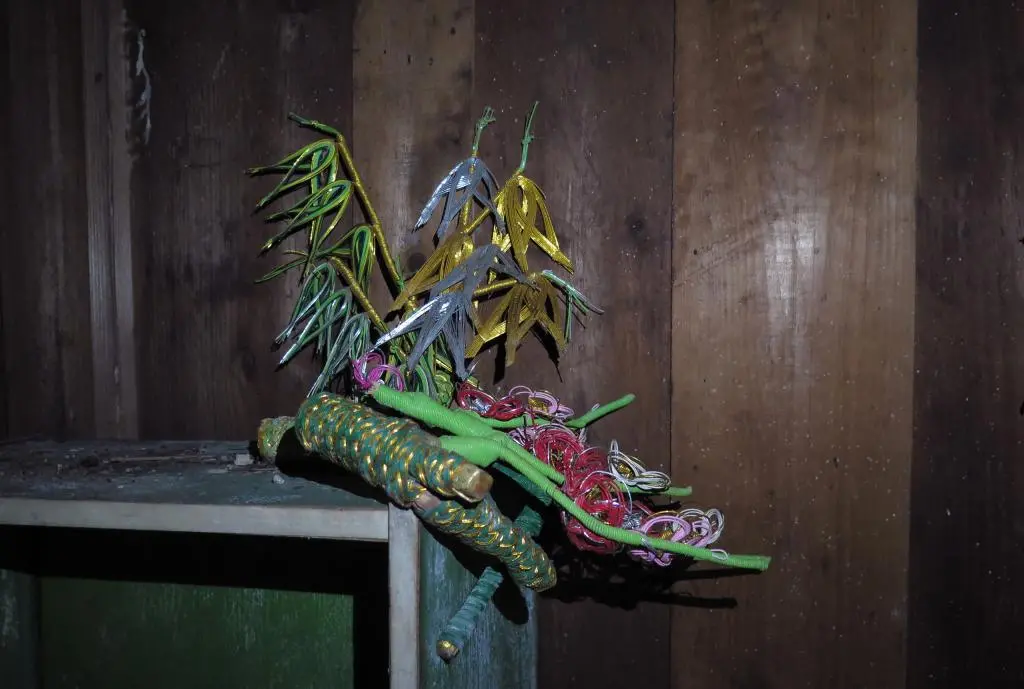
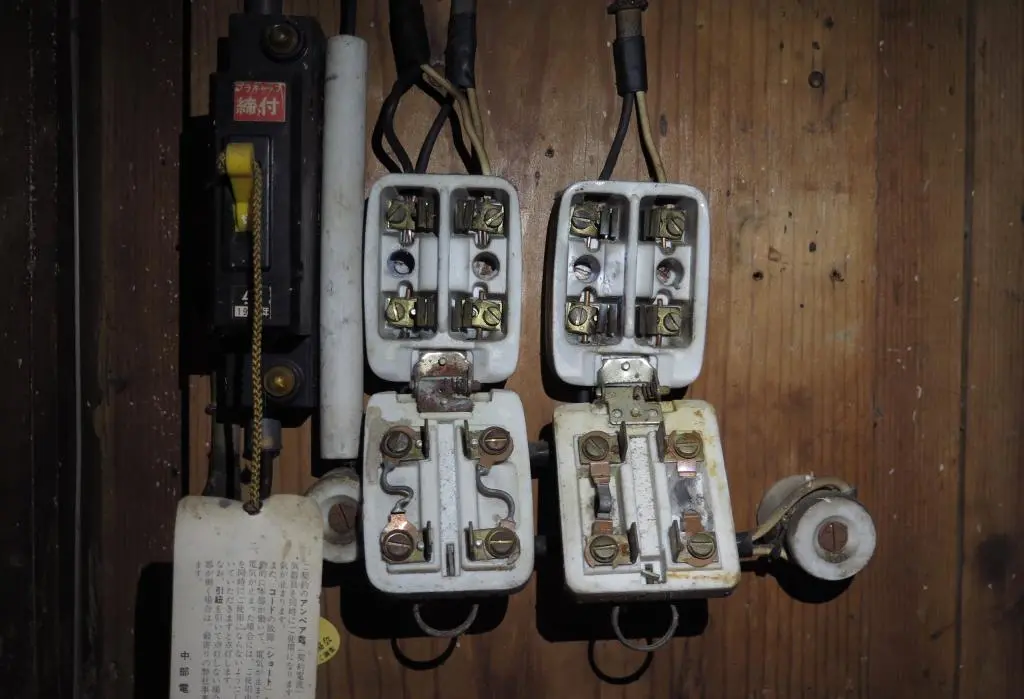
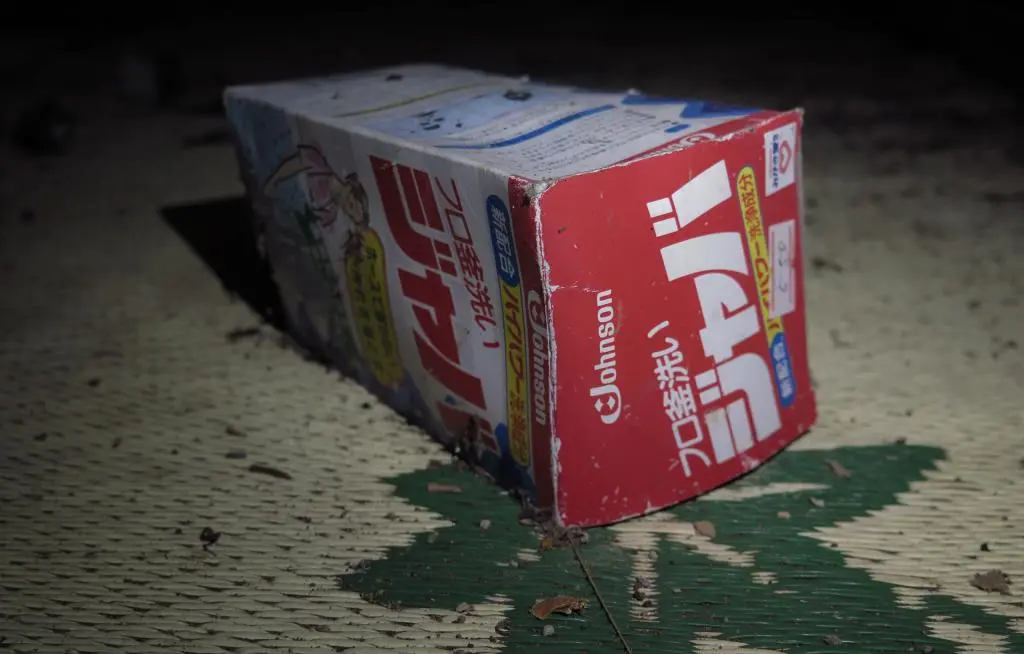
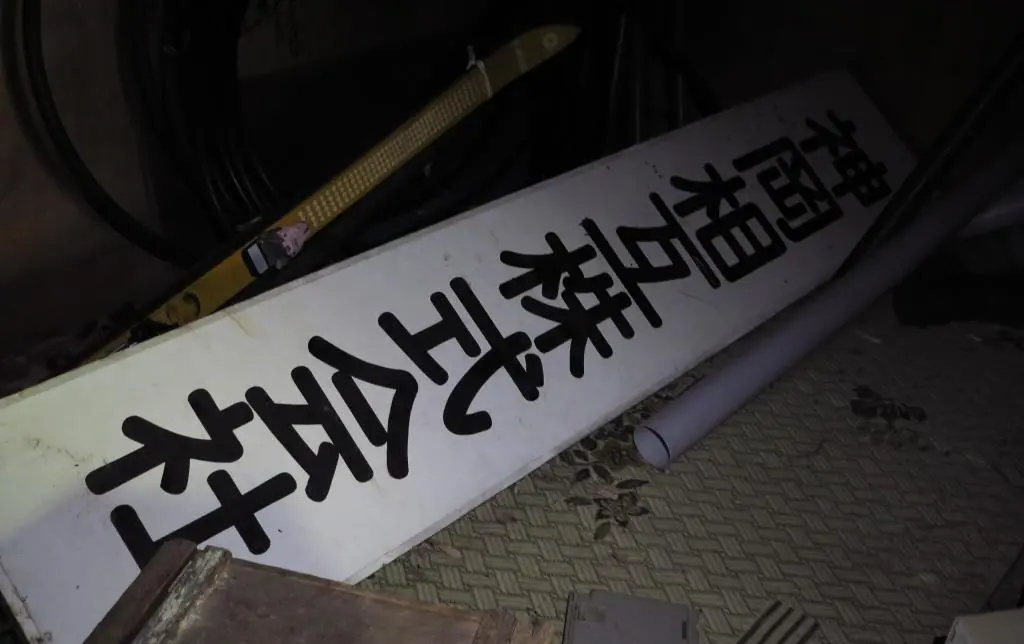
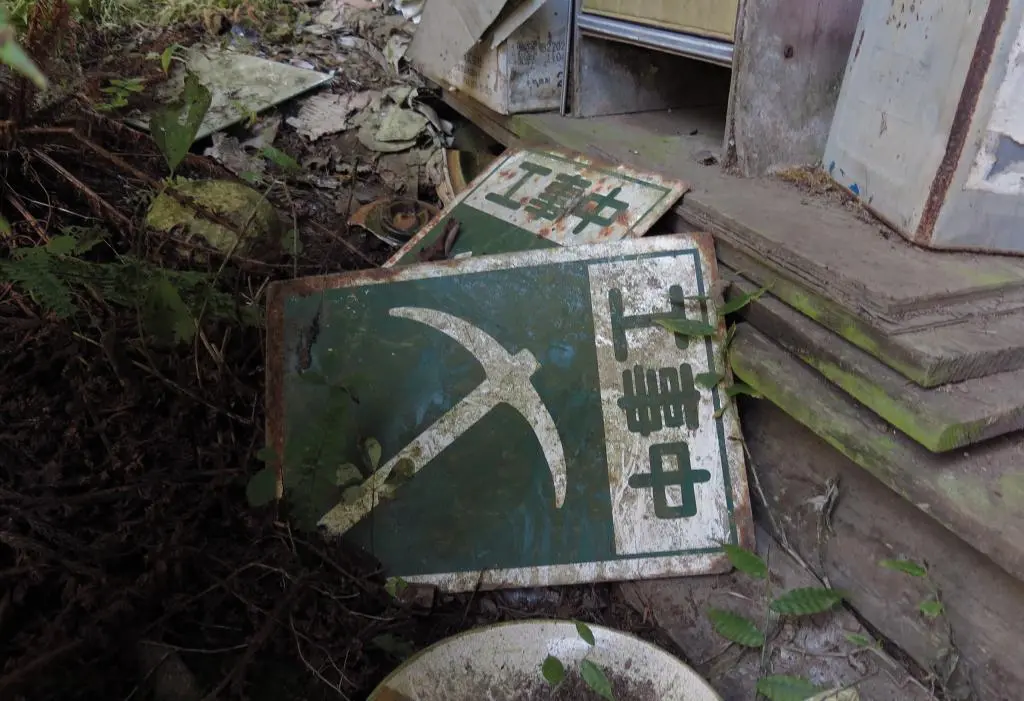
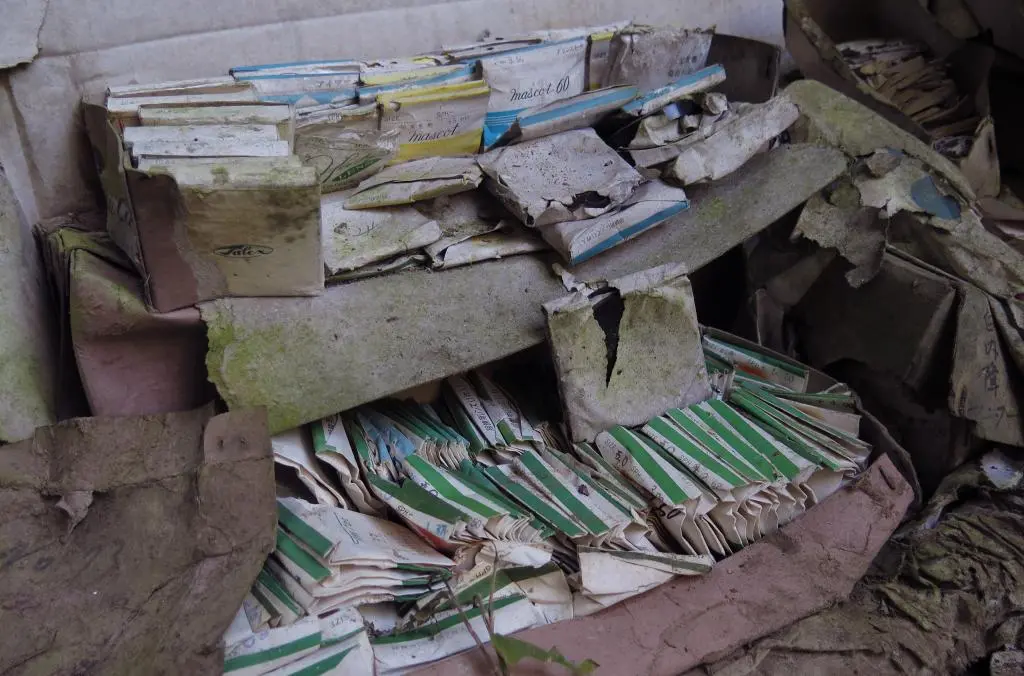
I went up to the shack and looked around the building. There were a lot of curious items outside. Mining construction signs, and boxes full of bifocal lens. Irrigated dirt filled with tons of empty beer cans. Part of the shack's wall had been removed, so I entered the small building and looked around. There was a computer monitor and some reel-to-reel tape, probably audio.
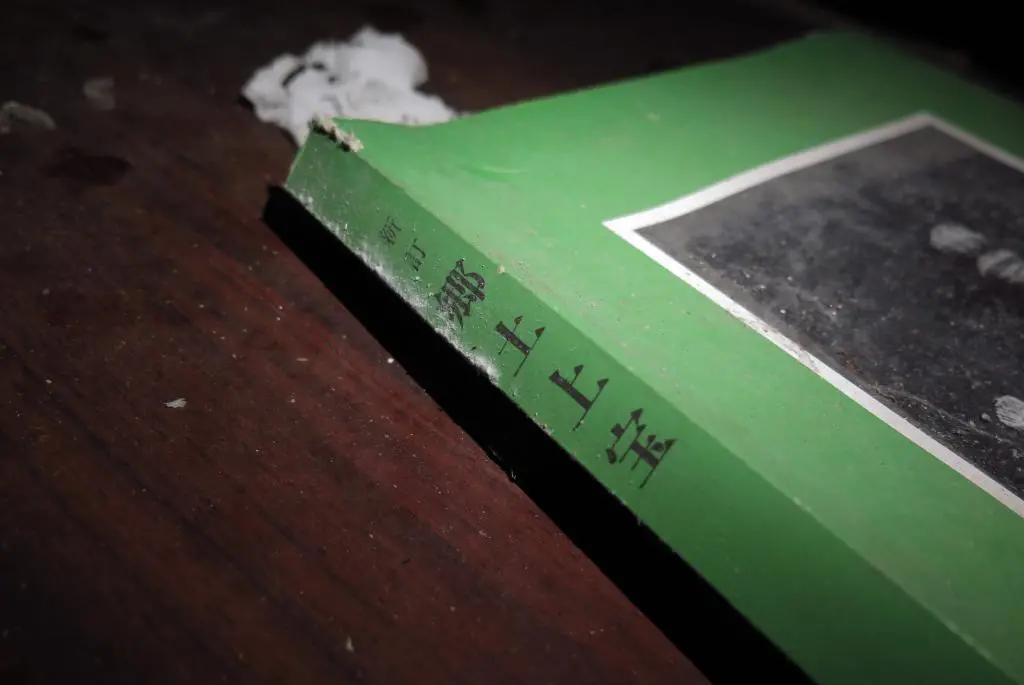
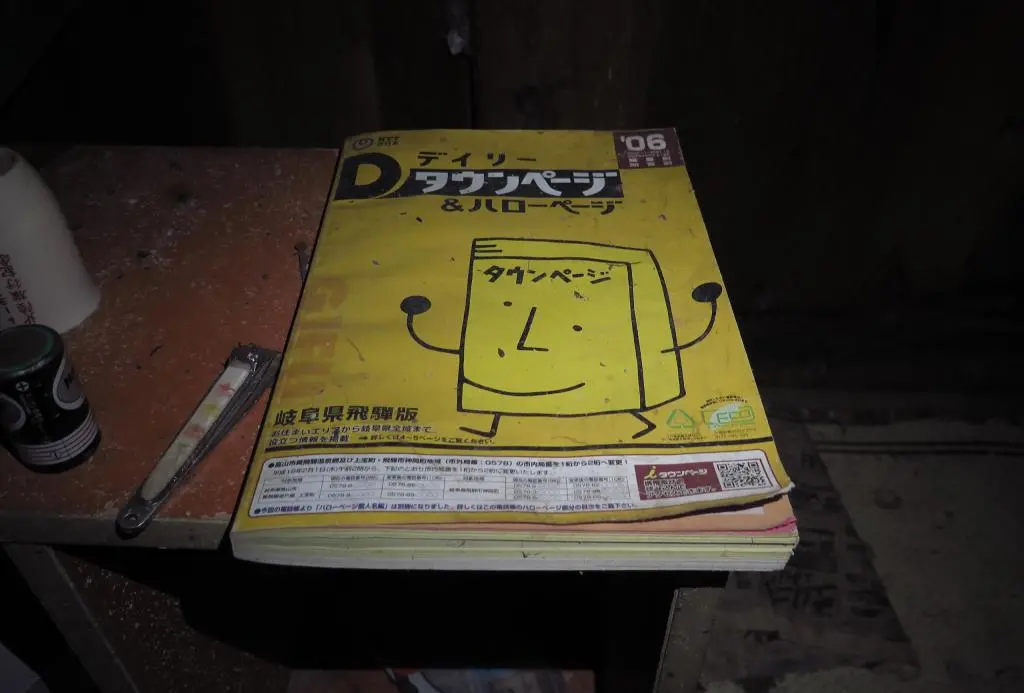
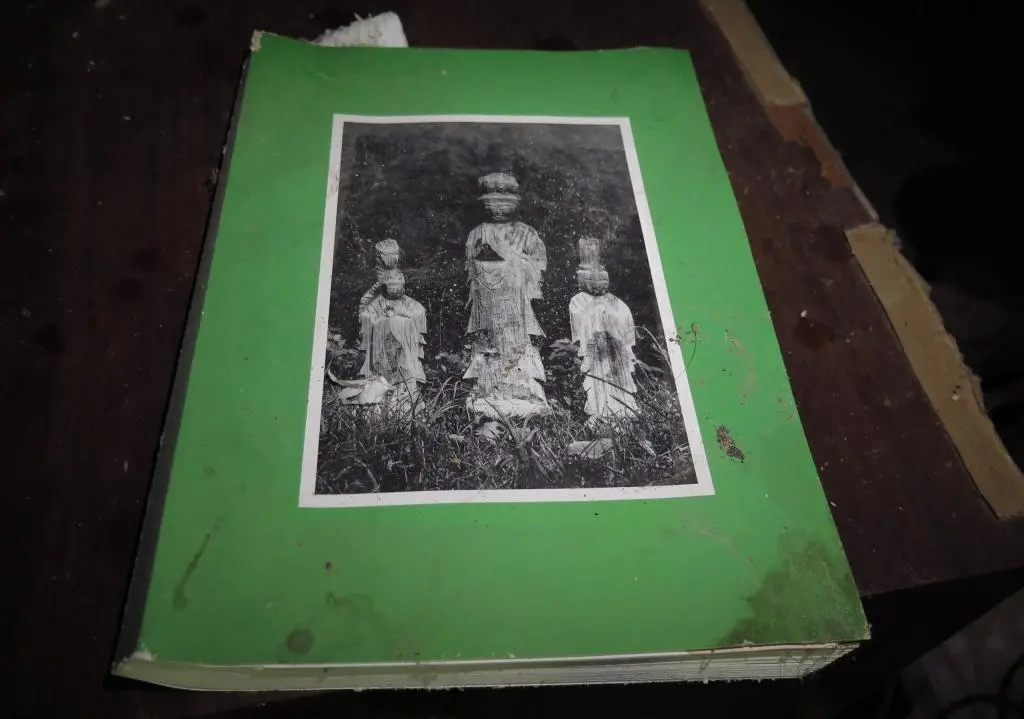
I also found a book label 新訂郷土上宝, or New Edition Native Kamitakara, which seemed like an historical record of items and people in old Kamitakara. (I later found the same book in slightly better condition in a pile of garbage, so I grabbed it and bagged it. At some point, I'll need to look through the book and see what secrets it contains.)
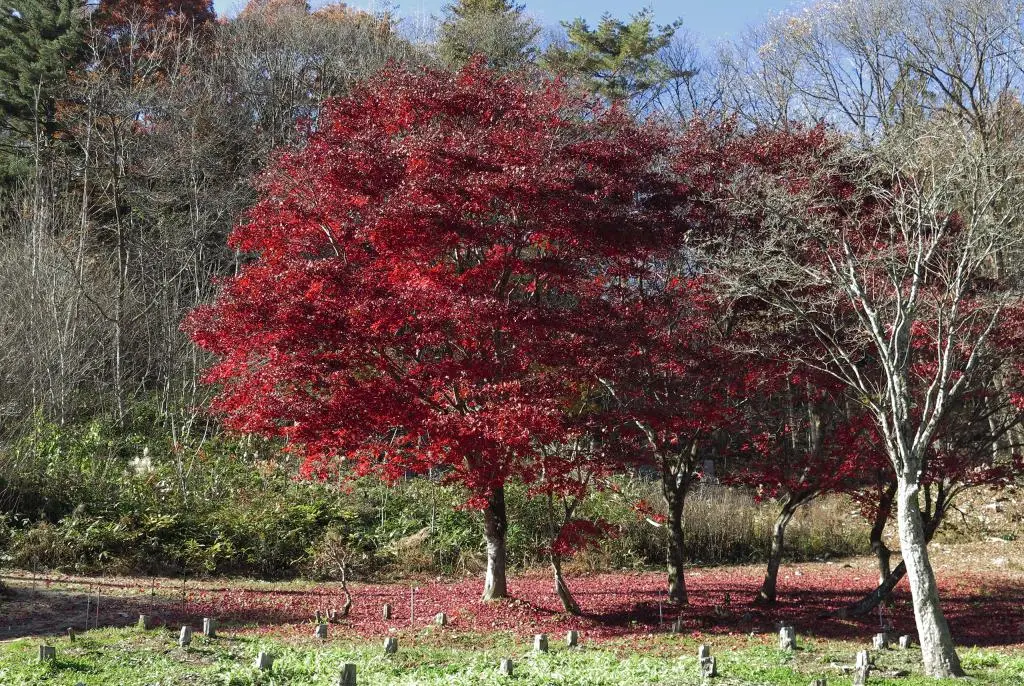
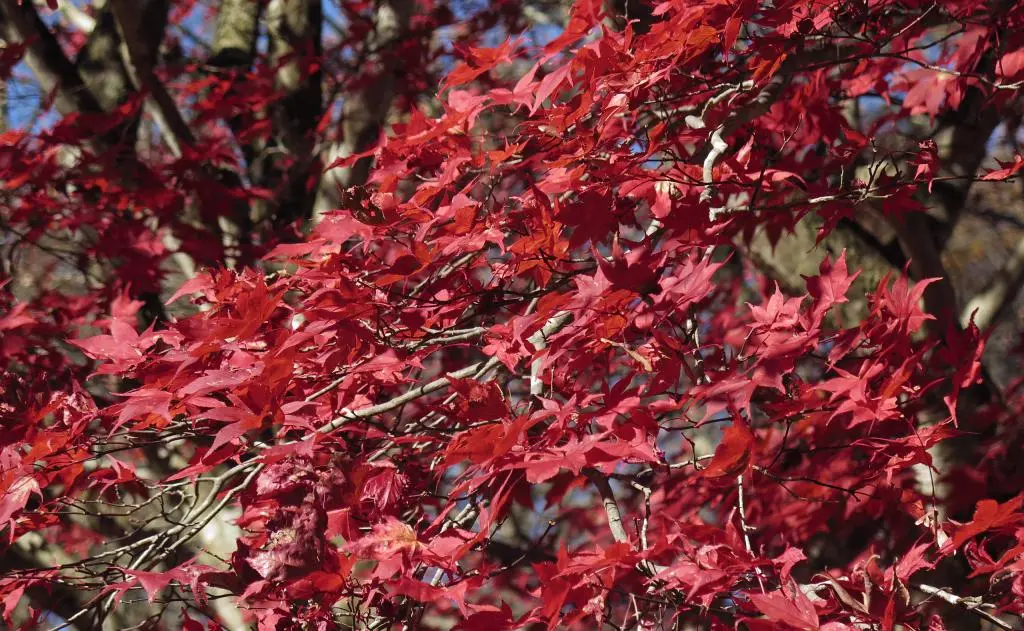
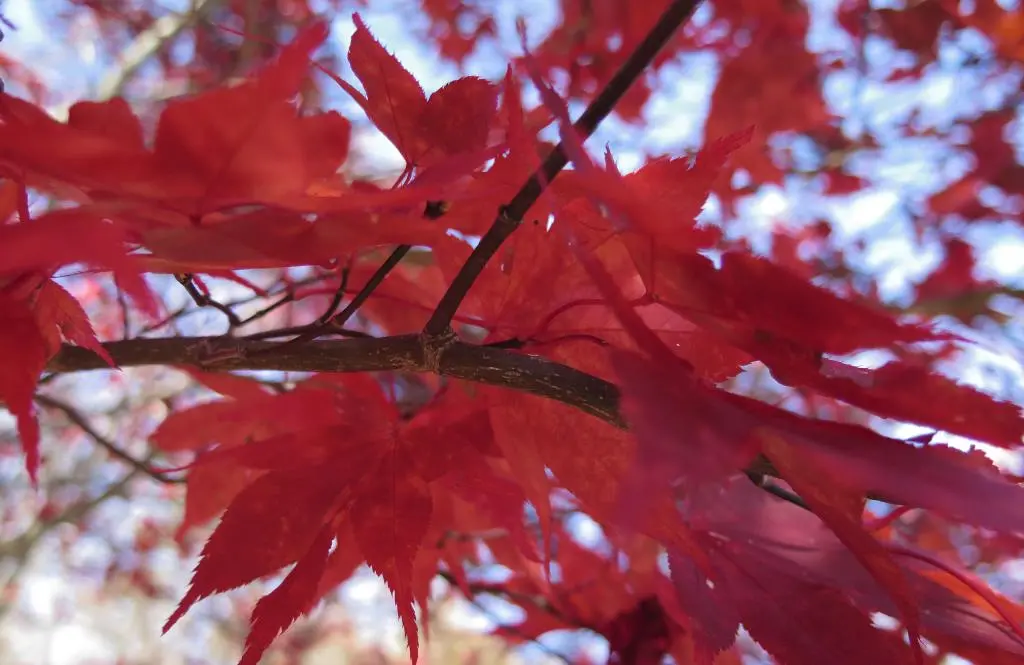
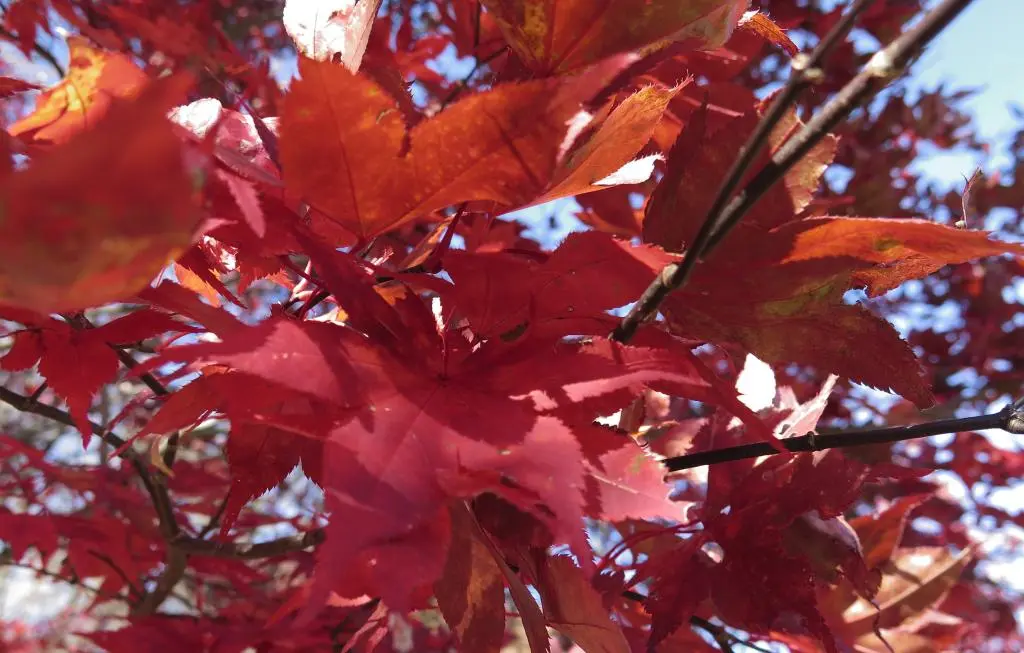
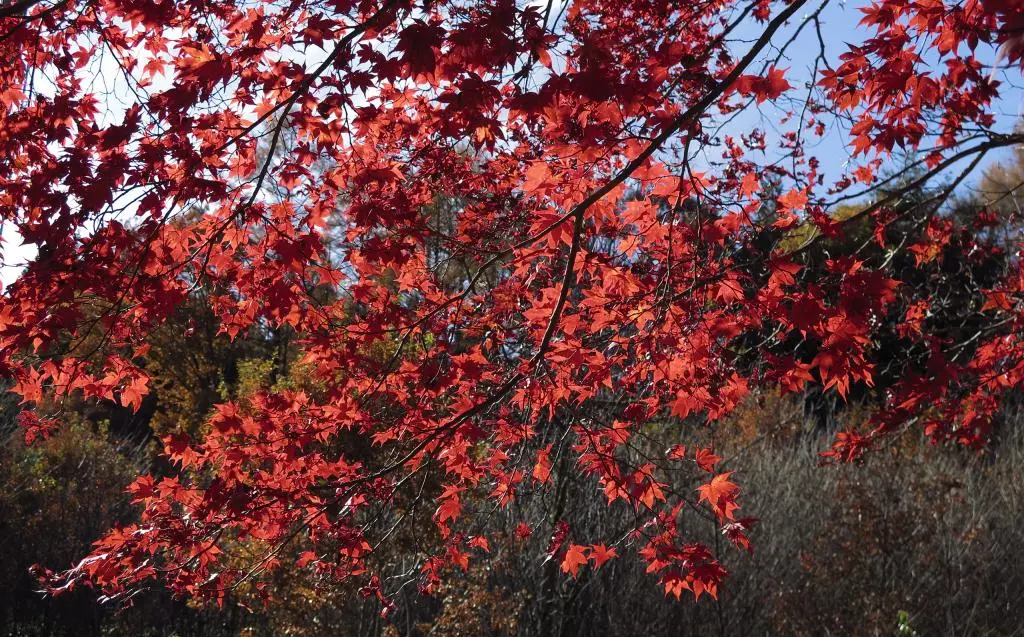
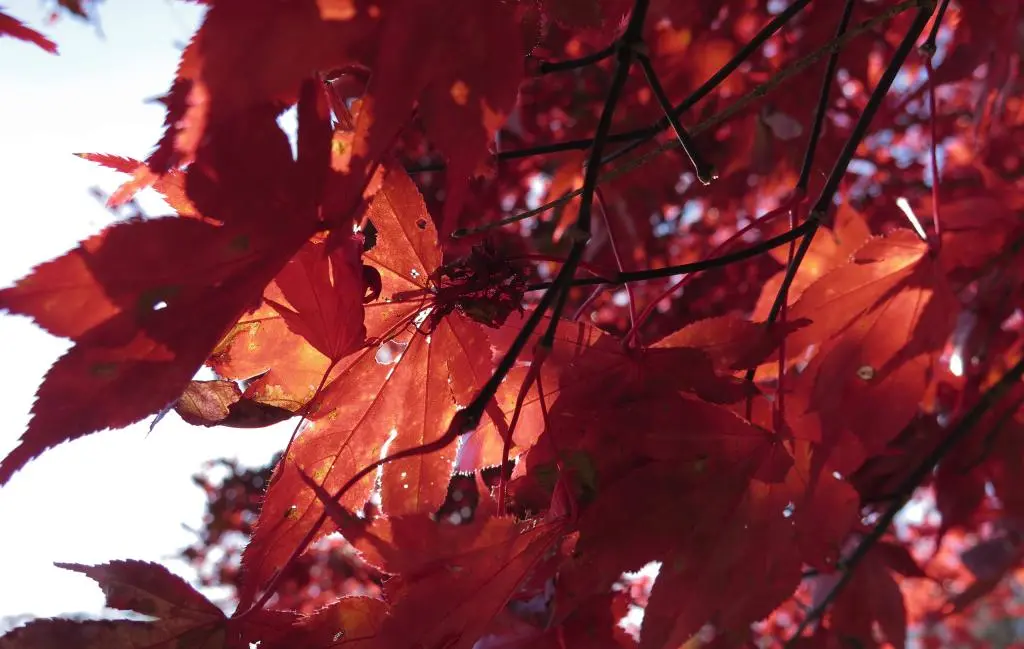
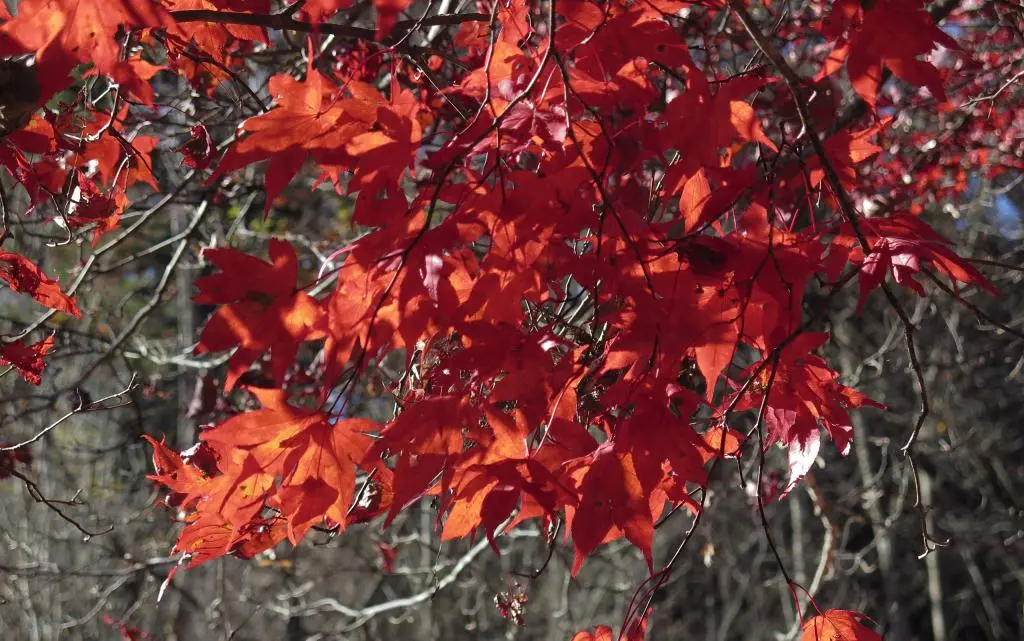
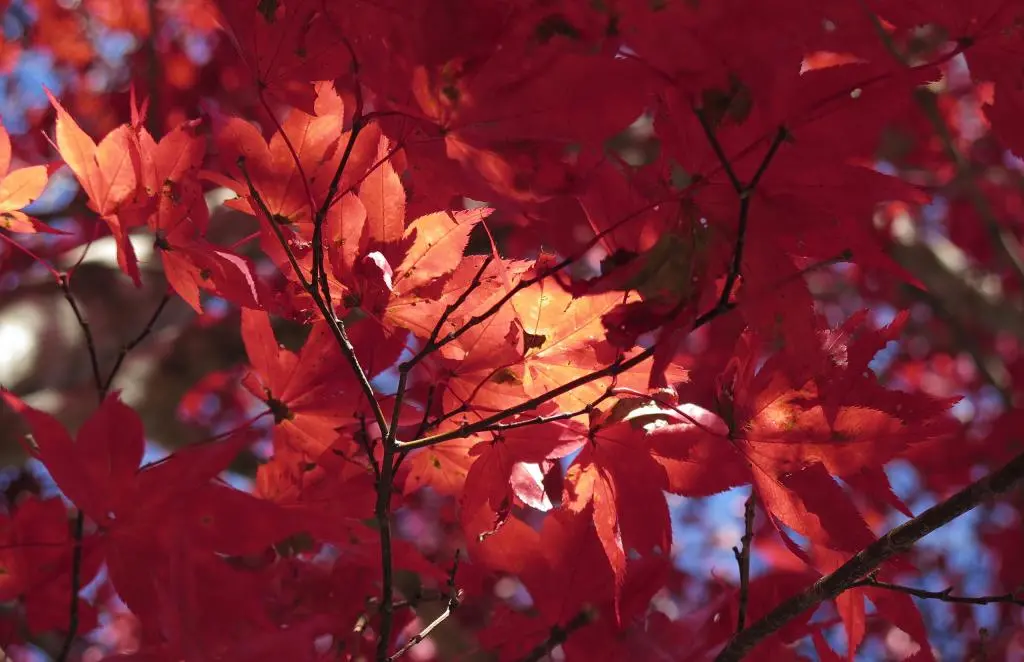
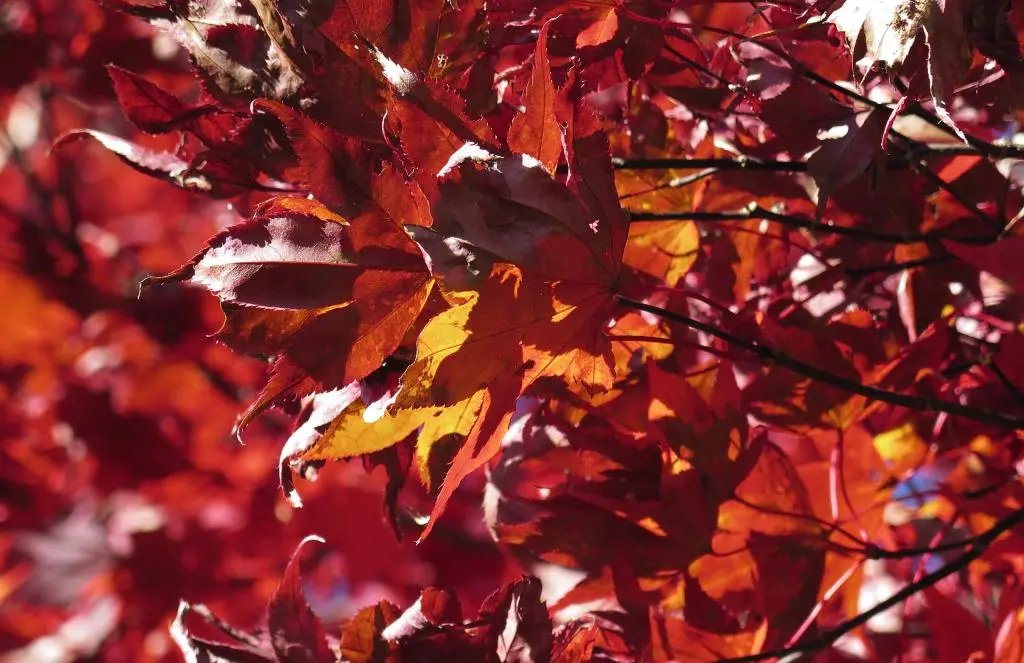
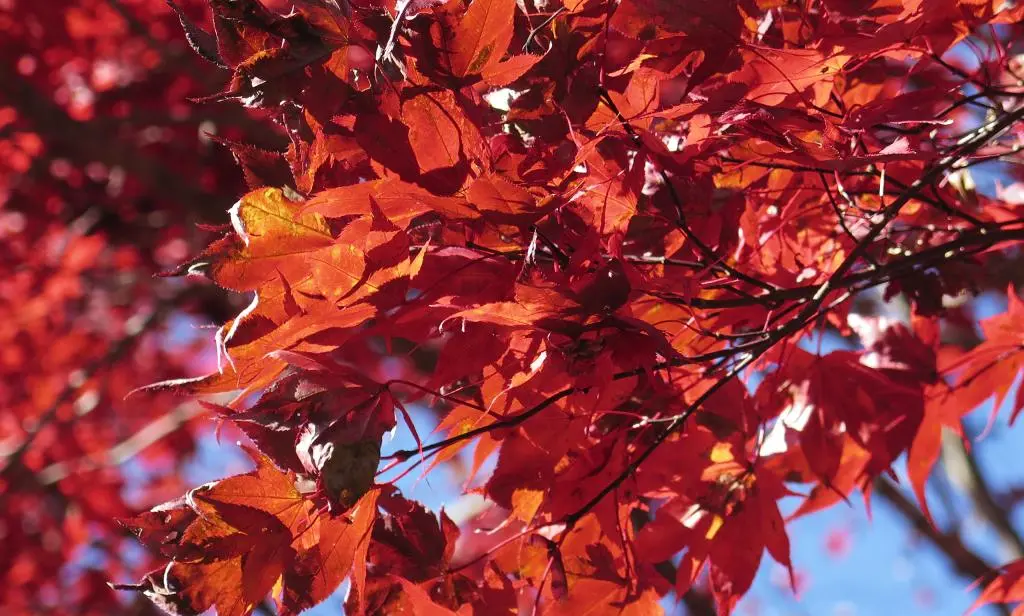
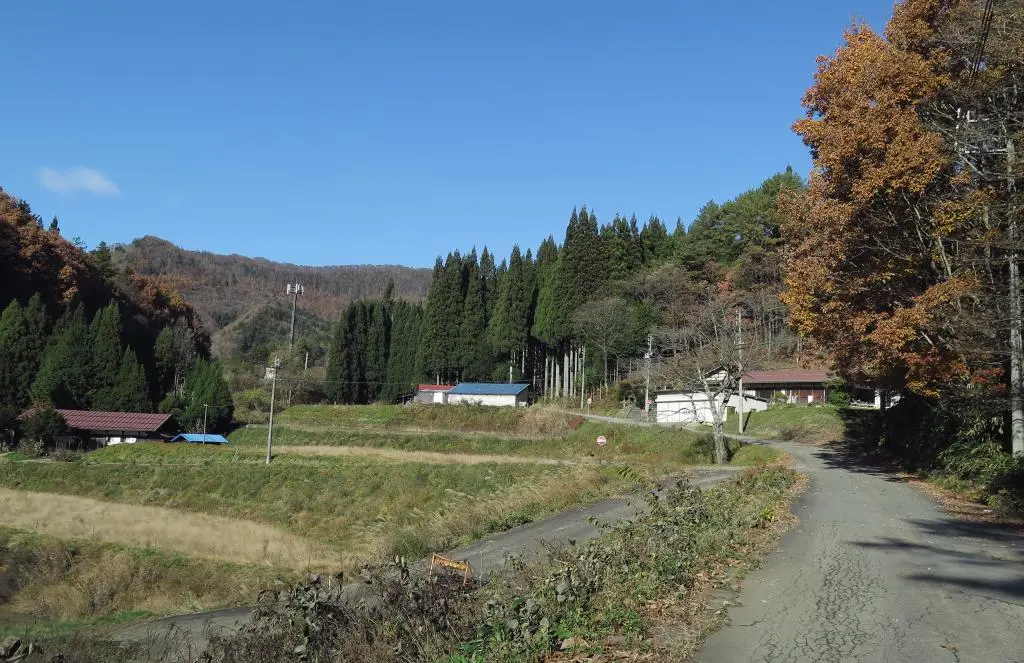
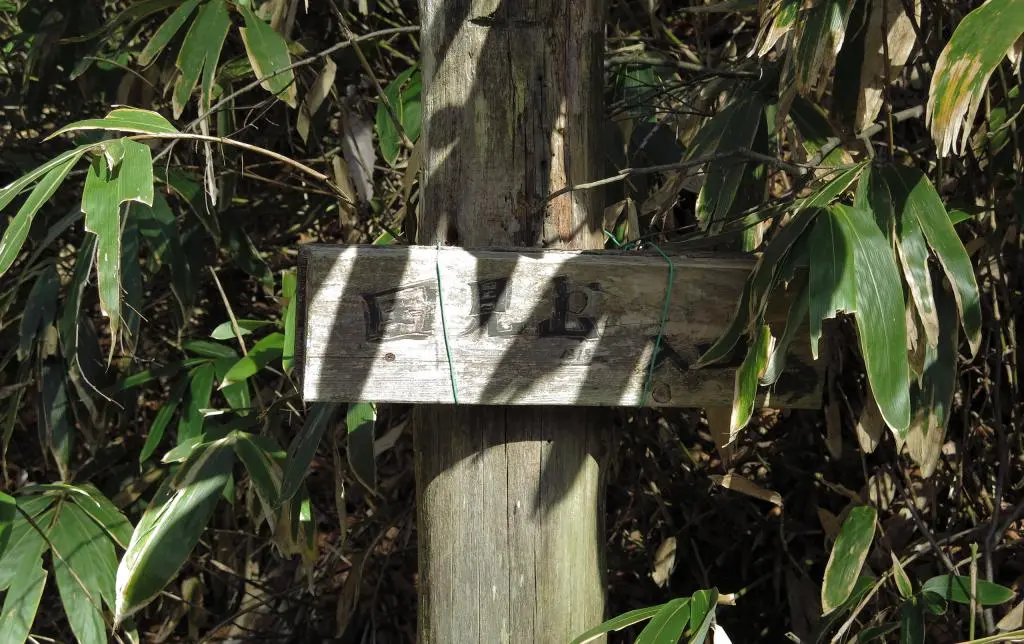
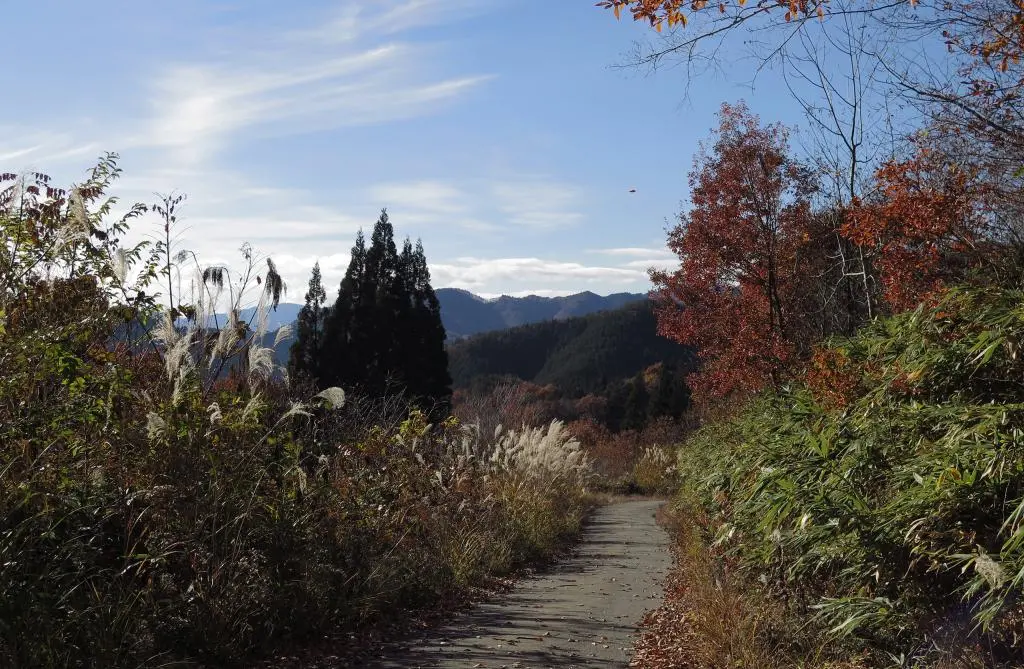
From there, I left the area and began my travels back home. I made a few more stops on the way back. I noticed another home near the vegetables fields with the farmer, and I went to investigate. I took a different route home intending to go hiking, but the trail was too steep. I stopped at this brilliant red tree instead.
Overall, this concluded my trip to Ohara village. In some ways, it felt like the most remote place I've visited. Takayama is already pretty far away from populated urban centers, and this village was another hour in a direction further away from it all. If an old woman does truly still live in that home, I think its a miracle. Especially if she's still there in winter.
It would be a lonely but peaceful existance.
Here's my timeline and coordinates at the key points of this trip.
| 10:10am | by car 車 | Nyukawa 丹生川 | |
| 10:35am | by car 車 | Crossroads | 36°13'53.3"N 137°21'59.8"E |
| 10:54am | by car 車 | Turn Off for Shrine | 36°14'16.0"N 137°22'35.8"E |
| 11:17am | by car 車 | Crossroads to Ohara | 36°14'12.6"N 137°22'31.8"E |
| 11:38am | by car 車 | Hie Shrine | 36°14'32.1"N 137°23'41.1"E |
| 11:52am | by car 車 | Home | 36°14'37.6"N 137°23'48.8"E |
| 12:21pm | Left Home area | ||
| 12:25pm | by car 車 | Construction Shack | 36°14'33.3"N 137°23'47.6"E |
| 12:45pm | Left shack | ||
| 1:07pm | by car 車 | back to crossroads | 36°14'12.6"N 137°22'31.8"E |
| 1:13pm | by car 車 | home at vegetable fields | 36°14'01.2"N 137°22'17.7"E |
| 1:47pm | by car 車 | red tree | 36°13'51.8"N 137°21'02.6"E |
| 2:03pm | by car 車 | failed hiking | 36°15'15.0"N 137°21'34.9"E |
| 2:45pm | by car 車 | back to Nyukawa 丹生川 |